



Mount Shasta's spectacular lenticular clouds
It's that time of year...when Mount Shasta tries to fool us all into thinking the volcano is up to something! But as many residents of Northern California will tell you, all that's up with Shasta right now is clouds - lenticular clouds, to be exact.
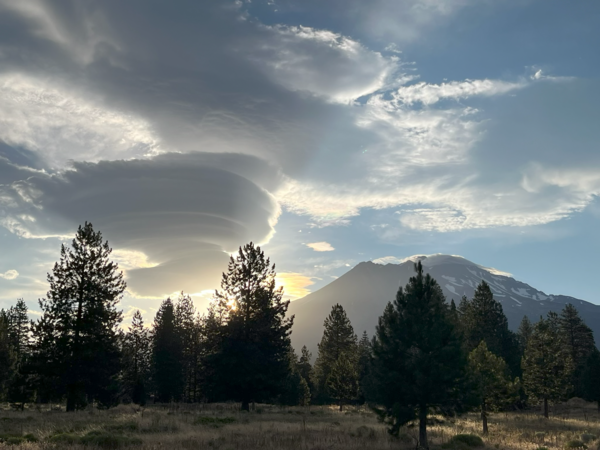
Lenticular clouds form when moist air flows up the slopes of a volcano (or other peak), cools, and condenses. The resulting clouds often drop a bit after pushing over the summit, like an eddy over a rock in a stream, and create seemingly stationary shapes that hover over the landscape. Sometimes they even stack up into the spectacular formations that Shasta's been displaying lately, looking like our idea of alien spaceships or fluffy candy confections. When lenticular clouds happen on volcanoes, they naturally pique our interest, since one of the signs of volcanic activity scientists watch for is gas being released from the volcano. About three-quarters of the gas that comes out of an active volcano is, in fact, water vapor. But how can we tell the difference between an active volcano and one that's just wearing a fun hat for the day?
The key is using multiple observations. Gas is only one indicator of volcanic unrest. For us to be concerned, we have to also see an increase in the number of earthquakes and possibly a change in the shape of a volcano, both of which would mean that magma is pushing its way into the mountain's "plumbing". Mount Shasta is actually a very quiet volcano, with few earthquakes and only one small gas vent on its summit. On any given day, it's much more likely that a weird-looking cloud at its summit is just a result of atmospheric conditions instead of any volcanic activity. But if you have questions, you can always check the data coming in from our monitoring instruments on Mount Shasta's landing page at https://www.usgs.gov/volcanoes/mount-shasta
USGS photo by Andrew Calvert