



Commemorating a fountain-filled year at Kīlauea
By Hawaiian Volcano Observatory
December 23, 2025
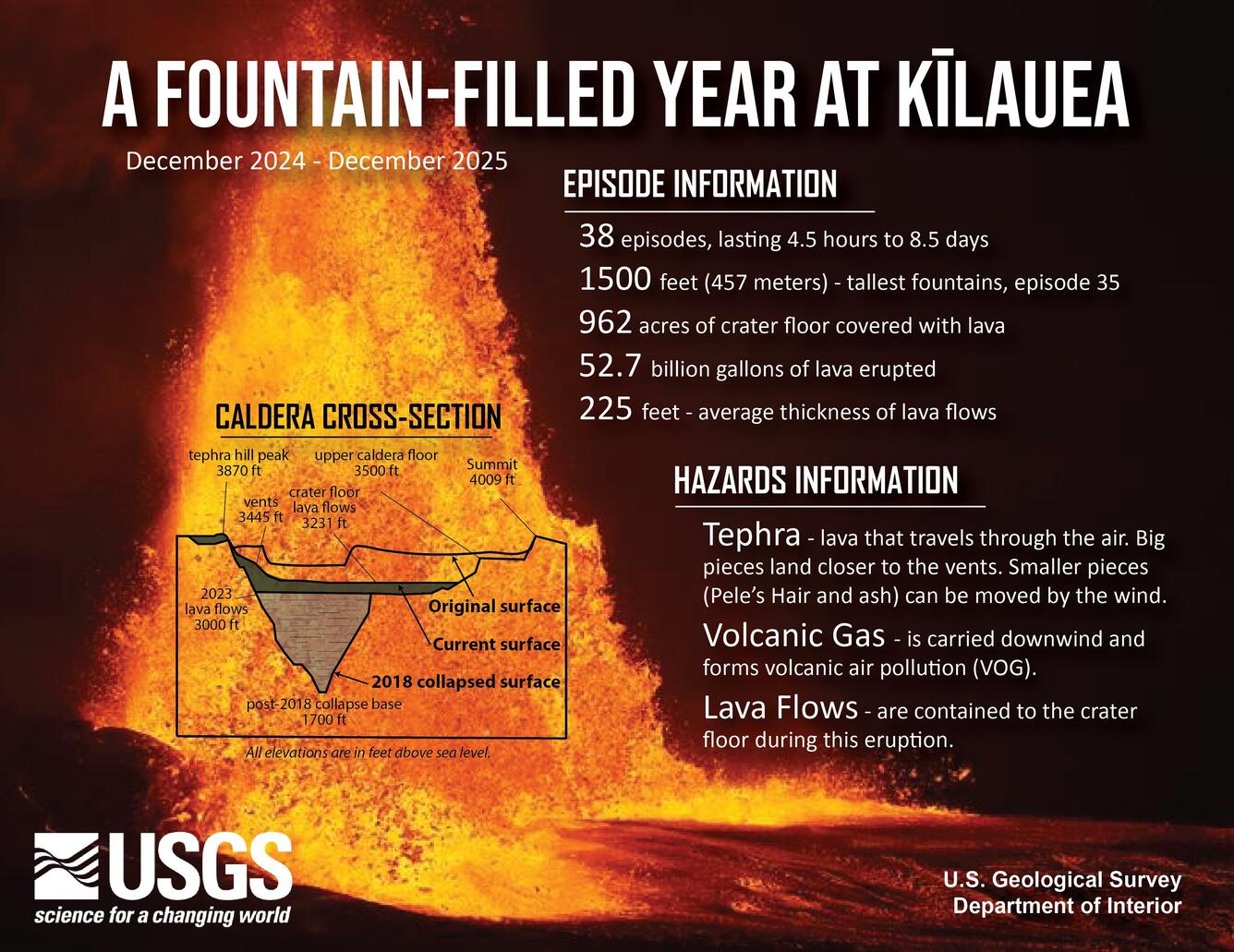
Today marks one year since a unique episodic lava fountaining eruption began at Kīlauea’s summit on December 23, 2024—a style of activity not seen in nearly 40 years! Over the past 12 months, Halemaʻumaʻu crater has hosted more than 35 eruptive episodes, each lasting from a few hours to more than a week, separated by quiet pauses.
Media
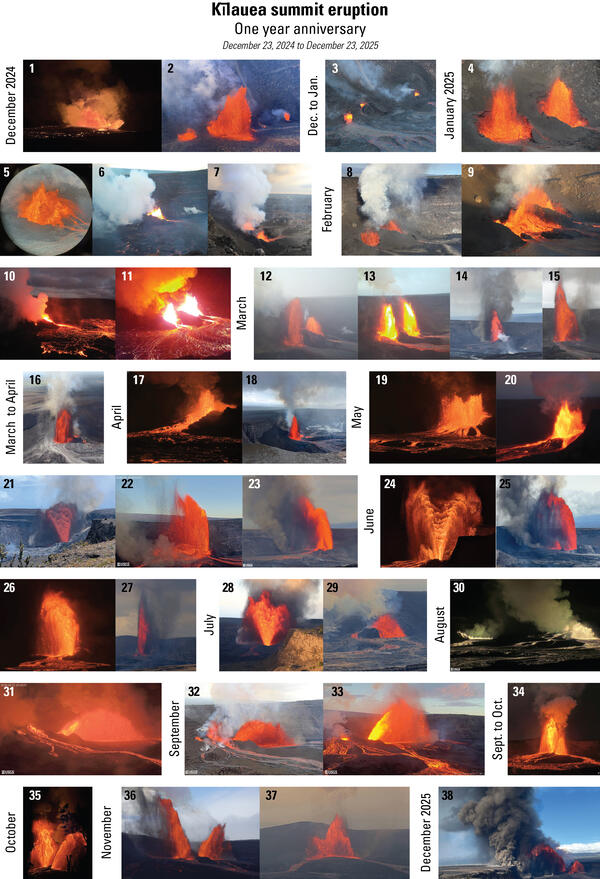
Photo calendar compilation of the 38 lava fountaining episodes that occurred the first year of the ongoing eruption at the summit of Kīlauea, with month time-stamps. The eruption started on December 23, 2024, and the eruption continues: episode 39 is expected soon. Compilation includes webcam imagery and photos taken by USGS Hawaiian Volcano Observatory scientists on the ground and during helicopter overflights. In all photos except for episode 7, the south vent is on the left and the north vent is on the right. For the episode 7 photo, the north vent is in the center and the south vent is below it to the right. The episode 5 photo only shows north vent. The episode 30 photo also shows a fissure on the south wall that was active in the first few hours of the episode.
Sources/Usage: Public Domain. View Media Details
Media
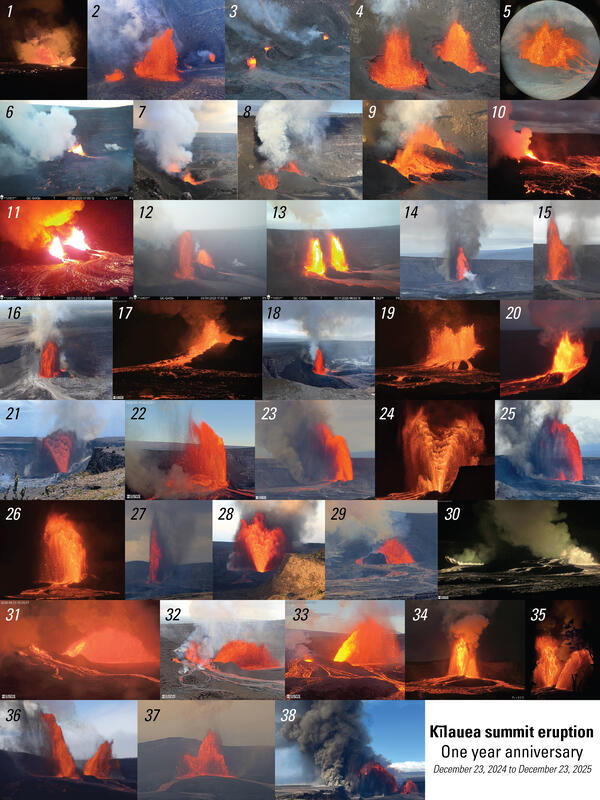
Photo compilation of the 38 lava fountaining episodes that occurred the first year of the ongoing eruption at the summit of Kīlauea. The eruption started on December 23, 2024, and the eruption continues: episode 39 is expected soon. Compilation includes webcam imagery and photos taken by USGS Hawaiian Volcano Observatory scientists on the ground and during helicopter overflights. In all photos except for episode 7, the south vent is on the left and the north vent is on the right. For the episode 7 photo, the north vent is in the center and the south vent is below it to the right. The episode 5 photo only shows north vent. The episode 30 photo also shows a fissure on the south wall that was active in the first few hours of the episode.
Sources/Usage: Public Domain. View Media Details
Media
Sources/Usage: Public Domain. View Media Details
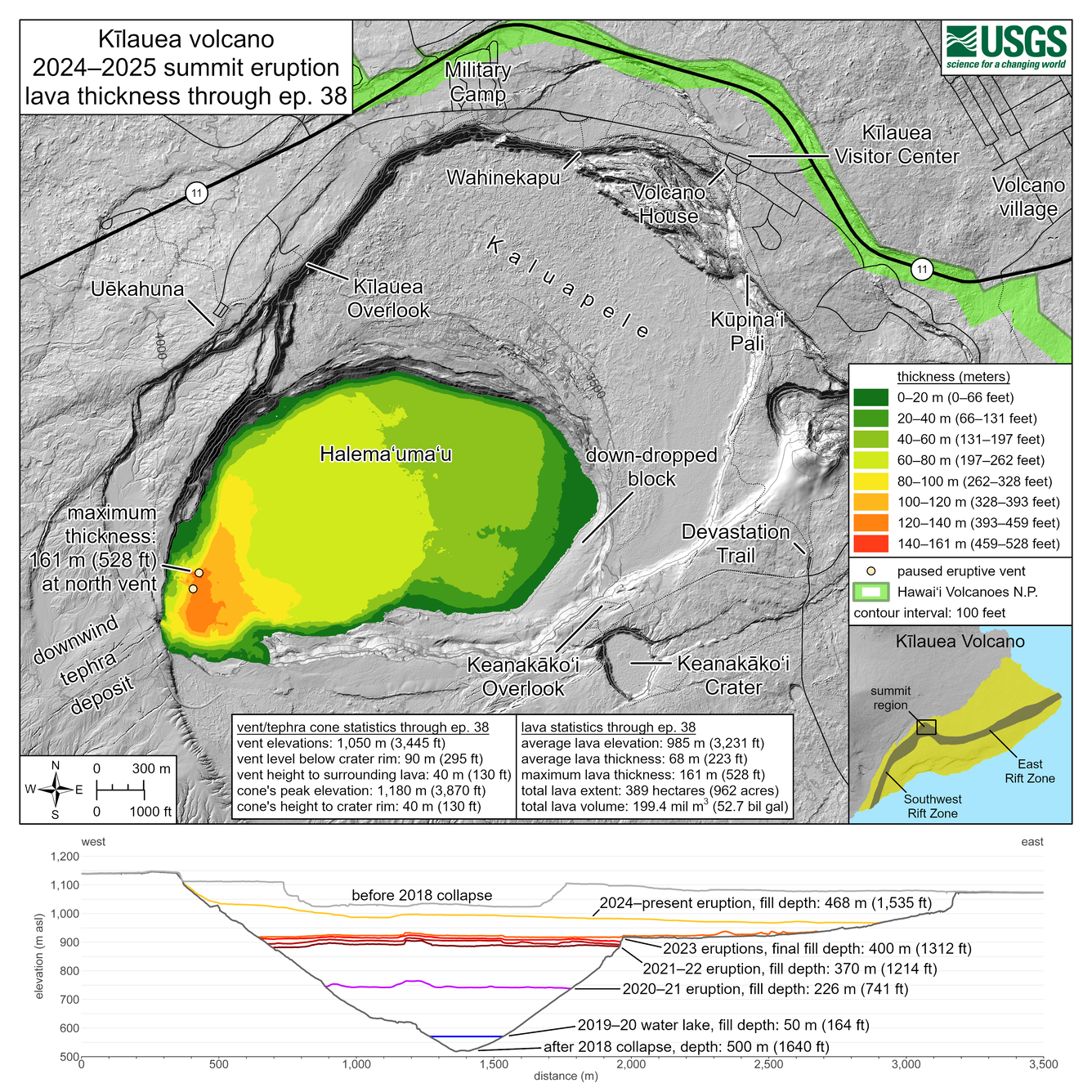
Detailed DescriptionThis map shows thickness values for lava flows within Halema‘uma‘u crater from the Kīlauea summit eruption that began on December 23, 2024. These values were calculated by topographic differencing between a digital elevation model collected on December 9, 2025—after eruptive episode 38—and one from before the eruption began. Also included here are west-to-east profiles across the summit caldera, depicting topographic changes since 2018. Profiles are provided for the periods before the 2018 caldera collapse, shortly after the 2018 collapse, following each of the five summit eruptions from 2020–2023, and for this eruption following the end of episode 38. Also shown is the maximum depth of the 2019–2020 Halema‘uma‘u water lake.
Media
Sources/Usage: Public Domain. View Media Details