



The top Yellowstone geological stories of 2025
With 2026 having arrived, Caldera Chronicles looks back on the past year of geological stories in Yellowstone National Park
Yellowstone Caldera Chronicles is a weekly column written by scientists and collaborators of the Yellowstone Volcano Observatory. This week's contribution is from Michael Poland, geophysicist with the U.S. Geological Survey and Scientist-in-Charge of the Yellowstone Volcano Observatory.
A year ago, talk about geological activity in Yellowstone National Park was dominated by hydrothermal explosions, like the small event of April 15, 2024, in Norris Geyser Basin and the much larger event of July 23, 2024, in Biscuit Basin. Although 2025 was much calmer in that respect, it wasn’t completely quiet.
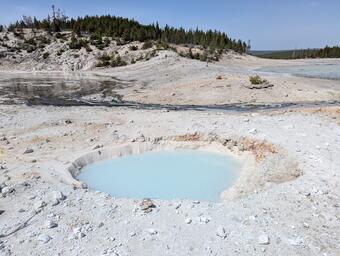
As usual, there were changes in hydrothermal activity. At Norris Geyser Basin a new blue-water pool developed during late 2024 and early 2025 in Porcelain Basin, and Valentine Geyser erupted for the first time in over 20 years! In addition, there was a general increase in activity of features in Black Sand Basin, and Minerva Terrace, at Mammoth Hot Springs, reactivated over the summer. Despite these variations, satellite data and river chemistry measurements indicate that the overall thermal output from the park was stable and in line with previous years.
While some thermal features sprang to life, others might have gone back to sleep. Steamboat Geyser, in Norris Geyser Basin, is the tallest active geyser in the world, erupting water and steam up to 120 meters (about 400 feet) into the air. The geyser can go through long periods—up to decades—with few or no eruptions and then enter periods of frequent activity. Since 2018, the geyser has been putting on a show, but the numbers of eruptions per year has been declining since 2020. In 2025 there were only 3 eruptions, in February, April, and December. In the 7 years of increased activity during 2018–2025, Steamboat Geyser erupted 177 times.
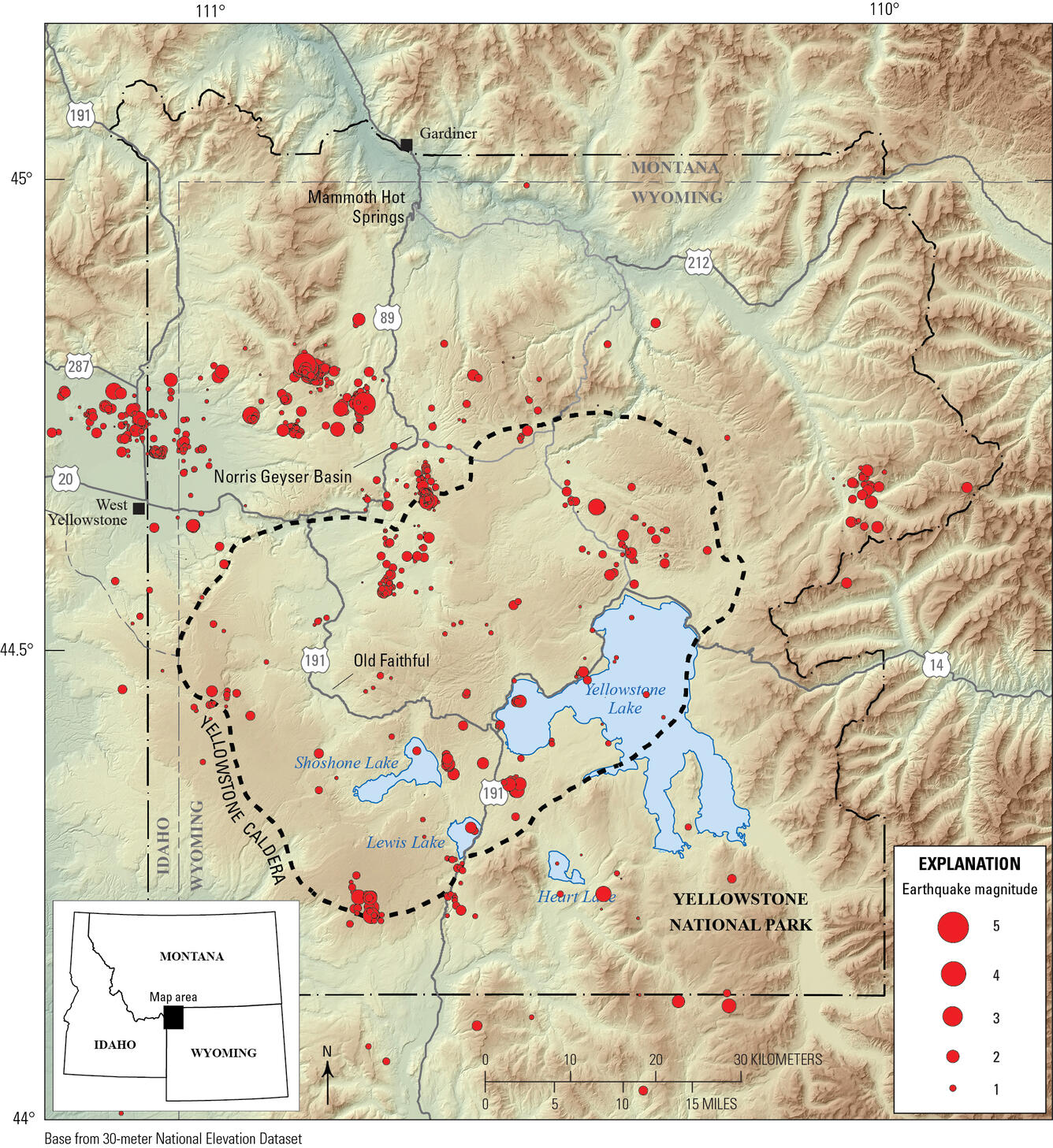
During 2025, there were 1,119 earthquakes located in and around the park, with three M3.7 events tied for the largest. All three occurred in the northwest part of the park, which is the most active area in terms of seismicity. Earthquake activity in 2025 was on the low end of normal—there are typically 1,500-2,500 small earthquakes located in Yellowstone every year. Surface deformation included some interesting changes, including the onset of subtle uplift in July centered south of Norris Geyser Basin along the north caldera rim—an area that also uplifted during 1996–2004. Overall caldera subsidence, which started in 2015, was once again interrupted by a pause or uplift in the summer, but the summertime pause in 2025 did not end in October-November like it usually does. Is this the start of a new phase of caldera uplift like that which occurred many times in the past, most recently during 2004–2009 and 2014–2015? We’ll find out in the coming year.
YVO enhanced several monitoring capabilities during the year. Three seismic sites were upgraded to fully digital, and a new seismic station was installed in the northeast part of the park. In addition, a hydrothermal monitoring station, consisting of a seismometer, infrasound array (to measure low-frequency acoustic signals), and GPS station (to measure ground deformation) was installed at Biscuit Basin. A camera was also established at Biscuit Basin to better track activity at Black Diamond Pool, site of the July 23, 2024, hydrothermal explosion. Both the camera and the new monitoring station have detected numerous eruptions from the pool, many of which threw water and mud about 10 meters (33 feet) into the air.
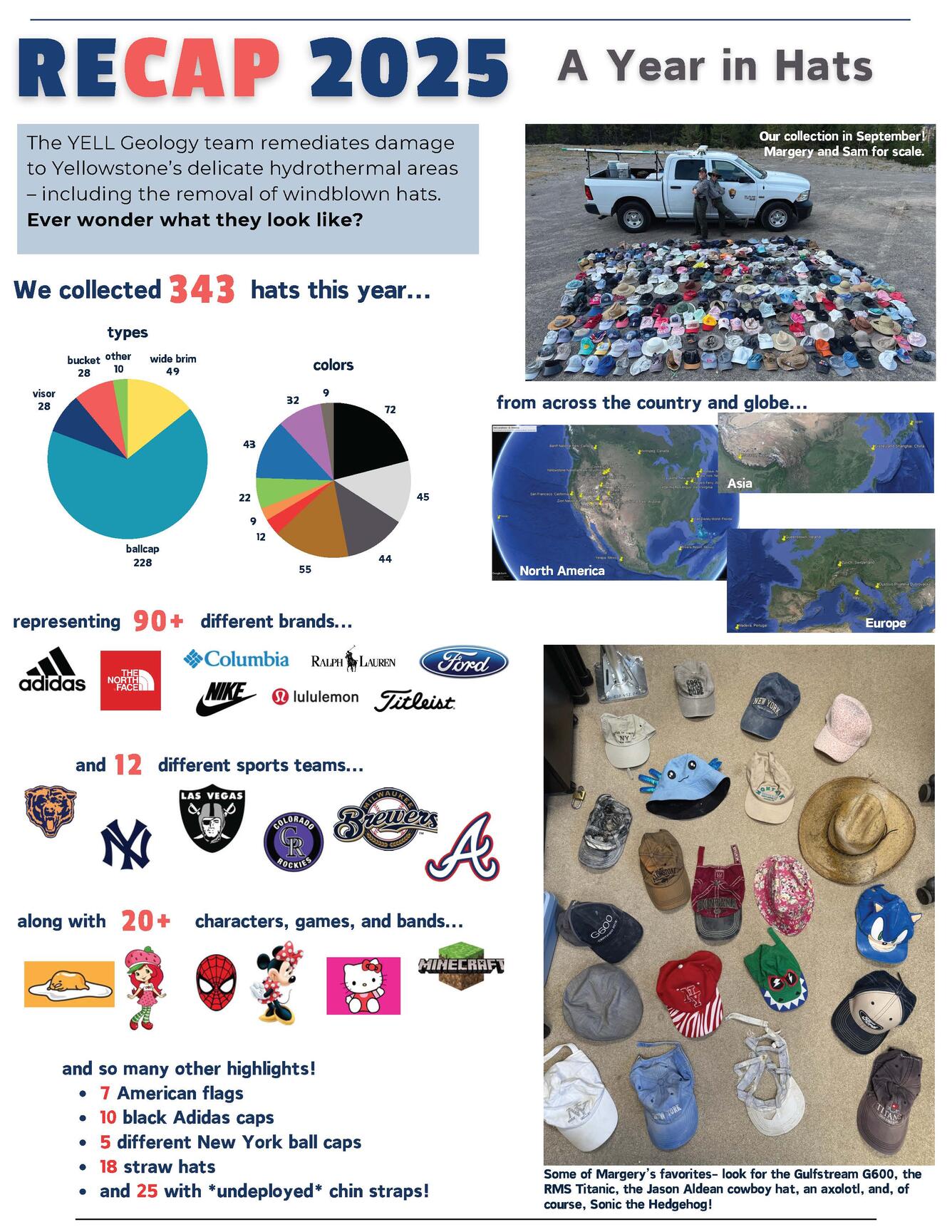
Yellowstone National Park geologists were also busy with ensuring visitor safety and removing debris from delicate thermal areas. In 2025, they collected 343 hats that had blown away from visitors. The hats were from across the USA, Europe, and Asia. The most common color was black, the most common style was a ballcap, and 12 different sports teams were represented. With that many hats, you can do a lot of statistics!
There were also the inevitable rumors. In 2025, the rumor that animals were leaving the park began circulating once again—that story pops up every few years but is never true. This time, it seemed to be fueled by a series of social media posts that were intended as a joke, but that some people took seriously.
As incredible as it might sound, despite the new thermal features, earthquake activity, and false rumors of astonishing animal behavior, 2025 was a pretty typical year in terms of Yellowstone’s geologic activity. Which is actually saying something, right? “Typical” in Yellowstone National Park is pretty amazing!