Drew Point, AK Time-Lapse Photography of Coastal Erosion
Drew Point, AK Time-Lapse Photography of Coastal Erosion4-week time-lapse photography of the Arctic coast at Drew Point, AK shows mass wasting of the coastal sediments in July, 2008


Official websites use .gov
A .gov website belongs to an official government organization in the United States.

Secure .gov websites use HTTPS
A lock () or https:// means you’ve safely connected to the .gov website. Share sensitive information only on official, secure websites.

Explore a diverse collection of engaging videos showcasing the latest research, discoveries, and educational content from the U.S. Geological Survey. Dive into the fascinating world of geology, hydrology, ecology, and natural hazards as we bring science to life. Stay informed and inspired by our visual storytelling that highlights the vital work of USGS scientists and their impact on the planet.

4-week time-lapse photography of the Arctic coast at Drew Point, AK shows mass wasting of the coastal sediments in July, 2008
4-week time-lapse photography of the Arctic coast at Drew Point, AK shows mass wasting of the coastal sediments in July, 2008

The Long Lasting Legacy of Nuclear Waste
Dave Stonestrom, USGS Research Hydrologist
The Long Lasting Legacy of Nuclear Waste
Dave Stonestrom, USGS Research Hydrologist

USGS employees using a wading rod to measure the streamflow over a road near Finchford, IA on 6/10/2008.
USGS employees using a wading rod to measure the streamflow over a road near Finchford, IA on 6/10/2008.

Video showing deer traversing flood waters and the affects on wildlife.
Video showing deer traversing flood waters and the affects on wildlife.
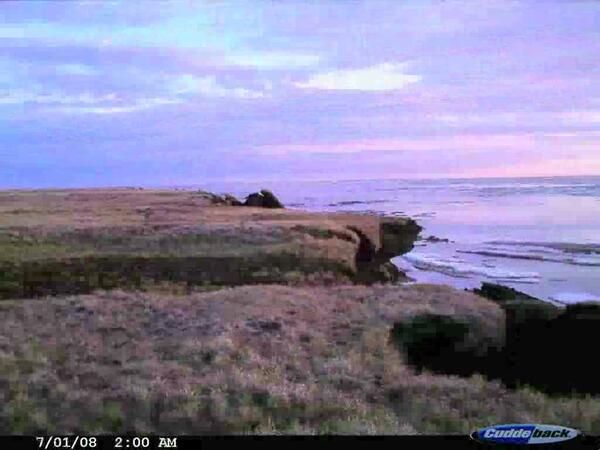
4-week time-lapse photography of the Arctic coast at Drew Point, AK shows intense coastal erosion in early July, 2008
4-week time-lapse photography of the Arctic coast at Drew Point, AK shows intense coastal erosion in early July, 2008

Flying at about the elevation of the plume top, this video shows a number of aspects of the ongoing activity at Halema`uma`u Crater. The mostly whitish plume rises to an elevation of about 5,500 feet and blows first to the southwest but apparently spreads to the west over the Ka`u Desert. Mauna Loa rises above the clouds in the background.
Flying at about the elevation of the plume top, this video shows a number of aspects of the ongoing activity at Halema`uma`u Crater. The mostly whitish plume rises to an elevation of about 5,500 feet and blows first to the southwest but apparently spreads to the west over the Ka`u Desert. Mauna Loa rises above the clouds in the background.

Closeup of the new vent from a hovering helicopter showing hazy views of incandescence deep inside the vent.
Closeup of the new vent from a hovering helicopter showing hazy views of incandescence deep inside the vent.

Western Style
Michael Dettinger, USGS Research Hydrologist
Western Style
Michael Dettinger, USGS Research Hydrologist

USGS scientists deliver a variety of science in the effort to restore wetlands to over 25,000 acres in San Francisco Bay. "Wetland Revival" shows how science is contributing to the transformation of once industrial salt producing ponds into more natural habitat. The program was completed in 2008. USGS General Information Product 61.
USGS scientists deliver a variety of science in the effort to restore wetlands to over 25,000 acres in San Francisco Bay. "Wetland Revival" shows how science is contributing to the transformation of once industrial salt producing ponds into more natural habitat. The program was completed in 2008. USGS General Information Product 61.

This video describes how scientists study past changes in sea-level and coastal environments by analyzing mangrove peat. Mangrove islands located off the coast of Belize are underlain by deep deposits of peat (organic soil), which retain a record of past sea level, vegetation, and climate.
This video describes how scientists study past changes in sea-level and coastal environments by analyzing mangrove peat. Mangrove islands located off the coast of Belize are underlain by deep deposits of peat (organic soil), which retain a record of past sea level, vegetation, and climate.

Visualizing Past, Present, and Future Earthquakes
USGS scientists David Schwartz, Heather Lackey, Luke Blair, and Scott Haefner take you on a virtual tour of the Bay Area's most urbanized fault
Visualizing Past, Present, and Future Earthquakes
USGS scientists David Schwartz, Heather Lackey, Luke Blair, and Scott Haefner take you on a virtual tour of the Bay Area's most urbanized fault

Movie of the littoral explosions at Waikupanaha
Movie of the littoral explosions at Waikupanaha

In this video podcast, USGS experts give preliminary observations on what took place during the high flow experiment. Time lapse videos and photos available.
In this video podcast, USGS experts give preliminary observations on what took place during the high flow experiment. Time lapse videos and photos available.

Video clip taken from the southeast rim of Halema`uma`u at 3 p.m. on April 2.
Video clip taken from the southeast rim of Halema`uma`u at 3 p.m. on April 2.

Restoring San Francisco Bay Salt Ponds to Wetlands Habitat
A video production introduced and discussed by Steven E. Schwarzbach, Director, USGS Western Ecological Research Center
Restoring San Francisco Bay Salt Ponds to Wetlands Habitat
A video production introduced and discussed by Steven E. Schwarzbach, Director, USGS Western Ecological Research Center

Today marks the 10th anniversary of the eruption within Halema‘uma‘u at the summit of Kīlauea Volcano. When the vent first opened on March 19, 2008, it formed a small pit about 115 feet (35 m) wide. Over the past decade, that pit (informally called the "Overlook crater") has grown into a gaping hole about 919 feet by 656 feet (280 x 200 m) in size.
Today marks the 10th anniversary of the eruption within Halema‘uma‘u at the summit of Kīlauea Volcano. When the vent first opened on March 19, 2008, it formed a small pit about 115 feet (35 m) wide. Over the past decade, that pit (informally called the "Overlook crater") has grown into a gaping hole about 919 feet by 656 feet (280 x 200 m) in size.

USGS scientist Bruce Molnia, discusses the impact of changing climate and conditions on Earth's glaciers
By Bruce Molnia, Geologist
See excerpts from this full-length film feature showing:
USGS scientist Bruce Molnia, discusses the impact of changing climate and conditions on Earth's glaciers
By Bruce Molnia, Geologist
See excerpts from this full-length film feature showing:

Long-lived mud "eruption" inundates housing and infrastructure
By Thomas J. Casadevall, Geologist
Long-lived mud "eruption" inundates housing and infrastructure
By Thomas J. Casadevall, Geologist

(January 26, 2008, 10:50:12 to 19:12:16) Perched lava ponds often formed atop the rootless shields built by the "Thanksgiving Eve Breakout" (TEB) lava flow. This movie shows the failure of the flank of a rootless shield on January 26, 2008, and the release of the lava contained within the perched lava pond at its summit.
(January 26, 2008, 10:50:12 to 19:12:16) Perched lava ponds often formed atop the rootless shields built by the "Thanksgiving Eve Breakout" (TEB) lava flow. This movie shows the failure of the flank of a rootless shield on January 26, 2008, and the release of the lava contained within the perched lava pond at its summit.

Just after midnight on July 21, 2007, a new fissure eruption broke out on the eastern flank of the Pu'u 'O'o cone (http://hvo.wr.usgs.gov/pressreleases/pr07_21_07.html).
Just after midnight on July 21, 2007, a new fissure eruption broke out on the eastern flank of the Pu'u 'O'o cone (http://hvo.wr.usgs.gov/pressreleases/pr07_21_07.html).

The rapid onset of unrest at Mount St. Helens on September 23, 2004 initiated an uninterrupted lava-dome-building eruption that continued until 2008. The initial phase produced rapid growth of a lava dome as magma pushed upward.
The rapid onset of unrest at Mount St. Helens on September 23, 2004 initiated an uninterrupted lava-dome-building eruption that continued until 2008. The initial phase produced rapid growth of a lava dome as magma pushed upward.