



Rapid Genetic Testing to Identify New World Screwworm
Early detection and rapid response are critical to controlling the spread of New World Screwworm, a blowfly pest that has re-emerged in the U.S. As the USDA leads the federal response, USGS Ecosystems Mission Area scientists are developing and validating a rapid DNA field test that can be used onsite with simple materials and basic training to support surveillance and response efforts.
Why Rapid Detection Matters for Screwworm Response
The USDA deploys thousands of traps for adult flies and conducts inspections for larvae in livestock. Because several other fly species look similar to New World Screwworm, expert examination of flies and larvae in the laboratory is required for accurate identification but may take hours. Field detection in minutes will expedite operational decisions by on-the-ground responders.
The USGS’s rapid New World Screwworm test will help the USDA and state responders protect the agricultural economy, wildlife, public health, and even pets. A New World Screwworm outbreak has the potential to cost Texas livestock producers \$732 million per year, and the state’s economy could lose \$1.8 billion.
Scientific Expertise
The USGS offers long-standing expertise in early detection and rapid response to emerging biological threats (invasive species, pathogens), including development of point-of-use molecular tools.
The USGS is working closely with the USDA on this rapid field DNA detection tool. The test is designed to streamline the process of detecting New World Screwworm, quickly and efficiently providing information to those on the ground to guide time-sensitive management decisions. Once complete, the test will be available for the USDA to integrate it into their fly surveillance efforts, which will benefit detection and response.
Point-of-Use Tool Development
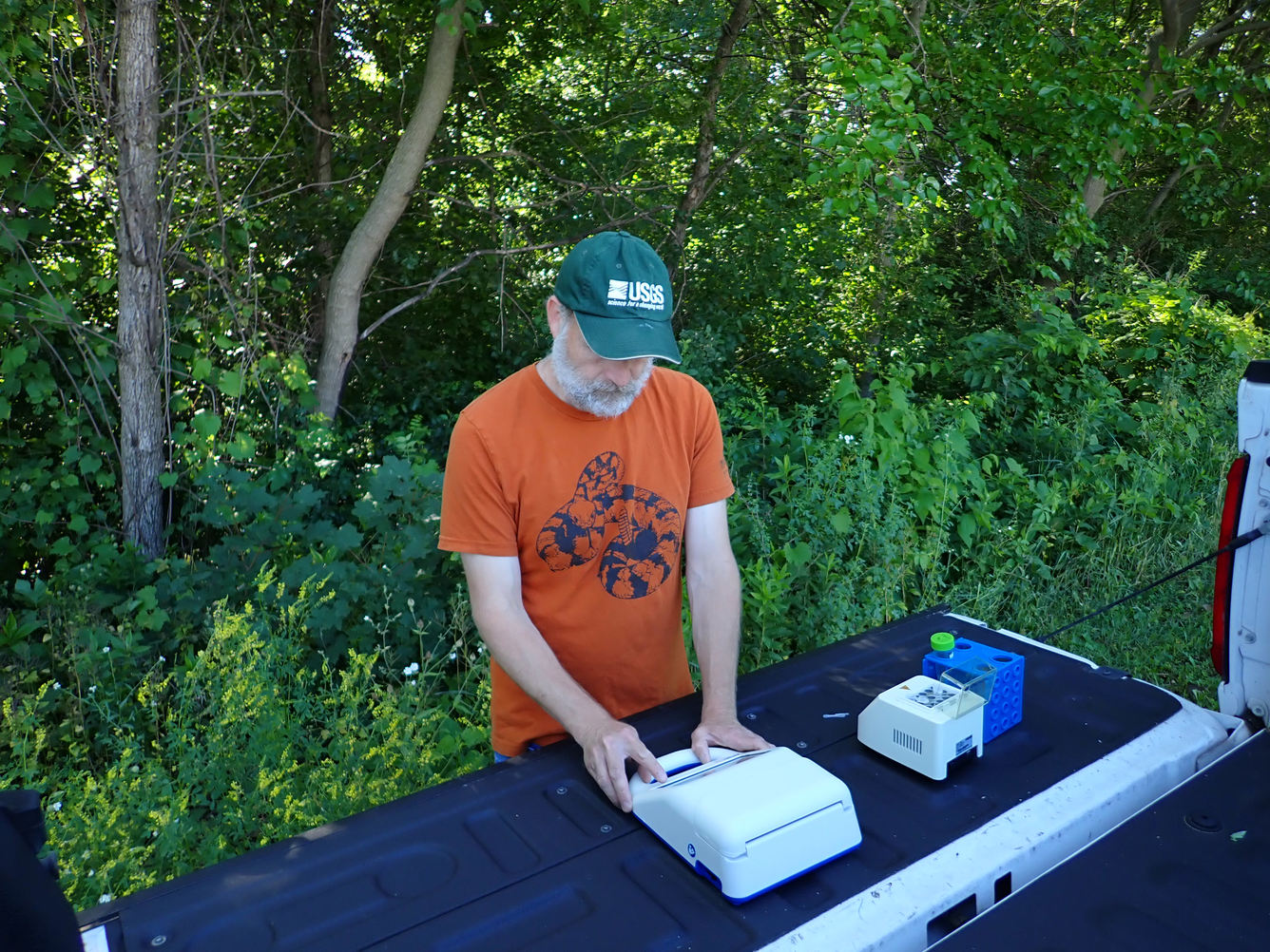
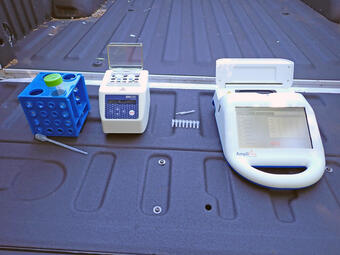
USGS scientists are using a DNA test called LAMP (loop-mediated isothermal amplification) that is designed to work fast. LAMP assays quickly identify a target pest’s DNA. They rely on short pieces of engineered DNA that act like ‘search helpers,’ sticking to matching parts of the pest’s genes. Once they attach, an enzyme leads to a rapid creation of new DNA fragments, much like a chain reaction, that happens over just a few minutes. The test only requires a heat block for equipment and is easy to learn, even for people without a science background.
The results can be visualized using ultraviolet light, a test strip, or a color change reaction. The USGS is also evaluating two test methods that provide an easy visual readout of results: 1) the use of fluorescent dyes with a fluorometer and 2) the use of a lateral flow assay strip.
Current Progress on Screwworm Test Development
- We have successfully extracted DNA from a single fly leg using an inexpensive resin solution and 15-minute heating step.
- We have developed a LAMP test that is consistently amplifying New World Screwworm DNA in 4-7 minutes and does not amplify other blowfly species.
- We are currently validating a lyophilized (freeze-dried) version of the LAMP test that allows it to be field portable as well as a lateral flow dipstick for easy interpretation of results. We are currently communicating and coordinating with USDA contacts to explore how best this rapid test can be implemented in the field.
USGS Rapid Detection Tools
The USGS has been developing LAMP assays since launching its first invasive carp assay in 2016. Since then, USGS scientists have built a wide range of LAMP tools at different stages of development. Fully validated assays for invasive carp are already in use for early detection and rapid response. Parts of the Illinois River heavily invaded by invasive carp have seen recreational fishing economic losses exceeding \$10 million over a decade, making this rapid detection tool critical.
The New World Screwworm Threat
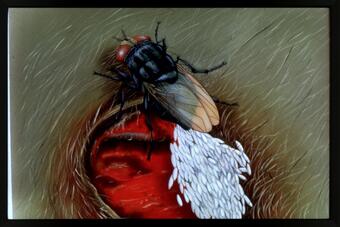
Once found across the southern U.S. and into Central America, the New World Screwworm blowfly was eliminated from the U.S. in 1966. Before eradication, this pest threatened livestock and harmed wildlife, such as deer, rabbits, and opossums. However, starting in 2023, the pest began moving north through Central America and Mexico, and by June 2026 it was detected again in the U.S., marking its first appearance in decades.
The fly lays its eggs in the wounds of living warm-blooded animals. Within 12 – 24 hours, the eggs hatch into larvae, which burrow in the wound to feed, creating a larger wound and leading to illness and death if untreated. Though New World Screwworm largely affects livestock, they can also infect people, pets, and wildlife, causing severe ecological and economic loss.
Responding to New World Screwworm in the U.S.

Developing a portable LAMP assay for detecting grass and black carp
Early detection and rapid response are critical to controlling the spread of New World Screwworm, a blowfly pest that has re-emerged in the U.S. As the USDA leads the federal response, USGS Ecosystems Mission Area scientists are developing and validating a rapid DNA field test that can be used onsite with simple materials and basic training to support surveillance and response efforts.
Why Rapid Detection Matters for Screwworm Response
The USDA deploys thousands of traps for adult flies and conducts inspections for larvae in livestock. Because several other fly species look similar to New World Screwworm, expert examination of flies and larvae in the laboratory is required for accurate identification but may take hours. Field detection in minutes will expedite operational decisions by on-the-ground responders.
The USGS’s rapid New World Screwworm test will help the USDA and state responders protect the agricultural economy, wildlife, public health, and even pets. A New World Screwworm outbreak has the potential to cost Texas livestock producers \$732 million per year, and the state’s economy could lose \$1.8 billion.
Scientific Expertise
The USGS offers long-standing expertise in early detection and rapid response to emerging biological threats (invasive species, pathogens), including development of point-of-use molecular tools.
The USGS is working closely with the USDA on this rapid field DNA detection tool. The test is designed to streamline the process of detecting New World Screwworm, quickly and efficiently providing information to those on the ground to guide time-sensitive management decisions. Once complete, the test will be available for the USDA to integrate it into their fly surveillance efforts, which will benefit detection and response.
Point-of-Use Tool Development
USGS scientists are using a DNA test called LAMP (loop-mediated isothermal amplification) that is designed to work fast. LAMP assays quickly identify a target pest’s DNA. They rely on short pieces of engineered DNA that act like ‘search helpers,’ sticking to matching parts of the pest’s genes. Once they attach, an enzyme leads to a rapid creation of new DNA fragments, much like a chain reaction, that happens over just a few minutes. The test only requires a heat block for equipment and is easy to learn, even for people without a science background.
The results can be visualized using ultraviolet light, a test strip, or a color change reaction. The USGS is also evaluating two test methods that provide an easy visual readout of results: 1) the use of fluorescent dyes with a fluorometer and 2) the use of a lateral flow assay strip.
Current Progress on Screwworm Test Development
- We have successfully extracted DNA from a single fly leg using an inexpensive resin solution and 15-minute heating step.
- We have developed a LAMP test that is consistently amplifying New World Screwworm DNA in 4-7 minutes and does not amplify other blowfly species.
- We are currently validating a lyophilized (freeze-dried) version of the LAMP test that allows it to be field portable as well as a lateral flow dipstick for easy interpretation of results. We are currently communicating and coordinating with USDA contacts to explore how best this rapid test can be implemented in the field.
USGS Rapid Detection Tools
The USGS has been developing LAMP assays since launching its first invasive carp assay in 2016. Since then, USGS scientists have built a wide range of LAMP tools at different stages of development. Fully validated assays for invasive carp are already in use for early detection and rapid response. Parts of the Illinois River heavily invaded by invasive carp have seen recreational fishing economic losses exceeding \$10 million over a decade, making this rapid detection tool critical.
The New World Screwworm Threat
Once found across the southern U.S. and into Central America, the New World Screwworm blowfly was eliminated from the U.S. in 1966. Before eradication, this pest threatened livestock and harmed wildlife, such as deer, rabbits, and opossums. However, starting in 2023, the pest began moving north through Central America and Mexico, and by June 2026 it was detected again in the U.S., marking its first appearance in decades.
The fly lays its eggs in the wounds of living warm-blooded animals. Within 12 – 24 hours, the eggs hatch into larvae, which burrow in the wound to feed, creating a larger wound and leading to illness and death if untreated. Though New World Screwworm largely affects livestock, they can also infect people, pets, and wildlife, causing severe ecological and economic loss.
Responding to New World Screwworm in the U.S.