



Explore More RADish Profiles
Explore interviews with scientists and managers researching and implementing the resist-accept-direct (RAD) framework.
Dr. Robert (Bob) Newman
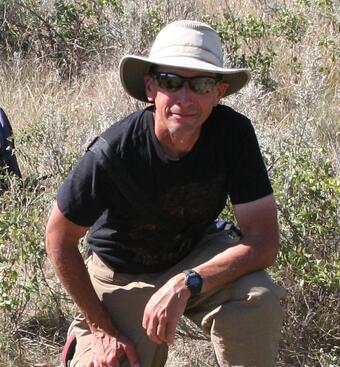
Wildlife Population Biologist, Professor at the University of North Dakota
Upon graduating from the University of Pennsylvania with his PhD in 1987, Bob Newman became a wildlife population biologist and a professor at the University of North Dakota, where he has focused on wildlife ecology and wetland conservation.
Early in his career, Bob’s research focused on wetland ecology and amphibians while working in Texas, including a decade of fieldwork studying desert amphibians in Big Bend National Park. These atypical aquatic habitats in the desert intrigued him, sparking his interest in how animals adapt to their surroundings. This fieldwork gave him an early understanding of the complicated relationship between animals and their environment, particularly how animals adapt to current and changing environmental conditions. He has devoted the last 30+ years to understanding amphibian populations in the Prairie Pothole Region of North Dakota, an ecologically critical region embedded in a landscape dominated by agriculture. His work also highlights the importance of incorporating Indigenous knowledge, cultural perspectives, and relationships with the land into environmental research and wildlife conservation.
Q: How long have you been a RADish? (How did you first get involved with the RAD framework or decision-making around ecological transformation?
The RAD framework really started to take shape around 2018, when people from the wildlife and fisheries communities, including Laura Thompson, Abigail Lynch, and other colleagues, came together to talk about how we can better respond to environmental change. We had a workshop in Seattle where we started exploring the framework, thinking about how it can be developed and eventually applied to wildlife conservation. Through those conversations and continued discussions, ideas started to come together and led to formulation of RAD centered publications (Managing RAD for Ecosystem Change, RAD Adaptive Management for Transforming Ecosystems).
Early on, one of the big questions we had was: what are people going to do with this framework? We wanted it to be useful for people on the ground who are making decisions about wildlife and natural resources. Could it help them think differently about their options when they are faced with environmental change? These ideas resulted in three broad ways one can respond to change. You can resist it and try to keep the system the same way. You can accept that the change is happening and learn to live with it. Or you can direct it, or actively intervene and try to guide the system towards a different future.
We wanted people to recognize that even when environmental change seems unavoidable, they still have choices. When discussing the intention of the RAD framework, we wanted to ensure managers consider their choices and decide which approach makes the most sense for their own situation.
Q: How important do you think cross-organization partnerships are for RAD?
Cross-organization partnerships are incredibly important for RAD, because environmental change doesn’t happen within one organization or one jurisdiction. Honestly, it all depends on people working with each other.
In my own work, I’ve worked with Indigenous Tribes, particularly in North and South Dakota, on climate adaptation and ecological restoration. Indigenous communities have their own cultural perspectives and relationships with the land, and it's critical to include those perspectives in environmental decision making.
One of the biggest challenges is that state and federal agencies often have different missions and priorities. Even though people are working hard, those efforts don't always align. Environmental problems are bigger than political boundaries. As some of my Indigenous friends say, “wildlife don't read maps.”
Animals cross state lines, national borders, and move into and out of Tribal Lands, so we need to think beyond jurisdictional boundaries. Climate change and wildlife conservation all require collaboration. For example, Tribes and states may have different goals for conservation. They might not agree on everything, but they need to find ways to work together so that one group’s decision doesn't prevent another from achieving its goals. For example, a Tribal Nation may want greater protection for certain species, such as wolves, whereas a state natural resource agency might be more focused on local producers concerns about risks to their livestock. Collaboration is critical to achieving an equitable solution. Ultimately, effective wildlife conservation is reliant on collaboration across jurisdictions levels, ensuring the long-term protection for shared ecosystems.
Q: What are some examples of the RAD work you’ve done?
Much of my work involves community outreach and working with people to think through what responding to environmental change actually looks like in practice. For example, when you're dealing with droughts and climate change in the Great Plains, you have to think about what your options really are. During a severe drought, like the one in 2017, ranchers might have to truck in water for their cattle, which is expensive and only a short-term solution. If a water source has dried up, you have to ask whether it makes sense to keep trying to maintain the same system.
On Tribal lands, some communities are exploring alternatives to cattle ranching, including bringing back bison (colloquially, also called buffalo). Bison restoration is culturally important to many tribes, and bison may also be more resilient to climate variability in these grassland environments. It's an example of how, instead of constantly resisting environmental change, we can consider different approaches that may be more sustainable in the long term.
And that's what I find useful about RAD. It gives people a way to step back, look at what's happening, and decide whether to keep trying to maintain the system they have, adapt to the changes, or consider a different direction altogether.
Q: In one sentence (or as close as you can get), how would you explain RAD to someone outside of science?
RAD is about options - a way of laying out a handful of options for managers to weigh whether they're going to fight climate change, roll with it, or adapt to it.
Explore interviews with scientists and managers researching and implementing the resist-accept-direct (RAD) framework.
Dr. Robert (Bob) Newman
Wildlife Population Biologist, Professor at the University of North Dakota
Upon graduating from the University of Pennsylvania with his PhD in 1987, Bob Newman became a wildlife population biologist and a professor at the University of North Dakota, where he has focused on wildlife ecology and wetland conservation.
Early in his career, Bob’s research focused on wetland ecology and amphibians while working in Texas, including a decade of fieldwork studying desert amphibians in Big Bend National Park. These atypical aquatic habitats in the desert intrigued him, sparking his interest in how animals adapt to their surroundings. This fieldwork gave him an early understanding of the complicated relationship between animals and their environment, particularly how animals adapt to current and changing environmental conditions. He has devoted the last 30+ years to understanding amphibian populations in the Prairie Pothole Region of North Dakota, an ecologically critical region embedded in a landscape dominated by agriculture. His work also highlights the importance of incorporating Indigenous knowledge, cultural perspectives, and relationships with the land into environmental research and wildlife conservation.
Q: How long have you been a RADish? (How did you first get involved with the RAD framework or decision-making around ecological transformation?
The RAD framework really started to take shape around 2018, when people from the wildlife and fisheries communities, including Laura Thompson, Abigail Lynch, and other colleagues, came together to talk about how we can better respond to environmental change. We had a workshop in Seattle where we started exploring the framework, thinking about how it can be developed and eventually applied to wildlife conservation. Through those conversations and continued discussions, ideas started to come together and led to formulation of RAD centered publications (Managing RAD for Ecosystem Change, RAD Adaptive Management for Transforming Ecosystems).
Early on, one of the big questions we had was: what are people going to do with this framework? We wanted it to be useful for people on the ground who are making decisions about wildlife and natural resources. Could it help them think differently about their options when they are faced with environmental change? These ideas resulted in three broad ways one can respond to change. You can resist it and try to keep the system the same way. You can accept that the change is happening and learn to live with it. Or you can direct it, or actively intervene and try to guide the system towards a different future.
We wanted people to recognize that even when environmental change seems unavoidable, they still have choices. When discussing the intention of the RAD framework, we wanted to ensure managers consider their choices and decide which approach makes the most sense for their own situation.
Q: How important do you think cross-organization partnerships are for RAD?
Cross-organization partnerships are incredibly important for RAD, because environmental change doesn’t happen within one organization or one jurisdiction. Honestly, it all depends on people working with each other.
In my own work, I’ve worked with Indigenous Tribes, particularly in North and South Dakota, on climate adaptation and ecological restoration. Indigenous communities have their own cultural perspectives and relationships with the land, and it's critical to include those perspectives in environmental decision making.
One of the biggest challenges is that state and federal agencies often have different missions and priorities. Even though people are working hard, those efforts don't always align. Environmental problems are bigger than political boundaries. As some of my Indigenous friends say, “wildlife don't read maps.”
Animals cross state lines, national borders, and move into and out of Tribal Lands, so we need to think beyond jurisdictional boundaries. Climate change and wildlife conservation all require collaboration. For example, Tribes and states may have different goals for conservation. They might not agree on everything, but they need to find ways to work together so that one group’s decision doesn't prevent another from achieving its goals. For example, a Tribal Nation may want greater protection for certain species, such as wolves, whereas a state natural resource agency might be more focused on local producers concerns about risks to their livestock. Collaboration is critical to achieving an equitable solution. Ultimately, effective wildlife conservation is reliant on collaboration across jurisdictions levels, ensuring the long-term protection for shared ecosystems.
Q: What are some examples of the RAD work you’ve done?
Much of my work involves community outreach and working with people to think through what responding to environmental change actually looks like in practice. For example, when you're dealing with droughts and climate change in the Great Plains, you have to think about what your options really are. During a severe drought, like the one in 2017, ranchers might have to truck in water for their cattle, which is expensive and only a short-term solution. If a water source has dried up, you have to ask whether it makes sense to keep trying to maintain the same system.
On Tribal lands, some communities are exploring alternatives to cattle ranching, including bringing back bison (colloquially, also called buffalo). Bison restoration is culturally important to many tribes, and bison may also be more resilient to climate variability in these grassland environments. It's an example of how, instead of constantly resisting environmental change, we can consider different approaches that may be more sustainable in the long term.
And that's what I find useful about RAD. It gives people a way to step back, look at what's happening, and decide whether to keep trying to maintain the system they have, adapt to the changes, or consider a different direction altogether.
Q: In one sentence (or as close as you can get), how would you explain RAD to someone outside of science?
RAD is about options - a way of laying out a handful of options for managers to weigh whether they're going to fight climate change, roll with it, or adapt to it.