



Metals Exposure and Effects
Metals Exposure and Effects
Filter Total Items: 25

Uranium in Springs Sampled Near the Grand Canyon Likely from Natural Sources
Scientists measured nine naturally occurring elements including uranium at 37 spring sites in the Grand Canyon area to establish baseline conditions and to understand the sources of uranium to local springs. Scientists found relatively greater concentrations of uranium at 6 of the 37 springs. A comprehensive geochemical analysis coupled with an understanding of the flow patterns in the area...
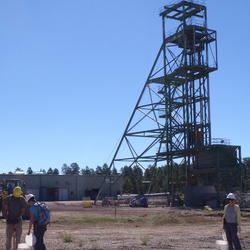
Is Uranium in Water Resources near the Grand Canyon a Health Hazard?
The public is concerned that uranium in natural geologic formations, mine tailings, dusts, water, and other geologic materials can pose a health hazard to humans and wildlife. Our specialized teams of hydrologists, chemists, and geologists working together at a field site in the Grand Canyon region of the United States have shown: Elevated uranium concentrations (above the drinking water standard)...

Can There be Unintended Benefits when Wastewater Treatment Infrastructure is Upgraded?
Science from the U.S. Geological Survey (USGS) and other entities has shown that a mixture of natural and synthetic estrogens and other similar chemicals are discharged from wastewater treatment plants (WWTPs) to streams and rivers.

Environmental Chemistry Core Technology Team
About the Research The Environmental Chemistry Laboratory Core Technology Team (CTT) as part of the Environmental Health Program develops and applies innovative methods of sampling and analysis to answer critical questions about the occurrence, distribution, fate and transport, and biological exposure of chemical in all environmental matrices (water, air, tissues, sediments, and others).

Scientists Identify Processes that Affect Fish Mercury Concentrations in Estuarine Wetlands
In a study designed to help resource managers when considering mercury exposure risk, scientists determined that sulfur cycling—a process closely related to mercury methylation rates—and ecological conditions that influence exposure are important factors affecting fish mercury concentrations in estuarine wetlands.

New Method Can Measure Naturally Occurring Element Exposure in Hummingbirds Without Harm
Seventeen naturally occurring trace elements, including those associated with adverse health impacts when birds are exposed to toxic levels (iron, lead, mercury, selenium, zinc, cadmium, and arsenic) were measured in small birds without harm. The nonlethal method was developed for hummingbirds, with Anna's hummingbirds ( Calypte anna) as a test species and can be more broadly applied to other...

New Method Improves Measurement of Bullet Fragments in Culled Varmints
A creative combination of radiography and techniques borrowed from meat processing and gold prospecting led to a better method for determining the lead content in ground squirrels shot by hunters to evaluate potential exposure risk to avian scavengers such as golden eagles ( Aquila chrysaetos).

Fish Diets Switch From Aquatic to Terrestrial Insects in Streams Effected By Metal Contamination
A riparian zone rich in terrestrial insects can provide an alternate food source for fish in metal-impacted watersheds.

Synthesis of Mercury Distribution and Bioaccumulation Across Western North America
The unique combination of natural processes and human activities present in western North America can strongly affect the exposure of fish and birds to methylmercury, the most toxic form of mercury (Hg).
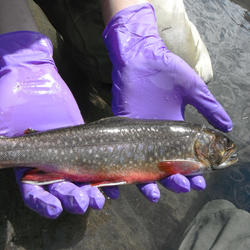
Mercury in Fish from 21 National Parks in the West
U.S. Geological Survey (USGS) and National Park Service (NPS) scientists collaborated in the first study to measure mercury in fish from remote places in 21 National Parks spanning 10 Western States, including Alaska. Mercury levels in fish generally were low, but were elevated in some local areas, including two parks in Utah and Alaska where samples taken from sport fish exceeded the U.S...

Satellite Tracking of Birds in Alaska Points to Distant Sources of Lead and Mercury Exposure
U.S. Geological Survey (USGS) scientists measured lead in blood from tundra swans that nest in Alaska and then followed the migration of these birds using satellite telemetry. Levels of lead in blood were higher in adults than young swans,suggesting exposure to lead occurs on wintering areas and/or during migration, rather than on the summer breeding grounds in Alaska. The lowest blood levels were...

Metals in Acid Mine Drainage Affect Aquatic Insects
Studies conducted in subalpine streams in Colorado by U.S. Geological Survey (USGS) scientists found that aqueous metals resulting from acid mine drainage and natural weathering can almost eliminate adult insect emergence from streams, even at metal levels too low to reduce aquatic larval densities. This pattern suggests that adult insects might be a more sensitive indicator of metals than...