A student volunteer scans historic USGS library material
A student volunteer scans historic USGS library materialStudent volunteers are trained to scan historic library materials. The materials can be complex, consisting of multiple parts.


Official websites use .gov
A .gov website belongs to an official government organization in the United States.

Secure .gov websites use HTTPS
A lock () or https:// means you’ve safely connected to the .gov website. Share sensitive information only on official, secure websites.

We are cultivating and sharing the creativity, vision, and innovative perspectives that can be found among our graduate student, staff, faculty, and friends.

Student volunteers are trained to scan historic library materials. The materials can be complex, consisting of multiple parts.
Student volunteers are trained to scan historic library materials. The materials can be complex, consisting of multiple parts.
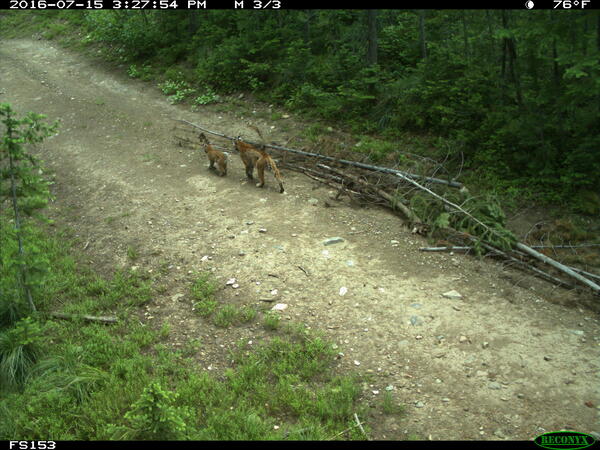
USGS researchers at the Idaho Cooperative Fish and Wildlife Research Unit investigated space use among five predator species (black bear, bobcat, coyote, mountain lion, and gray wolf across three temporal scales in northern Idaho.
USGS researchers at the Idaho Cooperative Fish and Wildlife Research Unit investigated space use among five predator species (black bear, bobcat, coyote, mountain lion, and gray wolf across three temporal scales in northern Idaho.

New technology is helping the USGS monitor harmful algal blooms
New technology is helping the USGS monitor harmful algal blooms
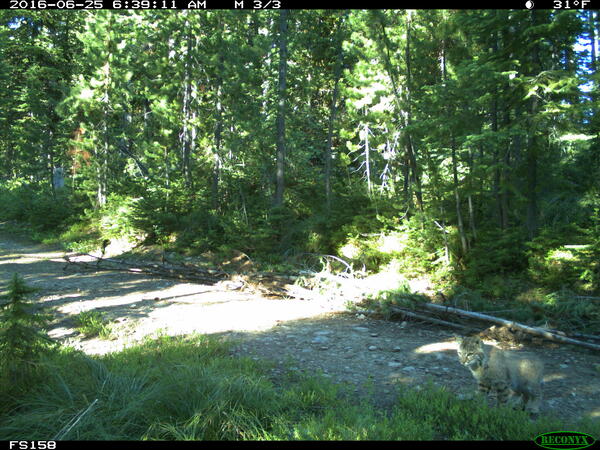
USGS researchers at the Idaho Cooperative Fish and Wildlife Research Unit investigated space use among five predator species (black bear, bobcat, coyote, mountain lion, and gray wolf across three temporal scales in northern Idaho.
USGS researchers at the Idaho Cooperative Fish and Wildlife Research Unit investigated space use among five predator species (black bear, bobcat, coyote, mountain lion, and gray wolf across three temporal scales in northern Idaho.
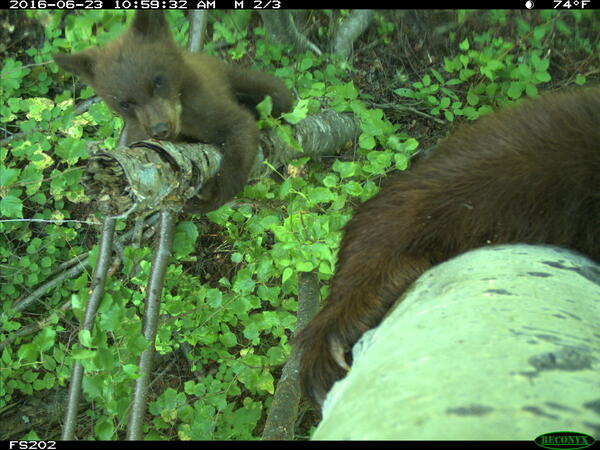
USGS researchers at the USGS Idaho Cooperative Fish and Wildlife Research Unit investigated space use among five predator species (black bear, bobcat, coyote, mountain lion, and gray wolf across three temporal scales in northern Idaho.
USGS researchers at the USGS Idaho Cooperative Fish and Wildlife Research Unit investigated space use among five predator species (black bear, bobcat, coyote, mountain lion, and gray wolf across three temporal scales in northern Idaho.
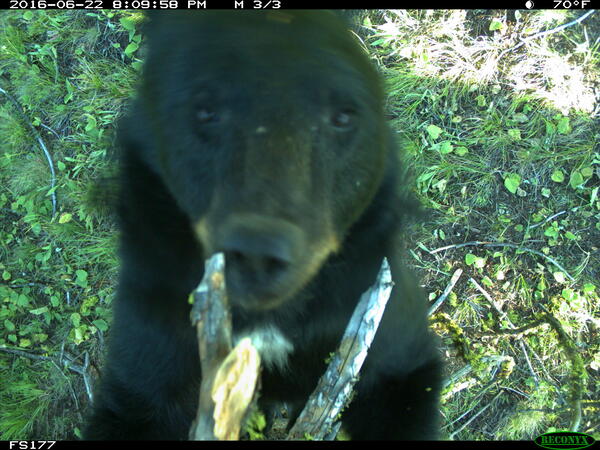
USGS researchers at the USGS Idaho Cooperative Fish and Wildlife Research Unit investigated space use among five predator species (black bear, bobcat, coyote, mountain lion, and gray wolf across three temporal scales in northern Idaho.
USGS researchers at the USGS Idaho Cooperative Fish and Wildlife Research Unit investigated space use among five predator species (black bear, bobcat, coyote, mountain lion, and gray wolf across three temporal scales in northern Idaho.

Led by Dr. Al Zale with the Montana Cooperative Fishery Research Unit at Montana State University, researchers Michael Lance and T. David Ritter are working closely with Montana Fish, Wildlife & Parks personnel, local landowners, and engineers to study salmonid movements in the popular Smith River system in central Montana.
Led by Dr. Al Zale with the Montana Cooperative Fishery Research Unit at Montana State University, researchers Michael Lance and T. David Ritter are working closely with Montana Fish, Wildlife & Parks personnel, local landowners, and engineers to study salmonid movements in the popular Smith River system in central Montana.

Researcher wearing blue gloves holds a northern long-eared bat during a field trip to Rock Creek Park in Washington, D.C.
Researcher wearing blue gloves holds a northern long-eared bat during a field trip to Rock Creek Park in Washington, D.C.

An example of a riparian system within the rugged desert landscape. Zone-tailed Hawks nested in the trees in the bottom of the canyon.
An example of a riparian system within the rugged desert landscape. Zone-tailed Hawks nested in the trees in the bottom of the canyon.
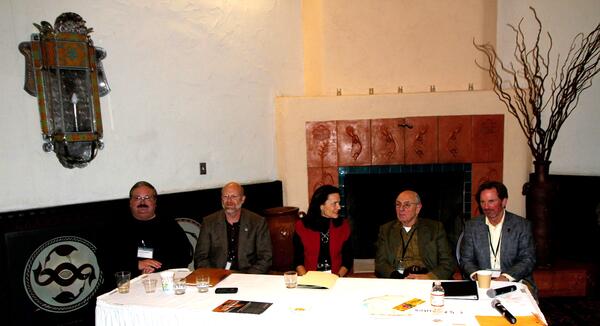
Jonathan Mawdsley (left), James Cummins (second from left), Joanna Prukop (center), Lowell Baier (second from right), and John Organ (right) attend a USGS Cooperative Fish and Wildlife Research Unit Program All-Hands Meeting in 2016.
Jonathan Mawdsley (left), James Cummins (second from left), Joanna Prukop (center), Lowell Baier (second from right), and John Organ (right) attend a USGS Cooperative Fish and Wildlife Research Unit Program All-Hands Meeting in 2016.

Student dusts the Model A Ford coupe used by USGS scientists from the 1930s to 1965.
Student dusts the Model A Ford coupe used by USGS scientists from the 1930s to 1965.
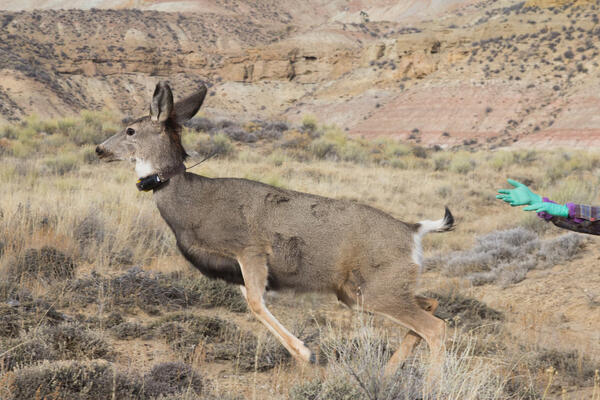
Mule deer is released after being radio-collared. The tracking information from this collar will enable researchers and managers to track the migrations of mule deer and evaluate their habitat and population performance and will aid in management of mule deer populations in Wyoming.
Mule deer is released after being radio-collared. The tracking information from this collar will enable researchers and managers to track the migrations of mule deer and evaluate their habitat and population performance and will aid in management of mule deer populations in Wyoming.

The pallid sturgeon is an endangered riverine sturgeon with historical distribution restricted to parts of the Yellowstone, Missouri, Mississippi, and Atchafalaya Rivers. Although rare, pallid sturgeon in the lower Mississippi River appear to be naturally recruiting, and information about habitat use is important to conserve this species.
The pallid sturgeon is an endangered riverine sturgeon with historical distribution restricted to parts of the Yellowstone, Missouri, Mississippi, and Atchafalaya Rivers. Although rare, pallid sturgeon in the lower Mississippi River appear to be naturally recruiting, and information about habitat use is important to conserve this species.

The Smithsonian Natural History Museum offers hands-on learning experiences.
The Smithsonian Natural History Museum offers hands-on learning experiences.
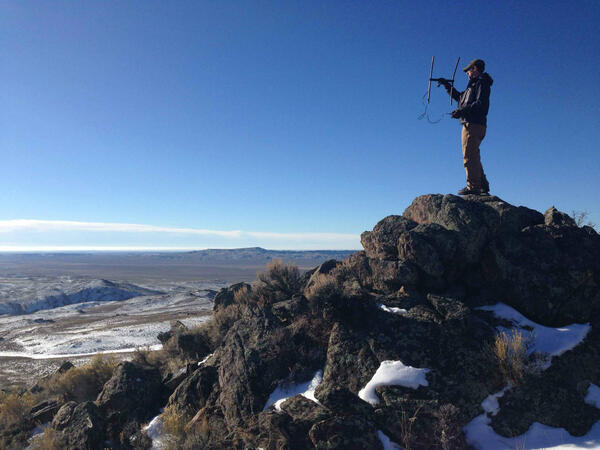
The tracking information from radio collars enable researchers and managers to track the migrations of mule deer and evaluate their habitat and population performance and will aid in management of mule deer populations in Wyoming.
The tracking information from radio collars enable researchers and managers to track the migrations of mule deer and evaluate their habitat and population performance and will aid in management of mule deer populations in Wyoming.

The Bureau of Reclamation (USBR) initiated a study on how its water operations influence fishes in the Missouri River basin above Fort Peck Reservoir. Of utmost concern is the effect of these operations on the spawning success and recruitment of endangered pallid sturgeon.
The Bureau of Reclamation (USBR) initiated a study on how its water operations influence fishes in the Missouri River basin above Fort Peck Reservoir. Of utmost concern is the effect of these operations on the spawning success and recruitment of endangered pallid sturgeon.

A southeastern myotis (Myotis austroriparius) that was caught while mist netting at Cypress Creek National Wildlife Refuge in the summer of 2015.
A southeastern myotis (Myotis austroriparius) that was caught while mist netting at Cypress Creek National Wildlife Refuge in the summer of 2015.

The Asian swamp eel is an invasive species that was introduced into the Chattahoochee River National Recreation Area and has persisted for more than 20 years.
The Asian swamp eel is an invasive species that was introduced into the Chattahoochee River National Recreation Area and has persisted for more than 20 years.

Mark Henderson recently started as the Unit Leader for the USGS Vermont Cooperative Fish and Wildlife Research Unit at the University of Vermont. Prior to joining the Vermont Cooperative Research Unit, he was the acting unit leader at the California Cooperative Research Unit for six years.
Mark Henderson recently started as the Unit Leader for the USGS Vermont Cooperative Fish and Wildlife Research Unit at the University of Vermont. Prior to joining the Vermont Cooperative Research Unit, he was the acting unit leader at the California Cooperative Research Unit for six years.

This project is designed to assess the feasibility of "rescuing" specific genetic lineages of bull trout from likely extirpation in three imperiled major lake drainages in GNP, through translocation of drainage-specific stocks into lakes located above barrier falls within parental drainages.
This project is designed to assess the feasibility of "rescuing" specific genetic lineages of bull trout from likely extirpation in three imperiled major lake drainages in GNP, through translocation of drainage-specific stocks into lakes located above barrier falls within parental drainages.

Black tape is stretched across the stopper of the 'Niskin' bottle and secured to form a positive pressure seal.
Black tape is stretched across the stopper of the 'Niskin' bottle and secured to form a positive pressure seal.