



USGS researchers at the Oregon Cooperative Fish and Wildlife Research Unit, U.S. Department of Agriculture (USDA) Forest Service, Pacific Northwest Research Station, USDA National Wildlife Research Center, and the Hoopa Valley Tribe, California, analyzed two long-term datasets. The datasets included over three decades of wildfire frequency and northern spotted owl banding.
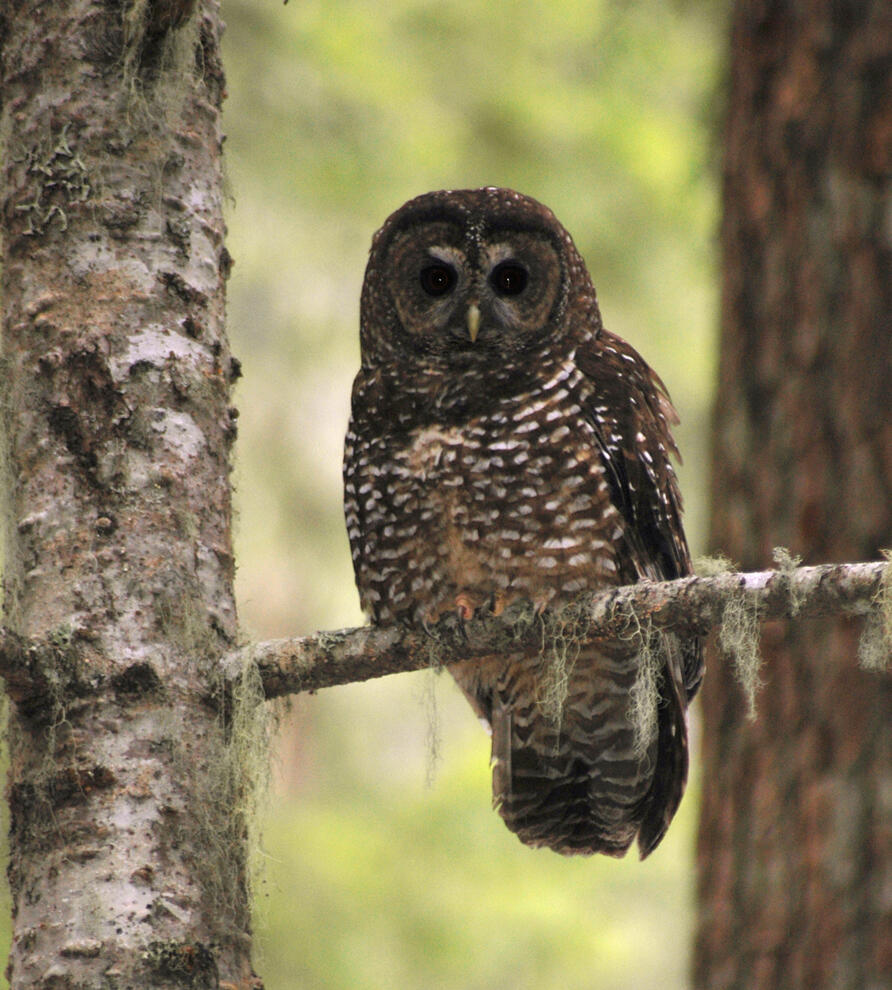
To understand the risk that changing fire regimes may pose to northern spotted owls, researchers from the U.S. Geological Survey Oregon Cooperative Fish and Wildlife Research Unit, U.S. Department of Agriculture (USDA) Forest Service, Pacific Northwest Research Station, USDA National Wildlife Research Center, and the Hoopa Valley Tribe, California, analyzed two long-term datasets. The datasets included over three decades of wildfire frequency and northern spotted owl banding data from 1987 – 2019 and the objective was to determine how past wildfire activity may have influenced spotted owl survival and territory displacement. In addition, the team assessed how changing fire regimes in this region may have affected northern spotted owls.
Wildfires throughout western North America are changing and threatening the long-term persistence of native species. However, the degree and pace of those changes vary from one region to the next, as does a species’ ability to cope with those changes. In the frequent-fire forests (forests that burn every 10 – 20 years) of the Pacific Northwest, changing fire regimes are causing concern about the influence the changes may have on critically imperiled northern spotted owl populations (Franklin et al. 2021).