



Michigan Cooperative Fish and Wildlife Research Unit
The Michigan Cooperative Fish and Wildlife Research Unit (est. 2022) is a partnership among the Michigan Department of Natural Resources, Michigan State University, the U.S. Geological Survey, the U.S. Fish and Wildlife Service, and the Wildlife Management Institute.
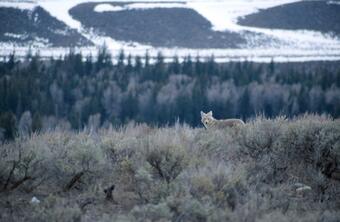
The Michigan Cooperative Fish and Wildlife Research Unit performs research designed to address the needs of Cooperators, bridging the gap between applied and basic wildlife and fisheries science. Collectively, the Unit scientists currently study fish and wildlife occupancy and distribution, community dynamics, density estimation, the impacts of introduced species, and landscape ecology. A primary theme of work conducted in the Unit is to understand the outcomes of management and human activity on fish and wildlife communities and populations.
The Unit works with many taxa, including birds, reptiles, freshwater fish, mammals, and insects. Our program's mission is to prioritize the needs of our Cooperators by remaining flexible and open to new areas of inquiry. Unit scientists advance the training and education of graduate students at Michigan State University by teaching up to one graduate-level course per year in the Fisheries and Wildlife Department as well as by recruiting, training, and mentoring exceptional graduate students, and serving on graduate committees of non-Unit students. The Michigan Unit endeavors to find opportunities for interaction and engagement between Unit students and Cooperators. Technical support and training is provided to Cooperators and other agencies as the need exists.
The Michigan Cooperative Fish and Wildlife Research Unit (est. 2022) is a partnership among the Michigan Department of Natural Resources, Michigan State University, the U.S. Geological Survey, the U.S. Fish and Wildlife Service, and the Wildlife Management Institute.
The Michigan Cooperative Fish and Wildlife Research Unit performs research designed to address the needs of Cooperators, bridging the gap between applied and basic wildlife and fisheries science. Collectively, the Unit scientists currently study fish and wildlife occupancy and distribution, community dynamics, density estimation, the impacts of introduced species, and landscape ecology. A primary theme of work conducted in the Unit is to understand the outcomes of management and human activity on fish and wildlife communities and populations.
The Unit works with many taxa, including birds, reptiles, freshwater fish, mammals, and insects. Our program's mission is to prioritize the needs of our Cooperators by remaining flexible and open to new areas of inquiry. Unit scientists advance the training and education of graduate students at Michigan State University by teaching up to one graduate-level course per year in the Fisheries and Wildlife Department as well as by recruiting, training, and mentoring exceptional graduate students, and serving on graduate committees of non-Unit students. The Michigan Unit endeavors to find opportunities for interaction and engagement between Unit students and Cooperators. Technical support and training is provided to Cooperators and other agencies as the need exists.