Nevada Cooperative Fish and Wildlife Research Unit
Active
By Cooperative Research Units
February 19, 2026
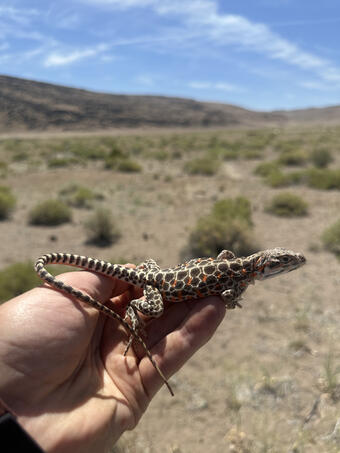
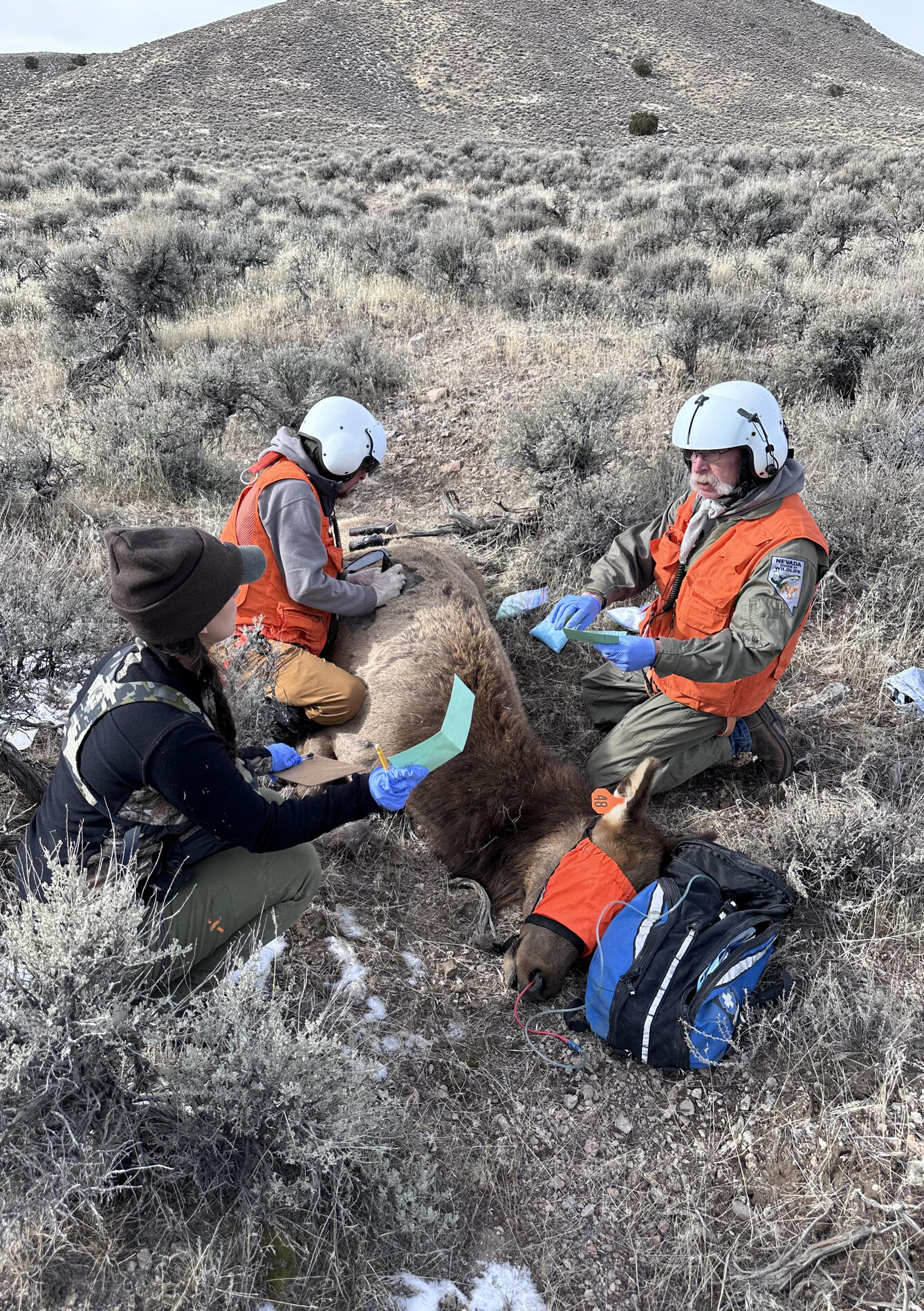
The Nevada Cooperative Fish and Wildlife Research Unit (est. 2021) is a partnership among the Nevada Department of Wildlife, University of Nevada, Reno, and the U.S. Geological Survey.
Media
Sources/Usage: Public Domain. View Media Details
Research at the Nevada Unit uses field research, quantitative methods, and structured decision-making approaches to help understand how landscapes influence fish and wildlife populations.
Dissolved organic and inorganic carbon in a Southeast Alaskan watershed (2021) Dissolved organic and inorganic carbon in a Southeast Alaskan watershed (2021)
Data from high frequency sampling of multiple carbon forms were collected in a predominately rain-fed watershed in Southeast Alaska during the main run-off season (May-October 2021). The dataset includes hourly measurements of stream temperature, specific conductivity, turbidity, and fluorescent dissolved organic matter, point samples of dissolved organic carbon (DOC), alkalinity...
Juvenile coho salmon growth differences track biennial pink salmon spawning patterns Juvenile coho salmon growth differences track biennial pink salmon spawning patterns
Spawning salmon provide marine derived resources to freshwater ecosystems that can benefit stream-dwelling fish foraging and growth. Pink salmon are widely distributed throughout watersheds along the north pacific ocean, and display distinct biennial fluctuations in spawning abundance. These data were collected from a coastal watershed in northern southeast Alaska (Montana Creek) to...
Stream Attributes and Habitat Intrinsic Potential Model Results to examine Freshwater Habitat Potential for Chinook Salmon in the Yukon and Kuskokwim River Basins, Alaska Stream Attributes and Habitat Intrinsic Potential Model Results to examine Freshwater Habitat Potential for Chinook Salmon in the Yukon and Kuskokwim River Basins, Alaska
Chinook Salmon (Oncorhynchus tshawytscha) are an important commercial, subsistence, and recreational fishery resource in Alaska, and recent population declines have resulted in closures of some Chinook Salmon fisheries. Research into environmental factors involved in the decline of salmon stocks has exposed information gaps regarding fine-scale freshwater habitat quality known to...
PopEquus: a predictive modeling tool to support management decisions for free-roaming horse populations PopEquus: a predictive modeling tool to support management decisions for free-roaming horse populations
Feral horse (Equus caballus) population management is a challenging problem around the world because populations often exhibit density-independent growth, can exert negative ecological effects on ecosystems, and require great cost to be managed. However, strong value-based connections between people and horses cause contention around management decisions. To help make informed decisions...
Authors
Brian Patrick Folt, Kathryn A. Schoenecker, L. Stefan Ekernas, David R. Edmunds, Mark T. Hannon
Code to Support Chinook Salmon Freshwater Habitat Potential Modeling and Mapping for the Yukon and Kuskokwim River Basins in Alaska Code to Support Chinook Salmon Freshwater Habitat Potential Modeling and Mapping for the Yukon and Kuskokwim River Basins in Alaska
Code to support the "Freshwater Habitat Potential for Chinook Salmon in the Yukon and Kuskokwim River Basins, Alaska" project dataset. These Python notebooks and scripts process synthetic stream networks and DEMs to create unique reach contributing areas (uRCAs) and uRCA valley bottoms (uRCA VBs). The Python notebooks are designed to be run within ESRI ArcPro software and utilize the...
Code to Support Hypoxia vulnerability in the salmon watersheds of Southeast Alaska Code to Support Hypoxia vulnerability in the salmon watersheds of Southeast Alaska
Oxygen depletion events (hypoxia) in coastal aquatic ecosystems occur more frequently, yet their causes and consequences remain poorly understood. We identified key drivers of hypoxia in Southeast Alaska watersheds for long-term hypoxia monitoring. This software release contains one R script that can be used to calculate hypoxia risk from environmental variables. This R code will re...
The Nevada Cooperative Fish and Wildlife Research Unit (est. 2021) is a partnership among the Nevada Department of Wildlife, University of Nevada, Reno, and the U.S. Geological Survey.
Media
Sources/Usage: Public Domain. View Media Details
Research at the Nevada Unit uses field research, quantitative methods, and structured decision-making approaches to help understand how landscapes influence fish and wildlife populations.
Dissolved organic and inorganic carbon in a Southeast Alaskan watershed (2021) Dissolved organic and inorganic carbon in a Southeast Alaskan watershed (2021)
Data from high frequency sampling of multiple carbon forms were collected in a predominately rain-fed watershed in Southeast Alaska during the main run-off season (May-October 2021). The dataset includes hourly measurements of stream temperature, specific conductivity, turbidity, and fluorescent dissolved organic matter, point samples of dissolved organic carbon (DOC), alkalinity...
Juvenile coho salmon growth differences track biennial pink salmon spawning patterns Juvenile coho salmon growth differences track biennial pink salmon spawning patterns
Spawning salmon provide marine derived resources to freshwater ecosystems that can benefit stream-dwelling fish foraging and growth. Pink salmon are widely distributed throughout watersheds along the north pacific ocean, and display distinct biennial fluctuations in spawning abundance. These data were collected from a coastal watershed in northern southeast Alaska (Montana Creek) to...
Stream Attributes and Habitat Intrinsic Potential Model Results to examine Freshwater Habitat Potential for Chinook Salmon in the Yukon and Kuskokwim River Basins, Alaska Stream Attributes and Habitat Intrinsic Potential Model Results to examine Freshwater Habitat Potential for Chinook Salmon in the Yukon and Kuskokwim River Basins, Alaska
Chinook Salmon (Oncorhynchus tshawytscha) are an important commercial, subsistence, and recreational fishery resource in Alaska, and recent population declines have resulted in closures of some Chinook Salmon fisheries. Research into environmental factors involved in the decline of salmon stocks has exposed information gaps regarding fine-scale freshwater habitat quality known to...
PopEquus: a predictive modeling tool to support management decisions for free-roaming horse populations PopEquus: a predictive modeling tool to support management decisions for free-roaming horse populations
Feral horse (Equus caballus) population management is a challenging problem around the world because populations often exhibit density-independent growth, can exert negative ecological effects on ecosystems, and require great cost to be managed. However, strong value-based connections between people and horses cause contention around management decisions. To help make informed decisions...
Authors
Brian Patrick Folt, Kathryn A. Schoenecker, L. Stefan Ekernas, David R. Edmunds, Mark T. Hannon
Code to Support Chinook Salmon Freshwater Habitat Potential Modeling and Mapping for the Yukon and Kuskokwim River Basins in Alaska Code to Support Chinook Salmon Freshwater Habitat Potential Modeling and Mapping for the Yukon and Kuskokwim River Basins in Alaska
Code to support the "Freshwater Habitat Potential for Chinook Salmon in the Yukon and Kuskokwim River Basins, Alaska" project dataset. These Python notebooks and scripts process synthetic stream networks and DEMs to create unique reach contributing areas (uRCAs) and uRCA valley bottoms (uRCA VBs). The Python notebooks are designed to be run within ESRI ArcPro software and utilize the...
Code to Support Hypoxia vulnerability in the salmon watersheds of Southeast Alaska Code to Support Hypoxia vulnerability in the salmon watersheds of Southeast Alaska
Oxygen depletion events (hypoxia) in coastal aquatic ecosystems occur more frequently, yet their causes and consequences remain poorly understood. We identified key drivers of hypoxia in Southeast Alaska watersheds for long-term hypoxia monitoring. This software release contains one R script that can be used to calculate hypoxia risk from environmental variables. This R code will re...