Beaver dam and lodge on the Wrench Creek, Noatak National Preserve
Beaver dam and lodge on the Wrench Creek, Noatak National PreserveBeaver dam and lodge on the Wrench Creek, Noatak National Preserve


Official websites use .gov
A .gov website belongs to an official government organization in the United States.

Secure .gov websites use HTTPS
A lock () or https:// means you’ve safely connected to the .gov website. Share sensitive information only on official, secure websites.

Browse images from a wide range of science topics covered by USGS.

Beaver dam and lodge on the Wrench Creek, Noatak National Preserve
Beaver dam and lodge on the Wrench Creek, Noatak National Preserve

Beaver dam complex and lodge at the confluence of Wrench Creek and Kelly River, Noatak National Preserve
Beaver dam complex and lodge at the confluence of Wrench Creek and Kelly River, Noatak National Preserve

Adult Pacific salmon (Oncorhynchus nerka) caught in impounded water above beaver dam. >25 rKM (river KM) from coast.
Adult Pacific salmon (Oncorhynchus nerka) caught in impounded water above beaver dam. >25 rKM (river KM) from coast.
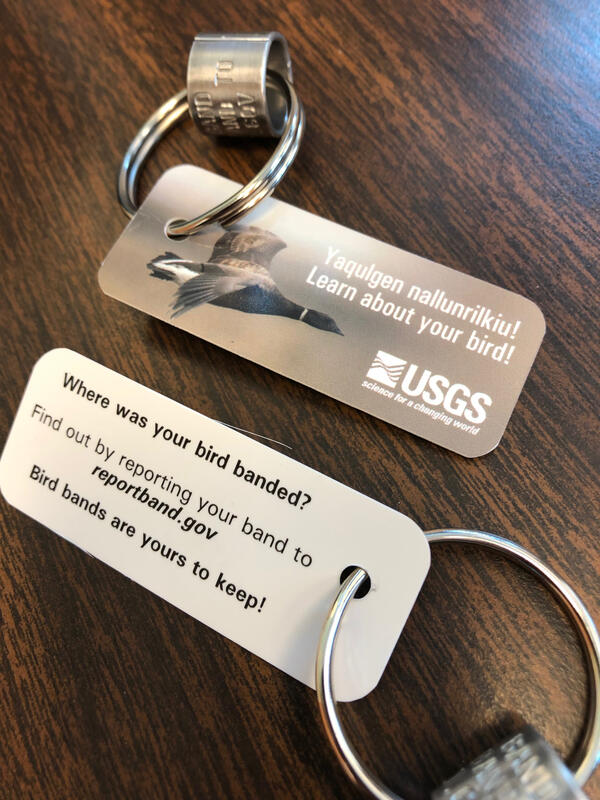
Keychain developed for USGS outreach activities about bird banding and reporting in Yup'ik and English. Yup'ik translation provided by Jakob Sipary, Alaska Native Science and Engineering Program (ANSEP).
Keychain developed for USGS outreach activities about bird banding and reporting in Yup'ik and English. Yup'ik translation provided by Jakob Sipary, Alaska Native Science and Engineering Program (ANSEP).

The Alaska North Slope is rich in gas hydrate-bearing formations which contain significant natural gas resources. The USGS has released a geologically based assessment for how much of these resources is technically recoverable.
The Alaska North Slope is rich in gas hydrate-bearing formations which contain significant natural gas resources. The USGS has released a geologically based assessment for how much of these resources is technically recoverable.

Puffin flying at Izembek National Wildlife Refuge Alaska with Frosty Peak in background.
Puffin flying at Izembek National Wildlife Refuge Alaska with Frosty Peak in background.
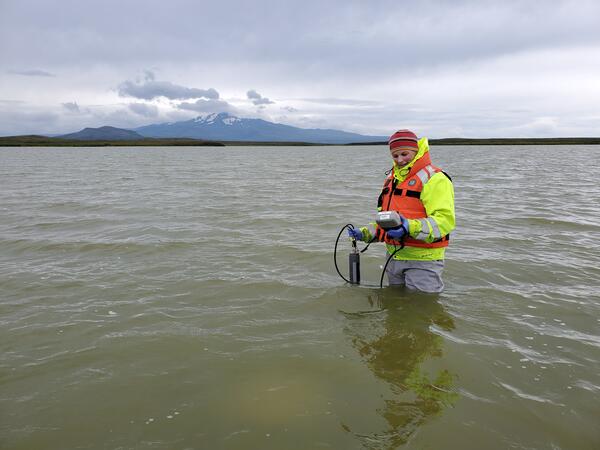
Laura Hubbard of the USGS Upper Midwest Water Science Center takes water chemistry measures on the Alaska Peninsula as part of research to understand how long influenza viruses remain viable in the environment.
Laura Hubbard of the USGS Upper Midwest Water Science Center takes water chemistry measures on the Alaska Peninsula as part of research to understand how long influenza viruses remain viable in the environment.

Harbor seals poking their heads above water near shore in Russell Creek, Cold Bay, Alaska.
Harbor seals poking their heads above water near shore in Russell Creek, Cold Bay, Alaska.

Short-tailed Shearwater die-off in the Bering Sea. Emaciated Short-tailed Shearwater carcasses littered the beaches of Bristol Bay during the summer of 2019
Short-tailed Shearwater die-off in the Bering Sea. Emaciated Short-tailed Shearwater carcasses littered the beaches of Bristol Bay during the summer of 2019

Measuring temperature and dissolved oxygen in impounded water of beaver dam on the Wrench Creek, Noatak National Preserve.
Measuring temperature and dissolved oxygen in impounded water of beaver dam on the Wrench Creek, Noatak National Preserve.

Arctic grayling (Thymallus arcticus) and Dolly varden (Salvelinus malma) from impounded water of beaver dam on the Wrench Creek, Noatak National Preserve.
Arctic grayling (Thymallus arcticus) and Dolly varden (Salvelinus malma) from impounded water of beaver dam on the Wrench Creek, Noatak National Preserve.

Gnawed tree from beaver activity on tributary of the Agashashok River, Noatak National Preserve
Gnawed tree from beaver activity on tributary of the Agashashok River, Noatak National Preserve

Beaver dams on Rabbit Creek, Cape Krusenstern National Monument
Beaver dams on Rabbit Creek, Cape Krusenstern National Monument

Beaver dam crossing mainstem of Rabbit Creek near the headwaters, Cape Krusenstern National Monument
Beaver dam crossing mainstem of Rabbit Creek near the headwaters, Cape Krusenstern National Monument

Beaver dams on Rabbit Creek, Cape Krusenstern National Monument
Beaver dams on Rabbit Creek, Cape Krusenstern National Monument

Beaver dams on Rabbit Creek, Cape Krusenstern National Monument
Beaver dams on Rabbit Creek, Cape Krusenstern National Monument

Beaver swimming near dam on Rabbit Creek, Cape Krusenstern National Monument
Beaver swimming near dam on Rabbit Creek, Cape Krusenstern National Monument

Measuring the amount of water impounded by a beaver dam on Rabbit Creek, Cape Krusenstern National Monument.
Measuring the amount of water impounded by a beaver dam on Rabbit Creek, Cape Krusenstern National Monument.

Short-tailed Shearwater die-off in the Bering Sea. Emaciated Short-tailed Shearwater carcasses littered the beaches of Bristol Bay during the summer of 2019
Short-tailed Shearwater die-off in the Bering Sea. Emaciated Short-tailed Shearwater carcasses littered the beaches of Bristol Bay during the summer of 2019

Short-tailed Shearwater die-off in the Bering Sea. Emaciated Short-tailed Shearwater carcasses littered the beaches of Bristol Bay during the summer of 2019
Short-tailed Shearwater die-off in the Bering Sea. Emaciated Short-tailed Shearwater carcasses littered the beaches of Bristol Bay during the summer of 2019

Short-tailed Shearwater die-off in the Bering Sea. Emaciated Short-tailed Shearwater carcasses littered the beaches of Bristol Bay during the summer of 2019
Short-tailed Shearwater die-off in the Bering Sea. Emaciated Short-tailed Shearwater carcasses littered the beaches of Bristol Bay during the summer of 2019