



Research Drilling Program Equipment
The Research Drilling Program operates a fleet of drilling rigs configured for several methods, from air and mud rotary to wireline coring. Each rig deploys as a self-contained unit carrying its own support vehicles, fluid handling, and downhole logging equipment, which allows crews to work at sites well away from established infrastructure.
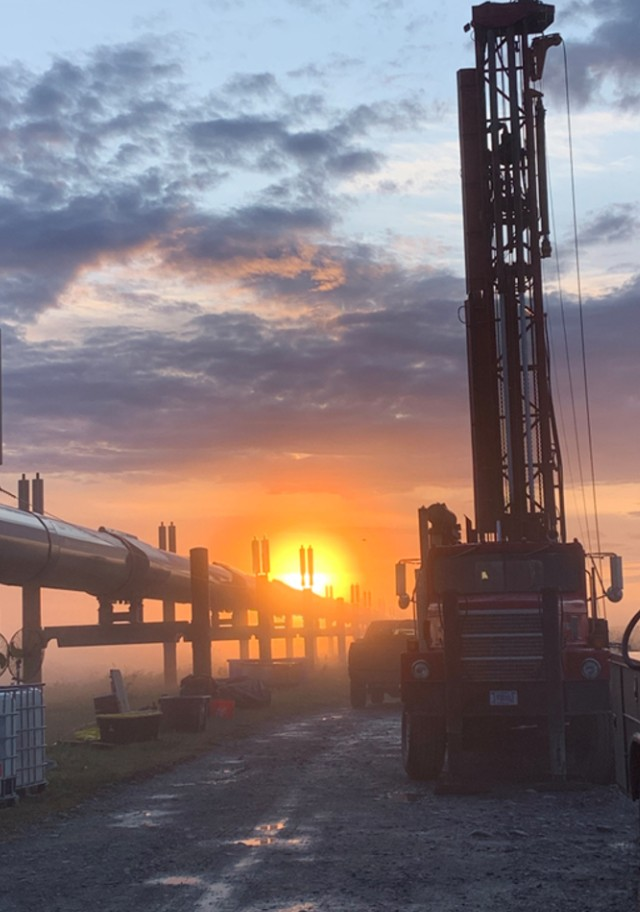
Equipment and Capabilities
Drilling Methods
Available techniques include:
- Air and mud rotary (direct circulation)
- 6-inch and 8-inch air ODEX systems, which are air hammers that advance casing as the hole deepens
- 4- to 12-inch air percussion hammers
- Wireline coring systems, which bring core to the surface through the drill string without pulling the pipe from the hole
Each method can collect continuous or intermittent core samples, depending on what the investigation requires.
Rig Configuration
Each drilling rig deploys as a fully self-contained unit. A typical setup includes:
- Rig-tender water truck outfitted with a crane, welder, torches, generator, winch, and fuel tank
- Mud filtration and recycling shaker system, which cleans and reuses drilling fluid on site
- Trailer configurations suited to equipment transport or to sites with limited access
- Positive-displacement grouter for sealing the space around the casing
- One or more complete drilling systems, including pipe and accessories
- Dedicated crew
- Tool and fuel trucks
- Geophysical logging truck for downhole data acquisition
Because the unit carries its own water, fuel, fluid handling, and logging capability, crews can operate at locations without local services.