



Drillers from the USGS Research Drilling Program using a drill rig to install a 42 foot length of schedule 80 extensometer pipe at the James River extensometer site.
Multimedia
Multimedia related to the Research Drilling Program.
Images
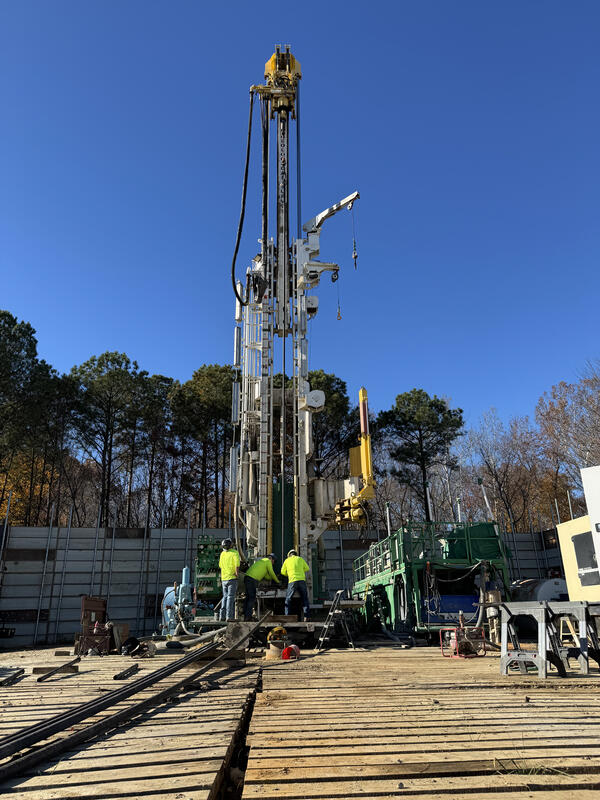
James River Extensometer Installation
Drillers from the USGS Research Drilling Program using a drill rig to install a 42 foot length of schedule 80 extensometer pipe at the James River extensometer site.
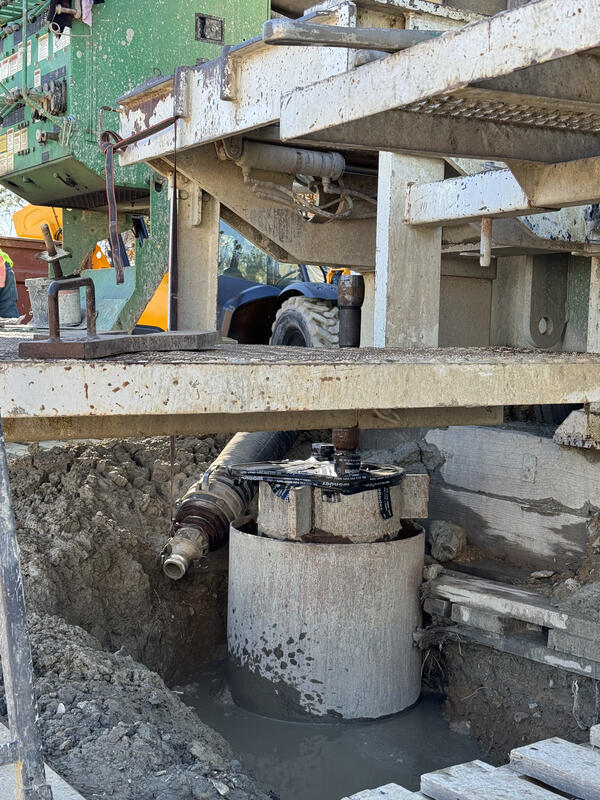
James River Deep Extensometer After Completion of Drilling
James River Deep Extensometer After Completion of DrillingThe completed Jame River extensometer borehole. The nested 24-inch diameter conductor casing, 16-inch diameter surface casing, 7-inch diameter steel casing, and the 2-inch diameter extensometer rod are all visible protruding upwards from the ground.
James River Deep Extensometer After Completion of Drilling
James River Deep Extensometer After Completion of DrillingThe completed Jame River extensometer borehole. The nested 24-inch diameter conductor casing, 16-inch diameter surface casing, 7-inch diameter steel casing, and the 2-inch diameter extensometer rod are all visible protruding upwards from the ground.
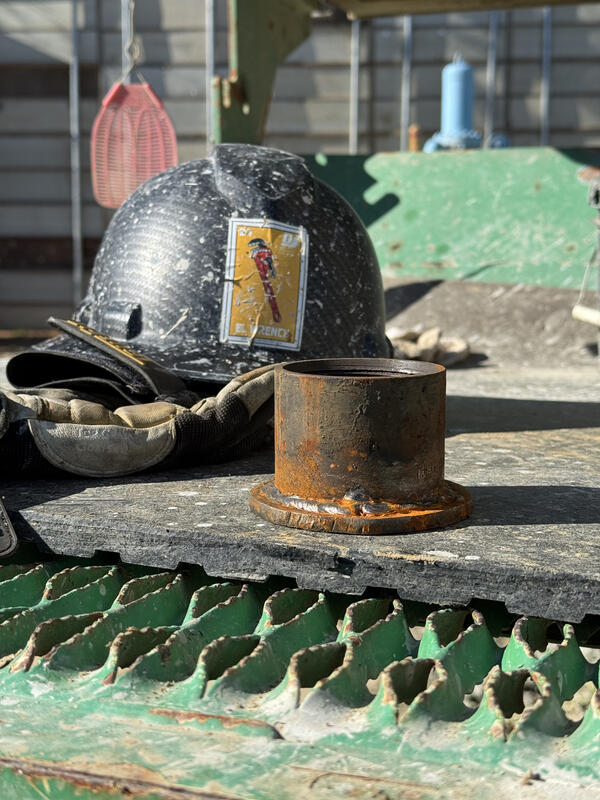
Extensometer Foot
The foot of the James River Extensometer shortly before installation, with a nearby hardhat for scale. The extensometer foot is installed at the very base of the extensometer hole, at a depth of 1280 feet in the case of the James River Extensometer. All 1280 feet of extensometer pipe gently rests on the extensometer foot.
The foot of the James River Extensometer shortly before installation, with a nearby hardhat for scale. The extensometer foot is installed at the very base of the extensometer hole, at a depth of 1280 feet in the case of the James River Extensometer. All 1280 feet of extensometer pipe gently rests on the extensometer foot.
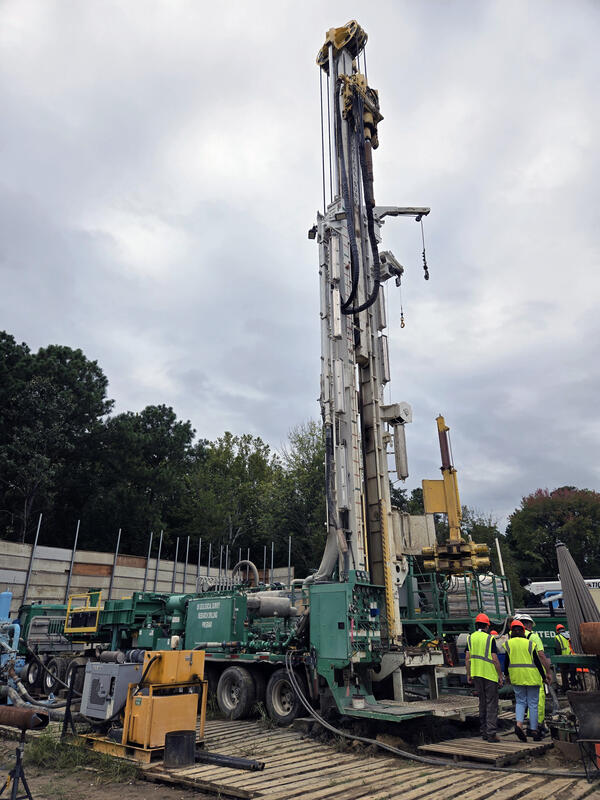
Drilling the James River Extensometer
A USGS Research Drilling Program rig at the site of the James River Extensometer.
A USGS Research Drilling Program rig at the site of the James River Extensometer.
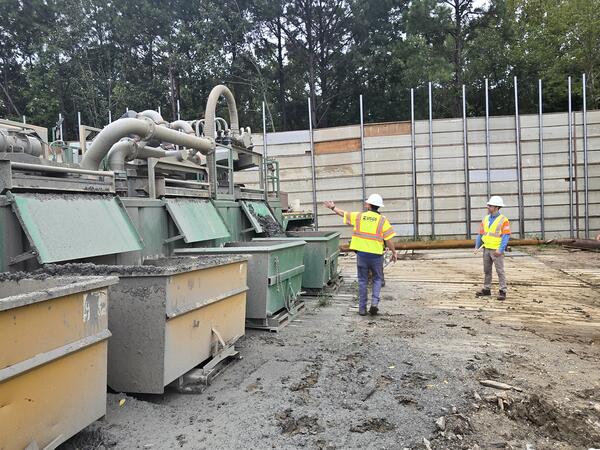
Tour of the James River Extensometer drill site
Greg Connock, a USGS geologist, leads a tour of the James River Extensometer drill site. He indicates where drilled sediments are deposited out of the shaker.
Greg Connock, a USGS geologist, leads a tour of the James River Extensometer drill site. He indicates where drilled sediments are deposited out of the shaker.

Performing Aquifer Test During Borehole Drilling, Perigo Mine, Colorado
Performing Aquifer Test During Borehole Drilling, Perigo Mine, ColoradoUSGS scientists performing a step-injection aquifer test while drilling a bedrock borehole at the Perigo Mine site, Colorado during September 2023.
Performing Aquifer Test During Borehole Drilling, Perigo Mine, Colorado
Performing Aquifer Test During Borehole Drilling, Perigo Mine, ColoradoUSGS scientists performing a step-injection aquifer test while drilling a bedrock borehole at the Perigo Mine site, Colorado during September 2023.