Adam Stonewall
Adam Stonewall is a supervisory hydrologist and the surface water specialist at the USGS Oregon Water Science Center.
I have been a Hydrologist in the Oregon Water Science Center since 2001. My background is primarily in flood frequency analysis. I also have strong interest and/or experience in statistical testing for nonstationarity, climate change, monte-carlo simulations and nonparametric statistics.
Education and Certifications
B.S. in hydrology from the University of Arizona
M.S. in forest hydrology from the University of British Columbia. Thesis: “The Use of Monte-Carlo Simulations in the Detection of Nonstationarity in Peak-Annual Flood Time Series of British Columbia"
Science and Products
Filter Total Items: 19
Assessing the effects of chloride deicer applications on groundwater near the Siskiyou Pass, southwestern Oregon, July 2018–February 2021 Assessing the effects of chloride deicer applications on groundwater near the Siskiyou Pass, southwestern Oregon, July 2018–February 2021
The U.S. Geological Survey, in cooperation with the Oregon Department of Transportation (ODOT), evaluated the effects of cold-weather chloride deicers (road deicing chemicals) on groundwater quality, with a focus on chloride, near the Siskiyou Pass in southwestern Oregon. The study covered the period during July 2018 through February 2021. Between the years 2016 and 2020 ODOT applied up...
Authors
Stephen B. Gingerich, Daniel R. Wise, Adam J. Stonewall
Assessing the impact of chloride deicer application in the Siskiyou Pass, southern Oregon Assessing the impact of chloride deicer application in the Siskiyou Pass, southern Oregon
Chloride deicers have been applied by the Oregon Department of Transportation (ODOT) to Interstate Route 5 (I–5) from the Oregon-California border north to mile marker 10 for several years in the high-elevation area known as the Siskiyou Pass. Magnesium chloride (MgCl2) and sodium chloride (NaCl) are applied to keep the interstate highway safe for drivers and allow for efficient...
Authors
Adam J. Stonewall, Matthew C. Yates, Gregory E. Granato
Historical streamflow and stage data compilation for the Lower Columbia River, Pacific Northwest Historical streamflow and stage data compilation for the Lower Columbia River, Pacific Northwest
The U.S. Geological Survey mined data from a variety of national and state agencies including USGS, Oregon Water Resources Department, National Oceanic and Atmospheric Administration, Washington Department of Ecology, Pacific Northwest National Laboratory, Portland State University, and U.S. Army Corps of Engineers. A comprehensive dataset of streamflow, stage, and tidal elevations for...
Authors
Carrie L. Boudreau, Marc A. Stewart, Adam J. Stonewall
Development of regional skew coefficients for selected flood durations in the Columbia River Basin, northwestern United States and British Columbia, Canada Development of regional skew coefficients for selected flood durations in the Columbia River Basin, northwestern United States and British Columbia, Canada
Flood-frequency (hereinafter frequency) estimates provide information used to design, operate, and maintain hydraulic structures such as bridges and dams. Failures of these structures could cause catastrophic loss of property, life, or both. In addition to frequency estimates that use annual peak streamflow, frequency estimates of flood durations are required to safely and effectively...
Authors
Greg D. Lind, Jonathan R. Lamontagne, Adam J. Stonewall
Evaluation of restoration alternatives using hydraulic models of lake outflow at Wapato Lake National Wildlife Refuge, northwestern Oregon Evaluation of restoration alternatives using hydraulic models of lake outflow at Wapato Lake National Wildlife Refuge, northwestern Oregon
Wapato Lake National Wildlife Refuge near the city of Gaston in northwestern Oregon was established in 2013, and planning is underway to restore a more natural lake and wetland system after more than 100 years of agricultural activity on the lakebed. Several water-management and restoration alternatives are under consideration, one of which involves opening and reconnecting Wapato Lake’s...
Authors
Stewart A. Rounds, Stephen L. Pilson, Annett B. Sullivan, Adam J. Stonewall
Assessing potential effects of highway and urban runoff on receiving streams in total maximum daily load watersheds in Oregon using the stochastic empirical loading and dilution model Assessing potential effects of highway and urban runoff on receiving streams in total maximum daily load watersheds in Oregon using the stochastic empirical loading and dilution model
The Stochastic Empirical Loading and Dilution Model (SELDM) was developed by the U.S. Geological Survey (USGS) in cooperation with the Federal Highway Administration to simulate stormwater quality. To assess the effects of runoff, SELDM uses a stochastic mass-balance approach to estimate combinations of pre-storm streamflow, stormflow, highway runoff, event mean concentrations (EMCs) and
Authors
Adam J. Stonewall, Gregory E. Granato, Kira M. Glover-Cutter
Monitoring tire-derived chemicals in stormwater
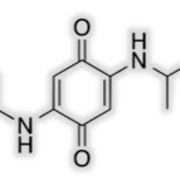
The USGS, in partnership with the Oregon Department of Transportation (ODOT) and other state and federal agencies, is studying a contaminant called 6PPD-quinone.
Modeling tire-derived chemicals in stormwater
The USGS and the Environmental Protection Agency are working together using advanced modeling tools to understand how 6PPD-quinone moves through watersheds and how green infrastructure can reduce its impact.
Tracking Tire Chemicals in Oregon Streams
The USGS studies 6PPD-quinone, a compound released from vehicle tires that can harm salmon and other fish. This research is part of a national effort to understand and mitigate stormwater pollution.
Effects of Highway Runoff on Water Quality
SELDM facilitates analysis by providing precipitation, pre-storm streamflow, and other variables by region or from hydrologically similar sites.
Groundwater Elevation and Temperature in Johnson Creek Basin
Water elevation and temperature in groundwater and Johnson Creek at Sycamore, near Portland, OR
Johnson Creek Basin Hydrologic Monitoring Study
The USGS provides hydrologic data for the Johnson Creek Basin. Real-time surface-water, water-quality and groundwater data, as well as historic data and analyses, help to improve our understanding of the hydrology of the basin.
Stochastic Empirical Loading and Dilution Model (SELDM) model archive and instructions for the Siskiyou Pass, Oregon Stochastic Empirical Loading and Dilution Model (SELDM) model archive and instructions for the Siskiyou Pass, Oregon
Chloride deicers have been applied by the Oregon Department of Transportation (ODOT) to Interstate-5 (I-5) from the Oregon-California border north to mile marker 10 for several years in the high-elevation area known as the Siskiyou Pass. Magnesium chloride (MgCl2) and sodium chloride (NaCl) are applied to keep the interstate safe for drivers and allow for efficient transport of goods and...
Surface-water transfers and removals in the Pacific drainages of the United States Surface-water transfers and removals in the Pacific drainages of the United States
This data release contains a comprehensive, spatially referenced database of surface-water transfer and removal events in the Pacific drainages of the United States, which include the Columbia River basin, the Puget Sound basin, the coastal drainages of Washington, Oregon, and California, and the Central Valley of California. The database also includes mean annual estimates of the water...
Oregon SELDM tools Oregon SELDM tools
A series of tools (spreadsheets, a database and a document) to be used in conjunction with the SELDM simulations used in the publication: Stonewall, A.J., and Granato, G.E., 2019, Assessing potential effects of highway and urban runoff on receiving streams in total maximum daily load watersheds in Oregon using the Stochastic Empirical Loading and Dilution Model: U.S. Geological Survey...
Highway-Runoff Database (HRDB) Version 1.0.0b Highway-Runoff Database (HRDB) Version 1.0.0b
The Highway-Runoff Database (HRDB) was developed by the U.S. Geological Survey (USGS), in cooperation with the Federal Highway Administration (FHWA) to provide planning-level information for decision makers, planners, and highway engineers to assess and mitigate possible adverse effects of highway runoff on the Nation's receiving waters. The HRDB was assembled by using a Microsoft Access...
Flood inundation mapping data for Johnson Creek near Sycamore, Oregon Flood inundation mapping data for Johnson Creek near Sycamore, Oregon
The basis for these features is U.S. Geological Survey Scientific Investigations Report 2017-5024 Flood Inundation Mapping Data for Johnson Creek near Sycamore, Oregon. The domain of the HEC-RAS hydraulic model is a 12.9-mile reach of Johnson Creek from just upstream of SE 174th Avenue in Portland, Oregon, to its confluence with the Willamette River. Some of the hydraulics used in the...
Science and Products
Filter Total Items: 19
Assessing the effects of chloride deicer applications on groundwater near the Siskiyou Pass, southwestern Oregon, July 2018–February 2021 Assessing the effects of chloride deicer applications on groundwater near the Siskiyou Pass, southwestern Oregon, July 2018–February 2021
The U.S. Geological Survey, in cooperation with the Oregon Department of Transportation (ODOT), evaluated the effects of cold-weather chloride deicers (road deicing chemicals) on groundwater quality, with a focus on chloride, near the Siskiyou Pass in southwestern Oregon. The study covered the period during July 2018 through February 2021. Between the years 2016 and 2020 ODOT applied up...
Authors
Stephen B. Gingerich, Daniel R. Wise, Adam J. Stonewall
Assessing the impact of chloride deicer application in the Siskiyou Pass, southern Oregon Assessing the impact of chloride deicer application in the Siskiyou Pass, southern Oregon
Chloride deicers have been applied by the Oregon Department of Transportation (ODOT) to Interstate Route 5 (I–5) from the Oregon-California border north to mile marker 10 for several years in the high-elevation area known as the Siskiyou Pass. Magnesium chloride (MgCl2) and sodium chloride (NaCl) are applied to keep the interstate highway safe for drivers and allow for efficient...
Authors
Adam J. Stonewall, Matthew C. Yates, Gregory E. Granato
Historical streamflow and stage data compilation for the Lower Columbia River, Pacific Northwest Historical streamflow and stage data compilation for the Lower Columbia River, Pacific Northwest
The U.S. Geological Survey mined data from a variety of national and state agencies including USGS, Oregon Water Resources Department, National Oceanic and Atmospheric Administration, Washington Department of Ecology, Pacific Northwest National Laboratory, Portland State University, and U.S. Army Corps of Engineers. A comprehensive dataset of streamflow, stage, and tidal elevations for...
Authors
Carrie L. Boudreau, Marc A. Stewart, Adam J. Stonewall
Development of regional skew coefficients for selected flood durations in the Columbia River Basin, northwestern United States and British Columbia, Canada Development of regional skew coefficients for selected flood durations in the Columbia River Basin, northwestern United States and British Columbia, Canada
Flood-frequency (hereinafter frequency) estimates provide information used to design, operate, and maintain hydraulic structures such as bridges and dams. Failures of these structures could cause catastrophic loss of property, life, or both. In addition to frequency estimates that use annual peak streamflow, frequency estimates of flood durations are required to safely and effectively...
Authors
Greg D. Lind, Jonathan R. Lamontagne, Adam J. Stonewall
Evaluation of restoration alternatives using hydraulic models of lake outflow at Wapato Lake National Wildlife Refuge, northwestern Oregon Evaluation of restoration alternatives using hydraulic models of lake outflow at Wapato Lake National Wildlife Refuge, northwestern Oregon
Wapato Lake National Wildlife Refuge near the city of Gaston in northwestern Oregon was established in 2013, and planning is underway to restore a more natural lake and wetland system after more than 100 years of agricultural activity on the lakebed. Several water-management and restoration alternatives are under consideration, one of which involves opening and reconnecting Wapato Lake’s...
Authors
Stewart A. Rounds, Stephen L. Pilson, Annett B. Sullivan, Adam J. Stonewall
Assessing potential effects of highway and urban runoff on receiving streams in total maximum daily load watersheds in Oregon using the stochastic empirical loading and dilution model Assessing potential effects of highway and urban runoff on receiving streams in total maximum daily load watersheds in Oregon using the stochastic empirical loading and dilution model
The Stochastic Empirical Loading and Dilution Model (SELDM) was developed by the U.S. Geological Survey (USGS) in cooperation with the Federal Highway Administration to simulate stormwater quality. To assess the effects of runoff, SELDM uses a stochastic mass-balance approach to estimate combinations of pre-storm streamflow, stormflow, highway runoff, event mean concentrations (EMCs) and
Authors
Adam J. Stonewall, Gregory E. Granato, Kira M. Glover-Cutter
Monitoring tire-derived chemicals in stormwater
The USGS, in partnership with the Oregon Department of Transportation (ODOT) and other state and federal agencies, is studying a contaminant called 6PPD-quinone.
Modeling tire-derived chemicals in stormwater
The USGS and the Environmental Protection Agency are working together using advanced modeling tools to understand how 6PPD-quinone moves through watersheds and how green infrastructure can reduce its impact.
Tracking Tire Chemicals in Oregon Streams
The USGS studies 6PPD-quinone, a compound released from vehicle tires that can harm salmon and other fish. This research is part of a national effort to understand and mitigate stormwater pollution.
Effects of Highway Runoff on Water Quality
SELDM facilitates analysis by providing precipitation, pre-storm streamflow, and other variables by region or from hydrologically similar sites.
Groundwater Elevation and Temperature in Johnson Creek Basin
Water elevation and temperature in groundwater and Johnson Creek at Sycamore, near Portland, OR
Johnson Creek Basin Hydrologic Monitoring Study
The USGS provides hydrologic data for the Johnson Creek Basin. Real-time surface-water, water-quality and groundwater data, as well as historic data and analyses, help to improve our understanding of the hydrology of the basin.
Stochastic Empirical Loading and Dilution Model (SELDM) model archive and instructions for the Siskiyou Pass, Oregon Stochastic Empirical Loading and Dilution Model (SELDM) model archive and instructions for the Siskiyou Pass, Oregon
Chloride deicers have been applied by the Oregon Department of Transportation (ODOT) to Interstate-5 (I-5) from the Oregon-California border north to mile marker 10 for several years in the high-elevation area known as the Siskiyou Pass. Magnesium chloride (MgCl2) and sodium chloride (NaCl) are applied to keep the interstate safe for drivers and allow for efficient transport of goods and...
Surface-water transfers and removals in the Pacific drainages of the United States Surface-water transfers and removals in the Pacific drainages of the United States
This data release contains a comprehensive, spatially referenced database of surface-water transfer and removal events in the Pacific drainages of the United States, which include the Columbia River basin, the Puget Sound basin, the coastal drainages of Washington, Oregon, and California, and the Central Valley of California. The database also includes mean annual estimates of the water...
Oregon SELDM tools Oregon SELDM tools
A series of tools (spreadsheets, a database and a document) to be used in conjunction with the SELDM simulations used in the publication: Stonewall, A.J., and Granato, G.E., 2019, Assessing potential effects of highway and urban runoff on receiving streams in total maximum daily load watersheds in Oregon using the Stochastic Empirical Loading and Dilution Model: U.S. Geological Survey...
Highway-Runoff Database (HRDB) Version 1.0.0b Highway-Runoff Database (HRDB) Version 1.0.0b
The Highway-Runoff Database (HRDB) was developed by the U.S. Geological Survey (USGS), in cooperation with the Federal Highway Administration (FHWA) to provide planning-level information for decision makers, planners, and highway engineers to assess and mitigate possible adverse effects of highway runoff on the Nation's receiving waters. The HRDB was assembled by using a Microsoft Access...
Flood inundation mapping data for Johnson Creek near Sycamore, Oregon Flood inundation mapping data for Johnson Creek near Sycamore, Oregon
The basis for these features is U.S. Geological Survey Scientific Investigations Report 2017-5024 Flood Inundation Mapping Data for Johnson Creek near Sycamore, Oregon. The domain of the HEC-RAS hydraulic model is a 12.9-mile reach of Johnson Creek from just upstream of SE 174th Avenue in Portland, Oregon, to its confluence with the Willamette River. Some of the hydraulics used in the...