



USGS Researchers stand by a heavy-duty enclosure that will house an autosampler and other equipment needed for monitoring 6PPD-Q.
Monitoring tire-derived chemicals in stormwater
Active
By Oregon Water Science Center
February 2, 2026
The USGS, in partnership with the Oregon Department of Transportation (ODOT) and other state and federal agencies, is studying a contaminant called 6PPD-quinone.
The USGS Oregon Water Science Center, in partnership with the Oregon Department of Transportation (ODOT) and other state and federal agencies, is studying a contaminant called 6PPD-quinone (6PPD-Q). This chemical, derived from tire additives, is highly toxic to Coho Salmon (Oncorhynchus kisutch) and sensitivity varies among multiple other salmon and trout species (family Salmonidae). Our research focuses on understanding how 6PPD-Q moves through highway runoff and evaluating the effectiveness of common stormwater treatments in reducing the effects of this contaminant.
Media
Sources/Usage: Public Domain. View Media Details
What We’re Doing:
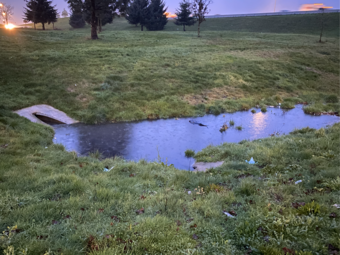
This multi-year study will monitor 6PPD-quinone (6PPD-Q) in highway runoff and evaluate the performance of stormwater treatment Best Management Practices (BMPs).
Common stormwater treatment BMPs we’re examining:
- Bioswales: shallow, vegetated channels designed to capture and treat stormwater runoff while allowing it to infiltrate into the ground.
- Vegetated filter strips: sloped areas with vegetation along roads and highways designed to treat stormwater runoff through filtration.
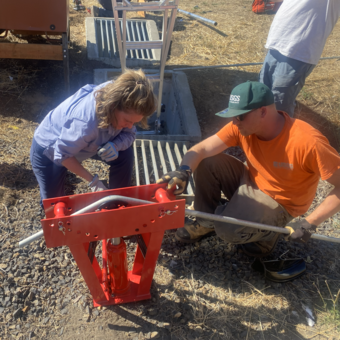
Field monitoring: We will collect runoff samples from six sites in four states (including Oregon) over two years between 2026-2027. We will use autosamplers to collect flow-weighted composite samples that represent average 6PPD-Q concentrations for individual storm events.
Fluorescence measurements: Recent research suggests that optical properties of light patterns from chemicals in tire particles can help us quickly identify tire wear in stormwater. While 6PPD-Q does not fluoresce when measured optically, it is often associated with other fluorescent compounds found in tire wear and road runoff.
Measuring 6PPD-Q through potential proxies such as zinc, copper, and other fluorescence-based indicators offers an innovative approach to support future rapid or real-time monitoring.
Support database development: We are creating a dataset to support a publicly accessible highway runoff database with site characteristics and BMP performance data.
Media
Sources/Usage: Public Domain. View Media Details
Project objectives:
- Measure 6PPD-Q concentrations in highway runoff and BMP effluent.
- Publicly available data from study sites to support a national highway runoff database focused on 6PPD-Q concentrations and BMP effectiveness.
- Assess stormwater treatment performance for reducing this contaminant.
- Investigate low-cost proxy methods for detecting 6PPD-Q.
Why It Matters:
6PPD-Q can kill Coho Salmon within hours of exposure. Its presence in stormwater runoff poses a serious risk to sensitive aquatic species and aquatic ecosystems at the national scale. By identifying effective treatment strategies and cost-efficient monitoring tools, this project helps transportation agencies meet environmental goals, protect endangered species, and make informed infrastructure decisions. The results will guide future stormwater management and improve water quality for communities and habitats for aquatic species.
Related USGS science project web pages.

Modeling tire-derived chemicals in stormwater
The USGS and the Environmental Protection Agency are working together using advanced modeling tools to understand how 6PPD-quinone moves through watersheds and how green infrastructure can reduce its impact.
Tracking Tire Chemicals in Oregon Streams
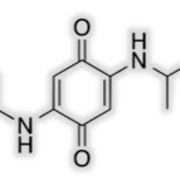
The USGS studies 6PPD-quinone, a compound released from vehicle tires that can harm salmon and other fish. This research is part of a national effort to understand and mitigate stormwater pollution.

Proxies Project
The Proxies Project is a series of studies to improve our understanding of water contaminants and water quality hazards. These studies develop models and technical approaches for estimating concentrations and assessing risk associated with: - harmful algal blooms (HABs) - per- and polyfluoroalkyl substances (PFAS) - 12 elements of concern (EoC)
Project field work photos.
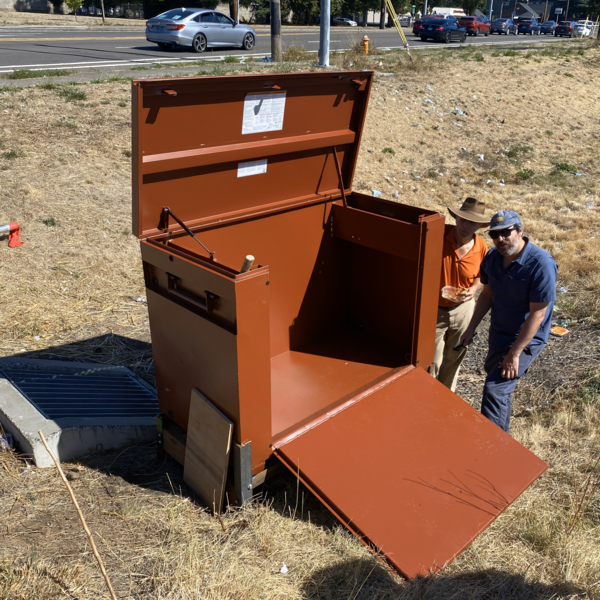
Installing 6PPD-Q monitoring sites
USGS Researchers stand by a heavy-duty enclosure that will house an autosampler and other equipment needed for monitoring 6PPD-Q.
The USGS, in partnership with the Oregon Department of Transportation (ODOT) and other state and federal agencies, is studying a contaminant called 6PPD-quinone.
The USGS Oregon Water Science Center, in partnership with the Oregon Department of Transportation (ODOT) and other state and federal agencies, is studying a contaminant called 6PPD-quinone (6PPD-Q). This chemical, derived from tire additives, is highly toxic to Coho Salmon (Oncorhynchus kisutch) and sensitivity varies among multiple other salmon and trout species (family Salmonidae). Our research focuses on understanding how 6PPD-Q moves through highway runoff and evaluating the effectiveness of common stormwater treatments in reducing the effects of this contaminant.
Media
Sources/Usage: Public Domain. View Media Details
What We’re Doing:
This multi-year study will monitor 6PPD-quinone (6PPD-Q) in highway runoff and evaluate the performance of stormwater treatment Best Management Practices (BMPs).
Common stormwater treatment BMPs we’re examining:
- Bioswales: shallow, vegetated channels designed to capture and treat stormwater runoff while allowing it to infiltrate into the ground.
- Vegetated filter strips: sloped areas with vegetation along roads and highways designed to treat stormwater runoff through filtration.
Field monitoring: We will collect runoff samples from six sites in four states (including Oregon) over two years between 2026-2027. We will use autosamplers to collect flow-weighted composite samples that represent average 6PPD-Q concentrations for individual storm events.
Fluorescence measurements: Recent research suggests that optical properties of light patterns from chemicals in tire particles can help us quickly identify tire wear in stormwater. While 6PPD-Q does not fluoresce when measured optically, it is often associated with other fluorescent compounds found in tire wear and road runoff.
Measuring 6PPD-Q through potential proxies such as zinc, copper, and other fluorescence-based indicators offers an innovative approach to support future rapid or real-time monitoring.
Support database development: We are creating a dataset to support a publicly accessible highway runoff database with site characteristics and BMP performance data.
Media
Sources/Usage: Public Domain. View Media Details
Project objectives:
- Measure 6PPD-Q concentrations in highway runoff and BMP effluent.
- Publicly available data from study sites to support a national highway runoff database focused on 6PPD-Q concentrations and BMP effectiveness.
- Assess stormwater treatment performance for reducing this contaminant.
- Investigate low-cost proxy methods for detecting 6PPD-Q.
Why It Matters:
6PPD-Q can kill Coho Salmon within hours of exposure. Its presence in stormwater runoff poses a serious risk to sensitive aquatic species and aquatic ecosystems at the national scale. By identifying effective treatment strategies and cost-efficient monitoring tools, this project helps transportation agencies meet environmental goals, protect endangered species, and make informed infrastructure decisions. The results will guide future stormwater management and improve water quality for communities and habitats for aquatic species.
Related USGS science project web pages.
Modeling tire-derived chemicals in stormwater
The USGS and the Environmental Protection Agency are working together using advanced modeling tools to understand how 6PPD-quinone moves through watersheds and how green infrastructure can reduce its impact.
Tracking Tire Chemicals in Oregon Streams
The USGS studies 6PPD-quinone, a compound released from vehicle tires that can harm salmon and other fish. This research is part of a national effort to understand and mitigate stormwater pollution.
Proxies Project
The Proxies Project is a series of studies to improve our understanding of water contaminants and water quality hazards. These studies develop models and technical approaches for estimating concentrations and assessing risk associated with: - harmful algal blooms (HABs) - per- and polyfluoroalkyl substances (PFAS) - 12 elements of concern (EoC)
Project field work photos.
Installing 6PPD-Q monitoring sites
USGS Researchers stand by a heavy-duty enclosure that will house an autosampler and other equipment needed for monitoring 6PPD-Q.
USGS Researchers stand by a heavy-duty enclosure that will house an autosampler and other equipment needed for monitoring 6PPD-Q.