



Invasive American bullfrogs are a BIG threat to our native wildlife in southeast Arizona, including some endangered reptiles and amphibians like Chiricahua leopard frogs and northern Mexican garter snakes. These bullfrogs can spread quickly and reproduce easily, making it tough to manage their population.
Javan M. Bauder, PhD
Assistant Unit Leader - Arizona Cooperative Fish and Wildlife Research Unit
Javan joined the Arizona CRU as an Assistant Unit Leader in 2021, where his research blends population ecology and landscape ecology with diverse statistical modeling tools to guide wildlife management and conservation. His current research includes evaluating population viability and genetic connectivity of the federally threatened eastern indigo snake in central Florida.
Javan was born and raised in the Pacific Northwest (Washington and Idaho) and received his M.S. from Idaho State University where he studied the movement and habitat ecology of prairie rattlesnakes. He then worked for non-profit reptile conservation organization, The Orianne Society, conducting and directing research projects to guide reptile conservation efforts. Javan received his Ph.D. from the University of Massachusetts Amherst where he studied the effects of landscape features on the spatial and habitat ecology, population viability, and genetic connectivity of the federally threatened eastern indigo snake in central Florida. Javan then joined the Illinois Natural History Survey as a post-doc studying population dynamics of furbearing mammals and the effects of translocation on nuisance black bear.
Javan joined the Arizona CRU in 2021 where his research blends population ecology and landscape ecology with diverse statistical modeling tools to guide wildlife management and conservation. His current research includes evaluating population viability of bald eagles in Arizona, developing tracking methods for and estimating demographic parameters of narrow-headed gartersnakes, and modeling habitat connectivity and survival for eastern indigo snakes. Javan has assisted in teaching multiple graduate-level statistics courses and teaches a course on wildlife habitat modeling
Science and Products

Arizona Cooperative Fish and Wildlife Research Unit
The Arizona Cooperative Fish and Wildlife Research Unit (est. 1950), is a partnership among the Arizona Game and Fish Department, the University of Arizona, the U.S. Geological Survey, the U.S. Fish and Wildlife Service, and the Wildlife Management Institute.
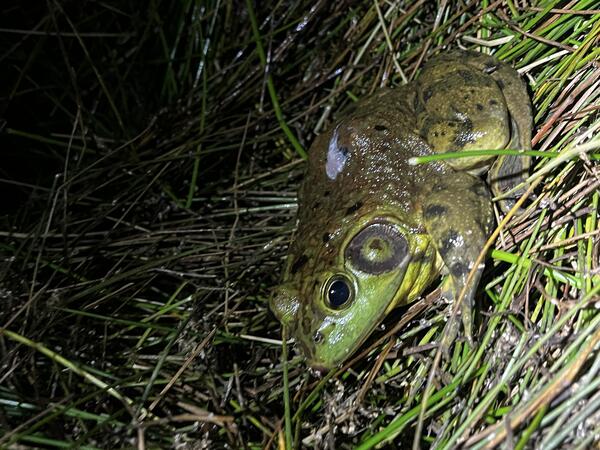
American bullfrog
Invasive American bullfrogs are a BIG threat to our native wildlife in southeast Arizona, including some endangered reptiles and amphibians like Chiricahua leopard frogs and northern Mexican garter snakes. These bullfrogs can spread quickly and reproduce easily, making it tough to manage their population.
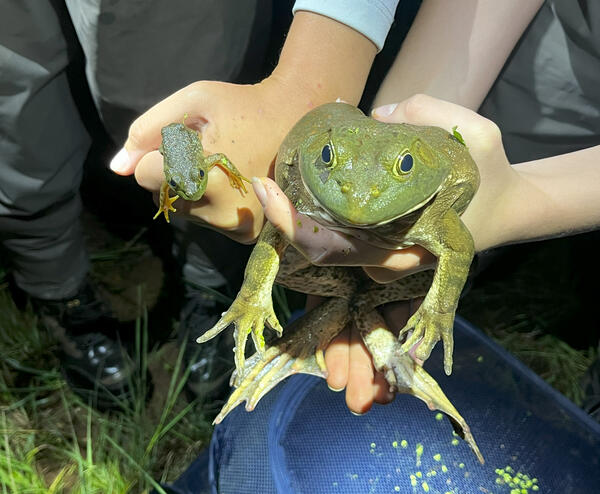
American bullfrogs are a threat to native wildlife in southeast Arizona
American bullfrogs are a threat to native wildlife in southeast ArizonaInvasive American bullfrogs are a big threat to our native wildlife in southeast Arizona, including some endangered reptiles and amphibians like Chiricahua leopard frogs and northern Mexican garter snakes. These bullfrogs can spread quickly and reproduce easily, making it tough to manage their population.
American bullfrogs are a threat to native wildlife in southeast Arizona
American bullfrogs are a threat to native wildlife in southeast ArizonaInvasive American bullfrogs are a big threat to our native wildlife in southeast Arizona, including some endangered reptiles and amphibians like Chiricahua leopard frogs and northern Mexican garter snakes. These bullfrogs can spread quickly and reproduce easily, making it tough to manage their population.
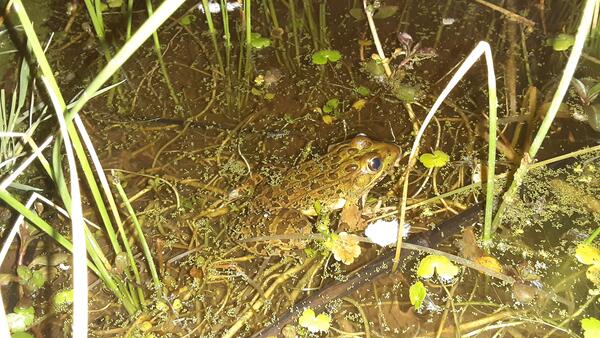
Chiricahua leopard frog
American bullfrogs are causing big problems for our native wildlife in Arizona. These non-native frogs are a threat to species like the federally threatened Chiricahua leopard frog. Bullfrogs breed quickly and spread far, making it tough to control their numbers.
American bullfrogs are causing big problems for our native wildlife in Arizona. These non-native frogs are a threat to species like the federally threatened Chiricahua leopard frog. Bullfrogs breed quickly and spread far, making it tough to control their numbers.
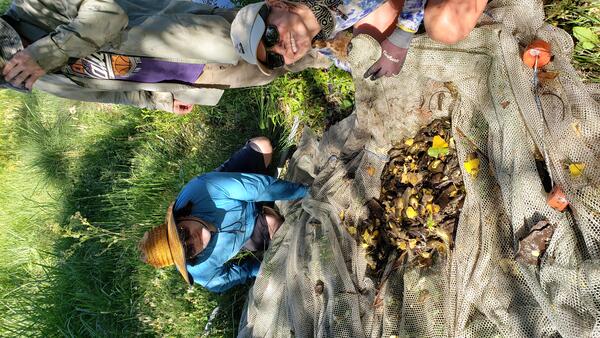
Graduate students gather invasive American bullfrog tadpoles using a net
Graduate students gather invasive American bullfrog tadpoles using a netAmerican bullfrogs are causing problems for native wildlife in Arizona. These non-native frogs are a threat to native species like the Chiricahua leopard frog and northern Mexican garter snake, which are already struggling to survive. Here, graduate students gather invasive American bullfrog tadpoles using a net.
Graduate students gather invasive American bullfrog tadpoles using a net
Graduate students gather invasive American bullfrog tadpoles using a netAmerican bullfrogs are causing problems for native wildlife in Arizona. These non-native frogs are a threat to native species like the Chiricahua leopard frog and northern Mexican garter snake, which are already struggling to survive. Here, graduate students gather invasive American bullfrog tadpoles using a net.

Chiricahua leopard frog breeding site, Las Cienegas National Conservation Area, Arizona
Chiricahua leopard frog breeding site, Las Cienegas National Conservation Area, ArizonaChiricahua leopard frog breeding site, Las Cienegas National Conservation Area, Arizona. American bullfrogs are causing big problems for native wildlife in Arizona. These non-native frogs are a threat to species like the federally threatened Chiricahua leopard frogs.
Chiricahua leopard frog breeding site, Las Cienegas National Conservation Area, Arizona
Chiricahua leopard frog breeding site, Las Cienegas National Conservation Area, ArizonaChiricahua leopard frog breeding site, Las Cienegas National Conservation Area, Arizona. American bullfrogs are causing big problems for native wildlife in Arizona. These non-native frogs are a threat to species like the federally threatened Chiricahua leopard frogs.
Science and Products
Arizona Cooperative Fish and Wildlife Research Unit
The Arizona Cooperative Fish and Wildlife Research Unit (est. 1950), is a partnership among the Arizona Game and Fish Department, the University of Arizona, the U.S. Geological Survey, the U.S. Fish and Wildlife Service, and the Wildlife Management Institute.
American bullfrog
Invasive American bullfrogs are a BIG threat to our native wildlife in southeast Arizona, including some endangered reptiles and amphibians like Chiricahua leopard frogs and northern Mexican garter snakes. These bullfrogs can spread quickly and reproduce easily, making it tough to manage their population.
Invasive American bullfrogs are a BIG threat to our native wildlife in southeast Arizona, including some endangered reptiles and amphibians like Chiricahua leopard frogs and northern Mexican garter snakes. These bullfrogs can spread quickly and reproduce easily, making it tough to manage their population.
American bullfrogs are a threat to native wildlife in southeast Arizona
American bullfrogs are a threat to native wildlife in southeast ArizonaInvasive American bullfrogs are a big threat to our native wildlife in southeast Arizona, including some endangered reptiles and amphibians like Chiricahua leopard frogs and northern Mexican garter snakes. These bullfrogs can spread quickly and reproduce easily, making it tough to manage their population.
American bullfrogs are a threat to native wildlife in southeast Arizona
American bullfrogs are a threat to native wildlife in southeast ArizonaInvasive American bullfrogs are a big threat to our native wildlife in southeast Arizona, including some endangered reptiles and amphibians like Chiricahua leopard frogs and northern Mexican garter snakes. These bullfrogs can spread quickly and reproduce easily, making it tough to manage their population.
Chiricahua leopard frog
American bullfrogs are causing big problems for our native wildlife in Arizona. These non-native frogs are a threat to species like the federally threatened Chiricahua leopard frog. Bullfrogs breed quickly and spread far, making it tough to control their numbers.
American bullfrogs are causing big problems for our native wildlife in Arizona. These non-native frogs are a threat to species like the federally threatened Chiricahua leopard frog. Bullfrogs breed quickly and spread far, making it tough to control their numbers.
Graduate students gather invasive American bullfrog tadpoles using a net
Graduate students gather invasive American bullfrog tadpoles using a netAmerican bullfrogs are causing problems for native wildlife in Arizona. These non-native frogs are a threat to native species like the Chiricahua leopard frog and northern Mexican garter snake, which are already struggling to survive. Here, graduate students gather invasive American bullfrog tadpoles using a net.
Graduate students gather invasive American bullfrog tadpoles using a net
Graduate students gather invasive American bullfrog tadpoles using a netAmerican bullfrogs are causing problems for native wildlife in Arizona. These non-native frogs are a threat to native species like the Chiricahua leopard frog and northern Mexican garter snake, which are already struggling to survive. Here, graduate students gather invasive American bullfrog tadpoles using a net.
Chiricahua leopard frog breeding site, Las Cienegas National Conservation Area, Arizona
Chiricahua leopard frog breeding site, Las Cienegas National Conservation Area, ArizonaChiricahua leopard frog breeding site, Las Cienegas National Conservation Area, Arizona. American bullfrogs are causing big problems for native wildlife in Arizona. These non-native frogs are a threat to species like the federally threatened Chiricahua leopard frogs.
Chiricahua leopard frog breeding site, Las Cienegas National Conservation Area, Arizona
Chiricahua leopard frog breeding site, Las Cienegas National Conservation Area, ArizonaChiricahua leopard frog breeding site, Las Cienegas National Conservation Area, Arizona. American bullfrogs are causing big problems for native wildlife in Arizona. These non-native frogs are a threat to species like the federally threatened Chiricahua leopard frogs.