Margaret (Maggie) Jaenicke
Maggie is a Geographer and Software Developer with the Web Informatics and Mapping team at the Upper Midwest Water Science Center.
Professional Experience
Specializes in front-end web development
Education and Certifications
B.A.s in Geography and Environmental Studies
Affiliations and Memberships*
Web Informatics and Mapping (WIM)
Science and Products
Providing Major Storm and Short-Term Flood Event Data
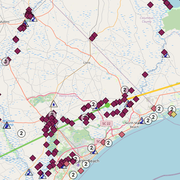
During major storms or other short-term events, the USGS collects streamflow and additional data to help document high-water events. This data is uploaded to the Short-Term Network (STN) for long-term archival and served out to the public through the Flood Event Viewer (FEV) which provides convenient, map-based access to downloadable event-based data.
Western Lake Erie Restoration Assessment: Dikes Western Lake Erie Restoration Assessment: Dikes
The US Geological Survey (USGS) created the Dikes dataset as ancillary layer in the Western Lake Erie Restoration Assessment (WLERA) which covers the southwestern shore of Lake Erie. WLERA is a part of the USGS's Great Lakes Coastal Wetland Restoration Assessment (GLCWRA) initiative where coastal areas around the Great Lakes are identified and ranked for potential wetland restoration...
Western Lake Erie Restoration Assessment: Degree Flowlines and Culverts Western Lake Erie Restoration Assessment: Degree Flowlines and Culverts
The U.S. Geological Survey (USGS) created geospatial datasets of potential culvert locations along with flowlines connected to southwestern Lake Erie as part of the Western Lake Erie Restoration Assessment (WLERA). The Degree Flowlines and Culverts datasets represent the flowline network and culverts in the WLERA study area. Both datasets will be served in the Great Lakes Wetlands...
Connecting River Systems Restoration Assessment: Dikes Connecting River Systems Restoration Assessment: Dikes
This dataset represents the location of dikes within the Connecting River Systems Restoration Assessment (CRSRA) study area. For more information, see the full data release documentation and the GLCWRA webpage: https://glcwra.wim.usgs.gov/.
Western Lake Erie Restoration Assessment: Composite Model Western Lake Erie Restoration Assessment: Composite Model
This dataset contains all the layers associated with U.S. Geological Survey (USGS) Great Lakes Coastal Wetland Restoration Assessment (GLCWRA) initiative for the Western Lake Erie Restoration Assessment (WLERA) which aims to identify and rank coastal areas with the greatest potential for wetland habitat restoration. Each layer has a unique contribution to the identification of restorable...
Connecting River Systems Restoration Assessment: Degree Flowlines Connecting River Systems Restoration Assessment: Degree Flowlines
The U.S. Geological Survey (USGS) created the Degree Flowlines and Culverts geospatial datasets representing potential culvert locations along with flowlines within the Connecting River Systems Restoration Assessment (CRSRA) study area. Both datasets will be served in the Great Lakes Wetlands Restoration Area mapping application [https://glcwra.wim.usgs.gov/]. The map-based user...
Connecting River Systems Restoration Assessment, Composite Model Connecting River Systems Restoration Assessment, Composite Model
This dataset contains all the layers associated with U.S. Geological Survey (USGS) Great Lakes Coastal Wetland Restoration Assessment (GLCWRA) initiative for the Connecting River Systems Restoration Assessment (CRSRA) which aims to identify and rank coastal areas with the greatest potential for wetland habitat restoration. Each layer has a unique contribution to the identification of...
Saginaw Bay Restoration Assessment: Degree Flowlines Saginaw Bay Restoration Assessment: Degree Flowlines
The U.S. Geological Survey (USGS) created geospatial datasets of potential culvert locations along with flowlines connected toLake Huron as part of the Saginaw Bay Restoration Assessment (SBRA). The Degree Flowlines and Culverts datasets represent the flowline network and culverts in the SBRA study area. Both datasets will be served in the Great Lakes Wetlands Restoration Area mapping...
Saginaw Bay Restoration Assessment, Composite Model Saginaw Bay Restoration Assessment, Composite Model
This dataset contains all the layers associated with U.S. Geological Survey (USGS) Great Lakes Coastal Wetland Restoration Assessment (GLCWRA) initiative for the Saginaw Bay Restoration Assessment (SBRA) which aims to identify and rank coastal areas with the greatest potential for wetland habitat restoration. Each layer has a unique contribution to the identification of restorable...
Saginaw Bay Restoration Assessment: Dikes Saginaw Bay Restoration Assessment: Dikes
This dataset represenst the location of dikes within the Saginaw Bay Restoration Assessment (SBRA) study area. An ArcGIS model identified dikes as having a difference in elevation and slope above a certain threshold. If the elevation difference was below a certain threshold, the area was not considered a dike. However, if the difference in elevation between two points was significantly...
Great Lakes Coastal Wetland Restoration Assessment (GLCWRA) Green Bay, U.S.: Dikes Great Lakes Coastal Wetland Restoration Assessment (GLCWRA) Green Bay, U.S.: Dikes
This dataset is part of the U.S. Geological Survey (USGS) Great Lakes Coastal Wetland Restoration Assessment (GLCWRA) initiative. These data represent the location of dikes within the Green Bay Restoration Assessment (GBRA) study area. An ArcGIS model (Python script) identified dikes as having a difference in elevation above a certain threshold. If the elevation difference was below a...
Science and Products
Providing Major Storm and Short-Term Flood Event Data
During major storms or other short-term events, the USGS collects streamflow and additional data to help document high-water events. This data is uploaded to the Short-Term Network (STN) for long-term archival and served out to the public through the Flood Event Viewer (FEV) which provides convenient, map-based access to downloadable event-based data.
Western Lake Erie Restoration Assessment: Dikes Western Lake Erie Restoration Assessment: Dikes
The US Geological Survey (USGS) created the Dikes dataset as ancillary layer in the Western Lake Erie Restoration Assessment (WLERA) which covers the southwestern shore of Lake Erie. WLERA is a part of the USGS's Great Lakes Coastal Wetland Restoration Assessment (GLCWRA) initiative where coastal areas around the Great Lakes are identified and ranked for potential wetland restoration...
Western Lake Erie Restoration Assessment: Degree Flowlines and Culverts Western Lake Erie Restoration Assessment: Degree Flowlines and Culverts
The U.S. Geological Survey (USGS) created geospatial datasets of potential culvert locations along with flowlines connected to southwestern Lake Erie as part of the Western Lake Erie Restoration Assessment (WLERA). The Degree Flowlines and Culverts datasets represent the flowline network and culverts in the WLERA study area. Both datasets will be served in the Great Lakes Wetlands...
Connecting River Systems Restoration Assessment: Dikes Connecting River Systems Restoration Assessment: Dikes
This dataset represents the location of dikes within the Connecting River Systems Restoration Assessment (CRSRA) study area. For more information, see the full data release documentation and the GLCWRA webpage: https://glcwra.wim.usgs.gov/.
Western Lake Erie Restoration Assessment: Composite Model Western Lake Erie Restoration Assessment: Composite Model
This dataset contains all the layers associated with U.S. Geological Survey (USGS) Great Lakes Coastal Wetland Restoration Assessment (GLCWRA) initiative for the Western Lake Erie Restoration Assessment (WLERA) which aims to identify and rank coastal areas with the greatest potential for wetland habitat restoration. Each layer has a unique contribution to the identification of restorable...
Connecting River Systems Restoration Assessment: Degree Flowlines Connecting River Systems Restoration Assessment: Degree Flowlines
The U.S. Geological Survey (USGS) created the Degree Flowlines and Culverts geospatial datasets representing potential culvert locations along with flowlines within the Connecting River Systems Restoration Assessment (CRSRA) study area. Both datasets will be served in the Great Lakes Wetlands Restoration Area mapping application [https://glcwra.wim.usgs.gov/]. The map-based user...
Connecting River Systems Restoration Assessment, Composite Model Connecting River Systems Restoration Assessment, Composite Model
This dataset contains all the layers associated with U.S. Geological Survey (USGS) Great Lakes Coastal Wetland Restoration Assessment (GLCWRA) initiative for the Connecting River Systems Restoration Assessment (CRSRA) which aims to identify and rank coastal areas with the greatest potential for wetland habitat restoration. Each layer has a unique contribution to the identification of...
Saginaw Bay Restoration Assessment: Degree Flowlines Saginaw Bay Restoration Assessment: Degree Flowlines
The U.S. Geological Survey (USGS) created geospatial datasets of potential culvert locations along with flowlines connected toLake Huron as part of the Saginaw Bay Restoration Assessment (SBRA). The Degree Flowlines and Culverts datasets represent the flowline network and culverts in the SBRA study area. Both datasets will be served in the Great Lakes Wetlands Restoration Area mapping...
Saginaw Bay Restoration Assessment, Composite Model Saginaw Bay Restoration Assessment, Composite Model
This dataset contains all the layers associated with U.S. Geological Survey (USGS) Great Lakes Coastal Wetland Restoration Assessment (GLCWRA) initiative for the Saginaw Bay Restoration Assessment (SBRA) which aims to identify and rank coastal areas with the greatest potential for wetland habitat restoration. Each layer has a unique contribution to the identification of restorable...
Saginaw Bay Restoration Assessment: Dikes Saginaw Bay Restoration Assessment: Dikes
This dataset represenst the location of dikes within the Saginaw Bay Restoration Assessment (SBRA) study area. An ArcGIS model identified dikes as having a difference in elevation and slope above a certain threshold. If the elevation difference was below a certain threshold, the area was not considered a dike. However, if the difference in elevation between two points was significantly...
Great Lakes Coastal Wetland Restoration Assessment (GLCWRA) Green Bay, U.S.: Dikes Great Lakes Coastal Wetland Restoration Assessment (GLCWRA) Green Bay, U.S.: Dikes
This dataset is part of the U.S. Geological Survey (USGS) Great Lakes Coastal Wetland Restoration Assessment (GLCWRA) initiative. These data represent the location of dikes within the Green Bay Restoration Assessment (GBRA) study area. An ArcGIS model (Python script) identified dikes as having a difference in elevation above a certain threshold. If the elevation difference was below a...
*Disclaimer: Listing outside positions with professional scientific organizations on this Staff Profile are for informational purposes only and do not constitute an endorsement of those professional scientific organizations or their activities by the USGS, Department of the Interior, or U.S. Government