



Meredith A Hartwell (Former Employee)
Science and Products
Filter Total Items: 17

Humpback Chub in the Colorado River, Grand Canyon
Threatened humpback chub are a native fish found only in the Colorado River Basin. Once found in warm-water canyons in the Basin, the largest population now persists in the Colorado River in Grand Canyon National Park, downstream of Glen Canyon Dam and Lake Powell reservoir.

River Geomorphology, Sediment Storage, Sandbar and Campsite Monitoring in Grand Canyon
River channels and their adjacent floodplains are ever evolving in form and composition in response to changing patterns of streamflow, the quantity and size of supplied sediment, and feedbacks with the riparian and aquatic ecosystems. Changes in channel form affect aquatic and riparian habitats, which are important for plants, animals, and insects. Erosion and deposition of river channels and...

GCMRC Science Informs Hydropower and Invasive Species Management
USGS Southwest Biological Science Center's Grand Canyon Monitoring and Research Center provided scientific expertise to evaluate potential effects of reservoir management on various resources in Lake Powell and Grand Canyon. This information, published in a cooperator report, was requested and used by the Bureau of Reclamation for decision-making on water flows from Glen Canyon Dam.

Oil and Gas Reclamation - About
What is reclamation? Reclamation means to assist in the repair or recovery of highly disturbed or degraded ecosystems to benefit native plants and animals by setting sites on a trajectory towards functioning habitats and ecological communities that are similar to surrounding, naturally occurring environments. During this process, the impacts of oil and gas development are minimized.

The Southwest Repeat Photography Collection (previously 'Desert Laboratory Repeat Photography Collection')
The USGS Southwest Repeat Photography Collection contains repeat imagery taken for a variety of research purposes over the last 100+ years. Repeat photographs are taken at precisely the same location at later times to document landscape and other change. To download individual images, click on 'View and Download' on each image within a slideshow. To view the geographic location of images shown in...
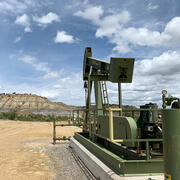
New guidelines for successful oil and gas reclamation New guidelines for successful oil and gas reclamation
The report provides specific and comprehensive reclamation guidance for surface oil and gas exploration and development.
Science and Products
Filter Total Items: 17
Humpback Chub in the Colorado River, Grand Canyon
Threatened humpback chub are a native fish found only in the Colorado River Basin. Once found in warm-water canyons in the Basin, the largest population now persists in the Colorado River in Grand Canyon National Park, downstream of Glen Canyon Dam and Lake Powell reservoir.
River Geomorphology, Sediment Storage, Sandbar and Campsite Monitoring in Grand Canyon
River channels and their adjacent floodplains are ever evolving in form and composition in response to changing patterns of streamflow, the quantity and size of supplied sediment, and feedbacks with the riparian and aquatic ecosystems. Changes in channel form affect aquatic and riparian habitats, which are important for plants, animals, and insects. Erosion and deposition of river channels and...
GCMRC Science Informs Hydropower and Invasive Species Management
USGS Southwest Biological Science Center's Grand Canyon Monitoring and Research Center provided scientific expertise to evaluate potential effects of reservoir management on various resources in Lake Powell and Grand Canyon. This information, published in a cooperator report, was requested and used by the Bureau of Reclamation for decision-making on water flows from Glen Canyon Dam.
Oil and Gas Reclamation - About
What is reclamation? Reclamation means to assist in the repair or recovery of highly disturbed or degraded ecosystems to benefit native plants and animals by setting sites on a trajectory towards functioning habitats and ecological communities that are similar to surrounding, naturally occurring environments. During this process, the impacts of oil and gas development are minimized.
The Southwest Repeat Photography Collection (previously 'Desert Laboratory Repeat Photography Collection')
The USGS Southwest Repeat Photography Collection contains repeat imagery taken for a variety of research purposes over the last 100+ years. Repeat photographs are taken at precisely the same location at later times to document landscape and other change. To download individual images, click on 'View and Download' on each image within a slideshow. To view the geographic location of images shown in...
New guidelines for successful oil and gas reclamation New guidelines for successful oil and gas reclamation
The report provides specific and comprehensive reclamation guidance for surface oil and gas exploration and development.