



USGS scientists were deployed to assess land deformation and movement after a large M6.4 earthquake struck Puerto Rico on January 7, 2020. This landslide was discovered along a neighborhood road near Ponce, Puerto Rico.
Steven Sobieszczyk (Former Employee)
Science and Products
Filter Total Items: 21

Hazards in Alaska
A major goal of the U.S. Geological Survey (USGS) is to reduce the vulnerability of the people and areas most at risk from natural hazards. Working with partners throughout all sectors of society, the USGS provides information, products, and knowledge to help build more resilient communities. This site provides important links to a number of hazard related internet sites that provide important...
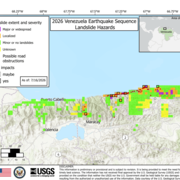
2026 Venezuela Sequence Earthquake-Triggered Landslide Hazards
On Wednesday, June 24th, 2026, a pair of earthquakes of Magnitude 7.2 and Magnitude 7.5 occurred in northern Venezuela, west of Caracas. The U.S. Geological Survey (USGS) Ground Failure product estimated that landslides triggered by this earthquake would likely be significant in number and/or spatial extent. This landslide event page serves to communicate timely science information to our partners...
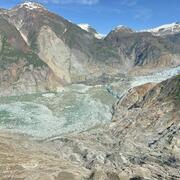
2025 Tracy Arm Landslide-Generated Tsunami
A landslide above the toe of the South Sawyer Glacier failed into the waters of Tracy Arm, south of Juneau, Alaska, producing a tsunami on Sunday, August 10th, 2025, at 05:26 AKDT / 13:26 UTC. No injuries or fatalities have been reported. This page may be updated as more information about the event is obtained. Steep, mountainous landslide areas are inherently unstable and will continue to change...

Tualatin River Basin Water Quality Assessment
In 1990, the USGS began assessing water-quality in the Tualatin River. More then 30 years later, we are still monitoring conditions in the basin and conducting investigations to better understand stream processes within the basin.

2024 Hurricane Helene Landslide Hazards
Hurricane Helene produced widespread damaging, and in some cases, deadly landslides. Hurricane Helene made landfall in Florida as a Category 4 storm on Thursday, September 26th, 2024. The hurricane continued across the southern Appalachian Mountains producing record rainfall and wind gusts, damaging flooding, and triggering over 2000 landslides. This page provides information about the extent and...

Wildland Fire Science - Media Kit
The U.S. Geological Survey’s Wildland Fire Science Program produces information to identify the causes of wildfires, understand the impacts and benefits of both wildfires and prescribed fires, and help manage larger, catastrophic events.

I Am A...Natural Resource Economist I Am A...Natural Resource Economist
Welcome to the "The I Am A..." series, a whiteboard animation video series highlighting USGS careers. The concept is to show whimsically "what society (or my mom) thinks I do" compared with "what I really do." This video is about a natural resource economist (i.e. someone who studies the value of features in the natural world).

I Am An...Ecotoxicologist I Am An...Ecotoxicologist
Welcome to the "The I Am A..." series. This is the tenth video in a series of USGS whiteboard animations that highlight USGS careers. The concept is to show "what society (or my mom) thinks I do" compared with "what I really do." One image captures a more whimsical representation of a "scientist" and the second demonstrates a more accurate representation of

I Am A...Climate Modeler I Am A...Climate Modeler
Welcome to the "The I Am A(n)..." series. This is the seventh video in a series of USGS whiteboard animations that highlight USGS careers. The concept is to show "what society (or my mom) thinks I do" compared with "what I really do." One image captures a more whimsical representation of a "scientist" and the second demonstrates a more accurate representation of what we really look like in the...

I Am A...Wildlife Biologist I Am A...Wildlife Biologist
Welcome to the "The I Am A(n)..." series. This is the seventh video in a series of USGS whiteboard animations that highlight USGS careers. The concept is to show "what society (or my mom) thinks I do" compared with "what I really do." One image captures a more whimsical representation of a "scientist" and the second demonstrates a more accurate representation of what we really look like in the...

I Am A...Wetland Ecologist I Am A...Wetland Ecologist
Welcome to the "The I Am A(n)..." series. This is the seventh video in a series of USGS whiteboard animations that highlight USGS careers. The concept is to show "what society (or my mom) thinks I do" compared with "what I really do." One image captures a more whimsical representation of a "scientist" and the second demonstrates a more accurate representation of what we really look like in the...

I Am A...Malacologist I Am A...Malacologist
Welcome to the "The I Am A(n)..." series. This is the sixth video in a series of USGS whiteboard animations that highlight USGS careers. The concept is to show "what society (or my mom) thinks I do" compared with "what I really do." One image captures a more whimsical representation of a "scientist" and the second demonstrates a more accurate representation of what we really look like in the field...
Filter Total Items: 229

Landslide near Ponce, Puerto Rico
USGS scientists were deployed to assess land deformation and movement after a large M6.4 earthquake struck Puerto Rico on January 7, 2020. This landslide was discovered along a neighborhood road near Ponce, Puerto Rico.

Lateral spread along road caused by M6.4 earthquake in Puerto Rico
Lateral spread along road caused by M6.4 earthquake in Puerto RicoUSGS scientists were deployed to assess land deformation and movement after a large M6.4 earthquake struck Puerto Rico on January 7, 2020. Here is an example of a lateral spread along a residential road in Ponce, Puerto Rico.
Lateral spread along road caused by M6.4 earthquake in Puerto Rico
Lateral spread along road caused by M6.4 earthquake in Puerto RicoUSGS scientists were deployed to assess land deformation and movement after a large M6.4 earthquake struck Puerto Rico on January 7, 2020. Here is an example of a lateral spread along a residential road in Ponce, Puerto Rico.

Rockfall in Ponce, Puerto Rico
USGS scientists were deployed to assess land deformation and movement after a large M6.4 earthquake struck Puerto Rico on January 7, 2020. Here is an example of rockfall material in the yard of a house in Ponce, Puerto Rico.
USGS scientists were deployed to assess land deformation and movement after a large M6.4 earthquake struck Puerto Rico on January 7, 2020. Here is an example of rockfall material in the yard of a house in Ponce, Puerto Rico.

Lateral Spread in Ponce, Puerto Rico
USGS scientists were deployed to assess land deformation and movement after a large M6.4 earthquake struck Puerto Rico on January 7, 2020. Here is an example of a lateral spread near a stream in Ponce, Puerto Rico.
USGS scientists were deployed to assess land deformation and movement after a large M6.4 earthquake struck Puerto Rico on January 7, 2020. Here is an example of a lateral spread near a stream in Ponce, Puerto Rico.

Lateral spread near creek in Ponce, Puerto Rico
USGS scientists, like Dr. Alex Grant, were deployed to assess land deformation and movement after a large M6.4 earthquake struck Puerto Rico on January 7, 2020. Here is an example of a lateral spread near a creek in Ponce, Puerto Rico.
USGS scientists, like Dr. Alex Grant, were deployed to assess land deformation and movement after a large M6.4 earthquake struck Puerto Rico on January 7, 2020. Here is an example of a lateral spread near a creek in Ponce, Puerto Rico.

House marking in Puerto Rico
Houses were damaged during the M6.4 earthquake that struck Puerto Rico on January 7, 2020. Houses were tagged by local officials for whether they were safe or not.
Houses were damaged during the M6.4 earthquake that struck Puerto Rico on January 7, 2020. Houses were tagged by local officials for whether they were safe or not.

Inspecting boardwalk in Ponce, Puerto Rico
USGS scientists were deployed to assess land deformation and movement after a large M6.4 earthquake struck Puerto Rico on January 7, 2020. The boardwalk in Ponce, Puerto Rico was damaged by the quake.
USGS scientists were deployed to assess land deformation and movement after a large M6.4 earthquake struck Puerto Rico on January 7, 2020. The boardwalk in Ponce, Puerto Rico was damaged by the quake.

Inspecting boardwalk in Ponce, Puerto Rico
USGS scientists were deployed to assess land deformation and movement after a large M6.4 earthquake struck Puerto Rico on January 7, 2020. The boardwalk in Ponce, Puerto Rico was damaged by the quake.
USGS scientists were deployed to assess land deformation and movement after a large M6.4 earthquake struck Puerto Rico on January 7, 2020. The boardwalk in Ponce, Puerto Rico was damaged by the quake.

Inspecting boardwalk in Ponce, Puerto Rico
USGS scientists were deployed to assess land deformation and movement after a large M6.4 earthquake struck Puerto Rico on January 7, 2020. The boardwalk in Ponce, Puerto Rico was damaged by the quake.
USGS scientists were deployed to assess land deformation and movement after a large M6.4 earthquake struck Puerto Rico on January 7, 2020. The boardwalk in Ponce, Puerto Rico was damaged by the quake.

Inspecting boardwalk in Ponce, Puerto Rico
USGS scientists were deployed to assess land deformation and movement after a large M6.4 earthquake struck Puerto Rico on January 7, 2020. The boardwalk in Ponce, Puerto Rico was damaged by the quake.
USGS scientists were deployed to assess land deformation and movement after a large M6.4 earthquake struck Puerto Rico on January 7, 2020. The boardwalk in Ponce, Puerto Rico was damaged by the quake.

Inspecting boardwalk in Ponce, Puerto Rico
USGS scientists were deployed to assess land deformation and movement after a large M6.4 earthquake struck Puerto Rico on January 7, 2020. The boardwalk in Ponce, Puerto Rico was damaged by the quake.
USGS scientists were deployed to assess land deformation and movement after a large M6.4 earthquake struck Puerto Rico on January 7, 2020. The boardwalk in Ponce, Puerto Rico was damaged by the quake.

Inspecting boardwalk in Ponce, Puerto Rico
USGS scientists were deployed to assess land deformation and movement after a large M6.4 earthquake struck Puerto Rico on January 7, 2020. The boardwalk in Ponce, Puerto Rico was damaged by the quake.
USGS scientists were deployed to assess land deformation and movement after a large M6.4 earthquake struck Puerto Rico on January 7, 2020. The boardwalk in Ponce, Puerto Rico was damaged by the quake.

Researchers deployed in Puerto Rico after earthquake
Researchers deployed in Puerto Rico after earthquakeMeet the team of USGS scientists who were deployed to assess land deformation and movement after a large M6.4 earthquake struck Puerto Rico on January 7, 2020.
Researchers deployed in Puerto Rico after earthquake
Researchers deployed in Puerto Rico after earthquakeMeet the team of USGS scientists who were deployed to assess land deformation and movement after a large M6.4 earthquake struck Puerto Rico on January 7, 2020.

Landslide triggered by M6.4 earthquake in Puerto Rico
Landslide triggered by M6.4 earthquake in Puerto RicoUSGS scientists were deployed to assess land deformation and movement after a large M6.4 earthquake struck Puerto Rico on January 7, 2020. Here is an example of a landslide failure along a residential road in Ponce, Puerto Rico.
Landslide triggered by M6.4 earthquake in Puerto Rico
Landslide triggered by M6.4 earthquake in Puerto RicoUSGS scientists were deployed to assess land deformation and movement after a large M6.4 earthquake struck Puerto Rico on January 7, 2020. Here is an example of a landslide failure along a residential road in Ponce, Puerto Rico.

The Great California ShakeOut (2019) Role Play Exercise - Biola Univ.
The Great California ShakeOut (2019) Role Play Exercise - Biola Univ.Each year the State of California promotes a ShakeOut event where local citizens practice earthquake response and preparedness. This video shows footage from the 2019 Great California ShakeOut, which was hosted at Biola University in La Mirenda, CA. Video includes footage of the initial ShakeAlert announcement that blared across campus.
The Great California ShakeOut (2019) Role Play Exercise - Biola Univ.
The Great California ShakeOut (2019) Role Play Exercise - Biola Univ.Each year the State of California promotes a ShakeOut event where local citizens practice earthquake response and preparedness. This video shows footage from the 2019 Great California ShakeOut, which was hosted at Biola University in La Mirenda, CA. Video includes footage of the initial ShakeAlert announcement that blared across campus.

October 17, 1989 (Part 1)
On October 17, 1989, at 5:04 pm a magnitude M6.9 earthquake struck near Loma Prieta, California. It was a tragic reminder of the destructive power of earthquakes. However, it was also a watershed moment in seismic research. 30 years later, we revisit the earthquake through the eyes of the scientists who experienced it. And studied it. These are their stories.
On October 17, 1989, at 5:04 pm a magnitude M6.9 earthquake struck near Loma Prieta, California. It was a tragic reminder of the destructive power of earthquakes. However, it was also a watershed moment in seismic research. 30 years later, we revisit the earthquake through the eyes of the scientists who experienced it. And studied it. These are their stories.

October 17, 1989 (Part 4)
On October 17, 1989, at 5:04 pm a magnitude M6.9 earthquake struck near Loma Prieta, California. It was a tragic reminder of the destructive power of earthquakes. However, it was also a watershed moment in seismic research. 30 years later, we revisit the earthquake through the eyes of the scientists who experienced it. And studied it. These are their stories.
On October 17, 1989, at 5:04 pm a magnitude M6.9 earthquake struck near Loma Prieta, California. It was a tragic reminder of the destructive power of earthquakes. However, it was also a watershed moment in seismic research. 30 years later, we revisit the earthquake through the eyes of the scientists who experienced it. And studied it. These are their stories.

October 17, 1989 (Part 2)
On October 17, 1989, at 5:04 pm a magnitude M6.9 earthquake struck near Loma Prieta, California. It was a tragic reminder of the destructive power of earthquakes. However, it was also a watershed moment in seismic research. 30 years later, we revisit the earthquake through the eyes of the scientists who experienced it. And studied it. These are their stories.
On October 17, 1989, at 5:04 pm a magnitude M6.9 earthquake struck near Loma Prieta, California. It was a tragic reminder of the destructive power of earthquakes. However, it was also a watershed moment in seismic research. 30 years later, we revisit the earthquake through the eyes of the scientists who experienced it. And studied it. These are their stories.

October 17, 1989 (Part 3)
On October 17, 1989, at 5:04 pm a magnitude M6.9 earthquake struck near Loma Prieta, California. It was a tragic reminder of the destructive power of earthquakes. However, it was also a watershed moment in seismic research. 30 years later, we revisit the earthquake through the eyes of the scientists who experienced it. And studied it.
On October 17, 1989, at 5:04 pm a magnitude M6.9 earthquake struck near Loma Prieta, California. It was a tragic reminder of the destructive power of earthquakes. However, it was also a watershed moment in seismic research. 30 years later, we revisit the earthquake through the eyes of the scientists who experienced it. And studied it.

Surfing the Green Wave
Mule deer are an important part of the Western landscape and are coveted among big-game hunters throughout the country. These animals draw outdoor enthusiasts to states, such as Wyoming, where nearly 800,000 people hunted, fished, and viewed wildlife, and contributed \$1.1 billion to the state’s economy.
Mule deer are an important part of the Western landscape and are coveted among big-game hunters throughout the country. These animals draw outdoor enthusiasts to states, such as Wyoming, where nearly 800,000 people hunted, fished, and viewed wildlife, and contributed \$1.1 billion to the state’s economy.

Thank You Women in Science
Science is done by those who "do." Thank you women in science for all your contributions to USGS and the sciences, as a whole.
Science is done by those who "do." Thank you women in science for all your contributions to USGS and the sciences, as a whole.
Science and Products
Filter Total Items: 21
Hazards in Alaska
A major goal of the U.S. Geological Survey (USGS) is to reduce the vulnerability of the people and areas most at risk from natural hazards. Working with partners throughout all sectors of society, the USGS provides information, products, and knowledge to help build more resilient communities. This site provides important links to a number of hazard related internet sites that provide important...
2026 Venezuela Sequence Earthquake-Triggered Landslide Hazards
On Wednesday, June 24th, 2026, a pair of earthquakes of Magnitude 7.2 and Magnitude 7.5 occurred in northern Venezuela, west of Caracas. The U.S. Geological Survey (USGS) Ground Failure product estimated that landslides triggered by this earthquake would likely be significant in number and/or spatial extent. This landslide event page serves to communicate timely science information to our partners...
2025 Tracy Arm Landslide-Generated Tsunami
A landslide above the toe of the South Sawyer Glacier failed into the waters of Tracy Arm, south of Juneau, Alaska, producing a tsunami on Sunday, August 10th, 2025, at 05:26 AKDT / 13:26 UTC. No injuries or fatalities have been reported. This page may be updated as more information about the event is obtained. Steep, mountainous landslide areas are inherently unstable and will continue to change...
Tualatin River Basin Water Quality Assessment
In 1990, the USGS began assessing water-quality in the Tualatin River. More then 30 years later, we are still monitoring conditions in the basin and conducting investigations to better understand stream processes within the basin.
2024 Hurricane Helene Landslide Hazards
Hurricane Helene produced widespread damaging, and in some cases, deadly landslides. Hurricane Helene made landfall in Florida as a Category 4 storm on Thursday, September 26th, 2024. The hurricane continued across the southern Appalachian Mountains producing record rainfall and wind gusts, damaging flooding, and triggering over 2000 landslides. This page provides information about the extent and...
Wildland Fire Science - Media Kit
The U.S. Geological Survey’s Wildland Fire Science Program produces information to identify the causes of wildfires, understand the impacts and benefits of both wildfires and prescribed fires, and help manage larger, catastrophic events.
I Am A...Natural Resource Economist I Am A...Natural Resource Economist
Welcome to the "The I Am A..." series, a whiteboard animation video series highlighting USGS careers. The concept is to show whimsically "what society (or my mom) thinks I do" compared with "what I really do." This video is about a natural resource economist (i.e. someone who studies the value of features in the natural world).
I Am An...Ecotoxicologist I Am An...Ecotoxicologist
Welcome to the "The I Am A..." series. This is the tenth video in a series of USGS whiteboard animations that highlight USGS careers. The concept is to show "what society (or my mom) thinks I do" compared with "what I really do." One image captures a more whimsical representation of a "scientist" and the second demonstrates a more accurate representation of
I Am A...Climate Modeler I Am A...Climate Modeler
Welcome to the "The I Am A(n)..." series. This is the seventh video in a series of USGS whiteboard animations that highlight USGS careers. The concept is to show "what society (or my mom) thinks I do" compared with "what I really do." One image captures a more whimsical representation of a "scientist" and the second demonstrates a more accurate representation of what we really look like in the...
I Am A...Wildlife Biologist I Am A...Wildlife Biologist
Welcome to the "The I Am A(n)..." series. This is the seventh video in a series of USGS whiteboard animations that highlight USGS careers. The concept is to show "what society (or my mom) thinks I do" compared with "what I really do." One image captures a more whimsical representation of a "scientist" and the second demonstrates a more accurate representation of what we really look like in the...
I Am A...Wetland Ecologist I Am A...Wetland Ecologist
Welcome to the "The I Am A(n)..." series. This is the seventh video in a series of USGS whiteboard animations that highlight USGS careers. The concept is to show "what society (or my mom) thinks I do" compared with "what I really do." One image captures a more whimsical representation of a "scientist" and the second demonstrates a more accurate representation of what we really look like in the...
I Am A...Malacologist I Am A...Malacologist
Welcome to the "The I Am A(n)..." series. This is the sixth video in a series of USGS whiteboard animations that highlight USGS careers. The concept is to show "what society (or my mom) thinks I do" compared with "what I really do." One image captures a more whimsical representation of a "scientist" and the second demonstrates a more accurate representation of what we really look like in the field...
Filter Total Items: 229
Landslide near Ponce, Puerto Rico
USGS scientists were deployed to assess land deformation and movement after a large M6.4 earthquake struck Puerto Rico on January 7, 2020. This landslide was discovered along a neighborhood road near Ponce, Puerto Rico.
USGS scientists were deployed to assess land deformation and movement after a large M6.4 earthquake struck Puerto Rico on January 7, 2020. This landslide was discovered along a neighborhood road near Ponce, Puerto Rico.
Lateral spread along road caused by M6.4 earthquake in Puerto Rico
Lateral spread along road caused by M6.4 earthquake in Puerto RicoUSGS scientists were deployed to assess land deformation and movement after a large M6.4 earthquake struck Puerto Rico on January 7, 2020. Here is an example of a lateral spread along a residential road in Ponce, Puerto Rico.
Lateral spread along road caused by M6.4 earthquake in Puerto Rico
Lateral spread along road caused by M6.4 earthquake in Puerto RicoUSGS scientists were deployed to assess land deformation and movement after a large M6.4 earthquake struck Puerto Rico on January 7, 2020. Here is an example of a lateral spread along a residential road in Ponce, Puerto Rico.
Rockfall in Ponce, Puerto Rico
USGS scientists were deployed to assess land deformation and movement after a large M6.4 earthquake struck Puerto Rico on January 7, 2020. Here is an example of rockfall material in the yard of a house in Ponce, Puerto Rico.
USGS scientists were deployed to assess land deformation and movement after a large M6.4 earthquake struck Puerto Rico on January 7, 2020. Here is an example of rockfall material in the yard of a house in Ponce, Puerto Rico.
Lateral Spread in Ponce, Puerto Rico
USGS scientists were deployed to assess land deformation and movement after a large M6.4 earthquake struck Puerto Rico on January 7, 2020. Here is an example of a lateral spread near a stream in Ponce, Puerto Rico.
USGS scientists were deployed to assess land deformation and movement after a large M6.4 earthquake struck Puerto Rico on January 7, 2020. Here is an example of a lateral spread near a stream in Ponce, Puerto Rico.
Lateral spread near creek in Ponce, Puerto Rico
USGS scientists, like Dr. Alex Grant, were deployed to assess land deformation and movement after a large M6.4 earthquake struck Puerto Rico on January 7, 2020. Here is an example of a lateral spread near a creek in Ponce, Puerto Rico.
USGS scientists, like Dr. Alex Grant, were deployed to assess land deformation and movement after a large M6.4 earthquake struck Puerto Rico on January 7, 2020. Here is an example of a lateral spread near a creek in Ponce, Puerto Rico.
House marking in Puerto Rico
Houses were damaged during the M6.4 earthquake that struck Puerto Rico on January 7, 2020. Houses were tagged by local officials for whether they were safe or not.
Houses were damaged during the M6.4 earthquake that struck Puerto Rico on January 7, 2020. Houses were tagged by local officials for whether they were safe or not.
Inspecting boardwalk in Ponce, Puerto Rico
USGS scientists were deployed to assess land deformation and movement after a large M6.4 earthquake struck Puerto Rico on January 7, 2020. The boardwalk in Ponce, Puerto Rico was damaged by the quake.
USGS scientists were deployed to assess land deformation and movement after a large M6.4 earthquake struck Puerto Rico on January 7, 2020. The boardwalk in Ponce, Puerto Rico was damaged by the quake.
Inspecting boardwalk in Ponce, Puerto Rico
USGS scientists were deployed to assess land deformation and movement after a large M6.4 earthquake struck Puerto Rico on January 7, 2020. The boardwalk in Ponce, Puerto Rico was damaged by the quake.
USGS scientists were deployed to assess land deformation and movement after a large M6.4 earthquake struck Puerto Rico on January 7, 2020. The boardwalk in Ponce, Puerto Rico was damaged by the quake.
Inspecting boardwalk in Ponce, Puerto Rico
USGS scientists were deployed to assess land deformation and movement after a large M6.4 earthquake struck Puerto Rico on January 7, 2020. The boardwalk in Ponce, Puerto Rico was damaged by the quake.
USGS scientists were deployed to assess land deformation and movement after a large M6.4 earthquake struck Puerto Rico on January 7, 2020. The boardwalk in Ponce, Puerto Rico was damaged by the quake.
Inspecting boardwalk in Ponce, Puerto Rico
USGS scientists were deployed to assess land deformation and movement after a large M6.4 earthquake struck Puerto Rico on January 7, 2020. The boardwalk in Ponce, Puerto Rico was damaged by the quake.
USGS scientists were deployed to assess land deformation and movement after a large M6.4 earthquake struck Puerto Rico on January 7, 2020. The boardwalk in Ponce, Puerto Rico was damaged by the quake.
Inspecting boardwalk in Ponce, Puerto Rico
USGS scientists were deployed to assess land deformation and movement after a large M6.4 earthquake struck Puerto Rico on January 7, 2020. The boardwalk in Ponce, Puerto Rico was damaged by the quake.
USGS scientists were deployed to assess land deformation and movement after a large M6.4 earthquake struck Puerto Rico on January 7, 2020. The boardwalk in Ponce, Puerto Rico was damaged by the quake.
Inspecting boardwalk in Ponce, Puerto Rico
USGS scientists were deployed to assess land deformation and movement after a large M6.4 earthquake struck Puerto Rico on January 7, 2020. The boardwalk in Ponce, Puerto Rico was damaged by the quake.
USGS scientists were deployed to assess land deformation and movement after a large M6.4 earthquake struck Puerto Rico on January 7, 2020. The boardwalk in Ponce, Puerto Rico was damaged by the quake.
Researchers deployed in Puerto Rico after earthquake
Researchers deployed in Puerto Rico after earthquakeMeet the team of USGS scientists who were deployed to assess land deformation and movement after a large M6.4 earthquake struck Puerto Rico on January 7, 2020.
Researchers deployed in Puerto Rico after earthquake
Researchers deployed in Puerto Rico after earthquakeMeet the team of USGS scientists who were deployed to assess land deformation and movement after a large M6.4 earthquake struck Puerto Rico on January 7, 2020.
Landslide triggered by M6.4 earthquake in Puerto Rico
Landslide triggered by M6.4 earthquake in Puerto RicoUSGS scientists were deployed to assess land deformation and movement after a large M6.4 earthquake struck Puerto Rico on January 7, 2020. Here is an example of a landslide failure along a residential road in Ponce, Puerto Rico.
Landslide triggered by M6.4 earthquake in Puerto Rico
Landslide triggered by M6.4 earthquake in Puerto RicoUSGS scientists were deployed to assess land deformation and movement after a large M6.4 earthquake struck Puerto Rico on January 7, 2020. Here is an example of a landslide failure along a residential road in Ponce, Puerto Rico.
The Great California ShakeOut (2019) Role Play Exercise - Biola Univ.
The Great California ShakeOut (2019) Role Play Exercise - Biola Univ.Each year the State of California promotes a ShakeOut event where local citizens practice earthquake response and preparedness. This video shows footage from the 2019 Great California ShakeOut, which was hosted at Biola University in La Mirenda, CA. Video includes footage of the initial ShakeAlert announcement that blared across campus.
The Great California ShakeOut (2019) Role Play Exercise - Biola Univ.
The Great California ShakeOut (2019) Role Play Exercise - Biola Univ.Each year the State of California promotes a ShakeOut event where local citizens practice earthquake response and preparedness. This video shows footage from the 2019 Great California ShakeOut, which was hosted at Biola University in La Mirenda, CA. Video includes footage of the initial ShakeAlert announcement that blared across campus.
October 17, 1989 (Part 1)
On October 17, 1989, at 5:04 pm a magnitude M6.9 earthquake struck near Loma Prieta, California. It was a tragic reminder of the destructive power of earthquakes. However, it was also a watershed moment in seismic research. 30 years later, we revisit the earthquake through the eyes of the scientists who experienced it. And studied it. These are their stories.
On October 17, 1989, at 5:04 pm a magnitude M6.9 earthquake struck near Loma Prieta, California. It was a tragic reminder of the destructive power of earthquakes. However, it was also a watershed moment in seismic research. 30 years later, we revisit the earthquake through the eyes of the scientists who experienced it. And studied it. These are their stories.
October 17, 1989 (Part 4)
On October 17, 1989, at 5:04 pm a magnitude M6.9 earthquake struck near Loma Prieta, California. It was a tragic reminder of the destructive power of earthquakes. However, it was also a watershed moment in seismic research. 30 years later, we revisit the earthquake through the eyes of the scientists who experienced it. And studied it. These are their stories.
On October 17, 1989, at 5:04 pm a magnitude M6.9 earthquake struck near Loma Prieta, California. It was a tragic reminder of the destructive power of earthquakes. However, it was also a watershed moment in seismic research. 30 years later, we revisit the earthquake through the eyes of the scientists who experienced it. And studied it. These are their stories.
October 17, 1989 (Part 2)
On October 17, 1989, at 5:04 pm a magnitude M6.9 earthquake struck near Loma Prieta, California. It was a tragic reminder of the destructive power of earthquakes. However, it was also a watershed moment in seismic research. 30 years later, we revisit the earthquake through the eyes of the scientists who experienced it. And studied it. These are their stories.
On October 17, 1989, at 5:04 pm a magnitude M6.9 earthquake struck near Loma Prieta, California. It was a tragic reminder of the destructive power of earthquakes. However, it was also a watershed moment in seismic research. 30 years later, we revisit the earthquake through the eyes of the scientists who experienced it. And studied it. These are their stories.
October 17, 1989 (Part 3)
On October 17, 1989, at 5:04 pm a magnitude M6.9 earthquake struck near Loma Prieta, California. It was a tragic reminder of the destructive power of earthquakes. However, it was also a watershed moment in seismic research. 30 years later, we revisit the earthquake through the eyes of the scientists who experienced it. And studied it.
On October 17, 1989, at 5:04 pm a magnitude M6.9 earthquake struck near Loma Prieta, California. It was a tragic reminder of the destructive power of earthquakes. However, it was also a watershed moment in seismic research. 30 years later, we revisit the earthquake through the eyes of the scientists who experienced it. And studied it.
Surfing the Green Wave
Mule deer are an important part of the Western landscape and are coveted among big-game hunters throughout the country. These animals draw outdoor enthusiasts to states, such as Wyoming, where nearly 800,000 people hunted, fished, and viewed wildlife, and contributed \$1.1 billion to the state’s economy.
Mule deer are an important part of the Western landscape and are coveted among big-game hunters throughout the country. These animals draw outdoor enthusiasts to states, such as Wyoming, where nearly 800,000 people hunted, fished, and viewed wildlife, and contributed \$1.1 billion to the state’s economy.
Thank You Women in Science
Science is done by those who "do." Thank you women in science for all your contributions to USGS and the sciences, as a whole.
Science is done by those who "do." Thank you women in science for all your contributions to USGS and the sciences, as a whole.