



After the 2018 summit collapse, Kīlauea volcano was quiet until an eruption began within Halema‘uma‘u crater on December 20, 2020, at about 9:30 p.m. HST. The eruption was one of several recent eruptions at Kīlauea's summit.
This is an exciting time on Kīlauea Volcano because there have been several summit eruptions following the 2018 summit collapse. For information

on the current eruption, see the eruption webpage: Recent Eruption | U.S. Geological Survey (usgs.gov)
Kīlauea Volcano had maintained a low level of non-eruptive unrest since the end of the 2018 lower East Rift Zone eruption and summit collapse, which deepened Halemaʻumaʻu crater by over 500 meters (1640 feet). Two months after the end of the 2018 eruption, the HVO monitoring network detected Deflation-Inflation events (DI-events) indicative that the shallow Halemaʻumaʻu magma reservoir, located approximately 1.6 km (1 mile) under Kīlauea caldera, still contained significant amounts of magma. Several months after that, in March of 2019, the summit began to steadily inflate. Beginning in September 2020, increased rates of uplift were observed by Global Positioning System (GPS) stations in Kīlauea’s upper East Rift Zone and over the past month were observed in Kīlauea’s summit region.
On December 2, 2020, GPS stations and tiltmeters recorded a ground deformation event at Kīlauea’s summit indicative of a small dike intrusion of magma under the southern part of Kīlauea caldera. Following the intrusion, seismometers detected a notable increase in occurrence and duration of long-period seismic signals beneath Kīlauea’s summit, which are attributed to magmatic activity, beginning on December 17, 2020.
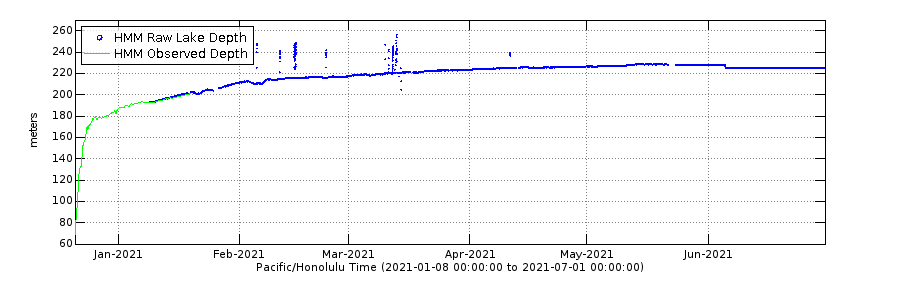
The eruption began as fissures on the walls and lowest down-dropped block within Halemaʻumaʻu on December 20 at approximately 9:30 p.m. HST. The water lake that had been present at the base of the crater was quickly boiled away and replaced by a lava lake. Eventually, activity became focused at a vent on the west wall of Halemaʻumaʻu. By May, the eruption had filled Halemaʻumaʻu crater with 223 meters/732 ft of lava (equal to an elevation of approximately 741 meters/2431 ft above sea level); the last activity on the lava lake surface was observed on May 23, 2021.
After the December 2020-May 2021 Halemaʻumaʻu eruption ended, Kīlauea summit region continued to slowly inflate. In August 2021, increased earthquake activity and patterns of ground deformation indicated that an intrusion was occurring, and magma was moving into an area south of Kīlauea caldera. However, no eruption occurred, and the shallow Halemaʻumaʻu magma reservoir continued to measure inflation.
On September 29, 2021, earthquake activity increased abruptly beneath Halemaʻumaʻu around 2 p.m. HST, and at 3:21 p.m. a series of vents opened in the floor and walls of Halemaʻumaʻu crater, generating a lava lake. The activity was nearly “continuous,” though there were multiple occasions when lava was not flowing on the surface. During the late fall and winter of 2021–2022, the eruption would episodically pause for periods lasting from hours to days. These pauses typically occurred in conjunction with deflation-inflation (DI) events in the summit magma reservoir, as recorded by USGS Hawaiian Volcano Observatory (HVO) tiltmeters in the region. The eruption continued for over a year until lava supply to the Halemaʻumaʻu lava lake ceased on December 9, 2022.
Following a brief month without active lava, another eruption began at the base of Halema‘uma‘u crater on January 5, 2023. The eruption was brief compared to the previous two eruptions in Halemaʻumaʻu crater, lasting about three months and ending on March 7, 2023.
In June 2023, another eruption, brief and lasting less than two weeks, occurred within Halema‘uma‘u crater. Much of the eruption was focused at vent on the southwest wall of the crater, above the crater floor.

December 2020–May 2021 eruption in Halemaʻumaʻu crater
Lava lake filled 229 meters (752 ft), to an elevation of 747 m (2450 ft) asl
41 million cubic meters (11 billion gallons) of lava erupted
112 acres (45 hectares) surface area of crater floor
Filled 5% of the volume of the 2018 collapse
September 2021–December 2022 eruption in Halemaʻumaʻu crater
Lava lake filled 143 m (469 ft), to an elevation of 886 m (2907 ft) asl
110.8 million cubic meters (29.3 billion gallons) of lava erupted
295 acres (119 hectares) surface area of crater floor
Filled about 14% of the volume of the 2018 collapse

January 2023–March 2023 eruption in Halemaʻumaʻu crater
Lava lake filled 13 meters (43 ft), to an elevation of 900 m (2953 ft) asl
16.5 million cubic meters (4.4 billion gallons) of lava erupted
292 acres (118 hectares) surface area of crater floor
Filled about 2% of the volume of the 2018 collapse
June 2023 eruption in Halemaʻumaʻu crater
Lava lake filled 11 meters (36 ft), to an elevation of 910 m (2986 ft) asl
15.9 million cubic meters (4.2 billion gallons) of lava erupted
376 acres (152 hectares) surface area of crater floor
Filled about 2% of the volume of the 2018 collapse
September 2023 eruption in Halemaʻumaʻu crater and on the downdropped block
Lava lake filled 20 meters (66 ft), to an elevation of 930 m (3052 ft) asl
18.6 million cubic meters (4.9 billion gallons) of lava erupted
499 acres (202 hectares) surface area of crater floor
Filled about 2% of the volume of the 2018 collapse
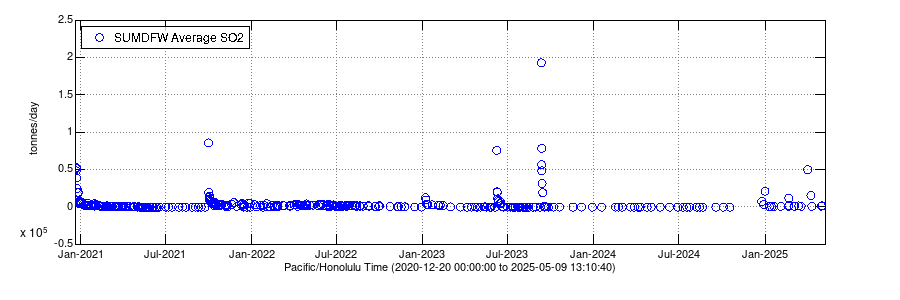
The data plots below show rise of Halema‘uma‘u crater floor and sulfur dioxide emissions since December 2020.
Additional resources related to the eruptions:
- Search for past volcano updates
- Subscribe to the USGS Volcano Notification Service to receive eruption updates
- Kīlauea geology and history
- Kīlauea Maps
- Vog Information Dashboard
- General Hawai‘i County Civil Defense information or subscribe to CD alerts and updates
- Follow USGS Volcanoes on Twitter, Facebook, and Instagram.
- Volcano viewing information from Hawaii Volcanoes National Park
After the 2018 summit collapse, Kīlauea volcano was quiet until an eruption began within Halema‘uma‘u crater on December 20, 2020, at about 9:30 p.m. HST. The eruption was one of several recent eruptions at Kīlauea's summit.
This is an exciting time on Kīlauea Volcano because there have been several summit eruptions following the 2018 summit collapse. For information
on the current eruption, see the eruption webpage: Recent Eruption | U.S. Geological Survey (usgs.gov)
Kīlauea Volcano had maintained a low level of non-eruptive unrest since the end of the 2018 lower East Rift Zone eruption and summit collapse, which deepened Halemaʻumaʻu crater by over 500 meters (1640 feet). Two months after the end of the 2018 eruption, the HVO monitoring network detected Deflation-Inflation events (DI-events) indicative that the shallow Halemaʻumaʻu magma reservoir, located approximately 1.6 km (1 mile) under Kīlauea caldera, still contained significant amounts of magma. Several months after that, in March of 2019, the summit began to steadily inflate. Beginning in September 2020, increased rates of uplift were observed by Global Positioning System (GPS) stations in Kīlauea’s upper East Rift Zone and over the past month were observed in Kīlauea’s summit region.
On December 2, 2020, GPS stations and tiltmeters recorded a ground deformation event at Kīlauea’s summit indicative of a small dike intrusion of magma under the southern part of Kīlauea caldera. Following the intrusion, seismometers detected a notable increase in occurrence and duration of long-period seismic signals beneath Kīlauea’s summit, which are attributed to magmatic activity, beginning on December 17, 2020.
The eruption began as fissures on the walls and lowest down-dropped block within Halemaʻumaʻu on December 20 at approximately 9:30 p.m. HST. The water lake that had been present at the base of the crater was quickly boiled away and replaced by a lava lake. Eventually, activity became focused at a vent on the west wall of Halemaʻumaʻu. By May, the eruption had filled Halemaʻumaʻu crater with 223 meters/732 ft of lava (equal to an elevation of approximately 741 meters/2431 ft above sea level); the last activity on the lava lake surface was observed on May 23, 2021.
After the December 2020-May 2021 Halemaʻumaʻu eruption ended, Kīlauea summit region continued to slowly inflate. In August 2021, increased earthquake activity and patterns of ground deformation indicated that an intrusion was occurring, and magma was moving into an area south of Kīlauea caldera. However, no eruption occurred, and the shallow Halemaʻumaʻu magma reservoir continued to measure inflation.
On September 29, 2021, earthquake activity increased abruptly beneath Halemaʻumaʻu around 2 p.m. HST, and at 3:21 p.m. a series of vents opened in the floor and walls of Halemaʻumaʻu crater, generating a lava lake. The activity was nearly “continuous,” though there were multiple occasions when lava was not flowing on the surface. During the late fall and winter of 2021–2022, the eruption would episodically pause for periods lasting from hours to days. These pauses typically occurred in conjunction with deflation-inflation (DI) events in the summit magma reservoir, as recorded by USGS Hawaiian Volcano Observatory (HVO) tiltmeters in the region. The eruption continued for over a year until lava supply to the Halemaʻumaʻu lava lake ceased on December 9, 2022.
Following a brief month without active lava, another eruption began at the base of Halema‘uma‘u crater on January 5, 2023. The eruption was brief compared to the previous two eruptions in Halemaʻumaʻu crater, lasting about three months and ending on March 7, 2023.
In June 2023, another eruption, brief and lasting less than two weeks, occurred within Halema‘uma‘u crater. Much of the eruption was focused at vent on the southwest wall of the crater, above the crater floor.
December 2020–May 2021 eruption in Halemaʻumaʻu crater
Lava lake filled 229 meters (752 ft), to an elevation of 747 m (2450 ft) asl
41 million cubic meters (11 billion gallons) of lava erupted
112 acres (45 hectares) surface area of crater floor
Filled 5% of the volume of the 2018 collapse
September 2021–December 2022 eruption in Halemaʻumaʻu crater
Lava lake filled 143 m (469 ft), to an elevation of 886 m (2907 ft) asl
110.8 million cubic meters (29.3 billion gallons) of lava erupted
295 acres (119 hectares) surface area of crater floor
Filled about 14% of the volume of the 2018 collapse
January 2023–March 2023 eruption in Halemaʻumaʻu crater
Lava lake filled 13 meters (43 ft), to an elevation of 900 m (2953 ft) asl
16.5 million cubic meters (4.4 billion gallons) of lava erupted
292 acres (118 hectares) surface area of crater floor
Filled about 2% of the volume of the 2018 collapse
June 2023 eruption in Halemaʻumaʻu crater
Lava lake filled 11 meters (36 ft), to an elevation of 910 m (2986 ft) asl
15.9 million cubic meters (4.2 billion gallons) of lava erupted
376 acres (152 hectares) surface area of crater floor
Filled about 2% of the volume of the 2018 collapse
September 2023 eruption in Halemaʻumaʻu crater and on the downdropped block
Lava lake filled 20 meters (66 ft), to an elevation of 930 m (3052 ft) asl
18.6 million cubic meters (4.9 billion gallons) of lava erupted
499 acres (202 hectares) surface area of crater floor
Filled about 2% of the volume of the 2018 collapse
The data plots below show rise of Halema‘uma‘u crater floor and sulfur dioxide emissions since December 2020.
Additional resources related to the eruptions:
- Search for past volcano updates
- Subscribe to the USGS Volcano Notification Service to receive eruption updates
- Kīlauea geology and history
- Kīlauea Maps
- Vog Information Dashboard
- General Hawai‘i County Civil Defense information or subscribe to CD alerts and updates
- Follow USGS Volcanoes on Twitter, Facebook, and Instagram.
- Volcano viewing information from Hawaii Volcanoes National Park