U.S. flag

An official website of the United States government

Images

Kīlauea images of eruptive activity, field work, and more.

Filter Total Items: 3024
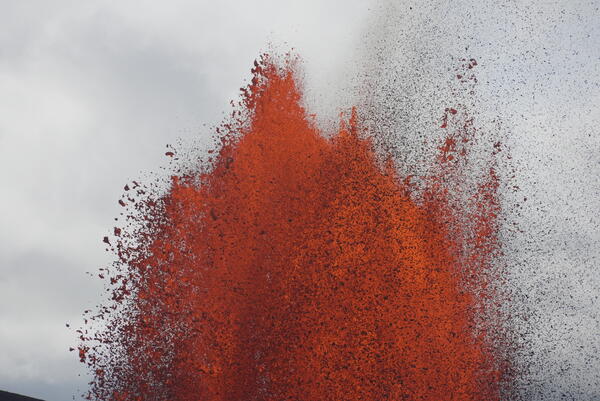
Color photograph showing the top of a lava fountain
March 10, 2026 — Kīlauea episode 43 lava fountain top

The top portion of the south lava fountain during episode 43 lava fountaining activity at the summit of Kīlauea, showing the range of sizes of clasts the separate out from the fountain. USGS photo by M. Patrick.
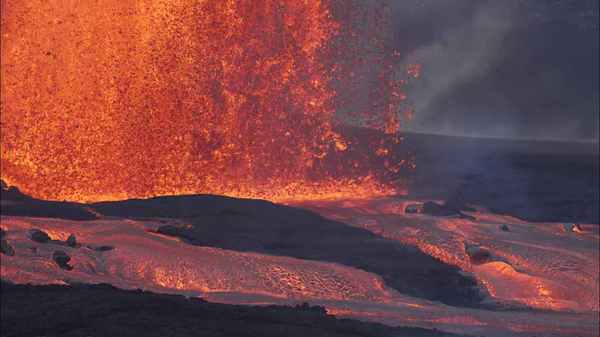
The top portion of the south lava fountain during episode 43 lava fountaining activity at the summit of Kīlauea, showing the range of sizes of clasts the separate out from the fountain. USGS photo by M. Patrick.
Color photograph of lava fountain
March 10, 2026 — Episode 43 lava fountain

Activity during the episode 43 lava fountains at the summit of Kīlauea, from the south rim of the crater. This area provided clear views of the north and south fountains, and the lava channels that transported lava from the vent into the eastern portion of the crater floor. USGS photo by M. Patrick.


Activity during the episode 43 lava fountains at the summit of Kīlauea, from the south rim of the crater. This area provided clear views of the north and south fountains, and the lava channels that transported lava from the vent into the eastern portion of the crater floor. USGS photo by M. Patrick.


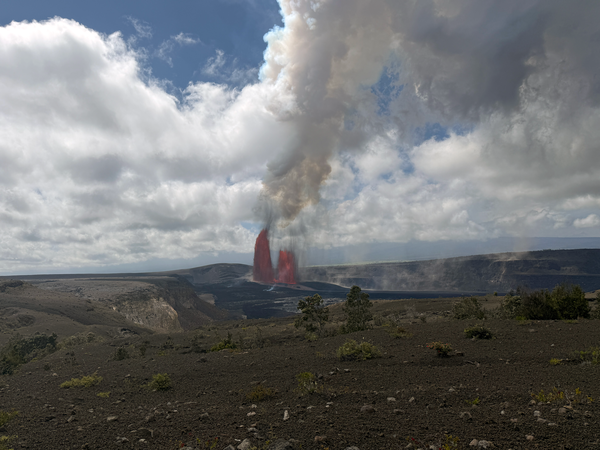
Color photograph of lava fountains
March 10, 2026 — Kīlauea episode 43 dual lava fountains

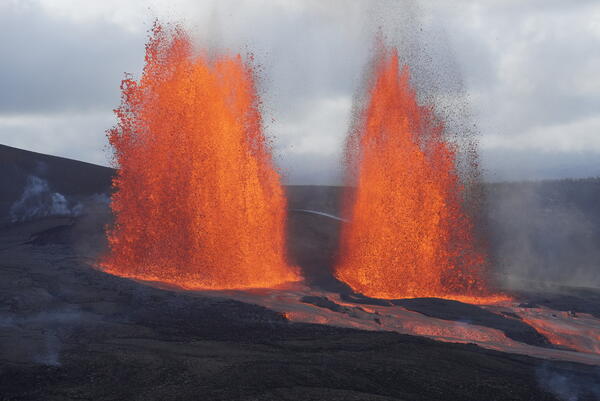
This photo was taken from the south rim of Halemaʻumaʻu crater and shows the south and north fountains active during episode 43 at the summit of Kīlauea. USGS photo by M. Patrick.

This photo was taken from the south rim of Halemaʻumaʻu crater and shows the south and north fountains active during episode 43 at the summit of Kīlauea. USGS photo by M. Patrick.
Color photograph of car covered with tephra
March 10, 2026 — Kīlauea episode 43 tephra on a car within Hawai‘i Volcanoes National Park

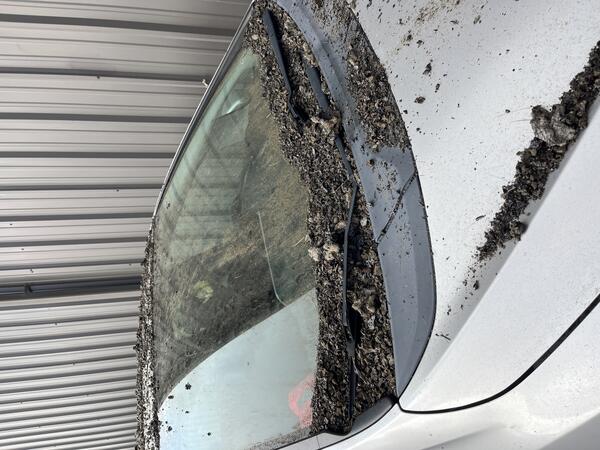
This car was parked within Hawai‘i Volcanoes National Park, nearly 3 miles (4.7 km) east-northeast of north and south vents of the ongoing eruption of Kīlauea volcano. The photo shows about 7 hours of tephra fall accumulation from episode 43.

Color photograph of volcanic eruption
March 10, 2026 — Episode 43 at the summit of Kīlauea

The onset of episode 43 fountaining of the ongoing Halemaʻumaʻu eruption at the summit of Kīlauea occurred at 9:17 a.m. HST on March 10, 2026, about an hour after the start of precursory eruptions at 8:20 a.m. HST. The start of episode 43 was marked by a sharp increase in tremor and deflationary tilt recorded at the Uēkahuna tiltmeter (UWD).

The onset of episode 43 fountaining of the ongoing Halemaʻumaʻu eruption at the summit of Kīlauea occurred at 9:17 a.m. HST on March 10, 2026, about an hour after the start of precursory eruptions at 8:20 a.m. HST. The start of episode 43 was marked by a sharp increase in tremor and deflationary tilt recorded at the Uēkahuna tiltmeter (UWD).

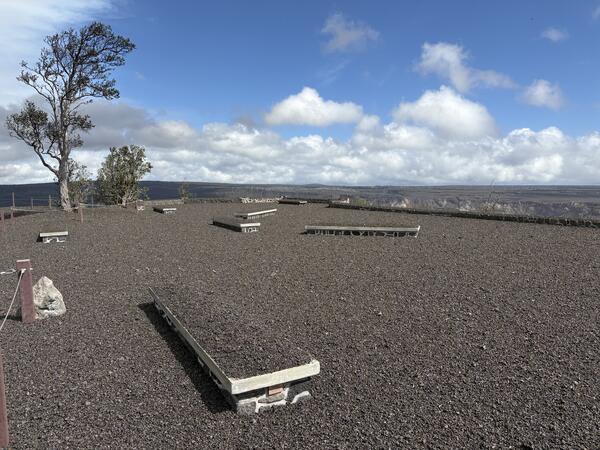
Color photograph of volcanic fallout on overlook
March 10, 2026 — Episode 43 tephra at the summit of Kīlauea

Episode 43 at the summit of Kīlauea was comparable in size to episodes 41 and 42, but due to light winds it produced tephra fallout similar to but not as great as episode 41.

Episode 43 at the summit of Kīlauea was comparable in size to episodes 41 and 42, but due to light winds it produced tephra fallout similar to but not as great as episode 41.

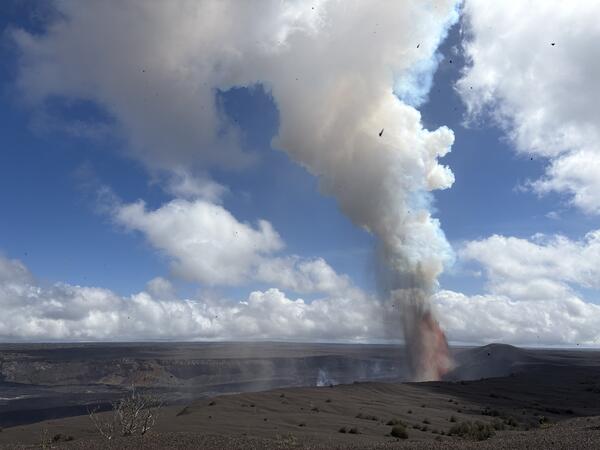
Lava fountains erupting in a crater
Episode 43 of the ongoing Kīlauea summit eruption

On March 10, 2026, lava fountains erupted from two main vents within Halema‘uma‘u crater. During the ongoing episodic Kīlauea summit eruption, which began on December 23, 2024. There have been 43 episodes so far. USGS photo taken by L. DeSmither from Keanakāko‘i.

On March 10, 2026, lava fountains erupted from two main vents within Halema‘uma‘u crater. During the ongoing episodic Kīlauea summit eruption, which began on December 23, 2024. There have been 43 episodes so far. USGS photo taken by L. DeSmither from Keanakāko‘i.

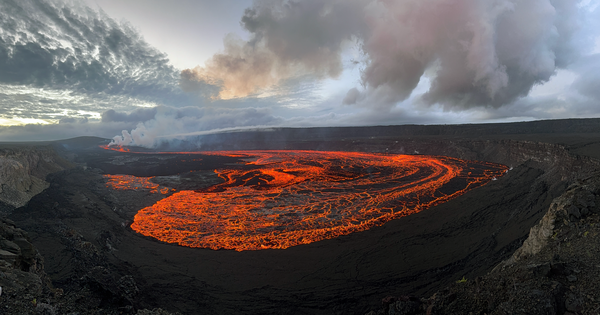
An incandescent red lava flow covers a large area of a crater floor
Episode 43 of the Kīlauea summit eruption

Episode 43, which began at 9:17 a.m. HST on March 10, erupted for just over 9 hours before pausing again at 6:21 p.m. This panoramic view of episode 43 lava flows on Halema‘uma‘u crater floor was taken a few minutes after the fountaining stopped. USGS photo taken by L. DeSmither near Keanakāko‘i on the southeast rim of the caldera.

Episode 43, which began at 9:17 a.m. HST on March 10, erupted for just over 9 hours before pausing again at 6:21 p.m. This panoramic view of episode 43 lava flows on Halema‘uma‘u crater floor was taken a few minutes after the fountaining stopped. USGS photo taken by L. DeSmither near Keanakāko‘i on the southeast rim of the caldera.

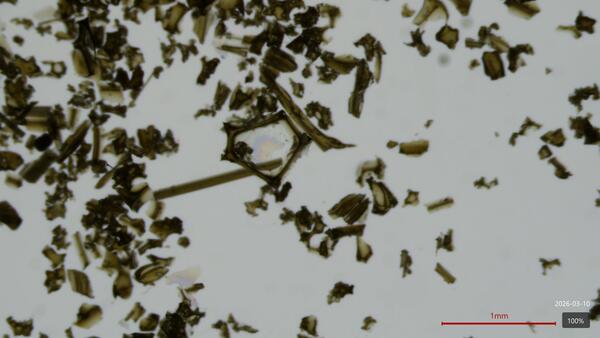
Color microscope photograph of ash
March 10, 2026 — Ash that fell in Hilo during episode 43 at Kīlauea

Microscopic images of Pele's hair and ash deposited in Hilo during Kīlauea's episode 43 fountains on March 10, 2026. The area in the center shows a bubble wall that was cooled and preserved. UHH/USGS photo by L. Gallant.

Microscopic images of Pele's hair and ash deposited in Hilo during Kīlauea's episode 43 fountains on March 10, 2026. The area in the center shows a bubble wall that was cooled and preserved. UHH/USGS photo by L. Gallant.

Color photograph of volcanic plume
March 10, 2026 — Kīlauea episode 43 lava fountains seen from Footprints Trail

Episode 43 of Kīlauea's ongoing summit eruption started at 9:17 a.m. H.S.T. on March 11, 2026. This photo was taken at noon from the Footprints Trail looking east. This site is nearly 6 miles (9 miles) from north and south vents. The fountain from south vent is clearly visible, along with towering volcanic plume.

Episode 43 of Kīlauea's ongoing summit eruption started at 9:17 a.m. H.S.T. on March 11, 2026. This photo was taken at noon from the Footprints Trail looking east. This site is nearly 6 miles (9 miles) from north and south vents. The fountain from south vent is clearly visible, along with towering volcanic plume.

Color photograph of road covered with volcanic fallout
March 10, 2026 — Edge of episode 43 (Kīlauea) tephra deposit

Episode 43 of Kīlauea's ongoing eruption occurred on March 10, 2026. This photo is taken on the Mauna Loa Road within Hawai‘i Volcanoes National Park, looking northwest. This photo shows the edge of the episode 43 tephra deposit.

Episode 43 of Kīlauea's ongoing eruption occurred on March 10, 2026. This photo is taken on the Mauna Loa Road within Hawai‘i Volcanoes National Park, looking northwest. This photo shows the edge of the episode 43 tephra deposit.

Large white plume of volcanic gas and steam rising from lava fountains in a crater
Episode 43 of the Kīlauea summit eruption

Episode 43 of the ongoing Kīlauea summit eruption occurred on March 10. Lava fountains from the north and south vents on the western side of Halema‘uma‘u crater floor produced a large eruption plume of volcanic gases and rock fragments (tephra).

Episode 43 of the ongoing Kīlauea summit eruption occurred on March 10. Lava fountains from the north and south vents on the western side of Halema‘uma‘u crater floor produced a large eruption plume of volcanic gases and rock fragments (tephra).

Color photograph of a roof with volcanic particles on it
March 10, 2026 — Episode 43 tephra on a roof in Mauna Loa Estates

Tephra fallout from episode 43 lava fountaining at the summit of Kīlauea accumulated on a roof in Mauna Loa Estates, east of the eruptive vents. Fallout in this area was less severe than what occurred during episode 41, and included particles up to 3 inches in diameter but coverage was not continuous. USGS photo. 

Tephra fallout from episode 43 lava fountaining at the summit of Kīlauea accumulated on a roof in Mauna Loa Estates, east of the eruptive vents. Fallout in this area was less severe than what occurred during episode 41, and included particles up to 3 inches in diameter but coverage was not continuous. USGS photo. 

Color photograph of floor with volcanic fallout particles on it
March 10, 2026 — Episode 43 fallout on a floor in Hilo

Volcanic ash and Pele's hair accumulated on a floor of a home located in Hilo after episode 43 lava fountaining at the summit of Kīlauea on March 10, 2026. The window was left open nearby and had a screen, but these small particles were able to waft inside. USGS photo. 

Volcanic ash and Pele's hair accumulated on a floor of a home located in Hilo after episode 43 lava fountaining at the summit of Kīlauea on March 10, 2026. The window was left open nearby and had a screen, but these small particles were able to waft inside. USGS photo. 

Two lava fountains erupt from vents on crater floor as scientist monitors in the foreground
Episode 43 of the Kīlauea summit eruption

A USGS scientist performs maintenance on an eruption monitoring camera during episode 43 of the ongoing Kīlauea summit eruption. Work within this area, which is closed to the public, is done with permission from Hawai‘i Volcanoes National Park. USGS photo taken by L. DeSmither on March 10, 2026. 

A USGS scientist performs maintenance on an eruption monitoring camera during episode 43 of the ongoing Kīlauea summit eruption. Work within this area, which is closed to the public, is done with permission from Hawai‘i Volcanoes National Park. USGS photo taken by L. DeSmither on March 10, 2026. 

Color photograph of fallout from volcanic eruption
March 10, 2026 — Episode 43 tephra deposits at Kilauea Military Camp

This photograph shows the grassy area around the flagpole at the Kilauea Military Camp in Hawaiʻi Volcanoes National Park. Tephra about 4-5 inches in diameter started falling at this location at about 10:20 a.m. HST, and in total the area received about 2 inches of accumulation that completely covered the ground surface. USGS photo. 

This photograph shows the grassy area around the flagpole at the Kilauea Military Camp in Hawaiʻi Volcanoes National Park. Tephra about 4-5 inches in diameter started falling at this location at about 10:20 a.m. HST, and in total the area received about 2 inches of accumulation that completely covered the ground surface. USGS photo. 

Color flyer promoting a website to report if tephra is falling
Flyer: Is Tephra Falling?

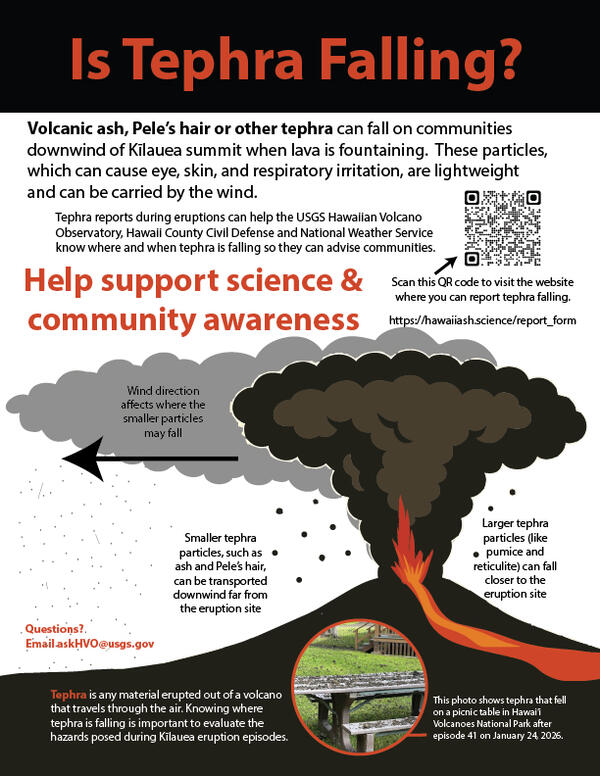
Kīlauea has erupting episodically within Hawaiʻi Volcanoes National Park since December 23, 2024. While lava flows are contained to the caldera, tephra fallout from the lava fountains can affect communities downwind. Tephra is any material erupted from a volcano that travels through the air and it includes volcanic ash, Pele's hair, and other larger tephra

Kīlauea has erupting episodically within Hawaiʻi Volcanoes National Park since December 23, 2024. While lava flows are contained to the caldera, tephra fallout from the lava fountains can affect communities downwind. Tephra is any material erupted from a volcano that travels through the air and it includes volcanic ash, Pele's hair, and other larger tephra

Color map of recent eruption location
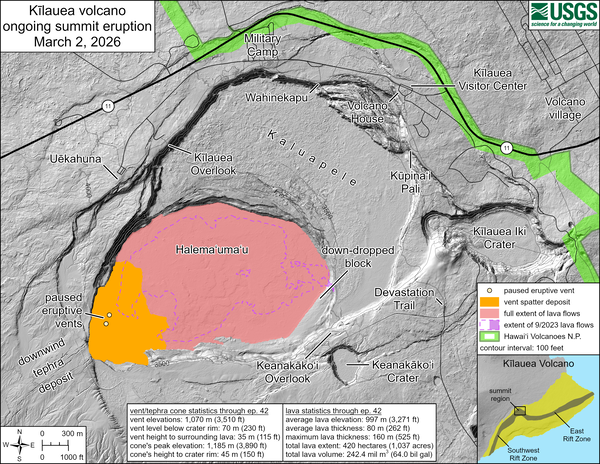
March 2, 2026—Kīlauea summit eruption reference map

This reference map depicts the Kīlauea summit eruption within Halema‘uma‘u crater that began on December 23, 2024. As of this posting on March 2, 2026, the eruption has had forty-two episodes, with the most recent occurring on February 15.

This reference map depicts the Kīlauea summit eruption within Halema‘uma‘u crater that began on December 23, 2024. As of this posting on March 2, 2026, the eruption has had forty-two episodes, with the most recent occurring on February 15.

Color photograph of volcanic vents degassing
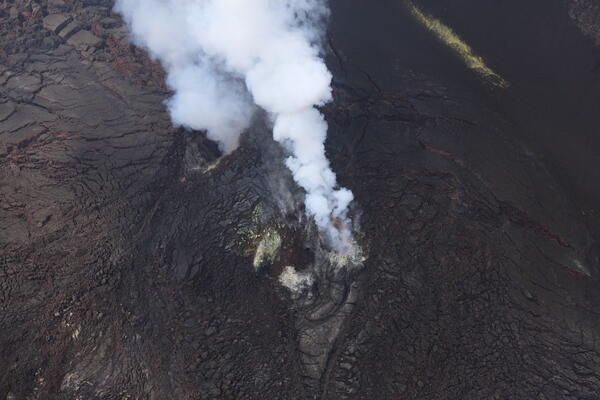
February 26, 2026 — Low pass over eruptive vents at the summit of Kīlauea

Despite hazy conditions on Thursday, February 26, the USGS Hawaiian Volcano Observatory monitoring overflight crew had clear views of the Kīlauea summit eruptive vents during a low pass over western Halema‘uma‘u crater. No lava or incandescence was visible in either the north (lower-right) or south (upper-left) vent. USGS photo by M. Zoeller.

Despite hazy conditions on Thursday, February 26, the USGS Hawaiian Volcano Observatory monitoring overflight crew had clear views of the Kīlauea summit eruptive vents during a low pass over western Halema‘uma‘u crater. No lava or incandescence was visible in either the north (lower-right) or south (upper-left) vent. USGS photo by M. Zoeller.

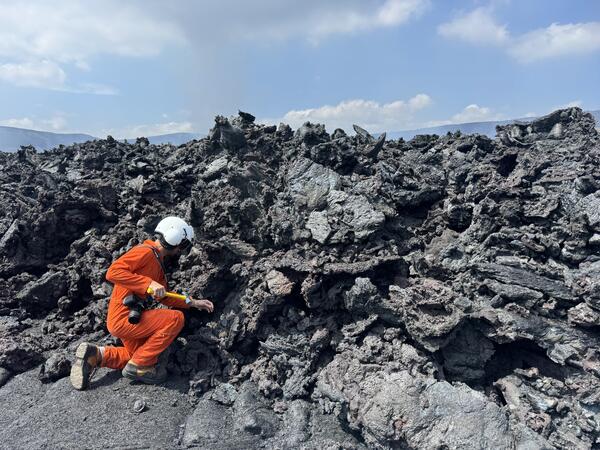
Color photograph of scientist collecting sample of lava flow
February 26, 2026 — Sampling on Halemaʻumaʻu crater floor, Kīlauea summit

A USGS Hawaiian Volcano Observatory geologist collects a cooled lava sample from the front of the episode 42 lava flow on Halema‘uma‘u crater floor at Kīlauea summit. The chemistry of these lava samples is analyzed to better understand the magmatic plumbing system and inform our understanding of eruptive hazards. USGS photo by M. Patrick.
A USGS Hawaiian Volcano Observatory geologist collects a cooled lava sample from the front of the episode 42 lava flow on Halema‘uma‘u crater floor at Kīlauea summit. The chemistry of these lava samples is analyzed to better understand the magmatic plumbing system and inform our understanding of eruptive hazards. USGS photo by M. Patrick.
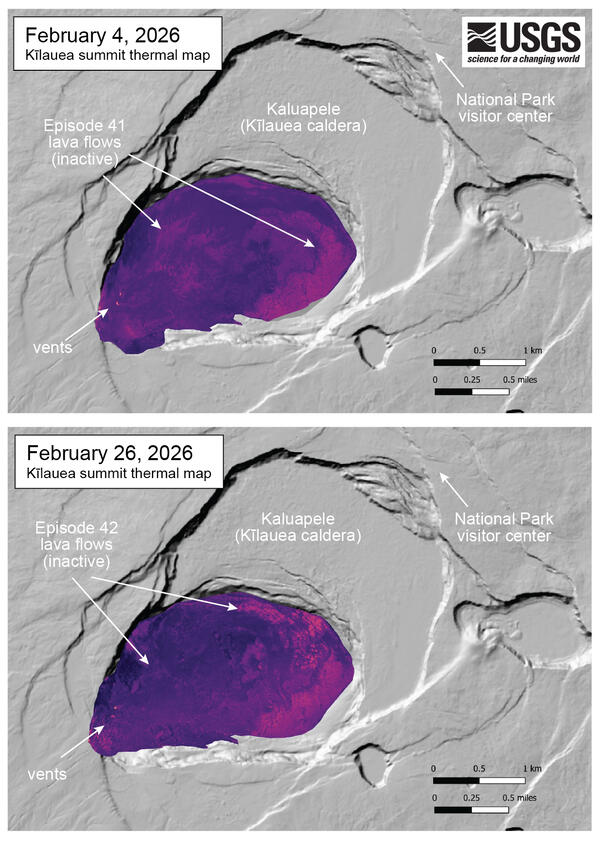
Color map showing temperature of crater floor
February 26, 2026 — Thermal maps of Kīlauea summit in February 2026

These thermal maps at the summit of Kīlauea show the crater floor after episodes 41 and 42. Episode 41 produced a lava flow that covered much of the eastern crater floor, while episode 42 produced flows that stopped short of reaching the eastern edge of the crater floor. 

These thermal maps at the summit of Kīlauea show the crater floor after episodes 41 and 42. Episode 41 produced a lava flow that covered much of the eastern crater floor, while episode 42 produced flows that stopped short of reaching the eastern edge of the crater floor. 

Was this page helpful?