



Juvenile bar-tailed godwit "B6" after capture on the Seward Peninsula near Nome, Alaska. Researchers from the Max Planck Institute, U.S. Geological Survey, and the U.S. Fish and Wildlife Service conducted a study to track the migration of juvenile (hatch year) bar-tailed godwits from breeding sites near Nome, Alaska.
Images
Browse images from a wide range of science topics covered by USGS. All items in this gallery are considered public domain unless otherwise noted.
Filter Total Items: 1611

Juvenile bar-tailed godwit "B6" after capture
Juvenile bar-tailed godwit "B6" after capture on the Seward Peninsula near Nome, Alaska. Researchers from the Max Planck Institute, U.S. Geological Survey, and the U.S. Fish and Wildlife Service conducted a study to track the migration of juvenile (hatch year) bar-tailed godwits from breeding sites near Nome, Alaska.

A Long-Suspected Culprit is Caught - Panel 10
HOWEVER, IF WE WORK TOGETHER, WE CAN MAKE THINGS SAFER. THE ALASKA HARMFUL ALGAL BLOOM NETWORK ASSEMBLES PARTNERS TO SHARE INFORMATION ABOUT HUMAN, WILDLIFE, AND ECOSYSTEM HEALTH.
HOWEVER, IF WE WORK TOGETHER, WE CAN MAKE THINGS SAFER. THE ALASKA HARMFUL ALGAL BLOOM NETWORK ASSEMBLES PARTNERS TO SHARE INFORMATION ABOUT HUMAN, WILDLIFE, AND ECOSYSTEM HEALTH.

A Long-Suspected Culprit is Caught - Panel 6
AS THE OCEAN WARMS AND FILLS WITH EXCESS NUTRIENTS FROM SURFACE RUNOFF, CERTAIN TYPES OF ALGAE CAN GROW OUT OF CONTROL AND PRODUCE DANGEROUS TOXINS.
TYPICALLY, THE HARMFUL ALGAE BLOOMS DURING THE SUMMER SEASON. THE WARMER TEMPERATURES KEEP WATER FROM MIXING, ALLOWING THE ALGAE TO GROW MUCH FASTER.
AS THE OCEAN WARMS AND FILLS WITH EXCESS NUTRIENTS FROM SURFACE RUNOFF, CERTAIN TYPES OF ALGAE CAN GROW OUT OF CONTROL AND PRODUCE DANGEROUS TOXINS.
TYPICALLY, THE HARMFUL ALGAE BLOOMS DURING THE SUMMER SEASON. THE WARMER TEMPERATURES KEEP WATER FROM MIXING, ALLOWING THE ALGAE TO GROW MUCH FASTER.

A Long-Suspected Culprit is Caught - Panel 8
NOT ONLY ARE HARMFUL ALGAL BLOOMS IN THE OCEAN DANGEROUS FOR ARCTIC TERNS, THEY CAN ALSO IMPACT HUMAN FOOD SOURCES AND HEALTH.
NOT ONLY ARE HARMFUL ALGAL BLOOMS IN THE OCEAN DANGEROUS FOR ARCTIC TERNS, THEY CAN ALSO IMPACT HUMAN FOOD SOURCES AND HEALTH.

A Long-Suspected Culprit is Caught - Panel 2
DURING THE SUMMER OF 2019, DOZENS OF ARCTIC TERNS WERE FOUND DEAD. RESEARCHERS WONDERED, "WHAT HAPPENED?"
DURING THE SUMMER OF 2019, DOZENS OF ARCTIC TERNS WERE FOUND DEAD. RESEARCHERS WONDERED, "WHAT HAPPENED?"

Juvenile bar-tailed godwit "B6" with metal leg band
Juvenile bar-tailed godwit "B6" with metal leg bandJuvenile bar-tailed godwit "B6" with metal leg band. At this time researchers put a metal band on the chick and glued a small (0.5 gram) VHF transmitter to the bird.
Juvenile bar-tailed godwit "B6" with metal leg band
Juvenile bar-tailed godwit "B6" with metal leg bandJuvenile bar-tailed godwit "B6" with metal leg band. At this time researchers put a metal band on the chick and glued a small (0.5 gram) VHF transmitter to the bird.

A Long-Suspected Culprit is Caught - Panel 1
ARCTIC TERNS SPEND THEIR SUMMERS NESTING IN ALASKA AND PARTS OF THE ARCTIC. WHEN THE SEASON ENDS, THEY FLY SOUTH TO ANTARCTICA, EMBARKING ON THE LONGEST MIGRATION OF ANY ANIMAL ON EARTH!
ARCTIC TERNS SPEND THEIR SUMMERS NESTING IN ALASKA AND PARTS OF THE ARCTIC. WHEN THE SEASON ENDS, THEY FLY SOUTH TO ANTARCTICA, EMBARKING ON THE LONGEST MIGRATION OF ANY ANIMAL ON EARTH!

A Long-Suspected Culprit is Caught - Panel 3
ALTHOUGH OTHER BIRD DIE-OFFS HAD BEEN SEEN RECENTLY IN ALASKA, THERE WAS SOMETHING DIFFERENT ABOUT THE TERNS. THEY HAD BEEN POISONED.
ALTHOUGH OTHER BIRD DIE-OFFS HAD BEEN SEEN RECENTLY IN ALASKA, THERE WAS SOMETHING DIFFERENT ABOUT THE TERNS. THEY HAD BEEN POISONED.

A Long-Suspected Culprit is Caught - Panel 5
BRIGHT GREEN ALGAE CAN OFTEN BE SPOTTED FLOATING IN THE OCEAN NEAR THE SURFACE. THEY CONSUME NUTRIENTS, LIKE NITROGEN AND PHOSPHORUS. IN A BALANCED ECOSYSTEM, THEY GROW AND PROVIDE FOOD FOR MANY SEA CREATURES, INCLUDING KRILL, SNAILS, AND JELLYFISH.
BRIGHT GREEN ALGAE CAN OFTEN BE SPOTTED FLOATING IN THE OCEAN NEAR THE SURFACE. THEY CONSUME NUTRIENTS, LIKE NITROGEN AND PHOSPHORUS. IN A BALANCED ECOSYSTEM, THEY GROW AND PROVIDE FOOD FOR MANY SEA CREATURES, INCLUDING KRILL, SNAILS, AND JELLYFISH.

A Long-Suspected Culprit is Caught - Panel 7
TERNS EAT KRILL AND FORAGE FISH LIKE HERRING AND SAND LANCE. USUALLY, THAT'S A NUTRITIOUS DIET. BUT WHEN HARMFUL ALGAL BLOOMS OCCUR, TOXINS CAN TAINT THE FOOD WEB FOR THE BIRDS.
TERNS EAT KRILL AND FORAGE FISH LIKE HERRING AND SAND LANCE. USUALLY, THAT'S A NUTRITIOUS DIET. BUT WHEN HARMFUL ALGAL BLOOMS OCCUR, TOXINS CAN TAINT THE FOOD WEB FOR THE BIRDS.

A Long-Suspected Culprit is Caught - Panel 4
SEABIRD DIE-OFFS IN ALASKA ARE BECOMING MORE FREQUENT. ALTHOUGH RESEARCHERS BELIEVE MOST BIRDS STARVE DURING THESE EVENTS, THERE MAY BE SOMETHING ELSE CONTRIBUTING TO SOME OF THE DEATHS -- HARMFUL ALGAL BLOOMS.
SEABIRD DIE-OFFS IN ALASKA ARE BECOMING MORE FREQUENT. ALTHOUGH RESEARCHERS BELIEVE MOST BIRDS STARVE DURING THESE EVENTS, THERE MAY BE SOMETHING ELSE CONTRIBUTING TO SOME OF THE DEATHS -- HARMFUL ALGAL BLOOMS.

Red-throated loon with GPS transmitter
Biological Science Technician Maura Speck (USGS – ASC) about to release a red-throated loon (Gavia stellata) with a GPS transmitter attached.
Biological Science Technician Maura Speck (USGS – ASC) about to release a red-throated loon (Gavia stellata) with a GPS transmitter attached.

Caribou walking along coastal habitat
Adult female caribou in the Porcupine herd equipped with a GPS-enabled video camera collar that shows the caribou’s point-of-view as she tries to avoid insect harassment by seeking non-vegetated, coastal habitat within the Yukon coastal plain. This video was collected in collaboration with the Yukon Government as part of a study on the influence of summer habit
Adult female caribou in the Porcupine herd equipped with a GPS-enabled video camera collar that shows the caribou’s point-of-view as she tries to avoid insect harassment by seeking non-vegetated, coastal habitat within the Yukon coastal plain. This video was collected in collaboration with the Yukon Government as part of a study on the influence of summer habit
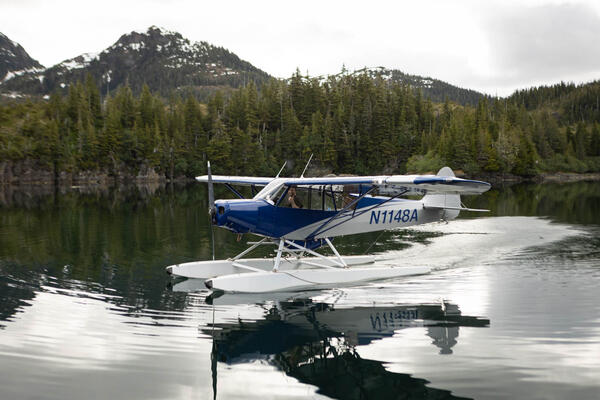
Float plane taking off in Prince William Sound for sea otter aerial survey
Float plane taking off in Prince William Sound for sea otter aerial surveyNorth River Air pilot Taj Shoemaker getting ready for takeoff in Prince William Sound.
Float plane taking off in Prince William Sound for sea otter aerial survey
Float plane taking off in Prince William Sound for sea otter aerial surveyNorth River Air pilot Taj Shoemaker getting ready for takeoff in Prince William Sound.

Pacific capelin trawl catch
Photo of Pacific capelin trawl catch in Cook Inlet Alaska. Capelin are cold water forage fish that play a key role in transferring energy between plankton and top marine predators. Seabirds, and their forage fish prey, serve as practical indicators of change in the marine environment— natural or human induced— and can be readily monitored at sea.
Photo of Pacific capelin trawl catch in Cook Inlet Alaska. Capelin are cold water forage fish that play a key role in transferring energy between plankton and top marine predators. Seabirds, and their forage fish prey, serve as practical indicators of change in the marine environment— natural or human induced— and can be readily monitored at sea.

Bar-tailed godwit habitat on the Seward Peninsula
Bar-tailed godwit habitat on the Seward Peninsula near Nome, Alaska. Researchers from the Max Planck Institute, U.S. Geological Survey, and the U.S. Fish and Wildlife Service conducted a study to track the migration of juvenile (hatch year) bar-tailed godwits from breeding sites near Nome, Alaska.
Bar-tailed godwit habitat on the Seward Peninsula near Nome, Alaska. Researchers from the Max Planck Institute, U.S. Geological Survey, and the U.S. Fish and Wildlife Service conducted a study to track the migration of juvenile (hatch year) bar-tailed godwits from breeding sites near Nome, Alaska.
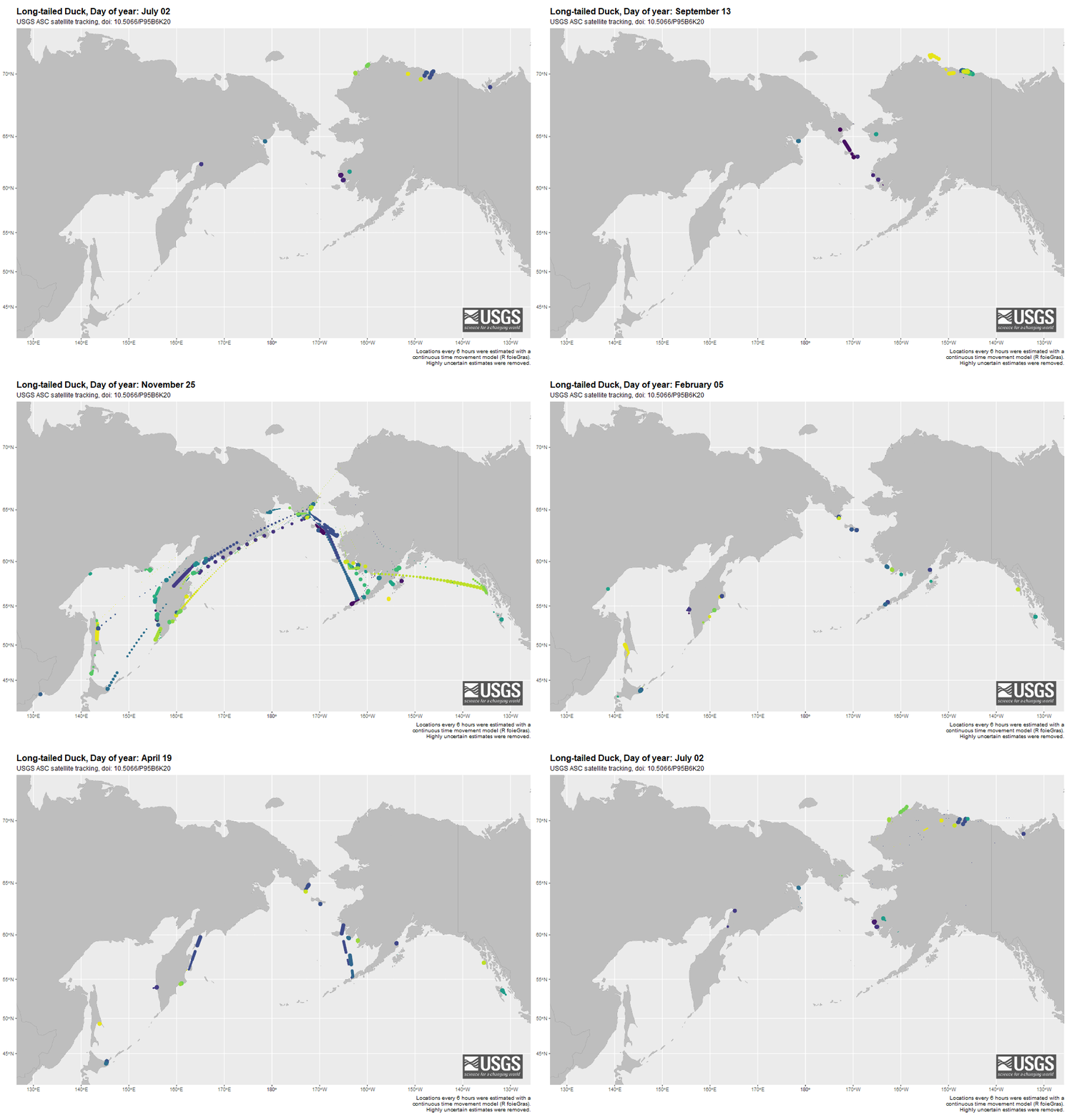
Argos Wildlife Tracking Long-tailed Ducks animation
Argos Wildlife Tracking Long-tailed Ducks animationIllustrates where Long-tailed Ducks were tracked using Argos Wildlife Tracking.
Argos Wildlife Tracking Long-tailed Ducks animation
Argos Wildlife Tracking Long-tailed Ducks animationIllustrates where Long-tailed Ducks were tracked using Argos Wildlife Tracking.

Lake in Wrangell St. Elias National Park
Lake in Wrangell St. Elias National Park. This is part of a study examining mercury in lake food webs.
Lake in Wrangell St. Elias National Park. This is part of a study examining mercury in lake food webs.

Longnose sucker in Wrangell St. Elias National Park
Longnose sucker in Wrangell St. Elias National ParkLongnose sucker in Wrangell St. Elias National Park. Longnose suckers (Catostomus catostomus) were collected as part of a study examining mercury in lake food webs.
Longnose sucker in Wrangell St. Elias National Park
Longnose sucker in Wrangell St. Elias National ParkLongnose sucker in Wrangell St. Elias National Park. Longnose suckers (Catostomus catostomus) were collected as part of a study examining mercury in lake food webs.

Fishing for lake trout in Wrangell St. Elias National Park
Fishing for lake trout in Wrangell St. Elias National ParkFishing for lake trout (Salvelinus namaycush) in Wrangell St. Elias National Park. Sam Graf (NPS – LACL) and Ashley Stanek (USGS – ASC) angle for lake trout (Salvelinus namaycush) in Wrangell St. Elias National Park as part of a study examining mercury in lake food webs.
Fishing for lake trout in Wrangell St. Elias National Park
Fishing for lake trout in Wrangell St. Elias National ParkFishing for lake trout (Salvelinus namaycush) in Wrangell St. Elias National Park. Sam Graf (NPS – LACL) and Ashley Stanek (USGS – ASC) angle for lake trout (Salvelinus namaycush) in Wrangell St. Elias National Park as part of a study examining mercury in lake food webs.

Burbot in Wrangell St. Elias National Park
Burbot in Wrangell St. Elias National Park. Burbot (Lota lota) were collected as part of a study examining mercury in lake food webs.
Burbot in Wrangell St. Elias National Park. Burbot (Lota lota) were collected as part of a study examining mercury in lake food webs.