U.S. flag

An official website of the United States government

Images

Browse images from a wide range of science topics covered by USGS. All items in this gallery are considered public domain unless otherwise noted.

Filter Total Items: 1610
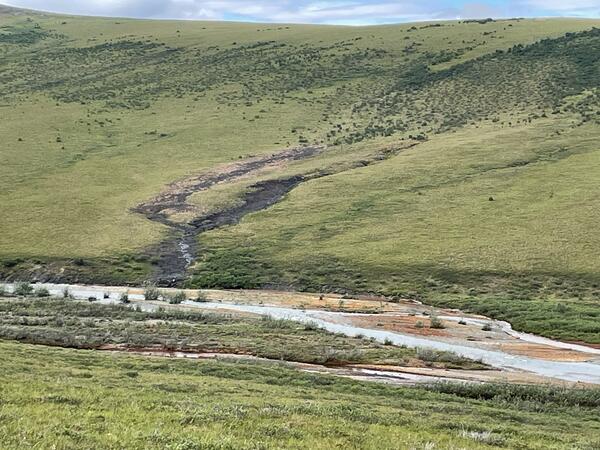
A blue creek running down a hillside into an orange river.
A seep emanates from a hillslope in the Nakolikurok Creek Watershed, blackening vegetation and staining the streambanks orange

Orange streams are increasingly common in the Brooks Range of northern Alaska. The orange stream color reflects oxidized iron, but also often indicates elevated heavy metal concentrations. Our ongoing study aims to document these occurrences and the timing of their onset.
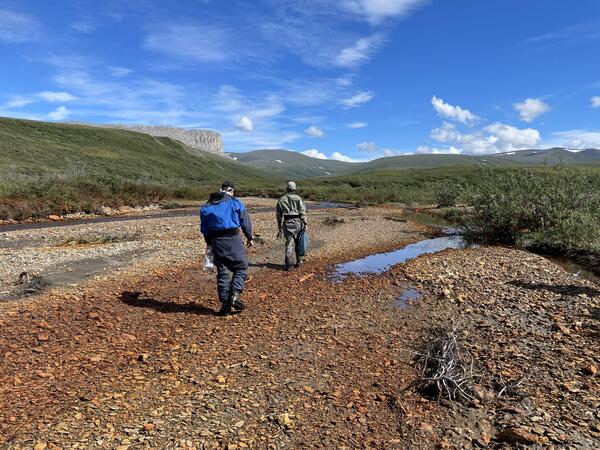
Two people walking up an orange creek bed.
Researchers walking to a site to sample rusting in the Nakolikurok Creek Watershed

Orange streams are increasingly common in the Brooks Range of northern Alaska. The orange stream color reflects oxidized iron, but also often indicates elevated heavy metal concentrations. Our ongoing study aims to document these occurrences and the timing of their onset.

Orange streams are increasingly common in the Brooks Range of northern Alaska. The orange stream color reflects oxidized iron, but also often indicates elevated heavy metal concentrations. Our ongoing study aims to document these occurrences and the timing of their onset.
Drone in air against blue sky, scattered clouds, ocean water near beach shore. Large case on ground grass in background.
USGS flying drone
USGS flying drone
USGS flying drone

USGS is flying drones for science, small uncrewed areal systems (sUAS), to surveys walruses when they rest on shore. The sUAS makes minimal sound due it is broad wing and is flown high above the walrus herds to enables survey data collection with minimal risk to walruses.

USGS is flying drones for science, small uncrewed areal systems (sUAS), to surveys walruses when they rest on shore. The sUAS makes minimal sound due it is broad wing and is flown high above the walrus herds to enables survey data collection with minimal risk to walruses.

Orange stained rock along a creek.
Orange staining in the braidplain of the Nakolikurok Creek

Orange streams are increasingly common in the Brooks Range of northern Alaska. The orange stream color reflects oxidized iron, but also often indicates elevated heavy metal concentrations. Our ongoing study aims to document these occurrences and the timing of their onset.

Orange streams are increasingly common in the Brooks Range of northern Alaska. The orange stream color reflects oxidized iron, but also often indicates elevated heavy metal concentrations. Our ongoing study aims to document these occurrences and the timing of their onset.
Two dead walrus on beach, two people on right walking towards walrus to collect samples. One person has 5-gallon bucket.
Two adult walrus carcasses

Two adult walrus carcasses on the beach observed during the summer after a large group of walruses had rested on shore.  USGS is collaborating with the North Slope Borough Department of Wildlife Management to screen walruses for wildlife diseases and algal toxins.  The University of Alaska Fairbanks is collaborating with USGS to validate drone survey metho

Two adult walrus carcasses on the beach observed during the summer after a large group of walruses had rested on shore.  USGS is collaborating with the North Slope Borough Department of Wildlife Management to screen walruses for wildlife diseases and algal toxins.  The University of Alaska Fairbanks is collaborating with USGS to validate drone survey metho

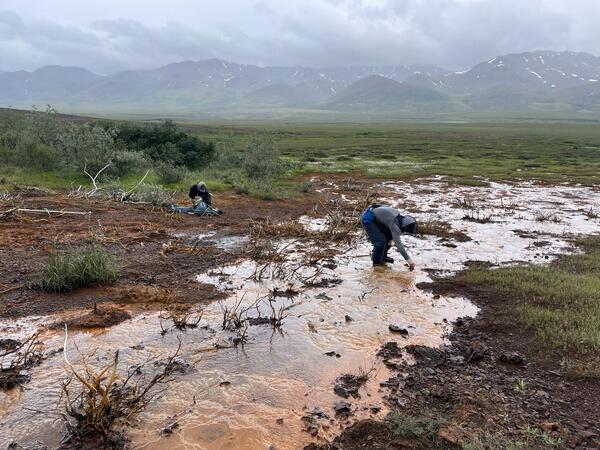
Two people sampling water from an orange creek.
Two scientists sample the orange water of a seep in the Kelly River Watershed, Alaska

Orange streams are increasingly common in the Brooks Range of northern Alaska. The orange stream color reflects oxidized iron, but also often indicates elevated heavy metal concentrations. Our ongoing study aims to document these occurrences and the timing of their onset.
Orange streams are increasingly common in the Brooks Range of northern Alaska. The orange stream color reflects oxidized iron, but also often indicates elevated heavy metal concentrations. Our ongoing study aims to document these occurrences and the timing of their onset.
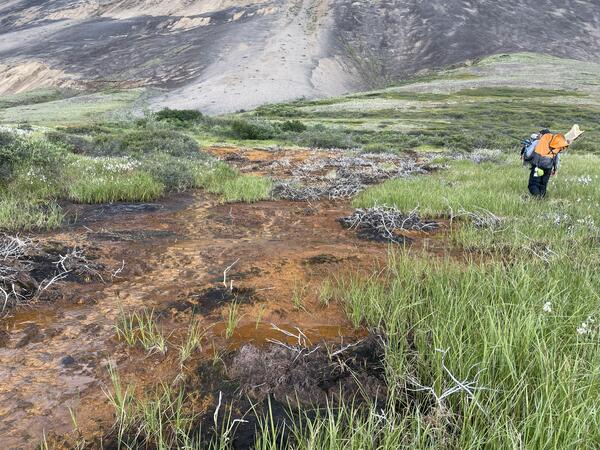
Person walking through green grass next to an orange creek.
A scientist walks uphill towards the source of an orange seep

Orange streams are increasingly common in the Brooks Range of northern Alaska. The orange stream color reflects oxidized iron, but also often indicates elevated heavy metal concentrations. Our ongoing study aims to document these occurrences and the timing of their onset.
Orange streams are increasingly common in the Brooks Range of northern Alaska. The orange stream color reflects oxidized iron, but also often indicates elevated heavy metal concentrations. Our ongoing study aims to document these occurrences and the timing of their onset.

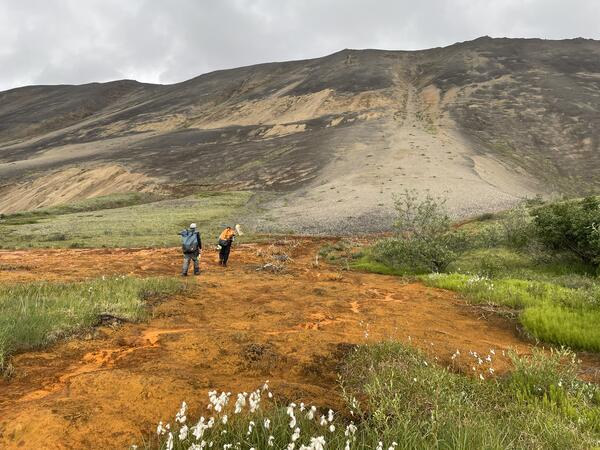
Two people walking across and orange seep.
Two scientists investigating the source of an orange seep

Orange streams are increasingly common in the Brooks Range of northern Alaska. The orange stream color reflects oxidized iron, but also often indicates elevated heavy metal concentrations. Our ongoing study aims to document these occurrences and the timing of their onset.

Orange streams are increasingly common in the Brooks Range of northern Alaska. The orange stream color reflects oxidized iron, but also often indicates elevated heavy metal concentrations. Our ongoing study aims to document these occurrences and the timing of their onset.
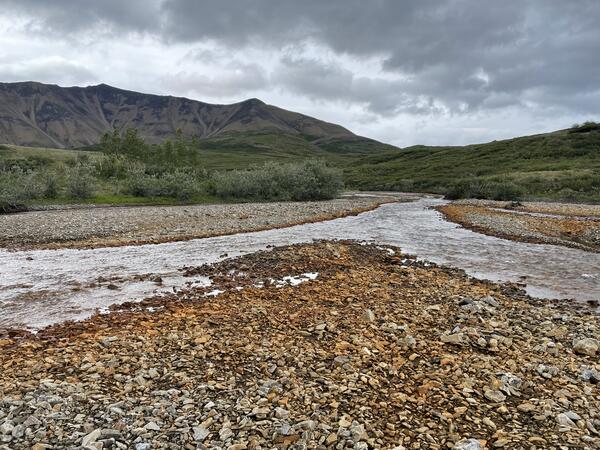
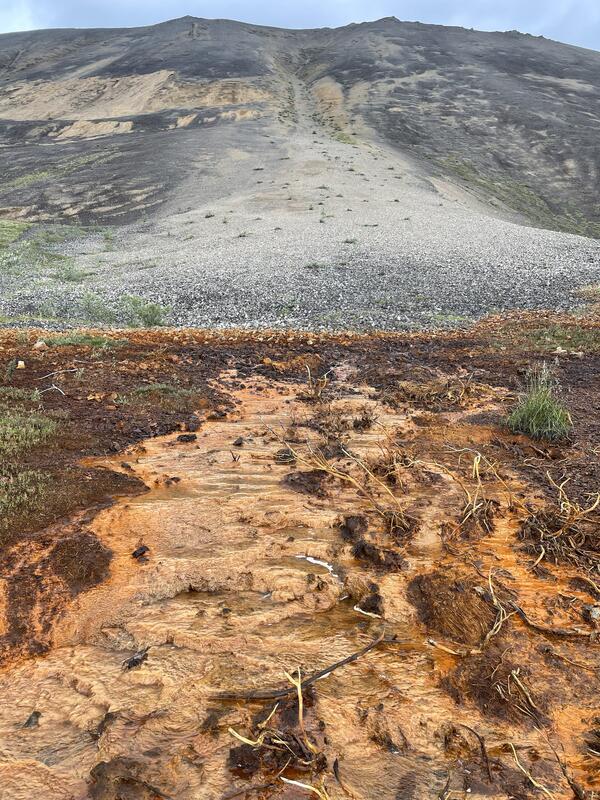
Orange stream with brown mountain in background.
Orange staining and blackened vegetation where a seep emerges from a debris fan

Orange streams are increasingly common in the Brooks Range of northern Alaska. The orange stream color reflects oxidized iron, but also often indicates elevated heavy metal concentrations. Our ongoing study aims to document these occurrences and the timing of their onset.
Orange streams are increasingly common in the Brooks Range of northern Alaska. The orange stream color reflects oxidized iron, but also often indicates elevated heavy metal concentrations. Our ongoing study aims to document these occurrences and the timing of their onset.
One black Orca shows dorsal fin with white saddle patch. The other is coming up for air as water splashes between them.
The Salmon Specialists

Orcas (Orcinus orca) of the AD8 pod search for schools of salmon in Amalik Bay. Orca populations have declined significantly since the Exxon Valdez oil spill in 1989. By collecting photos of saddle patches and dorsal fin notches, scientists are able to identify unique individual whales.

Orcas (Orcinus orca) of the AD8 pod search for schools of salmon in Amalik Bay. Orca populations have declined significantly since the Exxon Valdez oil spill in 1989. By collecting photos of saddle patches and dorsal fin notches, scientists are able to identify unique individual whales.

Looking at back side of large dorsal fin of black Orca whale moving through the ocean water. Mist from blowhole visible.
Male Orca AD37, "Brit"

Male orca (Orcinus orca) AD37 "Brit" of pod AD8, swims in front of a scientific research skiff in Amalik Bay. Orca populations have declined significantly since the Exxon Valdez oil spill in 1989. By collecting photos of saddle patches and dorsal fin notches, scientists are able to identify unique individual whales.

Male orca (Orcinus orca) AD37 "Brit" of pod AD8, swims in front of a scientific research skiff in Amalik Bay. Orca populations have declined significantly since the Exxon Valdez oil spill in 1989. By collecting photos of saddle patches and dorsal fin notches, scientists are able to identify unique individual whales.

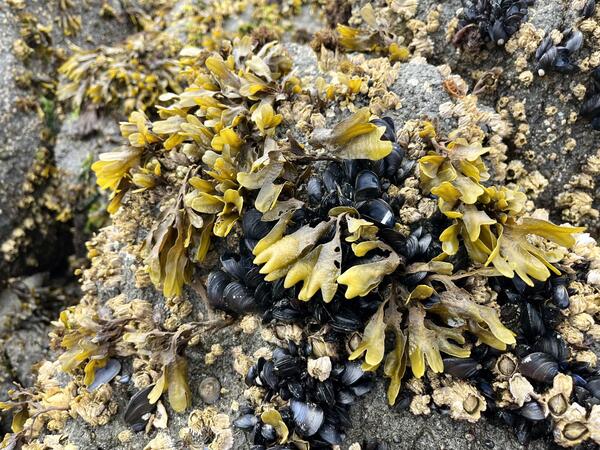
Rocks at low tide covered with brown algae, blue mussels and white barnacles also known as "sticky little crustaceans."
Fucus in the Rocky Intertidal

A cluster of fucus (Fucus distichus) mussels (Mytilus spp.) and barnacles at one of five rocky intertidal sampling sites in Katmai National Park and Preserve. An annual assessment of estimate percent cover and densities of intertidal invertebrates and algae is used to quantitatively assess change in communities from sheltered rocky shorelines.

A cluster of fucus (Fucus distichus) mussels (Mytilus spp.) and barnacles at one of five rocky intertidal sampling sites in Katmai National Park and Preserve. An annual assessment of estimate percent cover and densities of intertidal invertebrates and algae is used to quantitatively assess change in communities from sheltered rocky shorelines.

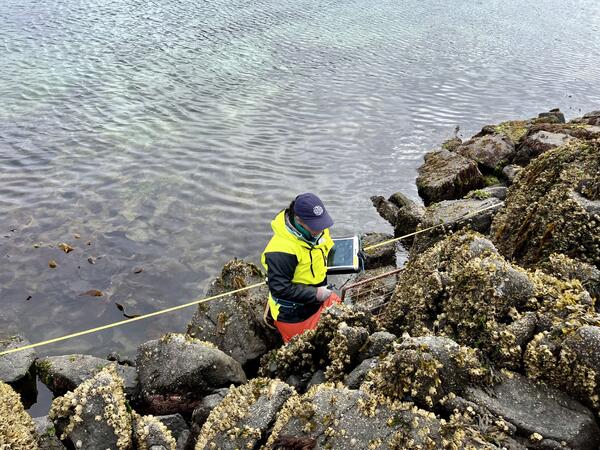
Women in blue hat, yellow vest, orange pants holding a computer collecting data. She is standing on rocks at low tide.
Monitoring Rocky Intertidal Communities

A USGS scientist collects information on intertidal communities during low tide at Takli Island. The purpose of the collection is to estimate percent cover and densities of intertidal invertebrates and algae to assess change in communities from sheltered rocky shorelines.

A USGS scientist collects information on intertidal communities during low tide at Takli Island. The purpose of the collection is to estimate percent cover and densities of intertidal invertebrates and algae to assess change in communities from sheltered rocky shorelines.

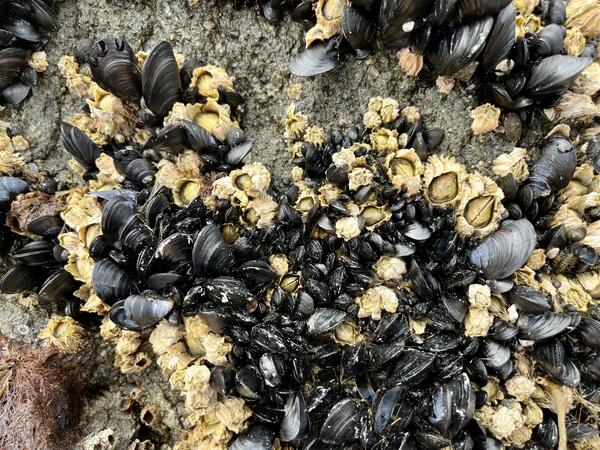
Blue mussels and yellowish white barnacles attached to rocks at low tide.
Mussels in the Rocky Intertidal

A cluster of mussels (Mytilus spp.) and barnacles at one of five rocky intertidal sampling sites in Katmai National Park and Preserve. An annual assessment of mussel size and density allows scientists to quantify change in communities from sheltered rocky shorelines.

A cluster of mussels (Mytilus spp.) and barnacles at one of five rocky intertidal sampling sites in Katmai National Park and Preserve. An annual assessment of mussel size and density allows scientists to quantify change in communities from sheltered rocky shorelines.

Close up of a large Orca dorsal fin with notch and saddle patch on body. Water surface broken by dive. Green cliffs in back.
Male Orca AD37, "Brit" taking a Dive

Male orca (Orcinus orca) AD37 "Brit" of pod AD8, swims next to a scientific research skiff in Amalik Bay. Orca populations have declined significantly since the Exxon Valdez oil spill in 1989. By collecting photos of saddle patches and dorsal fin notches, scientists are able to identify unique individual whales.

Male orca (Orcinus orca) AD37 "Brit" of pod AD8, swims next to a scientific research skiff in Amalik Bay. Orca populations have declined significantly since the Exxon Valdez oil spill in 1989. By collecting photos of saddle patches and dorsal fin notches, scientists are able to identify unique individual whales.

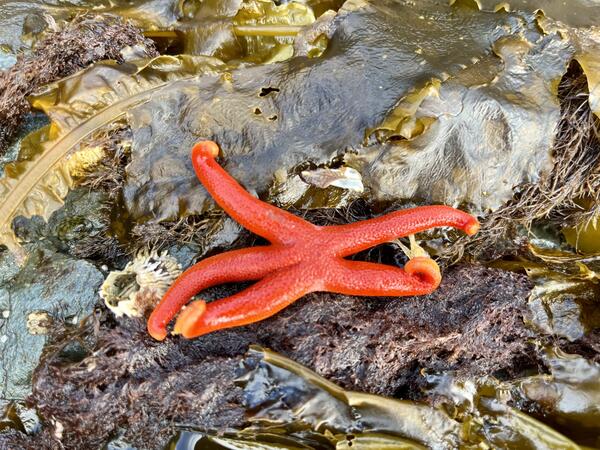
A SeaStar aka "Starfish" in the intertidal zone by leafy kelp blades. It is orange red in color with five arms.
A Splash of Color in the Rocky Intertidal

A bright red Pacific blood star (Henricia leviuscula) rests among the algae, barnacles, and limpets at low tide in Kalfia Bay. Beginning in 2014, a marine heat wave prompted the spread of Sea Star Wasting Syndrome throughout the Gulf of Alaska region.

A bright red Pacific blood star (Henricia leviuscula) rests among the algae, barnacles, and limpets at low tide in Kalfia Bay. Beginning in 2014, a marine heat wave prompted the spread of Sea Star Wasting Syndrome throughout the Gulf of Alaska region.

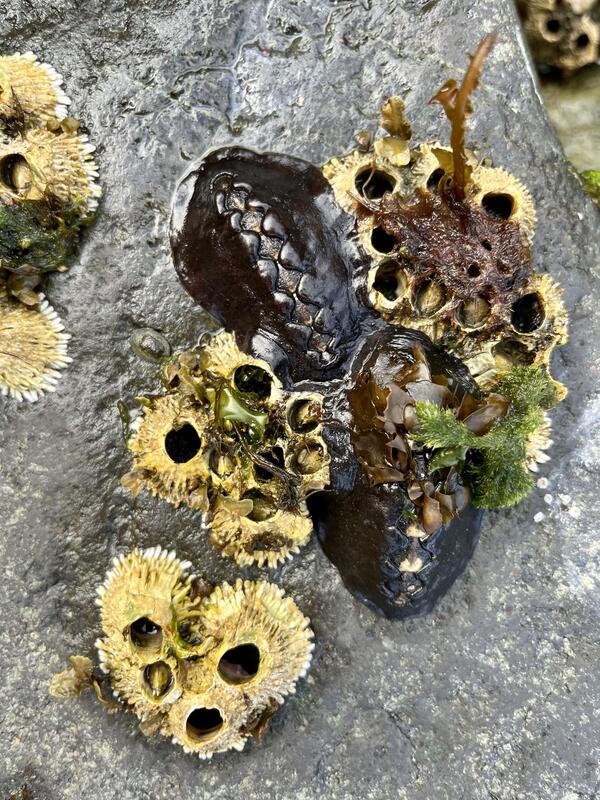
Two chitons on rocks in intertidal zone surrounded by barnacles. Football-shaped with black leathery 8 plates in middle.
Chitons of the Rocky Intertidal

A pair of Black Katy Chiton (Katharina tunicate) at one of five rocky intertidal sampling sites in Katmai National Park and Preserve. An annual assessment of chiton density allows scientists to quantify change in communities from sheltered rocky shorelines.

A pair of Black Katy Chiton (Katharina tunicate) at one of five rocky intertidal sampling sites in Katmai National Park and Preserve. An annual assessment of chiton density allows scientists to quantify change in communities from sheltered rocky shorelines.

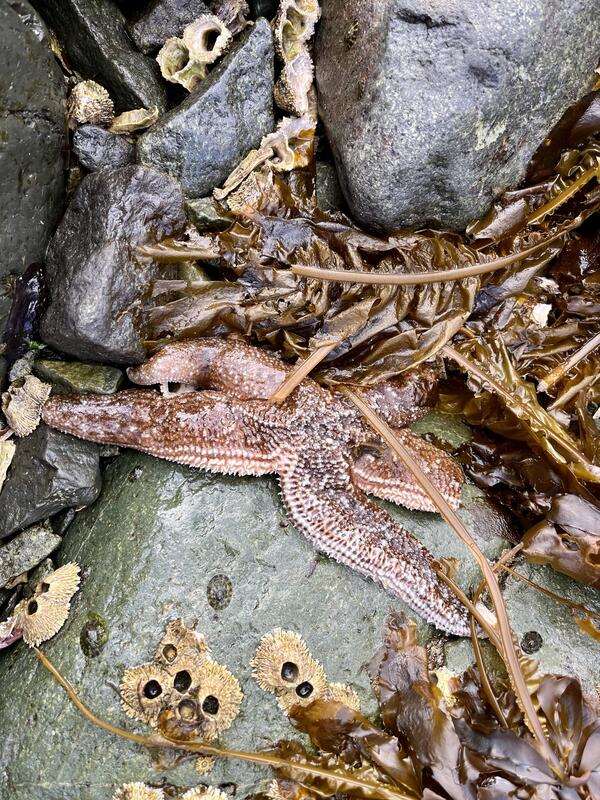
Brown Sea star aka "starfish" on rocks at low tide surrounded by kelp, barnacles, and limpets.
Return of the Sea Star

A mottled sea star (Evasterias troschelii) rests among the algae, barnacles, and limpets at low tide in Kalfia Bay. Beginning in 2014, a marine heat wave prompted the spread of Sea Star Wasting Syndrome throughout the Gulf of Alaska region. The symptoms of the syndrome included twisted arms, white lesions, deflated arms, arm loss, and body disintegration.

A mottled sea star (Evasterias troschelii) rests among the algae, barnacles, and limpets at low tide in Kalfia Bay. Beginning in 2014, a marine heat wave prompted the spread of Sea Star Wasting Syndrome throughout the Gulf of Alaska region. The symptoms of the syndrome included twisted arms, white lesions, deflated arms, arm loss, and body disintegration.

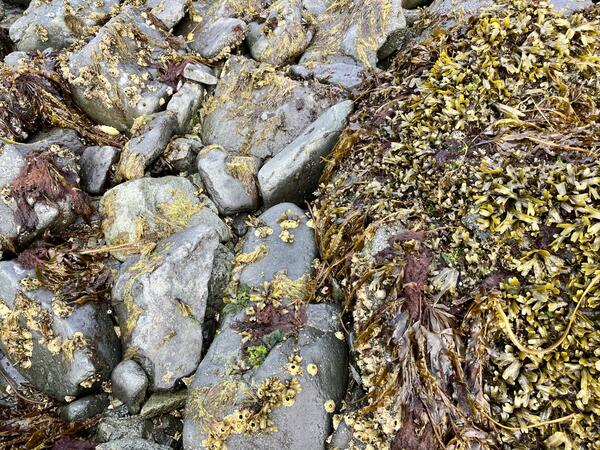
rocks, barnacles, and green, yellowish and red algae at low tide in Alaska.
Rocky Intertidal Coastline

A typical rocky intertidal monitoring site within Katmai National Park and Preserve. An annual assessment of estimate percent cover and densities of intertidal invertebrates and algae is used to quantitatively assess change in communities from sheltered rocky shorelines.

A typical rocky intertidal monitoring site within Katmai National Park and Preserve. An annual assessment of estimate percent cover and densities of intertidal invertebrates and algae is used to quantitatively assess change in communities from sheltered rocky shorelines.

Brown bear on rocks coming out of stream. Water is dripping from legs and belly. Head is dry.
Drip Dry for Katmai Brown Bears

Katmai National Park and Preserve is home to over 2,200 brown bears (Ursus arctos). Bears that live along the Katmai coast are known to swim several miles across the ocean in search of marine mammal carcasses, marine invertebrates, and beach grasses. 

Katmai National Park and Preserve is home to over 2,200 brown bears (Ursus arctos). Bears that live along the Katmai coast are known to swim several miles across the ocean in search of marine mammal carcasses, marine invertebrates, and beach grasses. 

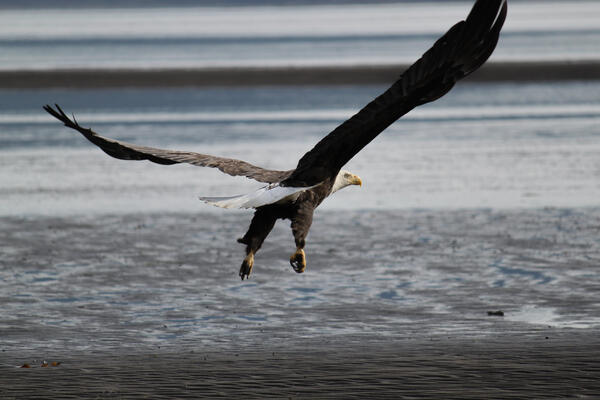
Mature Bald Eagle flying over water. Wings spread, white tail and head, yellow bill and talons.
Easy Opportunity for Bald Eagles

Katmai National Park and Preserve supports a large population of Bald Eagle (Haliaeetus leucocephalus). In summer, eagles are commonly observed scavenging on fish carcasses along beaches and streams.

Katmai National Park and Preserve supports a large population of Bald Eagle (Haliaeetus leucocephalus). In summer, eagles are commonly observed scavenging on fish carcasses along beaches and streams.

Was this page helpful?