



City of Independence Urban Stream Monitoring
The City of Independence, Missouri, and the U.S. Geological Survey (USGS) Central Midwest Water Science Center operate a long-term monitoring program of urban streams to track long-term changes in water quantity and quality and to guide effective strategies for protecting local waterways.
Monitoring Water Quantity and Quality of Urban Streams In and Near Independence, Missouri
Introduction
The City of Independence Municipal Services and the USGS Central Midwest Water Science Center have collaborated since 2005 to monitor water quantity and quality of urban streams and rivers in and near Independence, Missouri.
Changes in population, land use and management, climate, and other factors can contribute to changes in the local streams and rivers. Long term monitoring programs allow for the identification of trends in water quality conditions and aid the City in their implementation of strategies to reduce contaminants in receiving streams.
Water-Quality Sampling
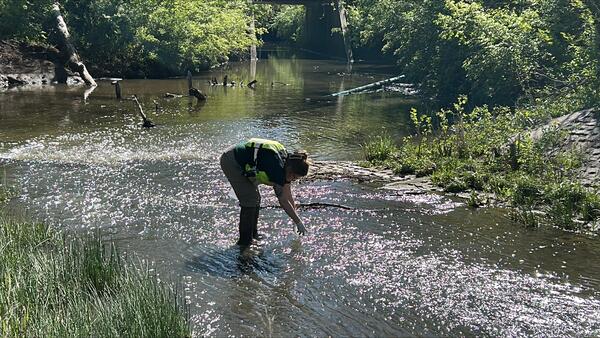
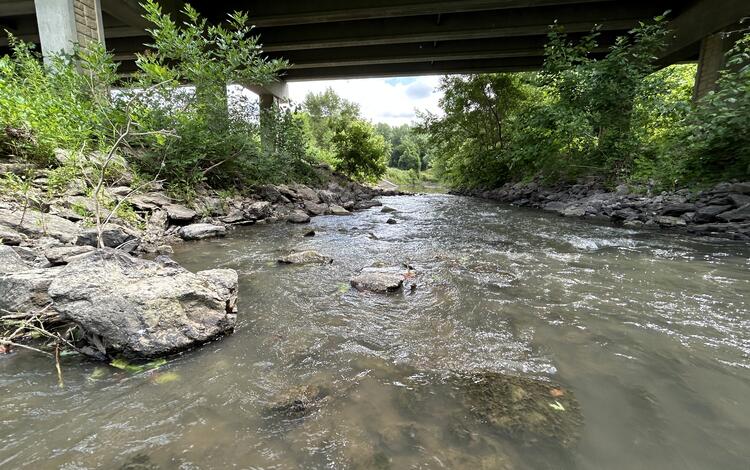
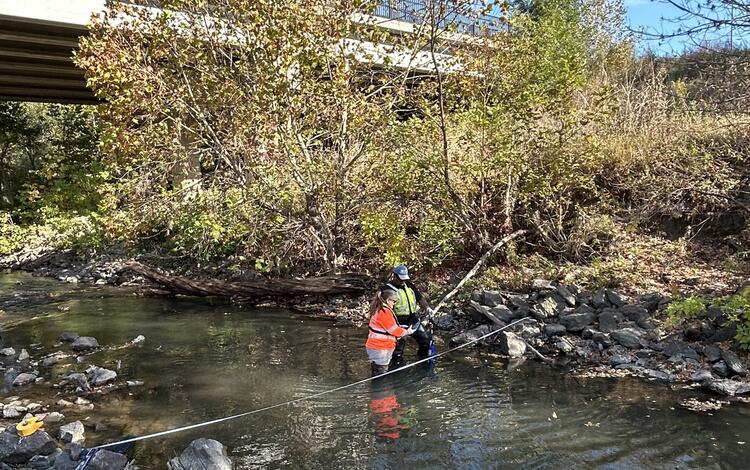
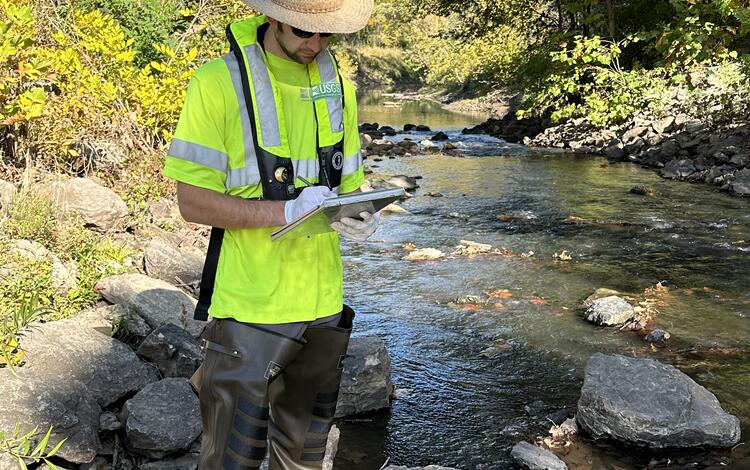
The USGS follows strict sampling methods when collecting water samples from any body of water. For sample collection at small streams where the water is well mixed, samples can often be obtained by taking a single “grab sample” at the center of flow. Field parameters, such as dissolved oxygen, temperature, specific conductance, and turbidity, are collected at the time of sampling. Samples are analyzed for a variety of constituents, including but not limited to, major ions, nutrients, fecal indicator bacteria, dissolved and suspended solids, and suspended sediment.
Real-Time Data Collection
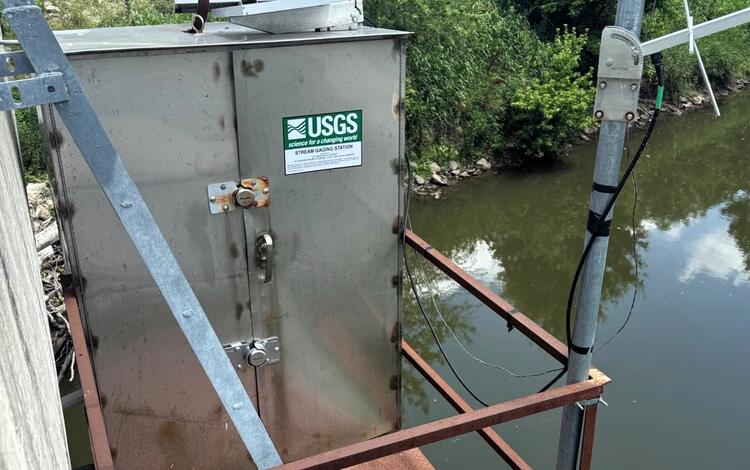
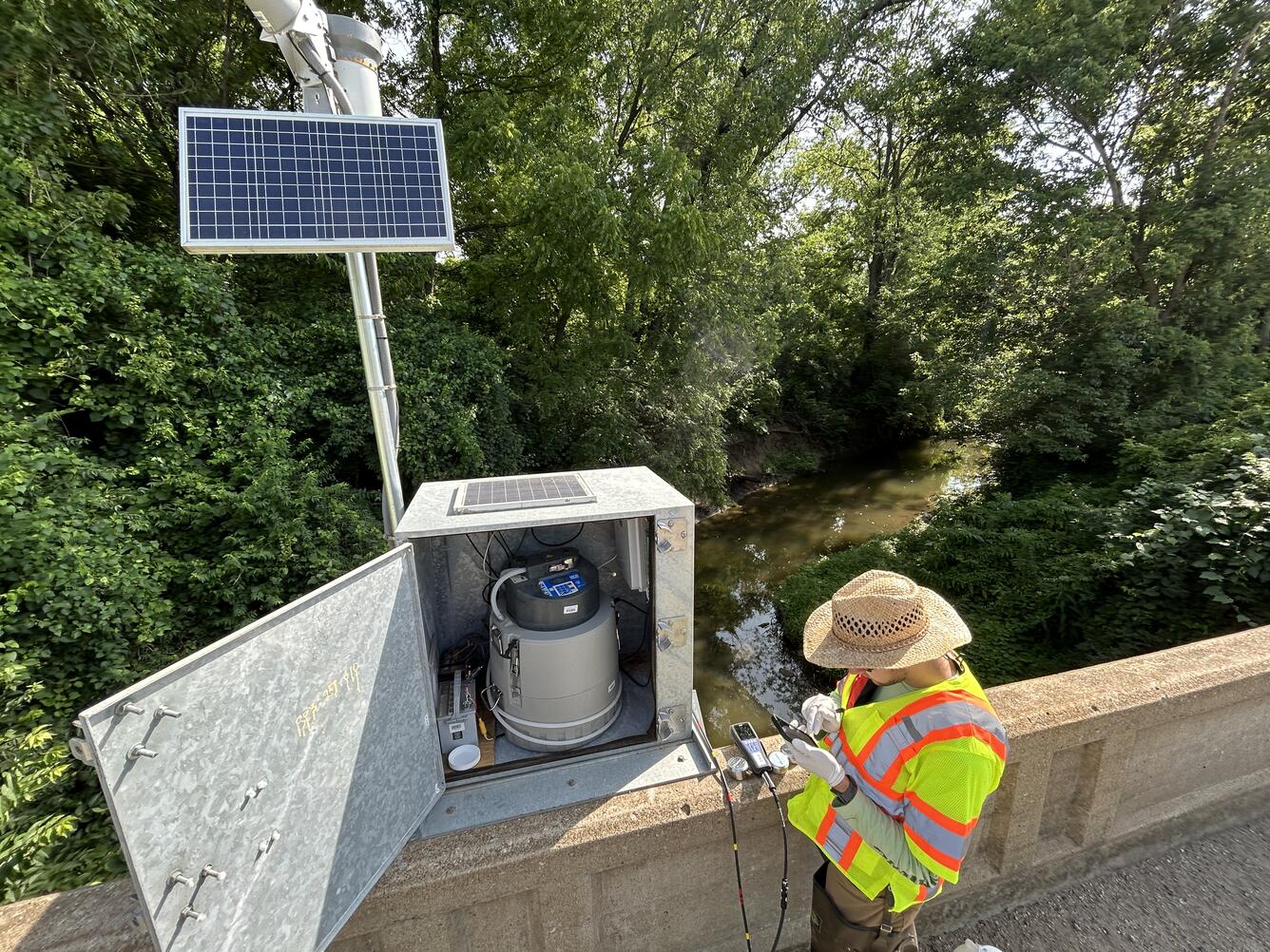
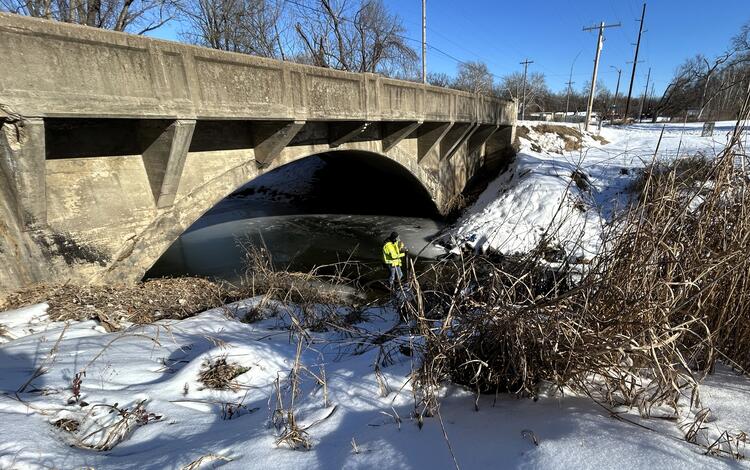
Most sampling sites are equipped to measure stream stage (the height of the water) every 15 minutes, with data transmitted hourly via satellite telemetry.
Real-time water-quality monitors also are deployed at some streamgages to record certain parameters every 15 minutes, such as:
- dissolved oxygen
- temperature
- specific conductance
- turbidity
Links to each streamgage and its associated historical and current data are provided in the interactive map below, as well as on the “Data” tab at the top of this page.
Stormflow Samples Using Autosamplers
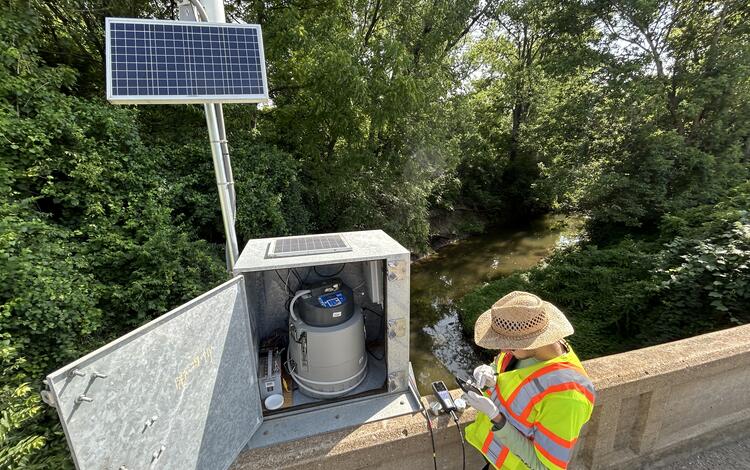
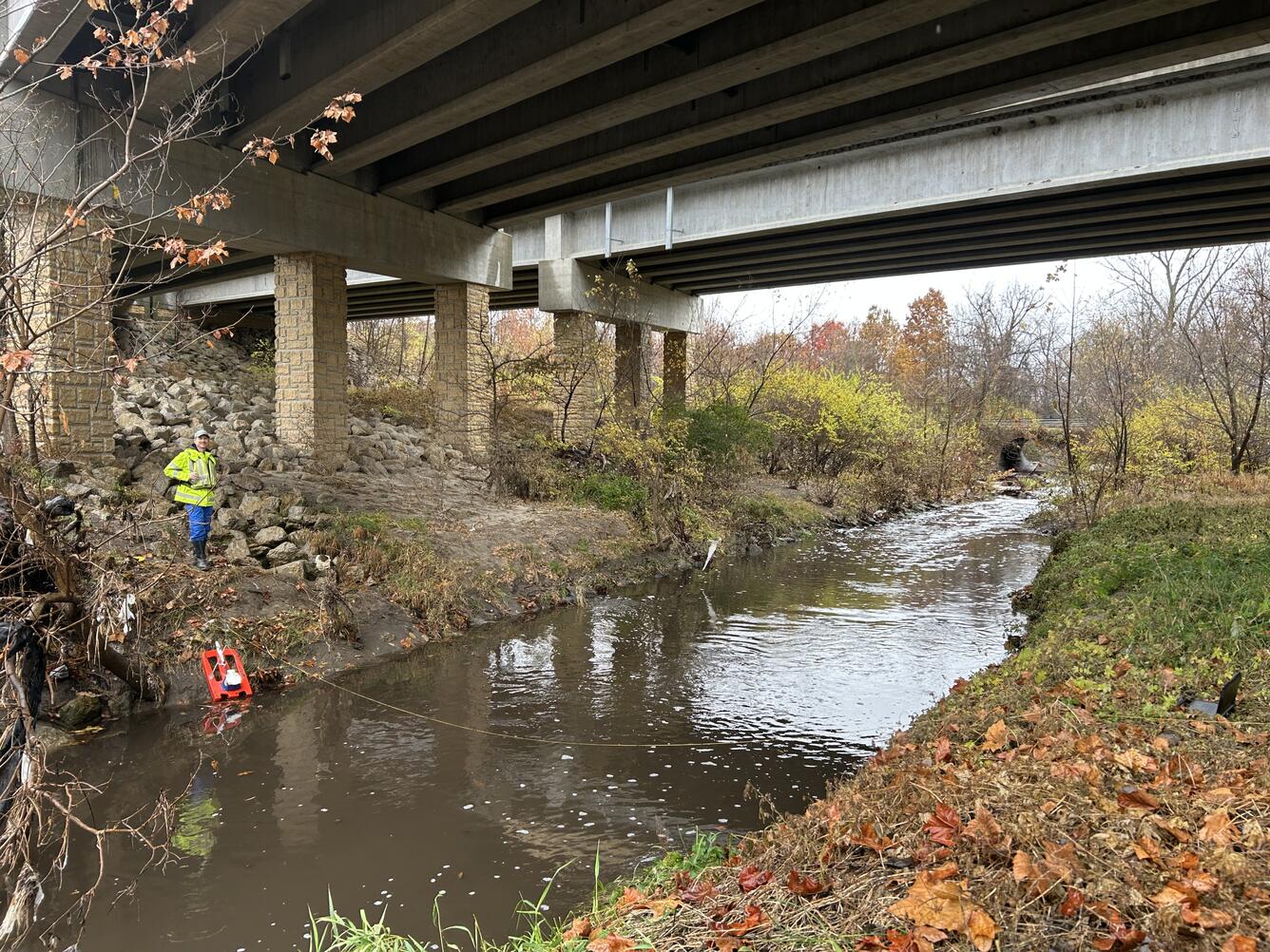
Autosamplers are used to collect water samples during stormflow events after significant rainfall. These samples are collected to better understand water quality after “first flush” events, when there is greater potential for mobilization of contaminants to streams. USGS staff collect the composited stormflow event samples for further processing and analysis.
Map of nine U.S. Geological Survey active streamgages and sampling sites.
Explore the areas around the streamgages and sampling sites shown on the map by using the zoom button in the upper left corner.
Title
Title
Protecting Stream Water Quality
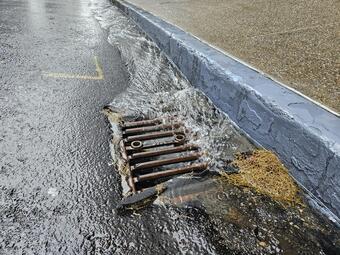
In addition to partnering with the USGS to monitor stream water quality, the City of Independence implements several efforts to protect stream water quality.
- Improving quality of stormwater runoff by street sweeping and maintaining storm sewers.
- On-going industrial stormwater runoff inspections and enforcement; including green space, stream buffers, and detention basins in development projects.
- Construction site inspections for proper erosion control practices; and sanitary and storm sewer lining and replacement projects.
How can residents help protect urban streams?
The City of Independence Municipal Services recommends the following actions:
Automotive
- Check vehicles for fluid leaks
- Properly dispose of all automotive fluids
- Avoid washing vehicles on paved surfaces
Chemicals
- Purchase only as much as needed
- Dispose of products properly at a hazardous waste collection site
Litter
- Do not throw trash on the ground
- When transporting trash or debris, cover all loads tightly
Pet waste
- Pick up pet waste and dispose of it in the trash
Swimming pools
- Do not drain into a storm drain
Yard
- Use lawn chemicals and fertilizers sparingly and never before heavy rainfall
- Choose lawn and garden products with the lowest toxicity for your intended purpose
- Prevent soil erosion by maintaining plant cover
- Compost or reuse yard waste
- Direct roof downspouts to vegetated areas to allow for rainfall infiltration; use rain barrels or rain gardens to capture rainwater.
Water-Quality Trends
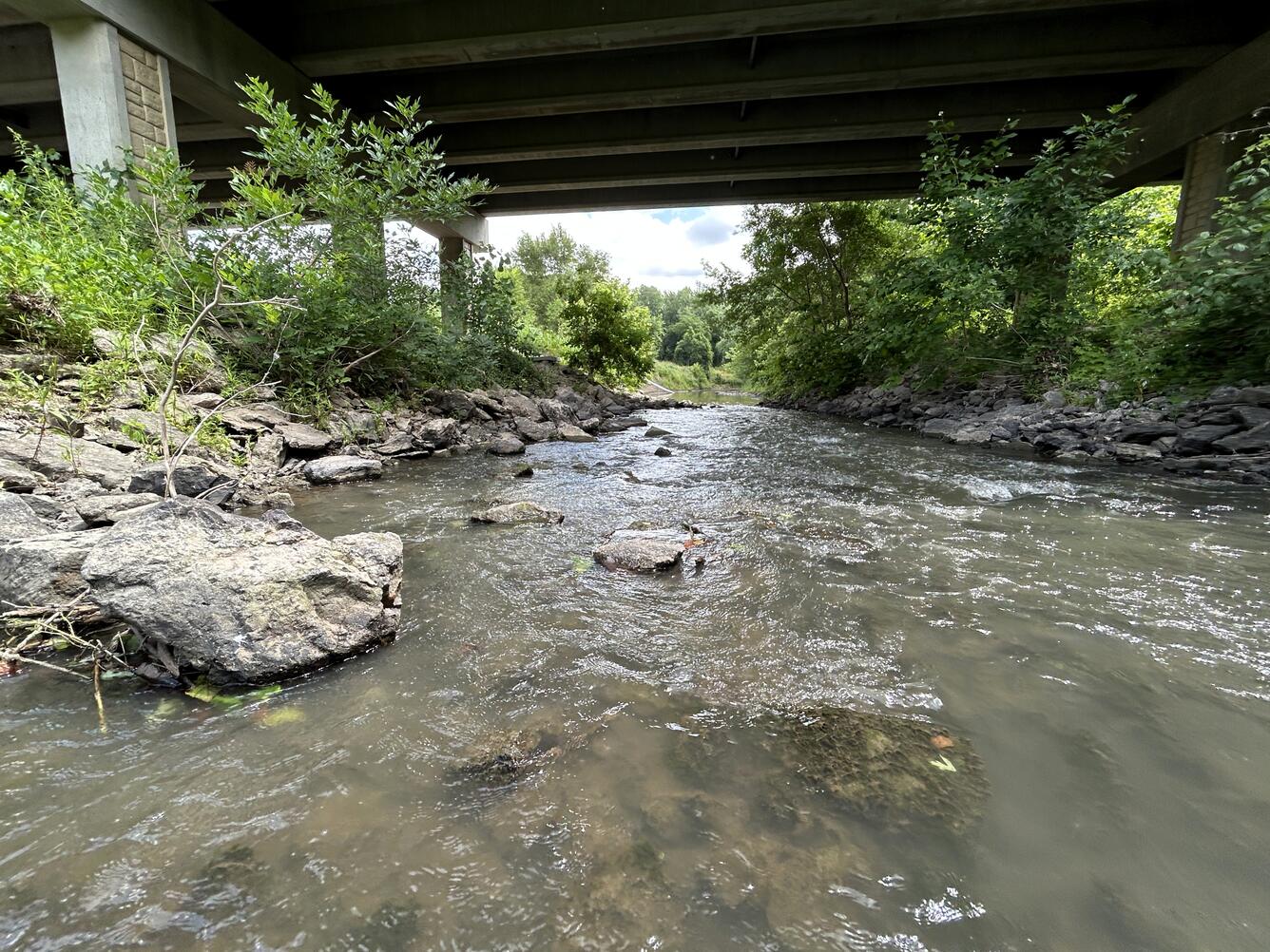
The most recent trend analysis was completed for the period from 2006 through 2018 (Barr and Kalkhoff, 2021). For sites with sufficient data, an analysis of whether a water quality constituent had a downward trend, upward trend, or no detected trend was determined.
Downwards trends in nutrient concentrations and Escherichia coli densities were noted at some of the sampling sites, which may be the result of improvements to the City’s stormwater and wastewater infrastructure. These improvements include additional sewage overflow holding tanks, removal of septic tanks, and improved and expanded sanitary sewer lines and storm overflows.
Microbial Source Tracking
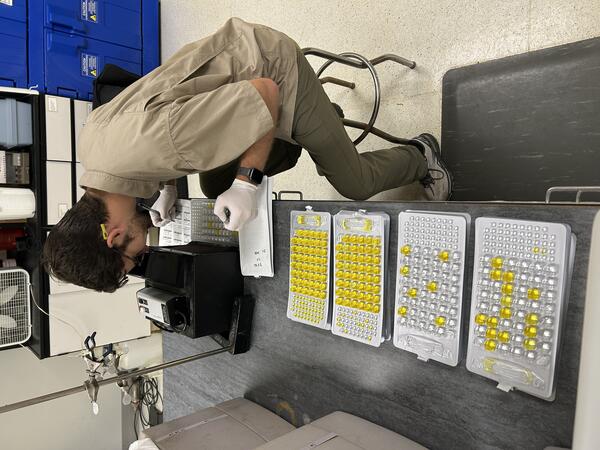
An on-going study using microbial source tracking (MST) methods to identify the host organisms (sources) of fecal indicator bacteria (E. coli) is being completed for many Independence streams.
Current trends in MST markers are being analyzed (2026). Previous publications have shown that higher concentrations of MST markers were observed during stormflow events than during base flow conditions.
When comparing the two sites on the Little Blue River (upstream and downstream of the City of Independence), a significant difference was not observed with respect to E. coli or MST marker concentrations (Bushon and others, 2017).
Summary
Water quantity and quality are being monitoring throughout Independence, Missouri, through a cooperative project between the U.S. Geological Survey and the City of Independence.
Water monitoring efforts currently include: water-quality sampling, microbial source tracking, stormflow sampling using autosamplers, and real-time data collection of various parameters, including streamflow.
Residents can help protect urban streams by: transporting and disposing of waste and chemicals properly, preventing soil erosion, and redirecting or capturing rainfall.
Water-quality improvements at some sampling sites may be the result of the City’s efforts to improve and expand stormwater and wastewater infrastructure.
Additional Information
Funding provided by the City of Independence, Missouri.
See references and supporting publications linked in the tabs at the top of this page.
The City of Independence, Missouri, and the U.S. Geological Survey (USGS) Central Midwest Water Science Center operate a long-term monitoring program of urban streams to track long-term changes in water quantity and quality and to guide effective strategies for protecting local waterways.
Monitoring Water Quantity and Quality of Urban Streams In and Near Independence, Missouri
Introduction
The City of Independence Municipal Services and the USGS Central Midwest Water Science Center have collaborated since 2005 to monitor water quantity and quality of urban streams and rivers in and near Independence, Missouri.
Changes in population, land use and management, climate, and other factors can contribute to changes in the local streams and rivers. Long term monitoring programs allow for the identification of trends in water quality conditions and aid the City in their implementation of strategies to reduce contaminants in receiving streams.
Water-Quality Sampling
The USGS follows strict sampling methods when collecting water samples from any body of water. For sample collection at small streams where the water is well mixed, samples can often be obtained by taking a single “grab sample” at the center of flow. Field parameters, such as dissolved oxygen, temperature, specific conductance, and turbidity, are collected at the time of sampling. Samples are analyzed for a variety of constituents, including but not limited to, major ions, nutrients, fecal indicator bacteria, dissolved and suspended solids, and suspended sediment.
Real-Time Data Collection
Most sampling sites are equipped to measure stream stage (the height of the water) every 15 minutes, with data transmitted hourly via satellite telemetry.
Real-time water-quality monitors also are deployed at some streamgages to record certain parameters every 15 minutes, such as:
- dissolved oxygen
- temperature
- specific conductance
- turbidity
Links to each streamgage and its associated historical and current data are provided in the interactive map below, as well as on the “Data” tab at the top of this page.
Stormflow Samples Using Autosamplers
Autosamplers are used to collect water samples during stormflow events after significant rainfall. These samples are collected to better understand water quality after “first flush” events, when there is greater potential for mobilization of contaminants to streams. USGS staff collect the composited stormflow event samples for further processing and analysis.
Map of nine U.S. Geological Survey active streamgages and sampling sites.
Explore the areas around the streamgages and sampling sites shown on the map by using the zoom button in the upper left corner.
Title
Title
Protecting Stream Water Quality
In addition to partnering with the USGS to monitor stream water quality, the City of Independence implements several efforts to protect stream water quality.
- Improving quality of stormwater runoff by street sweeping and maintaining storm sewers.
- On-going industrial stormwater runoff inspections and enforcement; including green space, stream buffers, and detention basins in development projects.
- Construction site inspections for proper erosion control practices; and sanitary and storm sewer lining and replacement projects.
How can residents help protect urban streams?
The City of Independence Municipal Services recommends the following actions:
Automotive
- Check vehicles for fluid leaks
- Properly dispose of all automotive fluids
- Avoid washing vehicles on paved surfaces
Chemicals
- Purchase only as much as needed
- Dispose of products properly at a hazardous waste collection site
Litter
- Do not throw trash on the ground
- When transporting trash or debris, cover all loads tightly
Pet waste
- Pick up pet waste and dispose of it in the trash
Swimming pools
- Do not drain into a storm drain
Yard
- Use lawn chemicals and fertilizers sparingly and never before heavy rainfall
- Choose lawn and garden products with the lowest toxicity for your intended purpose
- Prevent soil erosion by maintaining plant cover
- Compost or reuse yard waste
- Direct roof downspouts to vegetated areas to allow for rainfall infiltration; use rain barrels or rain gardens to capture rainwater.
Water-Quality Trends
The most recent trend analysis was completed for the period from 2006 through 2018 (Barr and Kalkhoff, 2021). For sites with sufficient data, an analysis of whether a water quality constituent had a downward trend, upward trend, or no detected trend was determined.
Downwards trends in nutrient concentrations and Escherichia coli densities were noted at some of the sampling sites, which may be the result of improvements to the City’s stormwater and wastewater infrastructure. These improvements include additional sewage overflow holding tanks, removal of septic tanks, and improved and expanded sanitary sewer lines and storm overflows.
Microbial Source Tracking
An on-going study using microbial source tracking (MST) methods to identify the host organisms (sources) of fecal indicator bacteria (E. coli) is being completed for many Independence streams.
Current trends in MST markers are being analyzed (2026). Previous publications have shown that higher concentrations of MST markers were observed during stormflow events than during base flow conditions.
When comparing the two sites on the Little Blue River (upstream and downstream of the City of Independence), a significant difference was not observed with respect to E. coli or MST marker concentrations (Bushon and others, 2017).
Summary
Water quantity and quality are being monitoring throughout Independence, Missouri, through a cooperative project between the U.S. Geological Survey and the City of Independence.
Water monitoring efforts currently include: water-quality sampling, microbial source tracking, stormflow sampling using autosamplers, and real-time data collection of various parameters, including streamflow.
Residents can help protect urban streams by: transporting and disposing of waste and chemicals properly, preventing soil erosion, and redirecting or capturing rainfall.
Water-quality improvements at some sampling sites may be the result of the City’s efforts to improve and expand stormwater and wastewater infrastructure.
Additional Information
Funding provided by the City of Independence, Missouri.
See references and supporting publications linked in the tabs at the top of this page.