



Scientists look for damage on the skin of a bat's wing as an indicator of white-nose syndrome infection. This bat has no wing damage.
White-nose syndrome detections in two Pacific Northwest National Parks
By Forest and Rangeland Ecosystem Science Center
September 19, 2025
The fungus that causes white-nose syndrome in bats has been detected at San Juan Island and Lewis and Clark National Historical Parks. This is the first documented case of the fungus in San Juan County, Washington and the State of Oregon.
Samples analyzed by the U.S. Geological Survey (USGS) confirmed the presence of the fungus in three bats at San Juan Island National Historical Park in Washington and guano collected from a bus shelter at Lewis and Clark National Historical Park in Oregon. The San Juan Island bats are part of a Yuma Myotis (Myotis yumanensis) colony housed in a bat box located in English Camp. No bats in Oregon have been observed with symptoms of white-nose syndrome, however, bats can carry the fungal spores on their skin and shed them in their feces or guano after grooming.
National Park Service biologists collected the sample as part of a National Park Service and USGS bat disease and surveillance effort in Pacific Northwest parks led by USGS scientists at the Forest and Rangeland Ecosystem Science Center's Olympic Field Station in Olympic National Park, Washington. Sample analyses are conducted at the USGS National Wildlife Health Center in Madison, WI.
Media
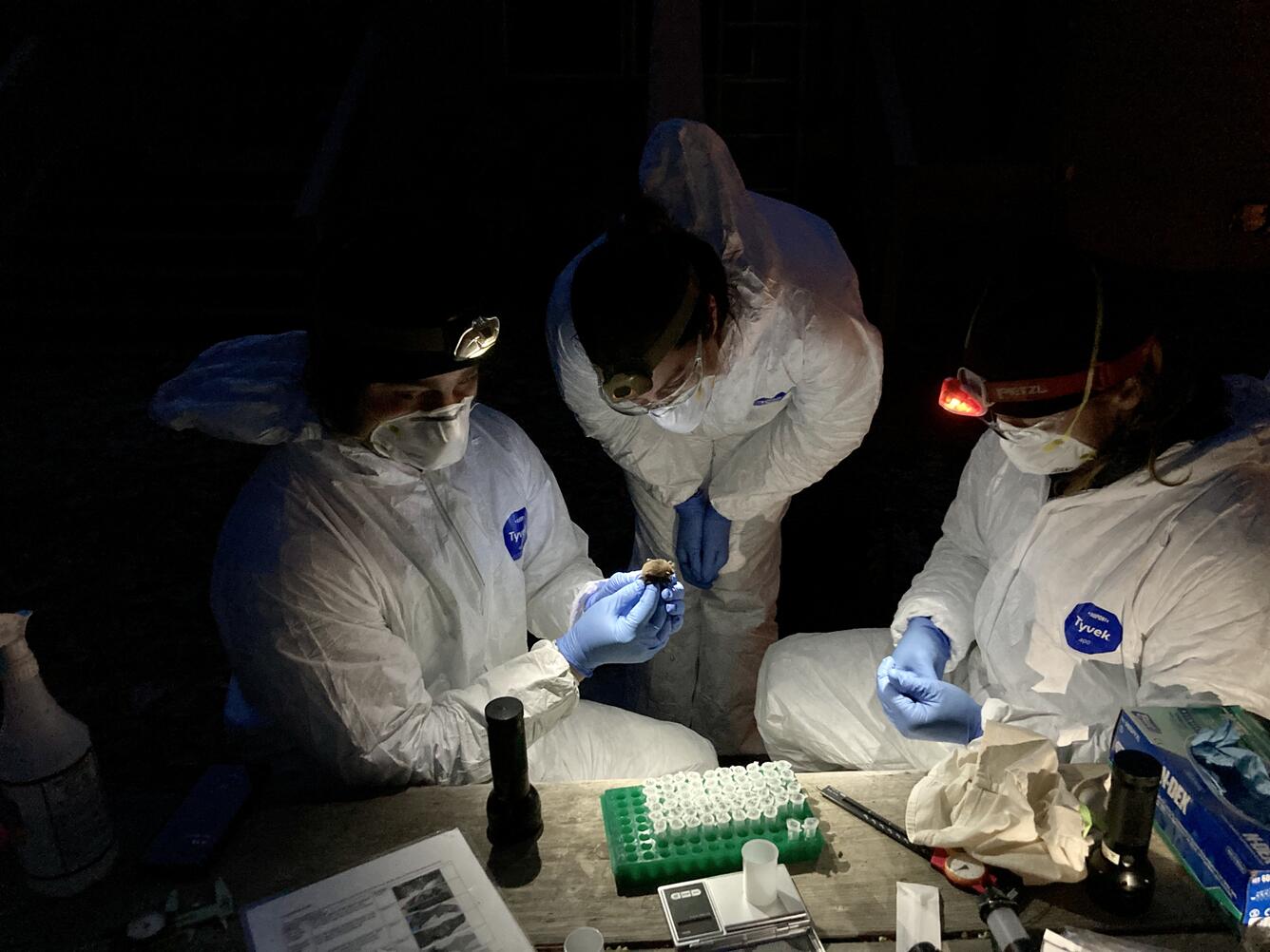
Sources/Usage: Public Domain. View Media Details
White-nose syndrome has killed millions of bats in North America since its detection in New York in 2007 and continues to spread. At least 41 states have detected the disease and 5 others have detected the fungus but no disease. The fungus spreads primarily through bat-to-bat contact during hibernation in caves, karsts, and mines. White-nose syndrome does not cause illness in humans, but it can be spread by contaminated clothing, gear, and equipment after recreating in or near caves.
Bats suffering from disease can have the fungus growing on their muzzle, ears, and wings during hibernation, causing irritation and damage to the bat’s skin. Bats with white-nose syndrome also wake up more frequently during hibernation and use up critical stored fat reserves faster than normal. The excessive energy expenditure and dehydration during winter in diseased bats can lead to starvation and death.
Media
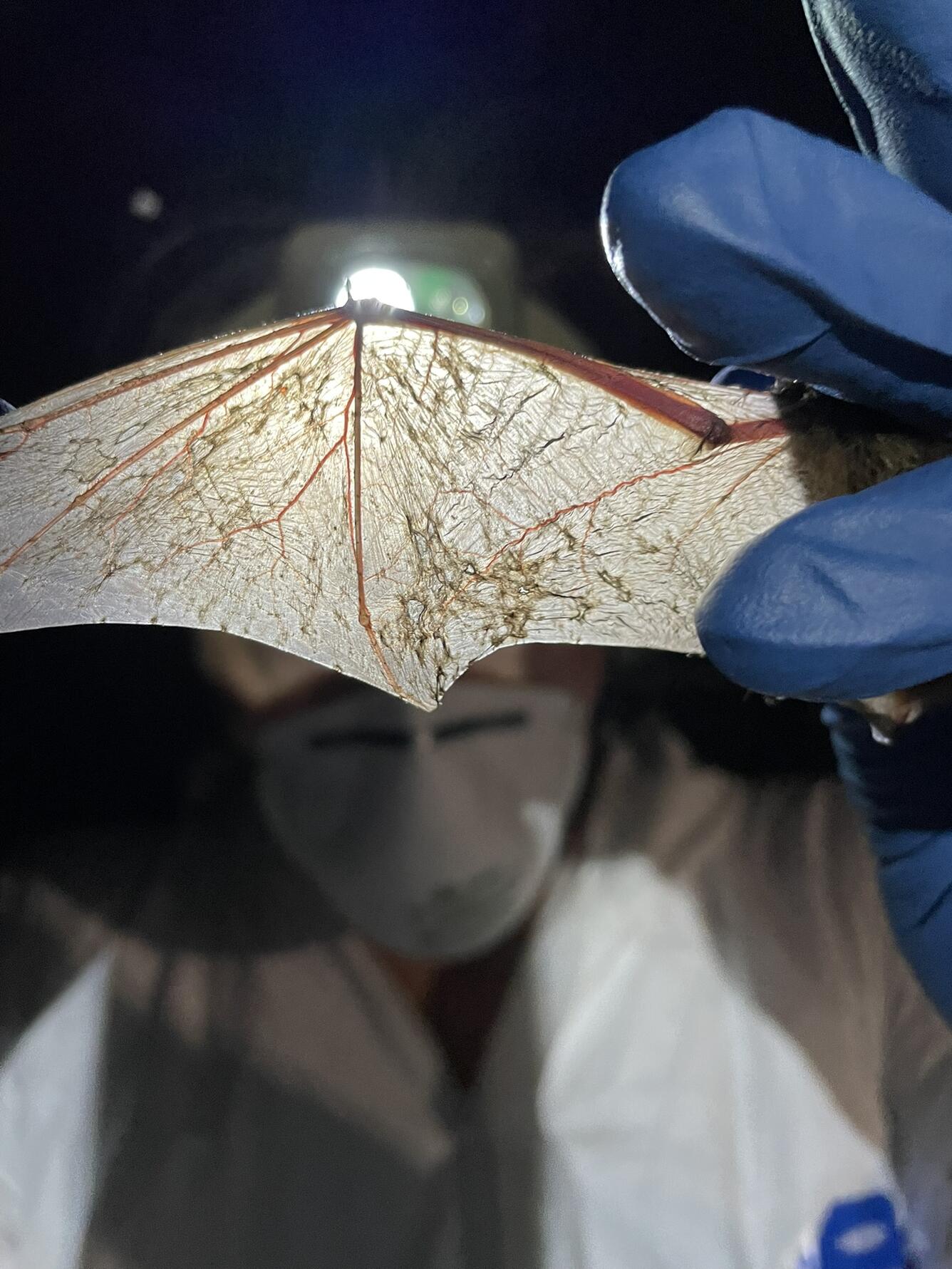
Sources/Usage: Public Domain. View Media Details
NPS News Release: White-nose syndrome suspected in bats at San Juan Island National Historical Park
NPS News Release: Fungus that causes white-nose syndrome in bats detected for first time in Oregon
Related

Bat population monitoring and white-nose syndrome surveillance in Pacific Northwest National Parks
The expansion of the bat fungal disease White-Nose Syndrome (WNS) to the Pacific Northwest is centered in western Washington. The USGS partners with the National Park Service on projects to understand bat distribution, activity, and disease spread in and around Washington’s National Parks.
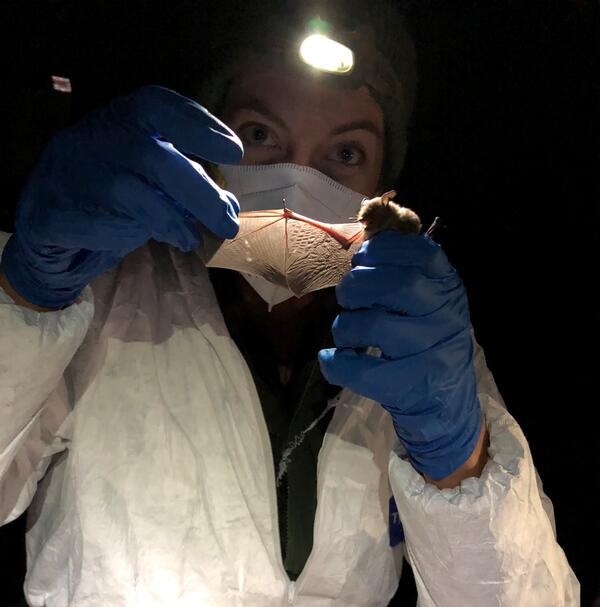
Looking for wing damage
Scientists look for damage on the skin of a bat's wing as an indicator of white-nose syndrome infection. This bat has no wing damage.
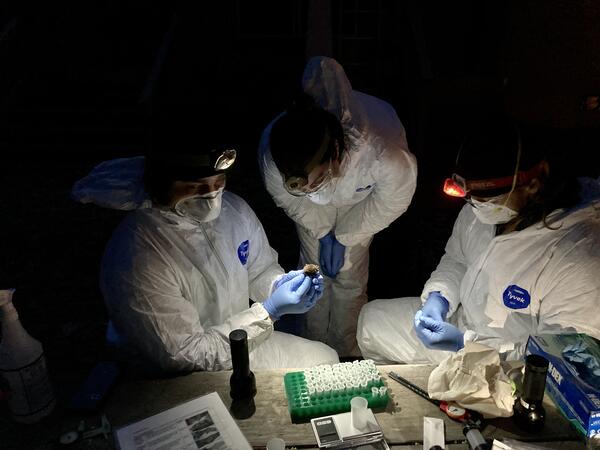
Setting up to collect samples from a bat
Scientists get ready to collect samples from a bat to test for Pseudogymnoascus destructans, the fungus that causes white-nose syndrome.
Scientists get ready to collect samples from a bat to test for Pseudogymnoascus destructans, the fungus that causes white-nose syndrome.
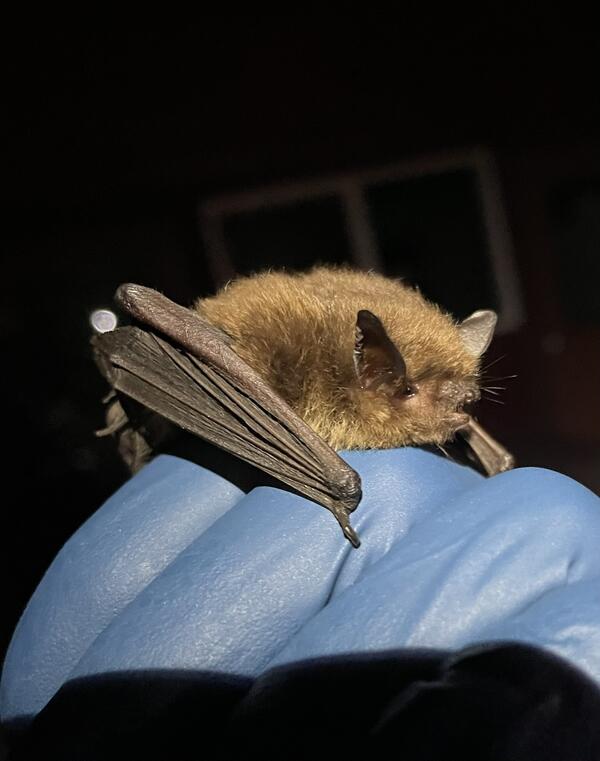
Perched Yuma myotis
Yuma myotis has a wide range throughout western North America, from the Southwestern regions of Canada into Mexico.
Yuma myotis has a wide range throughout western North America, from the Southwestern regions of Canada into Mexico.
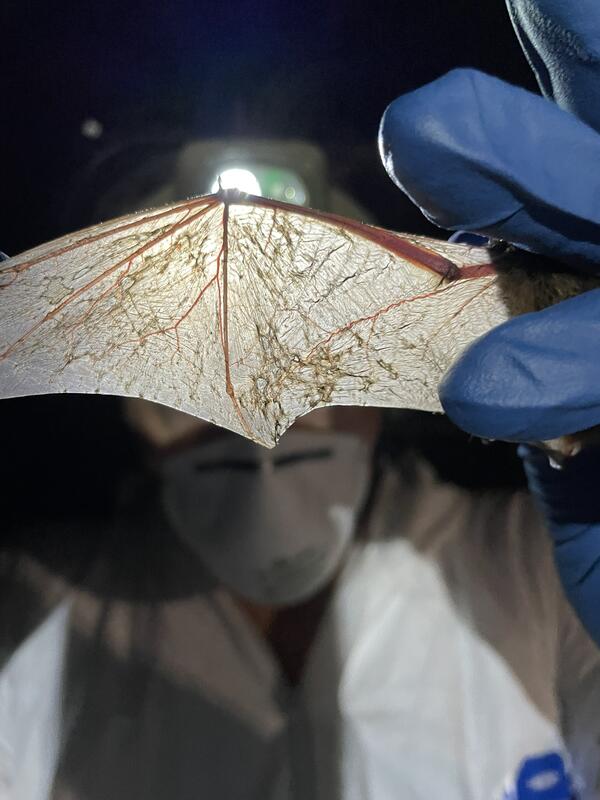
A bat's wing scarred by white-nose syndrome
Scars on the skin of this bat's wing suggest white-nose syndrome infection over the previous winter.
Scars on the skin of this bat's wing suggest white-nose syndrome infection over the previous winter.
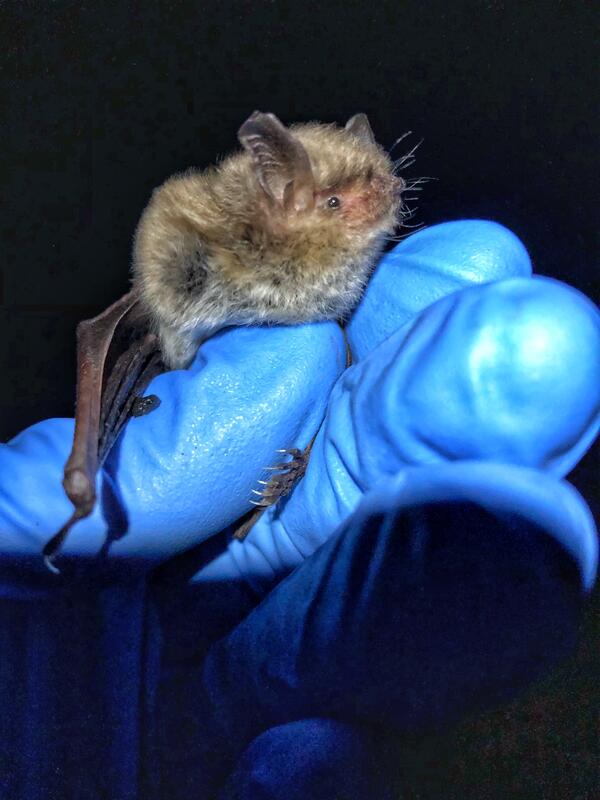
Yuma myotis bat
The Yuma myotis bat, Myotis yumanensis, has a body length of only 1.5-1.9 inches and they weigh less than half an ounce.
The Yuma myotis bat, Myotis yumanensis, has a body length of only 1.5-1.9 inches and they weigh less than half an ounce.
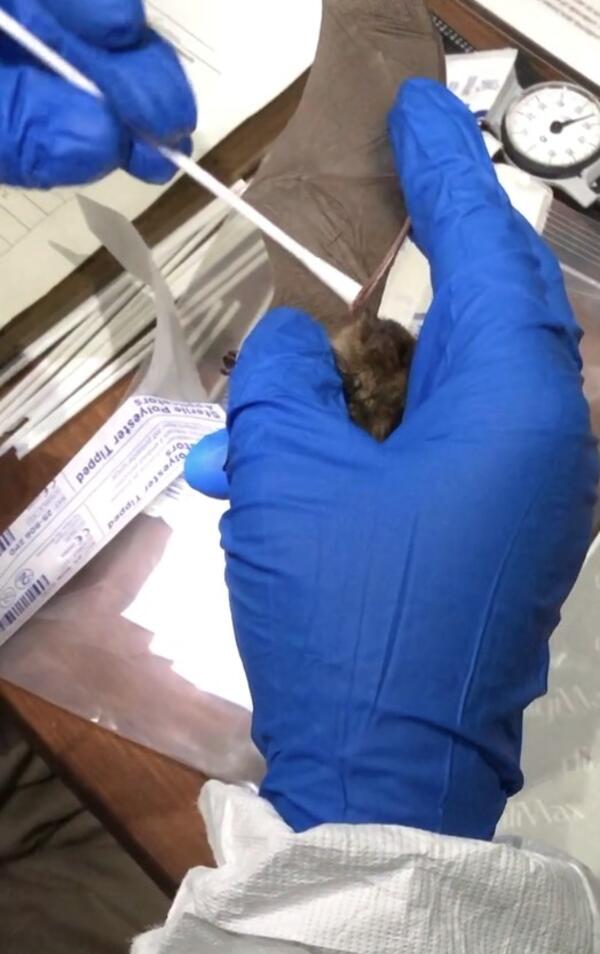
Collecting fungal samples to test for Pseudogymnoascus destructans
Collecting fungal samples to test for Pseudogymnoascus destructansIndividual bats are tested for Pseudogymnoascus destructans, the fungus that causes white-nose syndrome, by wiping a sterile swab across the skin of a bat's outstretched wing and muzzle.
Collecting fungal samples to test for Pseudogymnoascus destructans
Collecting fungal samples to test for Pseudogymnoascus destructansIndividual bats are tested for Pseudogymnoascus destructans, the fungus that causes white-nose syndrome, by wiping a sterile swab across the skin of a bat's outstretched wing and muzzle.
Related
Bat population monitoring and white-nose syndrome surveillance in Pacific Northwest National Parks
The expansion of the bat fungal disease White-Nose Syndrome (WNS) to the Pacific Northwest is centered in western Washington. The USGS partners with the National Park Service on projects to understand bat distribution, activity, and disease spread in and around Washington’s National Parks.
Looking for wing damage
Scientists look for damage on the skin of a bat's wing as an indicator of white-nose syndrome infection. This bat has no wing damage.
Scientists look for damage on the skin of a bat's wing as an indicator of white-nose syndrome infection. This bat has no wing damage.
Setting up to collect samples from a bat
Scientists get ready to collect samples from a bat to test for Pseudogymnoascus destructans, the fungus that causes white-nose syndrome.
Scientists get ready to collect samples from a bat to test for Pseudogymnoascus destructans, the fungus that causes white-nose syndrome.
Perched Yuma myotis
Yuma myotis has a wide range throughout western North America, from the Southwestern regions of Canada into Mexico.
Yuma myotis has a wide range throughout western North America, from the Southwestern regions of Canada into Mexico.
A bat's wing scarred by white-nose syndrome
Scars on the skin of this bat's wing suggest white-nose syndrome infection over the previous winter.
Scars on the skin of this bat's wing suggest white-nose syndrome infection over the previous winter.
Yuma myotis bat
The Yuma myotis bat, Myotis yumanensis, has a body length of only 1.5-1.9 inches and they weigh less than half an ounce.
The Yuma myotis bat, Myotis yumanensis, has a body length of only 1.5-1.9 inches and they weigh less than half an ounce.
Collecting fungal samples to test for Pseudogymnoascus destructans
Collecting fungal samples to test for Pseudogymnoascus destructansIndividual bats are tested for Pseudogymnoascus destructans, the fungus that causes white-nose syndrome, by wiping a sterile swab across the skin of a bat's outstretched wing and muzzle.
Collecting fungal samples to test for Pseudogymnoascus destructans
Collecting fungal samples to test for Pseudogymnoascus destructansIndividual bats are tested for Pseudogymnoascus destructans, the fungus that causes white-nose syndrome, by wiping a sterile swab across the skin of a bat's outstretched wing and muzzle.