



FORT Science in Action 2026, Part 10: Understanding the spread of Chronic Wasting Disease (CWD) and improving support for the management community
Chronic Wasting Disease (CWD), a fatal neurodegenerative disease of deer, elk, and moose, is affecting cervid populations across the country. New USGS science is helping understand not just how CWD spreads, but how best to empower managers dealing with the impacts of the disease on wildlife populations and local communities.
A chronic problem
Chronic Wasting Disease, a transmissible spongiform encephalopathy (TSE) similar to Creutzfeldt-Jakob Disease and Bovine spongiform encephalopathy (mad cow disease), is spreading rapidly through cervid populations in North America.
CWD is 100% fatal but difficult to detect, since it can take between 18 months and four years for an infected animal to show symptoms. Once infected, individuals can spread CWD through any bodily fluid, and infectious prions can persist in soils for decades, indirectly infecting new individuals.
Emerging solutions
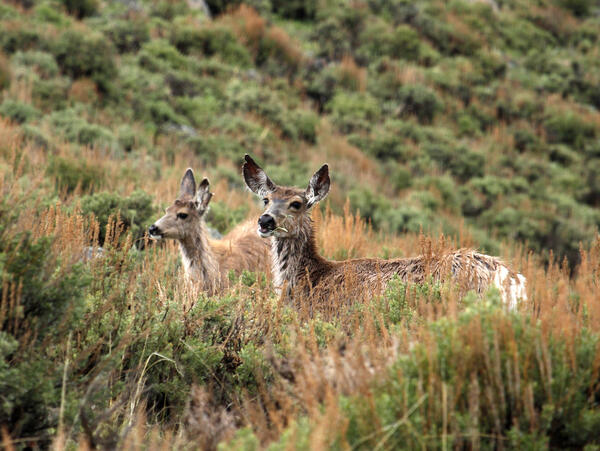
Wildlife managers need more information on which habitats or environmental characteristics put cervids most at risk for contracting CWD. This spring, USGS scientists collaborated with university scientists to investigate what factors impact CWD spread in mule deer. The study utilized GPS collar data collected from mule deer in southern Wyoming to analyze how movement patterns and habitat use relate to CWD transmission risk.
Surprisingly, they found population density was not the best predictor of CWD transmission risk, at least in the short term. Instead, CWD transmission risk was correlated with habitat characteristics often selected for by deer, like flatter, wetter areas in the summer. Researchers also mapped the relative risk of CWD transmission in Wyoming mule deer. Together, these maps and findings help managers prioritize where to sample landscapes for CWD to detect the disease as early as possible and reduce CWD risk.
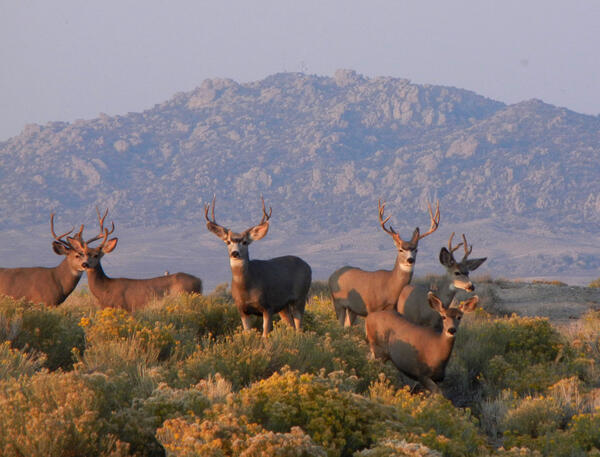
USGS science has also provided insight into how social systems influence effective management of CWD. Last December, a paper published with USFWS researchers documented the experiences of professionals managing CWD outbreaks and educating local communities. They found that the challenging nature of the disease and the limited availability of effective management actions are contributing to manager burnout. They also describe the challenges wildlife managers experience when interacting with hunters and residents, who are similarly frustrated by CWD.
Another study conducted in partnership with USFWS aimed to overcome some of these challenges by asking Federal, State, Tribal, and University experts – biologists, veterinarians, social scientists, and policymakers – to prioritize potential intervention strategies in CWD management. The study explores and proposes better strategies for engaging the public in CWD monitoring efforts and preventing the spread of the disease through revised management practices.
More FORT Science in Action
This September, FORT is highlighting how our science projects support sound decision-making. Each day, we will highlight a new project and its applications. To see more, follow the tabs below.
Related
Shrubland, Alpine and Grassland Ecology (SAGE) Wildlife Research Group

Mapping Chronic Wasting Disease Management: Identify Opportunities for Intervention
Related
Shrubland, Alpine and Grassland Ecology (SAGE) Wildlife Research Group