



FORT Science in Action 2026, Part 7: Using fire history to inform fire management and future wildfire projections in the Western U.S.
It’s no secret that today’s wildfires are severe. But are current fire patterns novel or the norm? Partnering with experts across the West, USGS Fort Collins Science Center scientists discovered where megafires are truly unprecedented and proposed the best management strategies for fuel-choked dry conifer forests.
How severe are today's wildfires?

Increasing drought severity across the West is driving larger, hotter fires. To make matters worse, a hundred years of fire suppression caused an overabundance of fuels and a “fire deficit,” feeding the flames.
But are these high severity “megafires” really unlike anything these landscapes have experienced in recent centuries?
To answer that question, FORT researchers delved into the North American Fire-Scar Network (NAFSN). The NAFSN database, which was compiled by FORT and international partners in 2022, catalogs over 37,000 trees from more than 2,500 sites in the US, Canada, and Mexico.
Cross sections of trees often show fire scars that are centuries old. Through tree ring analysis, researchers can use fire scars to determine the year, season, size, and severity of historic fires.
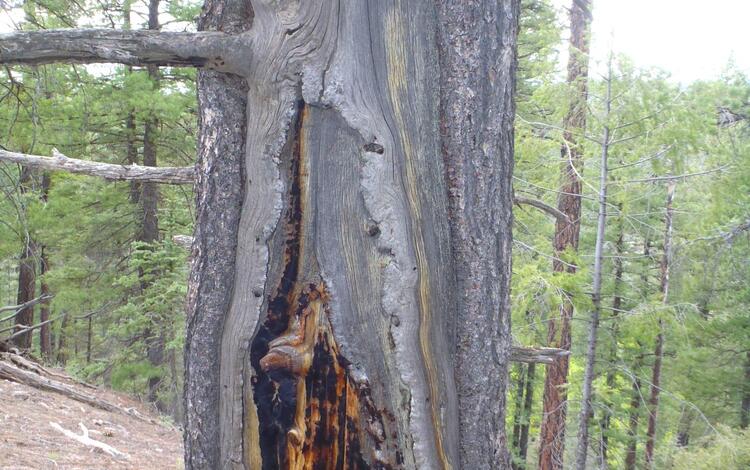
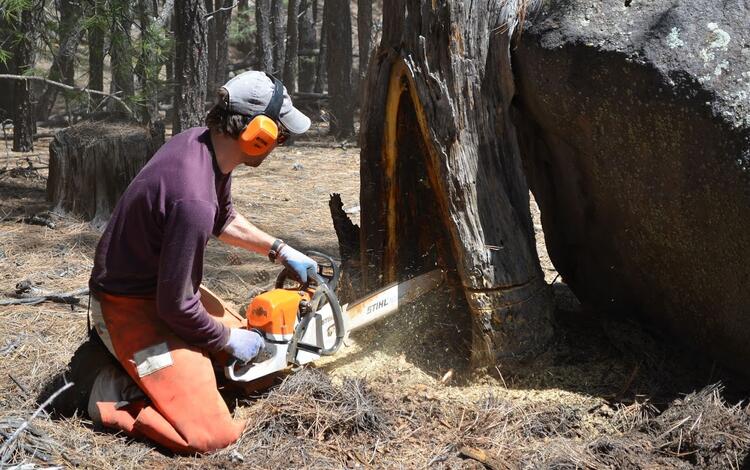
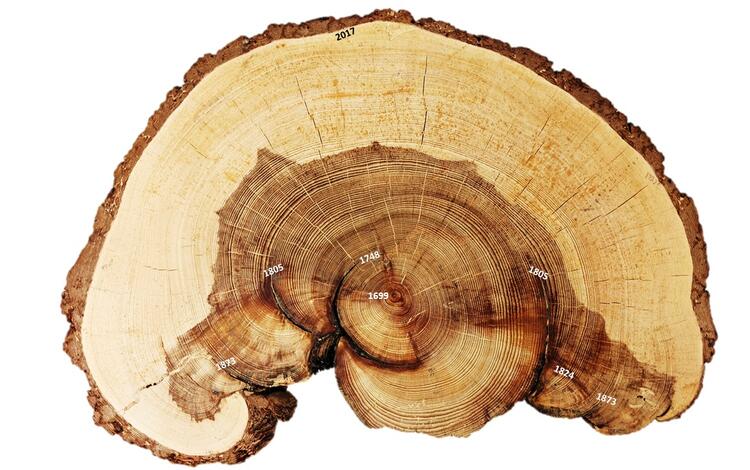
Whether modern fires were truly unprecedented depends on how fires were measured, by size or severity. A FORT team working with a breadth of experts across the West found that in Arizona, several large pre-1900 fires were comparable in size to the 2011 Wallow Fire – the largest in modern Arizona history – that burned almost 218,000 hectares.
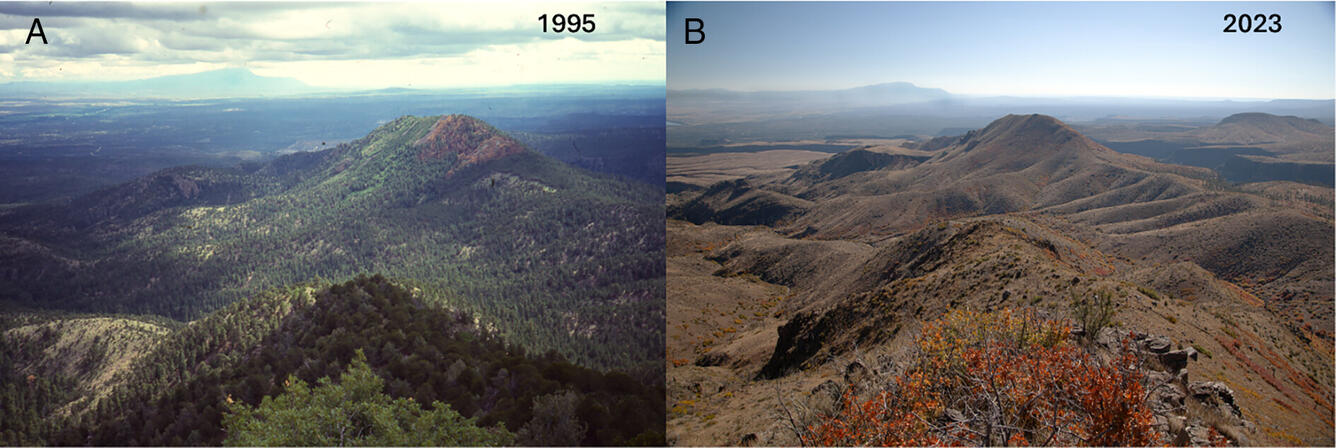
In the Jemez Mountains, USGS science showed that wildfires of the past 30 years were worse than those in the last 500 years. This extraordinary fire severity is partially due to human fire suppression, which allowed large amounts of fuels to accumulate on the landscape. If such fires continue, less than half of the dry-conifer forests of this portion of New Mexico will remain by 2065. The best solution? More fire.
Fighting fire with fire
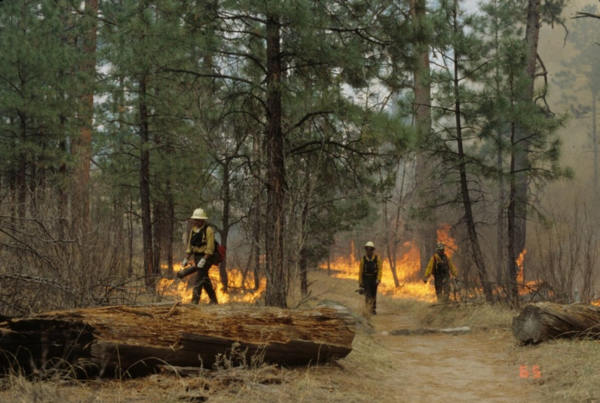
Recent FORT research has also examined whether progressive fire management in Wilderness Areas of the Southwest, which included prescribed and managed lightning fires, could restore the large, low-severity fires of the past. They found that after nearly a century of fire suppression, fire in recent decades in the Gila Wilderness was restored back to historical levels. At Saguaro National Park, recent low-severity forest fires were approaching pre-1900 levels recorded for centuries by the tree-ring fire scars.
In this and other recent studies, researchers suggest that more low-severity fire, in the form of managed wildfires or prescribed burns, could restore forests to their pre-suppression states and improve forest resilience to future fire. Tens of thousands of tree-ring fire scars from dry forests across the West show that pre-1900 low severity fires were much more common and served as an important stabilizing process. Fewer large trees were killed, while fuel loads were kept low by the repeated fires. Increasingly large, modern high severity fires in these same forests kill wide swaths of trees, removing seed sources, delaying forest recovery. The fire regime restoration success stories in the Gila Wilderness and Saguaro National Park serve as models that, if implemented more broadly, could help prevent megafires in the coming years.
More FORT Science in Action
This September, FORT is highlighting how our science projects support sound decision-making. Each day, we will highlight a new project and its applications. To see more, follow the tabs below.
FORT Science in Action, Part 6
FORT Science in Action, Part 8
Related

New Mexico Tree-Ring Science

The New Mexico Landscapes Field Station

New Mexico Landscapes Field Station: Forest Ecosystem Research

New Mexico Landscapes Field Station: Fire Research
Related
New Mexico Tree-Ring Science
The New Mexico Landscapes Field Station
New Mexico Landscapes Field Station: Forest Ecosystem Research