



FORT Science in Action, Part 15: Bat science in support of food and economic security
A deadly fungus is causing large declines in hibernating bats around the world. Detailed life history information can support wildlife managers in predicting species declines and managing healthy bat populations, protecting the economic, agricultural, and other services that bats provide.
Insect-eating bats within the U.S. provide over $3 billion dollars in economic services per year. Much of these services are provided through insect bio-control and offsetting the costs associated with pesticide use by farmers. Loss of bats that occur in the U.S. can have direct impacts to the public through increased costs of produce, as well as other plant and tree-related products, threatening both food and economic security of Americans.
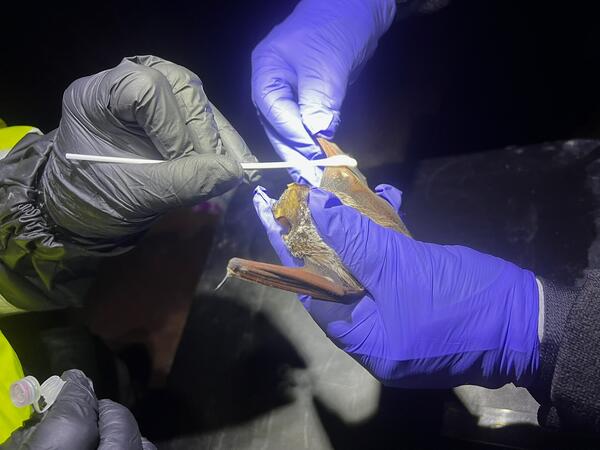
Over the past two decades, hibernating bat species have been negatively impacted by white-nose syndrome (WNS). This wildlife disease is caused by a fungus that was introduced into a cave system in the eastern U.S., during 2006-2007. Since then, this disease has killed millions of bats resulting in 90-95% population loss. WNS continues to spread westward, with the potential to affect an even greater number of species. At present, there is no cure for this disease.
FORT scientists provide decades of experience in bat research on public lands managed by agencies, such as the Bureau of Land Management and the National Park Service. Currently, FORT researchers are conducting WNS and bat-health research at eight national parks, across Colorado, New Mexico, and Texas. Projects include field and lab tests for potential defenses against WNS, like the naturally occurring bacteria Streptomyces, and detailed natural history and diet descriptions for understudied bat species. These studies support science-based decision-making by providing critical data and information to stakeholders.
Researchers also provide WNS-related training and workshops to Native American Tribes, and collaborate with other USGS scientists to study and address this wildlife health crisis.
More FORT Science in Action
This September, FORT is highlighting how our science projects support sound decision-making. Each day, we will highlight a new project and its applications. To see more, follow the tab below.
FORT Science in Action, Part 14
FORT Science in Action, Part 16
Related

The New Mexico Landscapes Field Station

New Mexico Landscapes Field Station: Wildlife Research

External Microbiota of Bats as Potential Bio-control Against Wildlife Diseases

Ecology of Insect-eating Bats
Related
The New Mexico Landscapes Field Station
New Mexico Landscapes Field Station: Wildlife Research
External Microbiota of Bats as Potential Bio-control Against Wildlife Diseases