Swabbing a bat during white-nose syndrome surveillance
Swabbing a bat during white-nose syndrome surveillanceResearchers swab a bat for the presence of Pseudogymnoascus destructans (Pd), the fungus that causes deadly white-nose syndrome.


Official websites use .gov
A .gov website belongs to an official government organization in the United States.

Secure .gov websites use HTTPS
A lock () or https:// means you’ve safely connected to the .gov website. Share sensitive information only on official, secure websites.

Ernie Valdez is a Research Wildlife Biologist at the Fort Collins Science Center, and works at the New Mexico Landscapes Field Station in Albuquerque, New Mexico.
Ernie received his doctorate degree in Biology, during 2006, at the University of New Mexico. His research interests span a variety of topics but are focused on conservation and ecology of insects and small mammals, with an emphasis on bats in temperate and tropical ecosystems. Ernie specializes in the feeding ecology and movement of insectivorous bats but also includes research on the ectoparasites of bats. His current projects include research related to white-nose syndrome, wind energy, and habitat use by bats at uranium mines in the Southwest.


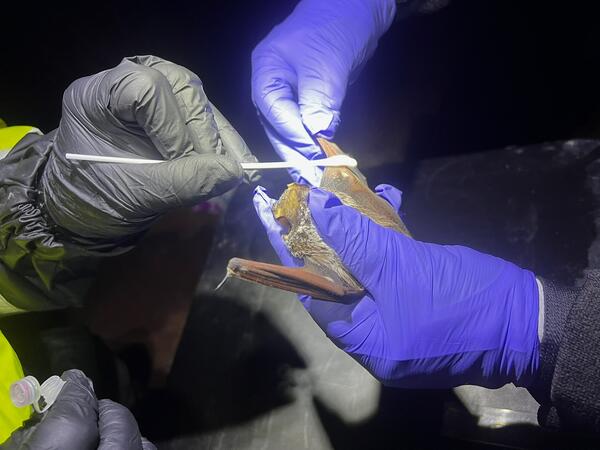
Researchers swab a bat for the presence of Pseudogymnoascus destructans (Pd), the fungus that causes deadly white-nose syndrome.
Researchers swab a bat for the presence of Pseudogymnoascus destructans (Pd), the fungus that causes deadly white-nose syndrome.

An Arizona bat or Occult bat (Myotis occultus) roost from southern Colorado.
An Arizona bat or Occult bat (Myotis occultus) roost from southern Colorado.

Dissected guano pellet showing antennae, eyes, and body fragments of midges.
Dissected guano pellet showing antennae, eyes, and body fragments of midges.
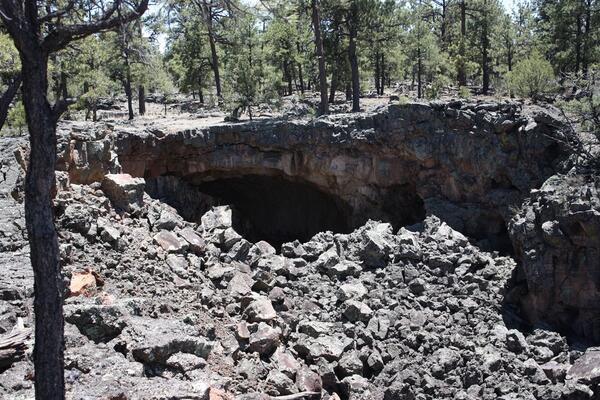
Opening of a large lava tube at El Malpais National Monument in western New Mexico and likely roost for bats, 2011.
Opening of a large lava tube at El Malpais National Monument in western New Mexico and likely roost for bats, 2011.

Asunset photo, from El Malpais National Monument, NM.
Asunset photo, from El Malpais National Monument, NM.

This photo of a Pacific sheath-tailed bat is the last good photo of this bat from Aguiguan in existence.
This photo of a Pacific sheath-tailed bat is the last good photo of this bat from Aguiguan in existence.
Researchers swab a bat for the presence of Pseudogymnoascus destructans (Pd), the fungus that causes deadly white-nose syndrome.
Researchers swab a bat for the presence of Pseudogymnoascus destructans (Pd), the fungus that causes deadly white-nose syndrome.
An Arizona bat or Occult bat (Myotis occultus) roost from southern Colorado.
An Arizona bat or Occult bat (Myotis occultus) roost from southern Colorado.
Dissected guano pellet showing antennae, eyes, and body fragments of midges.
Dissected guano pellet showing antennae, eyes, and body fragments of midges.
Opening of a large lava tube at El Malpais National Monument in western New Mexico and likely roost for bats, 2011.
Opening of a large lava tube at El Malpais National Monument in western New Mexico and likely roost for bats, 2011.
Asunset photo, from El Malpais National Monument, NM.
Asunset photo, from El Malpais National Monument, NM.
This photo of a Pacific sheath-tailed bat is the last good photo of this bat from Aguiguan in existence.
This photo of a Pacific sheath-tailed bat is the last good photo of this bat from Aguiguan in existence.
*Disclaimer: Listing outside positions with professional scientific organizations on this Staff Profile are for informational purposes only and do not constitute an endorsement of those professional scientific organizations or their activities by the USGS, Department of the Interior, or U.S. Government