



FORT Science in Action, Part 17: Informing public engagement objectives for the North American Waterfowl Management Plan
The North American Waterfowl Management Plan (NAWMP) represents the foundational and successful effort to manage waterfowl and migratory bird in North America. Continued success of NAWMP depends on maintaining relevance to partners and society over time. FORT social science research supports NAWMP by providing a better understanding of what people value regarding waterfowl and their habitats.
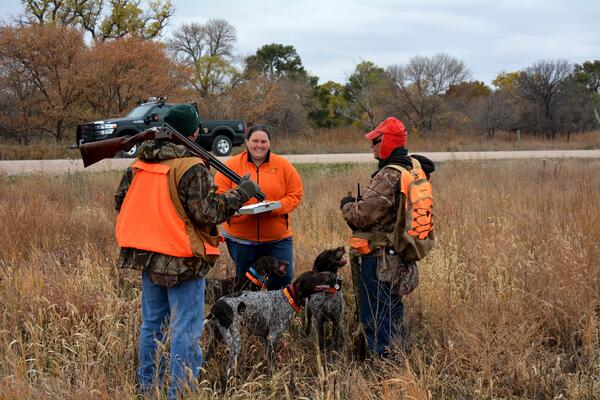
Waterfowl hunting and birdwatching contributed over \$240 billion to the U.S. economy in 2022. These popular outdoor recreation activities rely on annual efforts to effectively manage waterfowl and migratory birds through federal, state, tribal, and non-governmental partnerships created under the North American Waterfowl Management Plan (NAWMP).
Since 2012, NAWMP has set a goal to emphasize the important role of landowners and outdoor recreation participants in the benefits realized from waterfowl, wetlands, and migratory birds. Achieving this goal has required a better understanding of people’s involvement, opinions, and benefits.
FORT social scientists provide expertise to investigate the human dimensions of waterfowl and wetland management, including research on hunting trip preferences and perceived constraints to participating in recreational activities like hunting. They have cooperatively developed large, bi-national datasets to inform NAWMP partners, the National Flyway Council, and Migratory Bird Joint Venture objectives. From this research, FORT has collaboratively produced eight scientific products that directly inform waterfowl and wetland management decisions internationally.
More FORT Science in Action
This September, FORT is highlighting how our science projects support sound decision-making. Each day, we will highlight a new project and its applications. To see more, follow the tabs below.
FORT Science in Action, Part 16
FORT Science in Action, Part 18
Related

Human Dimensions of Resource Management

North American Waterfowl Management Plan
Related
Human Dimensions of Resource Management