



FORT Science in Action Part 9: The Wyoming Landscape Conservation Initiative produces science for energy development and conservation in southwestern Wyoming
As the science backbone of the Wyoming Landscape Conservation Initiative (WLCI), USGS has developed 200+ science products for WLCI partners over the last 18 years. From wildlife migration to water quality, invasive species to mineral mapping, this science helps partners within WLCI adapt and plan for the future.
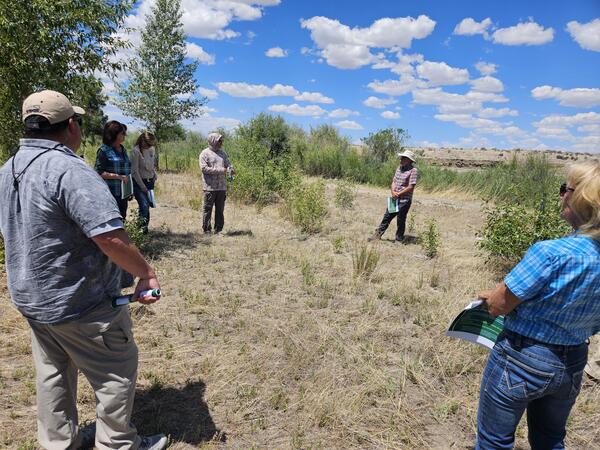
Southwestern Wyoming is an area rich in natural resources, including vast oil and gas fields, coal, uranium, critical minerals, the world's largest trona reserve, livestock grazing lands, and world-class wildlife habitats. In 2007, a coalition of local, state, and federal governments, private landowners, and non-governmental organizations formed the Wyoming Landscape Conservation Initiative (WLCI) to address conflicting land use needs and the rapid expansion of invasive plants and drought that were threatening the region's rural landscapes and economies.
Since its inception, the USGS has provided scientific expertise in support of WLCI, producing over 200 products related to the mapping of Southwest Wyoming’s natural resources, the efficacy of habitat management projects, and the economics of land management. They have also developed protocols and tools to monitor wildlife movement, track vegetation change, and water quantity and quality trends, and help managers plan by modeling future resource conditions.
Current FORT research projects for WLCI focus on:
- Decision optimization for public lands managers
- Estimation of land treatment costs
- Soil and vegetation patterns across vast landscapes.
- Sagebrush-obligate wildlife
- Biology and management of invasive plants
- Long-term assessments of habitat treatments and drought
FORT staff also participate in WLCI’s Coordination Team and Executive Committee.
The USGS is also responsible for transferring and integrating science with WLCI local teams to support their planning, implementation processes, and resource decisions. Collectively, USGS and WLCI conservation efforts are helping promote energy independence and economic growth, improving the Nation's forests and rangelands, and assisting with plans for utilizing our Nation’s critical minerals and energy needs while promoting a balance of state and local needs, economic viability, and preparedness.
Read more about this partner-led, science driven initiative.
More FORT Science in Action
This September, FORT is highlighting how our science projects support sound decision-making. Each day, we will highlight a new project and its applications. To see more, follow the tabs below.
FORT Science in Action, Part 8
FORT Science in Action, Part 10
Related

The Wyoming Landscape Conservation Initiative (WLCI)
Related