



Biology, Impacts and Control of Invasive Reptiles in the Everglades
Invasive species are considered to be second only to habitat degradation in terms of negative impacts on the Earth’s ecosystems, and our scientists make up a significant proportion of the global expertise in the rapidly-growing problem of invasive reptiles.

FORT's invasive reptile research in Florida focuses on understanding impacts and developing adaptive control opportunities for Burmese pythons and other recent invaders such as black and white tegus. Branch scientists combine extensive herpetological expertise with cutting-edge quantitative skills to inform and estimate detection probability, population size, and eradication prospects for a range of invasive reptiles. Projects and collaborators span across the United States mainland to Pacific islands.
Below are other science projects associated with this project.
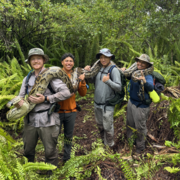
Invasive Burmese python research in the Greater Everglades
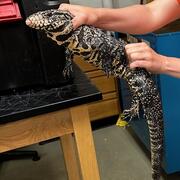
Early detection and rapid response tools for invasive tegu lizards

Multi-year Burmese Python Vital Rate Research Collaborative in the Greater Everglades

State Partnerships in South Florida

Ecology and Control of Invasive Reptiles in Florida

Mentoring the next generation: USGS, NPS, and University of Florida Cooperative Research Unit Invasive Reptile Intern Program
Invasive species are considered to be second only to habitat degradation in terms of negative impacts on the Earth’s ecosystems, and our scientists make up a significant proportion of the global expertise in the rapidly-growing problem of invasive reptiles.
FORT's invasive reptile research in Florida focuses on understanding impacts and developing adaptive control opportunities for Burmese pythons and other recent invaders such as black and white tegus. Branch scientists combine extensive herpetological expertise with cutting-edge quantitative skills to inform and estimate detection probability, population size, and eradication prospects for a range of invasive reptiles. Projects and collaborators span across the United States mainland to Pacific islands.
Below are other science projects associated with this project.
Invasive Burmese python research in the Greater Everglades
Early detection and rapid response tools for invasive tegu lizards
Multi-year Burmese Python Vital Rate Research Collaborative in the Greater Everglades
State Partnerships in South Florida
Ecology and Control of Invasive Reptiles in Florida