



Invasive Burmese python research in the Greater Everglades
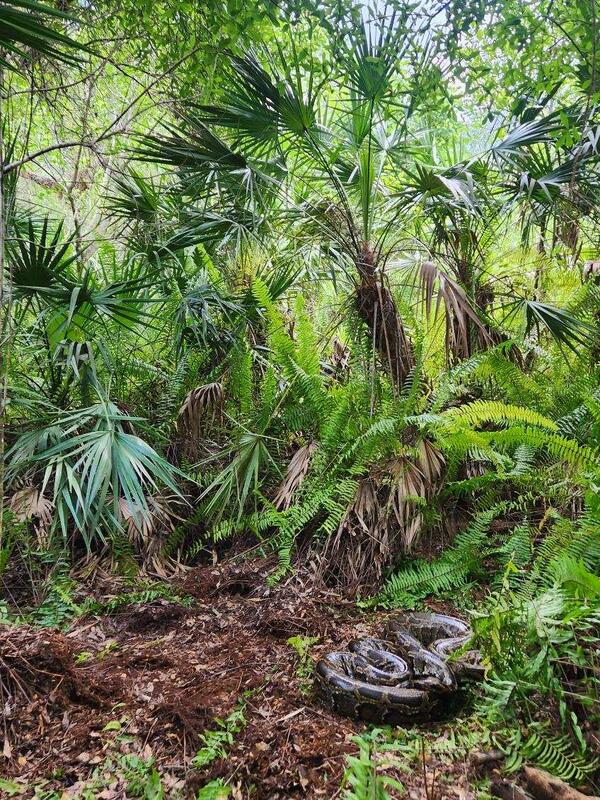
USGS leads federal research to control the highly invasive Burmese python (Python bivittatus), which has become firmly established across the Greater Everglades Ecosystem and poses a serious threat to native wildlife. Capable of reaching over 17 feet long, this massive constrictor is believed to be a key factor in the sharp decline of mammal populations in the region. For over a decade, scientists and land managers have worked to understand python ecology, but its remarkable camouflage and elusive behavior have made it notoriously difficult to study—and reliable population estimates have yet to be derived.
In response, USGS researchers and their partners have intensified research efforts, deploying a multi-faceted strategy to obtain critical data on python survival, reproduction, spatial use, feeding rates, and abundance. Working with multiple entities has a synergistic effect, allowing researchers to share data, knowledge, and resources to make faster progress on python control. Ultimately, the goal is to pioneer innovative methods—such as genetic biocontrol— to suppress populations and provide science-based guidance to restore ecological integrity to the Everglades.
Establishing the vital rates of Burmese pythons
Recognizing the significant ecological threat posed by Burmese pythons and the urgent need for a long-term management strategy, scientists from the USGS Fort Collins Science Center (FORT) and the Wetland and Aquatic Research Center (WARC), along with the University of Florida’s (UF) Invasion Ecology Lab and the National Park Service (Everglades National Park and Big Cypress National Preserve), are working to estimate key biological rates — collectively known as vital rates — for invasive Burmese pythons. These include:
- Individual growth rates
- Reproductive output
- Age-specific survival rates
- Sex ratios
This project builds on previous research to fill in critical knowledge gaps and address the priorities of the management community. With these data, scientists can develop quantitative models to:
- Pinpoint ages that will affect the population growth rate the most for targeted removal
- Estimate population growth or decline
- Simulate removal of vulnerable life-stages to determine effective strategies for suppressing the population
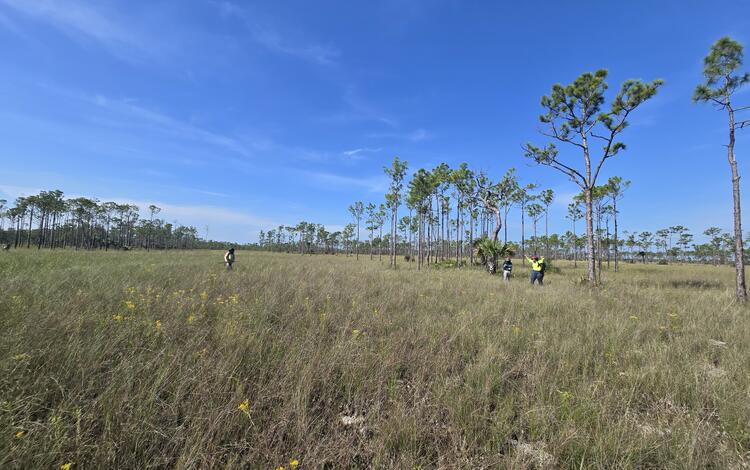
To collect these data, intensive fieldwork is conducted at two strategically selected sites within Big Cypress National Preserve (BCNP), representing distinct habitat types (wet and dry). The study primarily relies on radio telemetry in the form of a year-round scout program, in which selected male and female pythons, the scout snakes, are tracked continuously by USGS researchers and interns from the UF Everglades Invasive Reptile Internship Program. An added benefit to the scout program is that during the breeding season, scout snakes help researchers locate breeding aggregations, enabling:
- Additional pythons to be removed from the landscape
- New individuals to be radio-tagged and recruited into the study
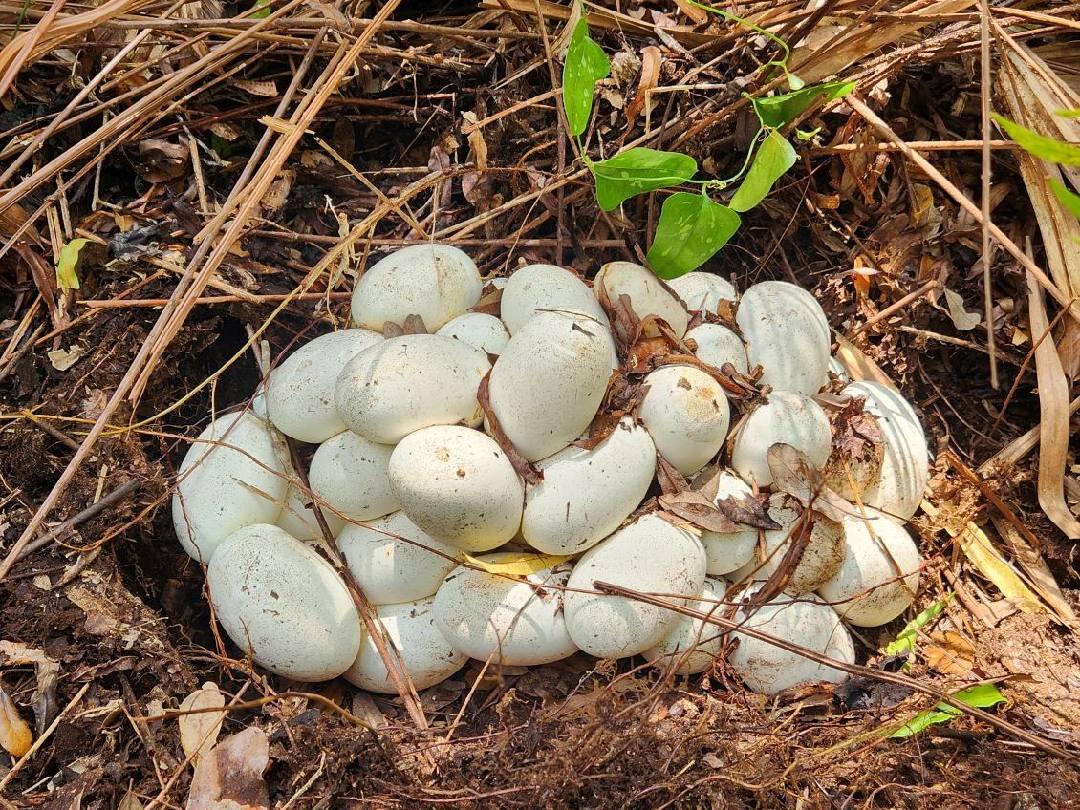
- Nests to be located from which eggs are collected for the juvenile survival study. After hatching, a subset of hatchlings are fitted with radio transmitters and tracked throughout the year to estimate juvenile survival rates and individual growth trajectories

Defining python reproductive ecology
A key aspect to understanding the spread of invasive Burmese pythons is their reproductive biology. While pythons have been documented laying between 11 and 111 eggs, studying the physiology and ecology of breeding can give insight into what makes a ‘successful’ breeding python.
USGS FORT researchers have been developing the expertise and tools to study the breeding physiology of pythons. This includes collecting blood samples from scout snakes for hormone analysis, collecting semen at different times of the year to understand breeding cycles and sperm quality, and ultra-sounding females to study ovarian follicle development.
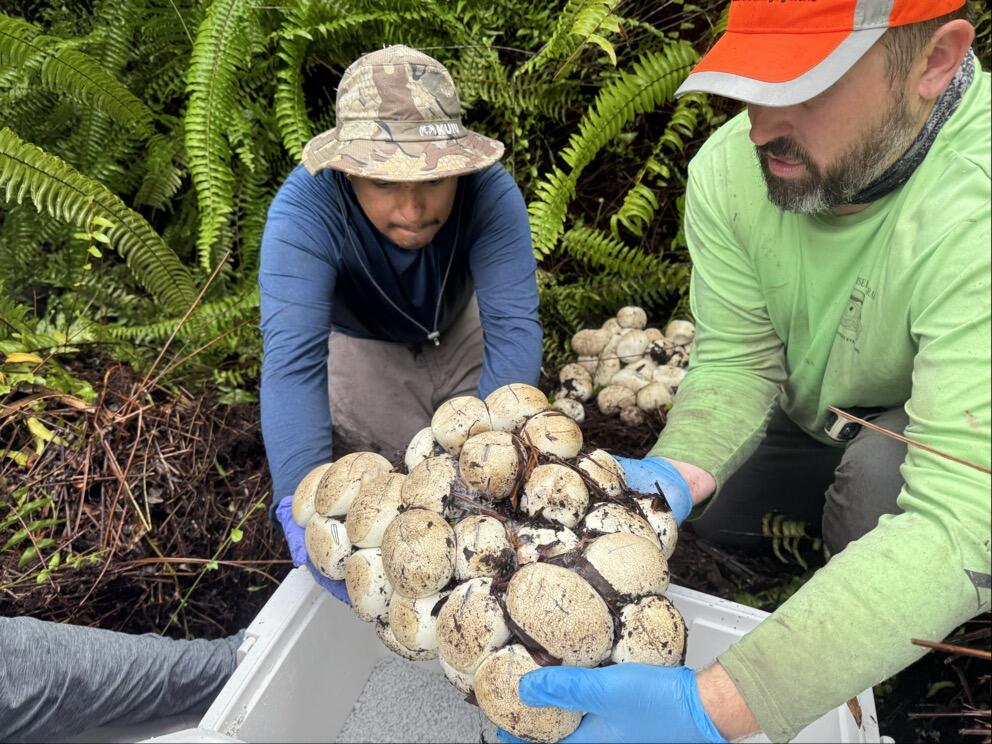
This is coupled with studies on breeding ecology, including breeding behavior (for example movement patterns during breeding and breeding aggregations), nest site selection, and maternal investment, to understand the overall reproductive output of this highly fertile species. These critical data can help inform the development of genetic biocontrol tools at WARC, tools that aim to disrupt the reproductive cycle of the pythons.
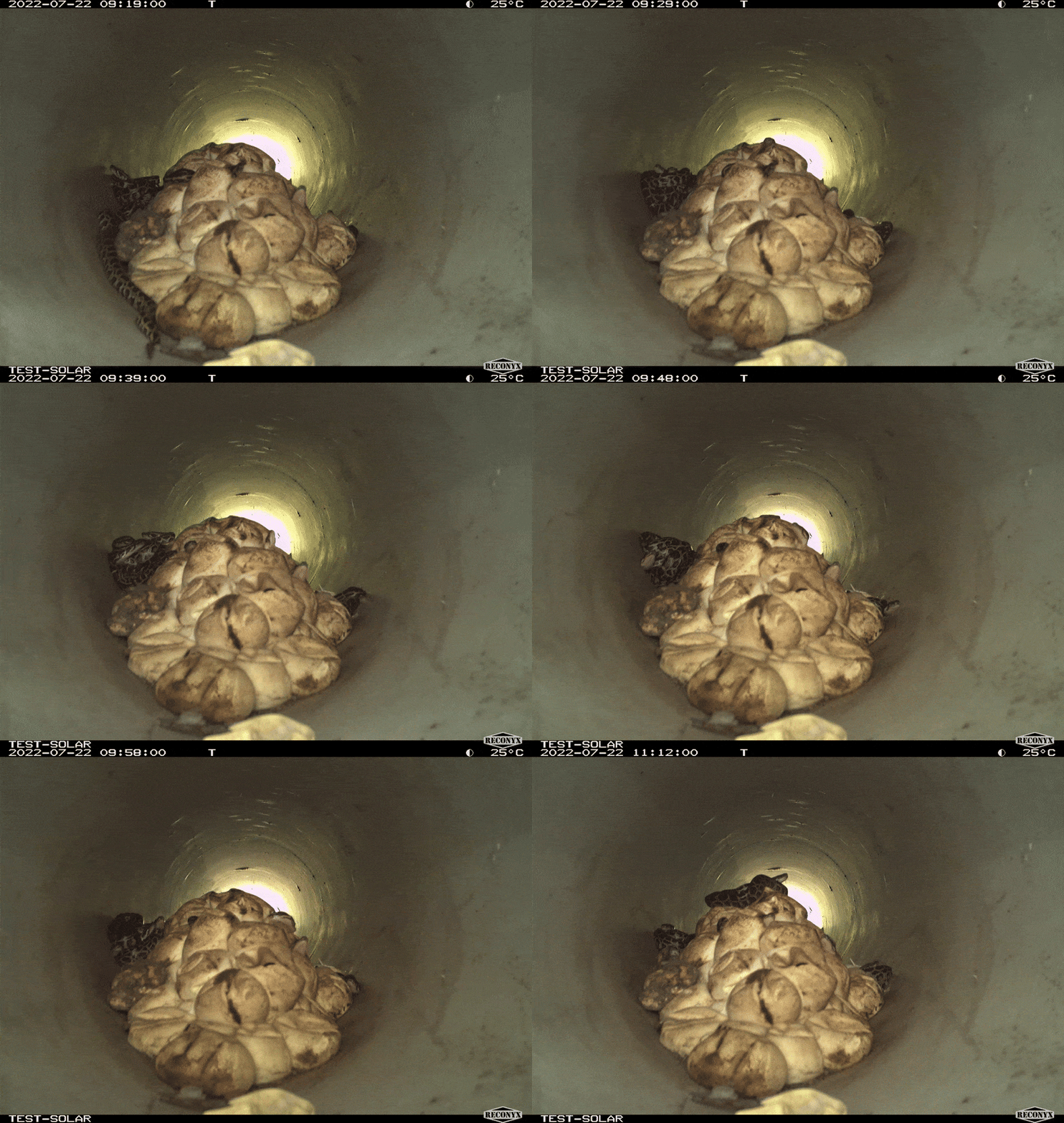
Background: Trail camera photography of Burmese pythons hatching from eggs within a concrete pipe located within the Greater Everglades Ecosystem, Florida, USA. Scientists measured the temperature inside the pipe and the nest itself to learn more about python thermogenesis and brooding behavior. Read more about this behavior in Currylow and others (2025), the first complete report of egg-laying and brooding for this time period of a female Burmese python.
Characterizing python movement across geographic space
Burmese pythons are a highly cryptic species, and movement and dispersal patterns of individual pythons are not well understood. USGS FORT and WARC scientists are leveraging location data from snakes implanted with radio-transmitters for the scout program in Big Cypress National Preserve to understand how pythons use space during the breeding and non-breeding seasons.
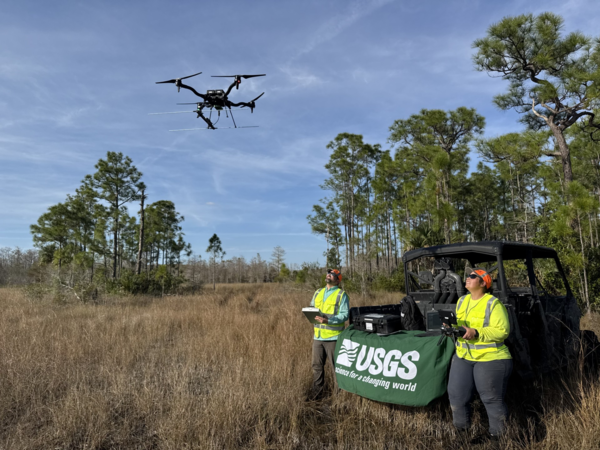
The data can be used to estimate home range sizes, overlap in space use over longtime periods, and to understand how often pythons choose to stay in the same area or move to a new area. These patterns can give insight into habitat preferences and requirements, the rate at which pythons may be expanding their range, and how habitat use overlaps in pythons. In a parallel effort, USGS FORT scientists are working with the South Florida Water Management District (SFWMD) and the UF Croc Docs Team to understand python movement in a vastly different aquatic environment at the Francis S. Taylor Wildlife Management Area in South Florida.
As part of this effort, USGS scientists are testing new radio‑tracking technology mounted on small uncrewed aircraft systems (sUAS) to locate pythons more frequently, improving research data, efficiency, and staff safety. If proven feasible in the complex habitats of the Everglades, this technological innovation could significantly strengthen invasive species management and advance restoration efforts across the Greater Everglades.
Understanding python consumption rate of deer
There have been numerous anecdotal observations of pythons consuming deer, and these observations have coincided with a steadily declining deer population in Big Cypress National Preserve. In 2024, USGS researchers collaborated with National Park Service (NPS) biologists to formally document and monitor consumption rates of deer by a subset of pythons in the USGS scout program. Researchers closely monitored 5 snakes for an entire year, and collected data on the number of large food boluses (a visible bulge in the snake after consumption of a prey item) and the rate of digestion.
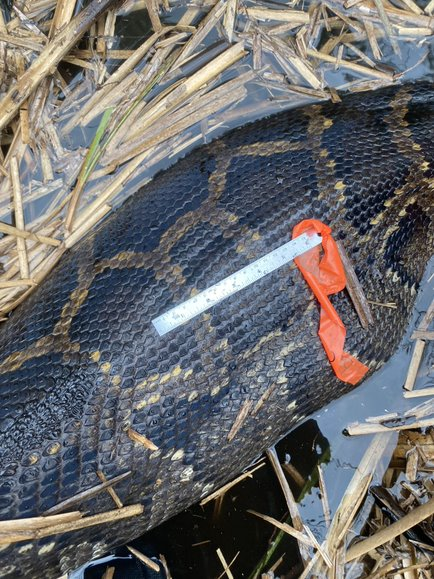
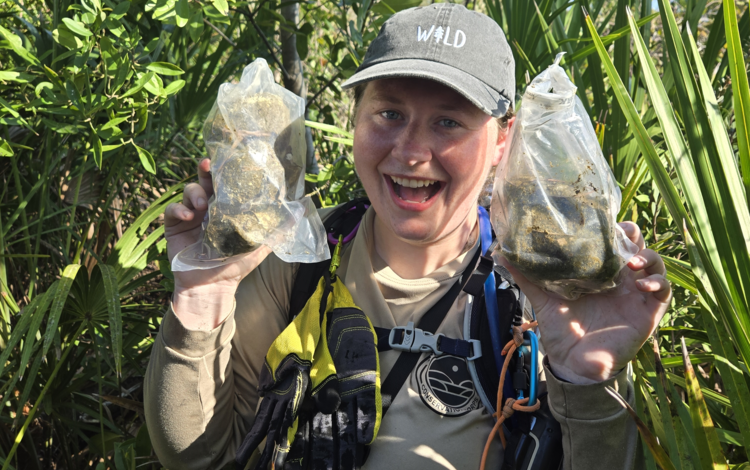
Researchers also used numerous methods to attempt to identify prey items if a bolus was observed in a snake. Techniques for identifying prey items included collecting fecal samples from snakes and taking opportunistic x-rays. Researchers are currently analyzing these data to quantify the variation and rate of deer consumption by study pythons.
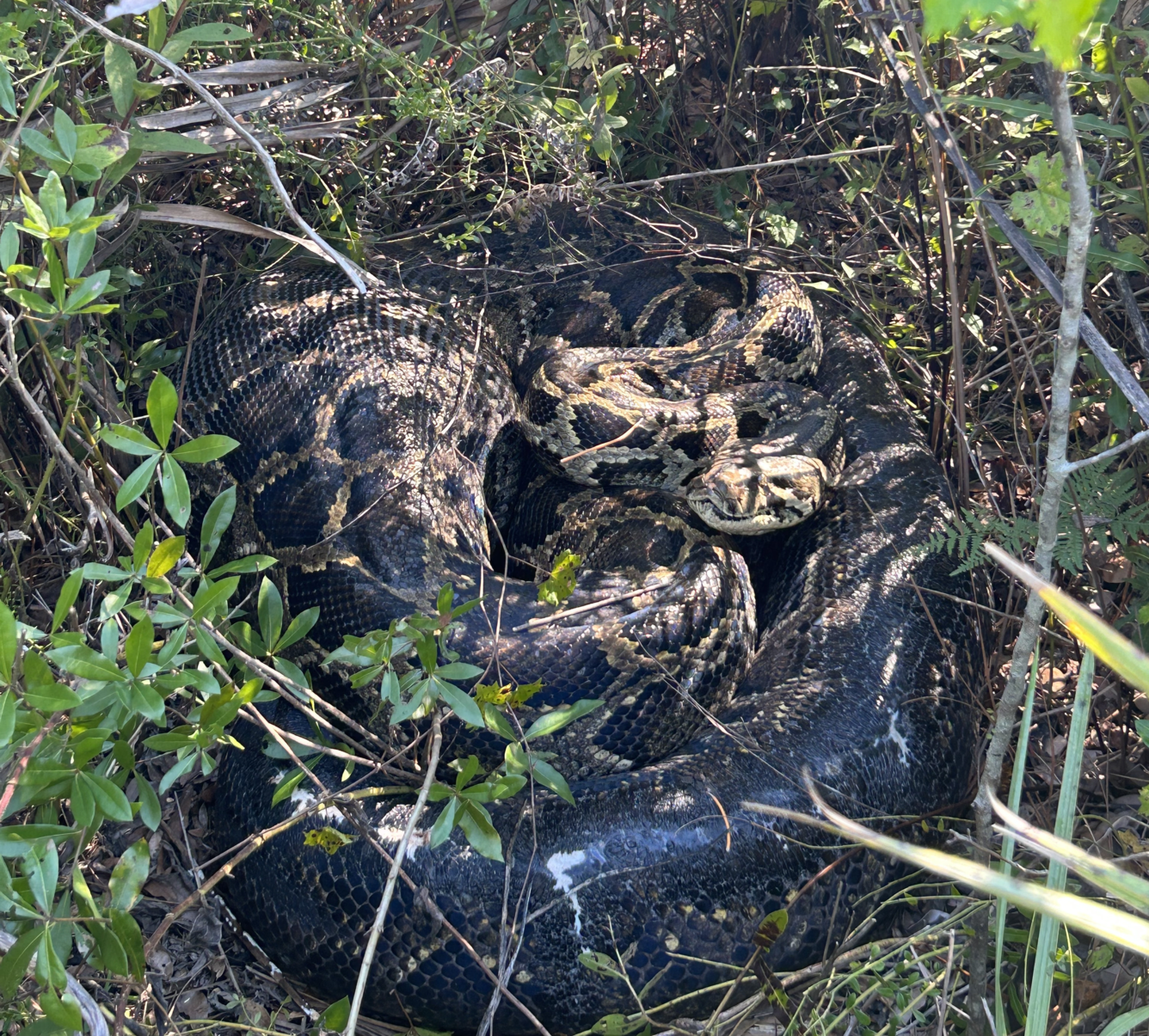
Background: Burmese python with a large bolus.
Modeling python abundance using removal data
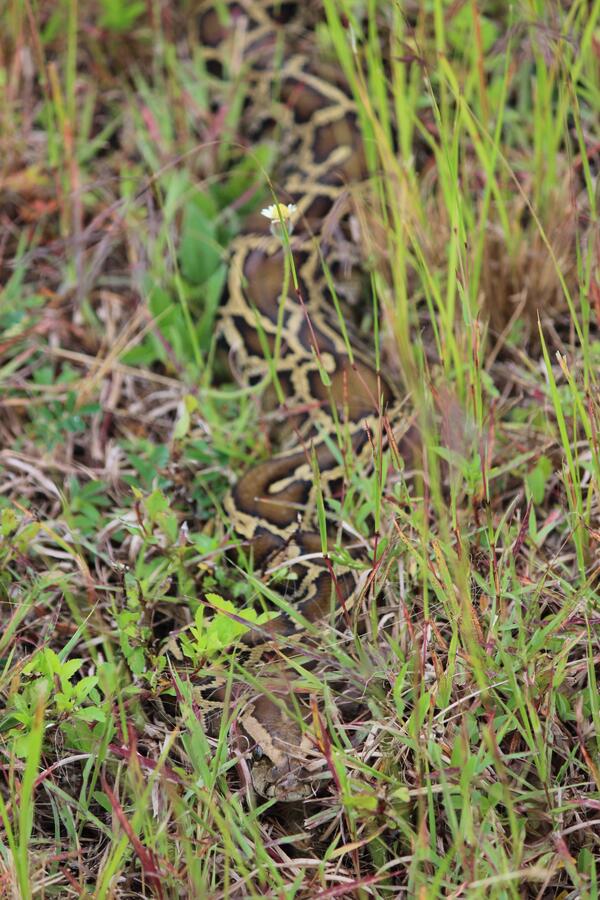
The most frequent question that python researchers are asked is, ‘how many invasive Burmese pythons are in the Greater Everglades?’
To date, there are no robust estimates of population size due to the low detection probability of pythons. USGS FORT is part of a collaborative group including scientists from North Carolina Cooperative Fish and Wildlife Research Unit, and the UF Invasion Ecology Lab, as well as managers from the Florida Fish and Wildlife Commission and South Florida Water Management District, that is actively working to develop estimates of python population size. Together, they are collaborating on cutting-edge research to derive abundance estimates using python removal data gathered by both citizens and contractors.
Around 100 contractors work year-round to remove invasive pythons, while broader public participation occurs during Florida’s annual ‘Python Challenge’, which can attract over 1,000 participants from several states and countries. Using removal data from these two sources collected at the Francis S. Taylor Wildlife Management Area in South Florida, scientists are developing advanced modeling approaches not only to estimate abundance, but to simultaneously assess the effectiveness of removal programs in reducing python abundance.
These models can also estimate python survival rates and give insight into the demographic composition of the population—key information for guiding python management across the Greater Everglades ecosystem.
Evaluating pythons as an indicator of mercury levels
Mercury, a toxic chemical at high levels, is pervasive in the Greater Everglades Ecosystem and understanding mercury contamination levels is important for human and ecological health. As apex predators, Burmese pythons are known to accumulate mercury in their bodies from consumption of smaller prey that also contain mercury and thus can offer insight into the patterns of mercury levels across the ecosystem.
Scientists can leverage both reproductive study animals that have laid eggs and animals removed from the environment by contractors to track mercury levels. This approach also offers opportunities to research mechanisms of mercury cycling and transfer in reptiles. Scientists from USGS FORT and the USGS Mercury Research Lab at the Upper Midwest Water Science Center are collaborating to assess the exposure of developing invasive pythons to maternally transferred mercury, which may affect survival. In addition, removal programs for invasive pythons have led to increased consumption of python meat which is a public health concern where levels of mercury are high. The state of Florida recently released a consumption advisory for python meat related to potential exposure to mercury.

Invasive Burmese Pythons in Southern Florida

Multi-year Burmese Python Vital Rate Research Collaborative in the Greater Everglades

Invasive Species We Study: Burmese Pythons
USGS leads federal research to control the highly invasive Burmese python (Python bivittatus), which has become firmly established across the Greater Everglades Ecosystem and poses a serious threat to native wildlife. Capable of reaching over 17 feet long, this massive constrictor is believed to be a key factor in the sharp decline of mammal populations in the region. For over a decade, scientists and land managers have worked to understand python ecology, but its remarkable camouflage and elusive behavior have made it notoriously difficult to study—and reliable population estimates have yet to be derived.
In response, USGS researchers and their partners have intensified research efforts, deploying a multi-faceted strategy to obtain critical data on python survival, reproduction, spatial use, feeding rates, and abundance. Working with multiple entities has a synergistic effect, allowing researchers to share data, knowledge, and resources to make faster progress on python control. Ultimately, the goal is to pioneer innovative methods—such as genetic biocontrol— to suppress populations and provide science-based guidance to restore ecological integrity to the Everglades.
Establishing the vital rates of Burmese pythons
Recognizing the significant ecological threat posed by Burmese pythons and the urgent need for a long-term management strategy, scientists from the USGS Fort Collins Science Center (FORT) and the Wetland and Aquatic Research Center (WARC), along with the University of Florida’s (UF) Invasion Ecology Lab and the National Park Service (Everglades National Park and Big Cypress National Preserve), are working to estimate key biological rates — collectively known as vital rates — for invasive Burmese pythons. These include:
- Individual growth rates
- Reproductive output
- Age-specific survival rates
- Sex ratios
This project builds on previous research to fill in critical knowledge gaps and address the priorities of the management community. With these data, scientists can develop quantitative models to:
- Pinpoint ages that will affect the population growth rate the most for targeted removal
- Estimate population growth or decline
- Simulate removal of vulnerable life-stages to determine effective strategies for suppressing the population
To collect these data, intensive fieldwork is conducted at two strategically selected sites within Big Cypress National Preserve (BCNP), representing distinct habitat types (wet and dry). The study primarily relies on radio telemetry in the form of a year-round scout program, in which selected male and female pythons, the scout snakes, are tracked continuously by USGS researchers and interns from the UF Everglades Invasive Reptile Internship Program. An added benefit to the scout program is that during the breeding season, scout snakes help researchers locate breeding aggregations, enabling:
- Additional pythons to be removed from the landscape
- New individuals to be radio-tagged and recruited into the study
- Nests to be located from which eggs are collected for the juvenile survival study. After hatching, a subset of hatchlings are fitted with radio transmitters and tracked throughout the year to estimate juvenile survival rates and individual growth trajectories
Defining python reproductive ecology
A key aspect to understanding the spread of invasive Burmese pythons is their reproductive biology. While pythons have been documented laying between 11 and 111 eggs, studying the physiology and ecology of breeding can give insight into what makes a ‘successful’ breeding python.
USGS FORT researchers have been developing the expertise and tools to study the breeding physiology of pythons. This includes collecting blood samples from scout snakes for hormone analysis, collecting semen at different times of the year to understand breeding cycles and sperm quality, and ultra-sounding females to study ovarian follicle development.
This is coupled with studies on breeding ecology, including breeding behavior (for example movement patterns during breeding and breeding aggregations), nest site selection, and maternal investment, to understand the overall reproductive output of this highly fertile species. These critical data can help inform the development of genetic biocontrol tools at WARC, tools that aim to disrupt the reproductive cycle of the pythons.
Background: Trail camera photography of Burmese pythons hatching from eggs within a concrete pipe located within the Greater Everglades Ecosystem, Florida, USA. Scientists measured the temperature inside the pipe and the nest itself to learn more about python thermogenesis and brooding behavior. Read more about this behavior in Currylow and others (2025), the first complete report of egg-laying and brooding for this time period of a female Burmese python.
Characterizing python movement across geographic space
Burmese pythons are a highly cryptic species, and movement and dispersal patterns of individual pythons are not well understood. USGS FORT and WARC scientists are leveraging location data from snakes implanted with radio-transmitters for the scout program in Big Cypress National Preserve to understand how pythons use space during the breeding and non-breeding seasons.
The data can be used to estimate home range sizes, overlap in space use over longtime periods, and to understand how often pythons choose to stay in the same area or move to a new area. These patterns can give insight into habitat preferences and requirements, the rate at which pythons may be expanding their range, and how habitat use overlaps in pythons. In a parallel effort, USGS FORT scientists are working with the South Florida Water Management District (SFWMD) and the UF Croc Docs Team to understand python movement in a vastly different aquatic environment at the Francis S. Taylor Wildlife Management Area in South Florida.
As part of this effort, USGS scientists are testing new radio‑tracking technology mounted on small uncrewed aircraft systems (sUAS) to locate pythons more frequently, improving research data, efficiency, and staff safety. If proven feasible in the complex habitats of the Everglades, this technological innovation could significantly strengthen invasive species management and advance restoration efforts across the Greater Everglades.
Understanding python consumption rate of deer
There have been numerous anecdotal observations of pythons consuming deer, and these observations have coincided with a steadily declining deer population in Big Cypress National Preserve. In 2024, USGS researchers collaborated with National Park Service (NPS) biologists to formally document and monitor consumption rates of deer by a subset of pythons in the USGS scout program. Researchers closely monitored 5 snakes for an entire year, and collected data on the number of large food boluses (a visible bulge in the snake after consumption of a prey item) and the rate of digestion.
Researchers also used numerous methods to attempt to identify prey items if a bolus was observed in a snake. Techniques for identifying prey items included collecting fecal samples from snakes and taking opportunistic x-rays. Researchers are currently analyzing these data to quantify the variation and rate of deer consumption by study pythons.
Background: Burmese python with a large bolus.
Modeling python abundance using removal data
The most frequent question that python researchers are asked is, ‘how many invasive Burmese pythons are in the Greater Everglades?’
To date, there are no robust estimates of population size due to the low detection probability of pythons. USGS FORT is part of a collaborative group including scientists from North Carolina Cooperative Fish and Wildlife Research Unit, and the UF Invasion Ecology Lab, as well as managers from the Florida Fish and Wildlife Commission and South Florida Water Management District, that is actively working to develop estimates of python population size. Together, they are collaborating on cutting-edge research to derive abundance estimates using python removal data gathered by both citizens and contractors.
Around 100 contractors work year-round to remove invasive pythons, while broader public participation occurs during Florida’s annual ‘Python Challenge’, which can attract over 1,000 participants from several states and countries. Using removal data from these two sources collected at the Francis S. Taylor Wildlife Management Area in South Florida, scientists are developing advanced modeling approaches not only to estimate abundance, but to simultaneously assess the effectiveness of removal programs in reducing python abundance.
These models can also estimate python survival rates and give insight into the demographic composition of the population—key information for guiding python management across the Greater Everglades ecosystem.
Evaluating pythons as an indicator of mercury levels
Mercury, a toxic chemical at high levels, is pervasive in the Greater Everglades Ecosystem and understanding mercury contamination levels is important for human and ecological health. As apex predators, Burmese pythons are known to accumulate mercury in their bodies from consumption of smaller prey that also contain mercury and thus can offer insight into the patterns of mercury levels across the ecosystem.
Scientists can leverage both reproductive study animals that have laid eggs and animals removed from the environment by contractors to track mercury levels. This approach also offers opportunities to research mechanisms of mercury cycling and transfer in reptiles. Scientists from USGS FORT and the USGS Mercury Research Lab at the Upper Midwest Water Science Center are collaborating to assess the exposure of developing invasive pythons to maternally transferred mercury, which may affect survival. In addition, removal programs for invasive pythons have led to increased consumption of python meat which is a public health concern where levels of mercury are high. The state of Florida recently released a consumption advisory for python meat related to potential exposure to mercury.
Invasive Burmese Pythons in Southern Florida
Multi-year Burmese Python Vital Rate Research Collaborative in the Greater Everglades