



The Molecular Ecology Laboratory applies innovative genetic and genomic technologies to address a variety of complex questions and issues facing the Nation's natural resources. While we continually update the scale and efficiency of laboratory procedures to meet stakeholder needs, we must also be innovative and flexible in addressing those needs that have no off-the-shelf solution.
We help characterize known and emerging pathogens that impact natural resources such as game fish, avian species, and pollinators. These innovations arise out of close partnership between the benchtop and data analysis realms. Our lab also develops and evaluates novel methods for detecting unobserved species (such as invasive species) via the trace DNA they leave in their environment. We identify signatures of local adaptation and the means to monitor these critical genomic regions in populations. We apply cutting-edge sequencing and bioinformatic methods to generate reference-quality genome assemblies that support diverse partnerships and research goals.
Pathogen Genomics
Many commercially important animal species as well as natural populations are impacted by pathogens that are poorly understood and difficult to detect. Metagenomics is the field of identifying microbial genomes present in a host species or an environmental sample. Application of metagenomics to fishery and wildlife disease include identifying novel viruses associated with symptoms, monitoring the dynamics of known viruses and how they spread in a population, and characterizing the immune response of hosts in different environments or at different life-history stages.
Environmental DNA (eDNA)

Environmental DNA (eDNA) is organismal DNA that can be found in the environment. Environmental DNA originates from cellular material shed by organisms (via skin, excrement, etc.) into aquatic or terrestrial environments that can be sampled and monitored using new molecular methods. Such methodology is important for the early detection of invasive species as well as the detection of rare and cryptic species.
Genome sequencing and genomics
The latest generation of sequencing technologies now allows high-quality reference genome sequences to be developed by a single lab with modest investment. For research programs such as ours that that use genetic methods, the benefits of a reference genome are many and profound. In our lab we use genomics to assess disease resistance and outbreaks, diets, demography, and even adaptation
Landscape Genetics
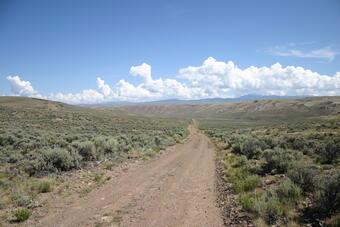
The field of landscape genetics provides information about the interaction between landscape features and microevolutionary processes such as gene flow, genetic drift, and selection which can help guide efficient planning.
Molecular Tagging
Molecular tagging is a new application of molecular genetic techniques to traditional mark-recapture methodology designed to address situations where traditional methods fail. In such studies, non-invasively collected samples (such as feces, feathers, or fur) are used as a source of DNA that is then genotyped at multiple loci such that each individual animal can be uniquely identified. Thus, each individual’s DNA represents a unique tag analogous to a band or other mark used in traditional mark-recapture studies.
Population Models

Population models can incorporate genetic data to assess potential impacts of different management strategies on connectivity, effective population size, and genetic diversity. Models that can guide the selection, implementation, and anticipated outcome of management actions are powerful tools for managers to maintain healthy wildlife populations amidst the complexities of balancing multiple land uses.
Diet Analysis
Genetic “barcodes” are short DNA sequences, obtained from many organisms using a single “universal” method. These barcodes are then compared to genetic databases to identify the source of the DNA. When applied to samples containing may different sources mixed together, a semi-quantitative table of the DNA sources can be obtained. This metabarcoding approach is frequently used to characterize the diet of focal species, in order to better understand habitat requirements and trophic interactions. Metabarcoding data can often be obtained more quickly, with higher throughput, and sometimes with greater resolution, than traditional methods of direct observation.
Below are other science projects associated with this project.

Synthesis of sage-grouse genetic information to support conservation and land management actions

Research to support conservation of America’s national mammal, the bison
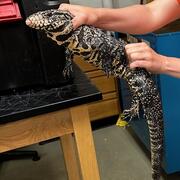
Early detection and rapid response tools for invasive tegu lizards

Fish and wildlife science in support of heritage preservation, efficient decision making, wild ungulate management, and outdoor recreation

Invasive species science in support of public safety, America’s natural resources, and economic growth

Developing and evaluating a point-of-use environmental DNA test for rapid field detection of highly invasive brown treesnakes

Characterizing the environmental drivers of range-wide gene flow for greater sage-grouse

Development and application of genomic resources for the greater sage-grouse

Genomic Scans for Local Adaptation in Greater Sage-Grouse

Integration of Genetic and Demographic Data to Assess the Relative Importance of Connectivity and Habitat in Sage-Grouse Populations

Using Genetic Analyses To Inform On-The-Ground Conservation for Multiple Sagebrush-Associated Wildlife Species

Non-invasive Genetic Sampling of Free-roaming Horses to Estimate Population Size, Genetic Diversity, and Consumption of Invasive Species
The Molecular Ecology Laboratory applies innovative genetic and genomic technologies to address a variety of complex questions and issues facing the Nation's natural resources. While we continually update the scale and efficiency of laboratory procedures to meet stakeholder needs, we must also be innovative and flexible in addressing those needs that have no off-the-shelf solution.
We help characterize known and emerging pathogens that impact natural resources such as game fish, avian species, and pollinators. These innovations arise out of close partnership between the benchtop and data analysis realms. Our lab also develops and evaluates novel methods for detecting unobserved species (such as invasive species) via the trace DNA they leave in their environment. We identify signatures of local adaptation and the means to monitor these critical genomic regions in populations. We apply cutting-edge sequencing and bioinformatic methods to generate reference-quality genome assemblies that support diverse partnerships and research goals.
Pathogen Genomics
Many commercially important animal species as well as natural populations are impacted by pathogens that are poorly understood and difficult to detect. Metagenomics is the field of identifying microbial genomes present in a host species or an environmental sample. Application of metagenomics to fishery and wildlife disease include identifying novel viruses associated with symptoms, monitoring the dynamics of known viruses and how they spread in a population, and characterizing the immune response of hosts in different environments or at different life-history stages.
Environmental DNA (eDNA)
Environmental DNA (eDNA) is organismal DNA that can be found in the environment. Environmental DNA originates from cellular material shed by organisms (via skin, excrement, etc.) into aquatic or terrestrial environments that can be sampled and monitored using new molecular methods. Such methodology is important for the early detection of invasive species as well as the detection of rare and cryptic species.
Genome sequencing and genomics
The latest generation of sequencing technologies now allows high-quality reference genome sequences to be developed by a single lab with modest investment. For research programs such as ours that that use genetic methods, the benefits of a reference genome are many and profound. In our lab we use genomics to assess disease resistance and outbreaks, diets, demography, and even adaptation
Landscape Genetics
The field of landscape genetics provides information about the interaction between landscape features and microevolutionary processes such as gene flow, genetic drift, and selection which can help guide efficient planning.
Molecular Tagging
Molecular tagging is a new application of molecular genetic techniques to traditional mark-recapture methodology designed to address situations where traditional methods fail. In such studies, non-invasively collected samples (such as feces, feathers, or fur) are used as a source of DNA that is then genotyped at multiple loci such that each individual animal can be uniquely identified. Thus, each individual’s DNA represents a unique tag analogous to a band or other mark used in traditional mark-recapture studies.
Population Models
Population models can incorporate genetic data to assess potential impacts of different management strategies on connectivity, effective population size, and genetic diversity. Models that can guide the selection, implementation, and anticipated outcome of management actions are powerful tools for managers to maintain healthy wildlife populations amidst the complexities of balancing multiple land uses.
Diet Analysis
Genetic “barcodes” are short DNA sequences, obtained from many organisms using a single “universal” method. These barcodes are then compared to genetic databases to identify the source of the DNA. When applied to samples containing may different sources mixed together, a semi-quantitative table of the DNA sources can be obtained. This metabarcoding approach is frequently used to characterize the diet of focal species, in order to better understand habitat requirements and trophic interactions. Metabarcoding data can often be obtained more quickly, with higher throughput, and sometimes with greater resolution, than traditional methods of direct observation.
Below are other science projects associated with this project.
Synthesis of sage-grouse genetic information to support conservation and land management actions
Research to support conservation of America’s national mammal, the bison
Early detection and rapid response tools for invasive tegu lizards
Fish and wildlife science in support of heritage preservation, efficient decision making, wild ungulate management, and outdoor recreation
Invasive species science in support of public safety, America’s natural resources, and economic growth
Developing and evaluating a point-of-use environmental DNA test for rapid field detection of highly invasive brown treesnakes
Characterizing the environmental drivers of range-wide gene flow for greater sage-grouse
Development and application of genomic resources for the greater sage-grouse
Genomic Scans for Local Adaptation in Greater Sage-Grouse
Integration of Genetic and Demographic Data to Assess the Relative Importance of Connectivity and Habitat in Sage-Grouse Populations
Using Genetic Analyses To Inform On-The-Ground Conservation for Multiple Sagebrush-Associated Wildlife Species