



Geophysical and Geological Characterization of Mineral Deposit Localization in the Colorado Mineral Belt and Surrounding Lithosphere: Isotope Geochemistry & Geochronology
Isotope geochemistry and geochronology are critical tools in Earth sciences. Sophisticated analytical measurements allow us to understand when and how rocks and minerals formed, helping build models of how tectonic forces built the Earth’s crust through magmatism, when critical mineral deposits formed and how geological processes concentrated metals in the Earth at concentrations economically viable for mining.
Determining when and where from isotopes in rocks and minerals
Rocks and minerals host many different elements when they crystallize, including many which decay through radioactivity. Radioactive elements naturally decay at a constant rate. By comparing the ratio of the constantly decaying parent isotopes that form daughter isotopes, geologists can calculate the age of crystallization or alteration of a rock. These ages allow geologists to determine when magmatic systems were active, when they were mineralized or when they were changed by tectonic activity such as faulting. There are several isotopic parent-daughter isotopic systems with long-lived radiogenic decays, such as uranium that decays to lead or potassium that decays to argon. Each of these pairs are like tools or geochronometers that can be tuned to any particular geologic application. The concentrations or isotopic compositions of certain elements can also be used to determine what rocks melted to cause magmatism or how hydrothermal fluids interacted with a given rock, allowing geologists to determine what caused magmatism and the formation of ore deposits. These tools are commonly referred to as isotope tracers.
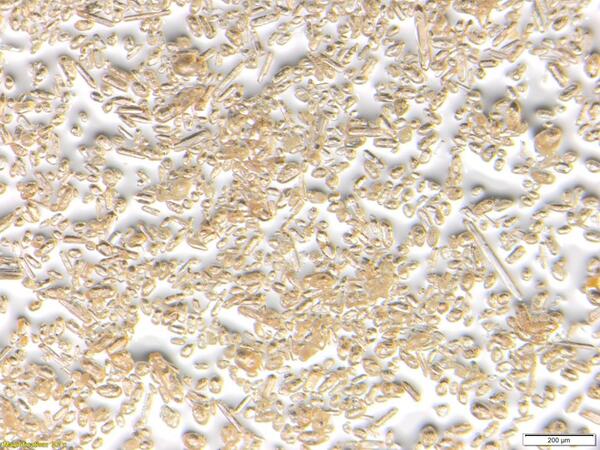
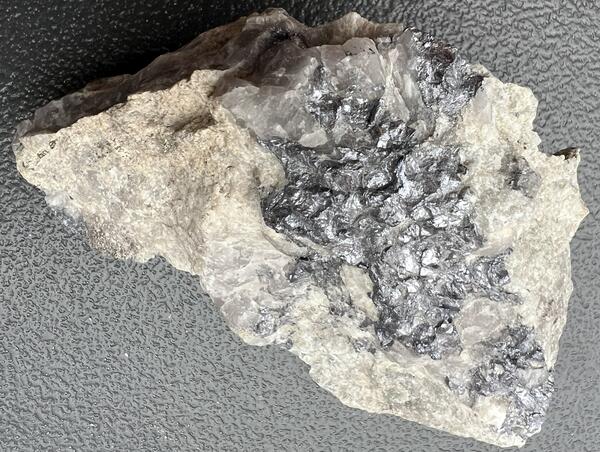
There are many exciting scientific questions that can be answered using isotope geochronology and geochemistry within the CMB. USGS labs in Denver, Colorado are uniquely equipped for isotope geochronology and geochemistry studies, allowing for a suite of geochronology and isotope tracer studies. Our goals include studying the following:
- How ancient supervolcano eruptions in Colorado may have influenced the formation of ore deposits in the San Juan volcanic center,
- How the rate at which magmatic injections into the Earth’s upper crust enriches minerals to levels of economic concentration,
- How the tectonic history of the deep crust of the region influences which metals are enriched to economic levels, and
- How the tectonics of the region shifted over the last 80 (?) million years to create the varied mineral deposits of the region.
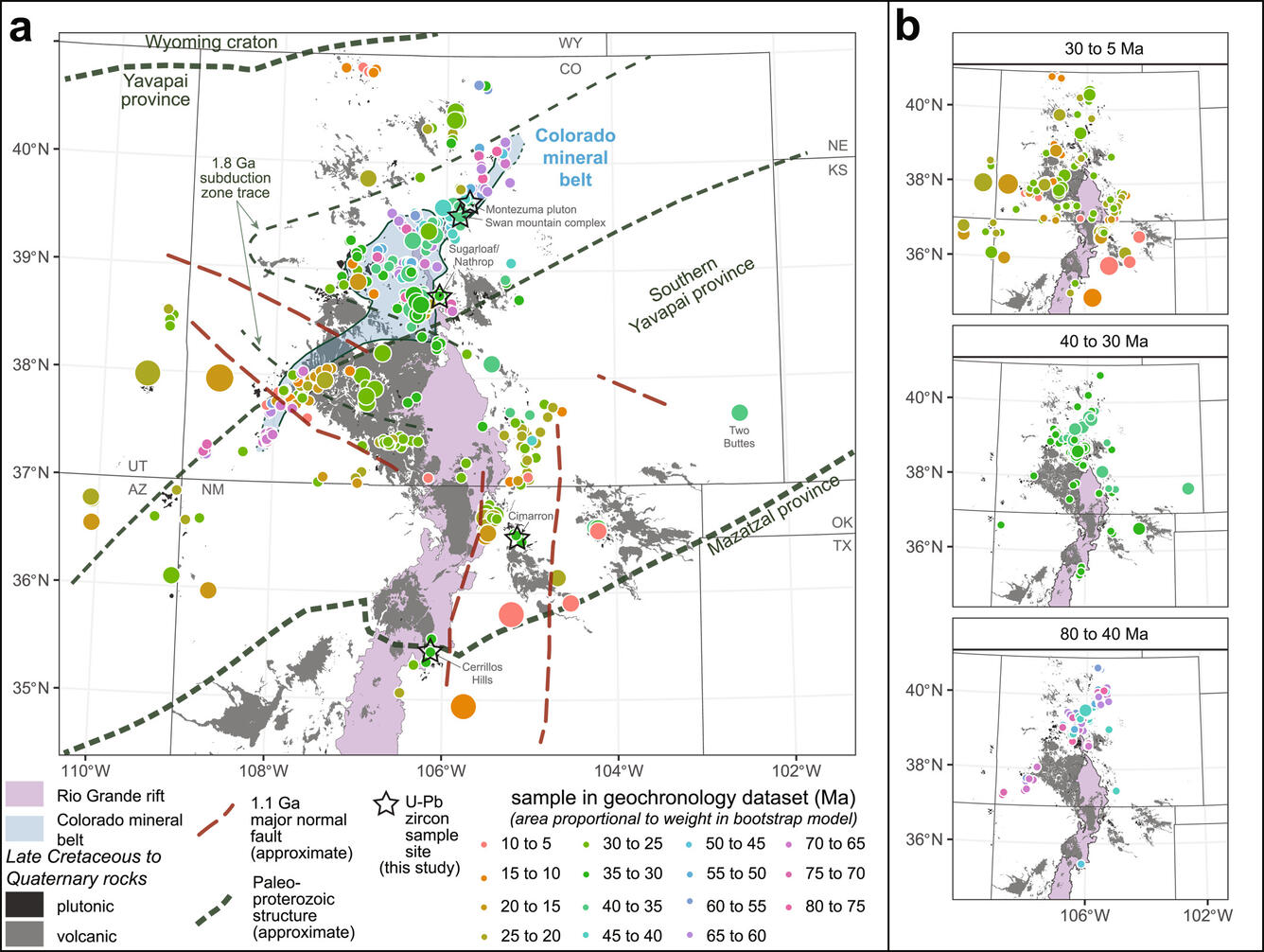
This project is a task of the Geophysical and Geological Characterization of Mineral Deposit Localization in the Colorado Mineral Belt and Surrounding Lithosphere project.

Geophysical and Geological Characterization of Mineral Deposit Localization in the Colorado Mineral Belt and Surrounding Lithosphere
Isotope geochemistry and geochronology are critical tools in Earth sciences. Sophisticated analytical measurements allow us to understand when and how rocks and minerals formed, helping build models of how tectonic forces built the Earth’s crust through magmatism, when critical mineral deposits formed and how geological processes concentrated metals in the Earth at concentrations economically viable for mining.
Determining when and where from isotopes in rocks and minerals
Rocks and minerals host many different elements when they crystallize, including many which decay through radioactivity. Radioactive elements naturally decay at a constant rate. By comparing the ratio of the constantly decaying parent isotopes that form daughter isotopes, geologists can calculate the age of crystallization or alteration of a rock. These ages allow geologists to determine when magmatic systems were active, when they were mineralized or when they were changed by tectonic activity such as faulting. There are several isotopic parent-daughter isotopic systems with long-lived radiogenic decays, such as uranium that decays to lead or potassium that decays to argon. Each of these pairs are like tools or geochronometers that can be tuned to any particular geologic application. The concentrations or isotopic compositions of certain elements can also be used to determine what rocks melted to cause magmatism or how hydrothermal fluids interacted with a given rock, allowing geologists to determine what caused magmatism and the formation of ore deposits. These tools are commonly referred to as isotope tracers.
There are many exciting scientific questions that can be answered using isotope geochronology and geochemistry within the CMB. USGS labs in Denver, Colorado are uniquely equipped for isotope geochronology and geochemistry studies, allowing for a suite of geochronology and isotope tracer studies. Our goals include studying the following:
- How ancient supervolcano eruptions in Colorado may have influenced the formation of ore deposits in the San Juan volcanic center,
- How the rate at which magmatic injections into the Earth’s upper crust enriches minerals to levels of economic concentration,
- How the tectonic history of the deep crust of the region influences which metals are enriched to economic levels, and
- How the tectonics of the region shifted over the last 80 (?) million years to create the varied mineral deposits of the region.
This project is a task of the Geophysical and Geological Characterization of Mineral Deposit Localization in the Colorado Mineral Belt and Surrounding Lithosphere project.