



Geophysical and Geological Characterization of Mineral Deposit Localization in the Colorado Mineral Belt and Surrounding Lithosphere
The Colorado Mineral Belt (CMB) contains many important metallic and critical mineral deposits, concentrated (or localized) in a region that is geologically complex. The origins of these deposits are still not well understood making the CMB an ideal place to study how geologic processes concentrate minerals. This project aims to determine where, when, and how these mineral deposits form.
Understanding Where, When, and How Mineralization Form
Mineral resources are important for modern society because they provide the materials we need for a high standard of living. Many ore deposits are found in certain regions where tectonic, magmatic, fluid flow, and structural geologic processes overlap. But we still don’t have consistent models explaining why these factors come together in some places to create large mineral-rich areas. Understanding how these factors align can help us find mineral deposits and better understand the ones we already know about.
The Colorado Mineral Belt as a Natural Laboratory
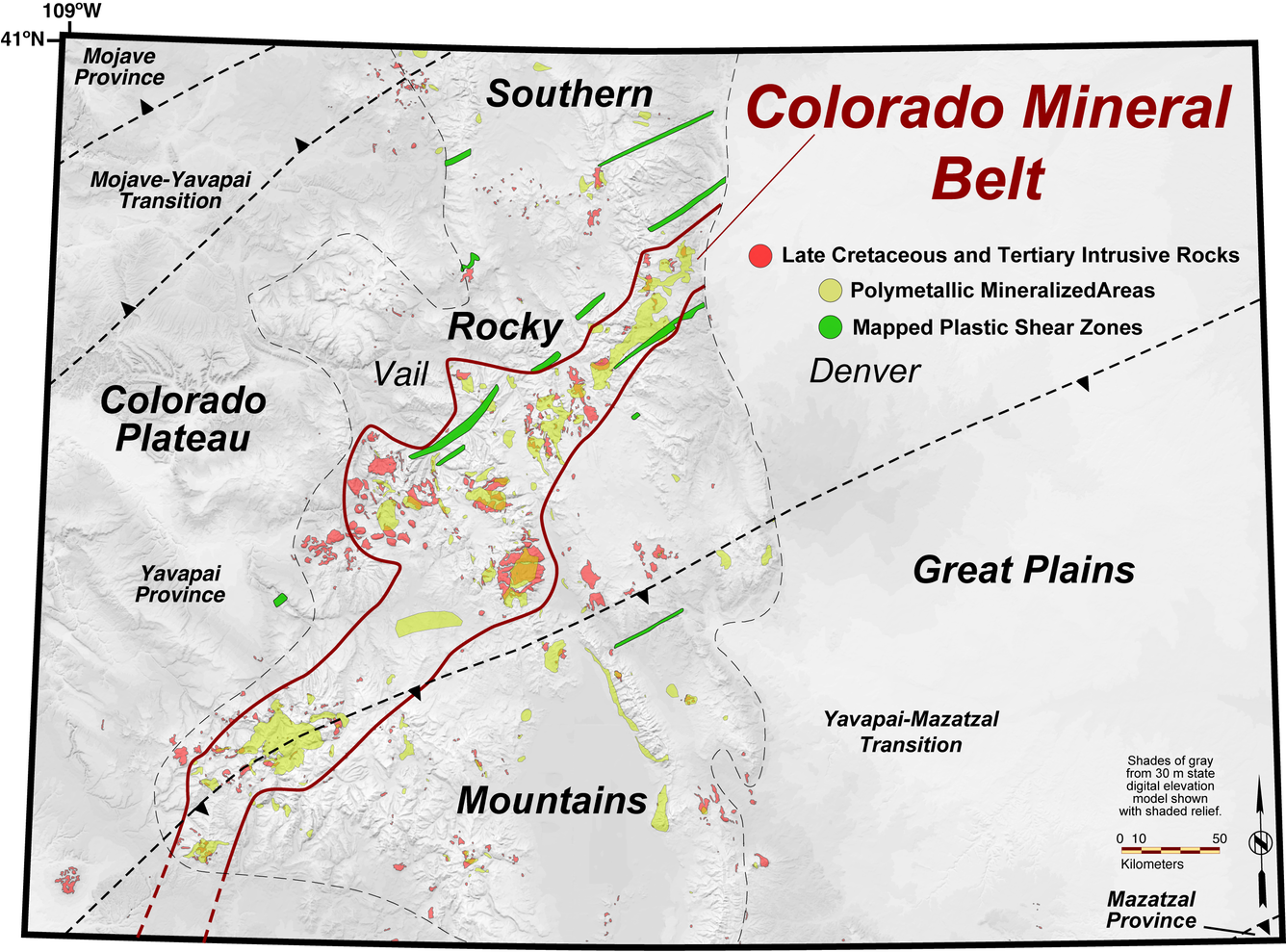
The Colorado Mineral Belt started the nation’s first gold rush in 1858 and has produced a large variety of minerals ever since. It is a long, somewhat narrow zone with numerous mineral deposits that have remained economically important since the 19th century. Because of its unique geology, it is an excellent place to study how mineral deposits form and why they occur in specific regions.
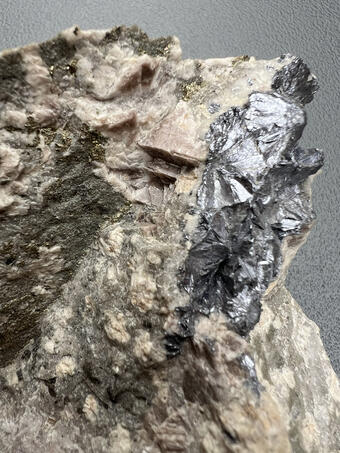
The Colorado Mineral Belt is a northeast-southwest zone of metallic ores and other non-fuel mineral deposits that stretches from Durango to Boulder. These ore deposits have produced a suite of commodities including copper, lead, molybdenum, gold, silver, tungsten, uranium and zinc, beginning in 1858 and they continue to be productive. Mining in the region created economic vitality throughout the state of Colorado, leading to the incorporation of many towns and communities driving the initial push for infrastructure throughout much of the state. The region hosts a suite of critical mineral deposits where exploration and mining resulted in production of target minerals that host beryllium, fluorspar, graphite, lithium, manganese, niobium, rare Earth elements (REEs), tantalum, titanium, uranium, vanadium, and zinc.
Importance of New Research
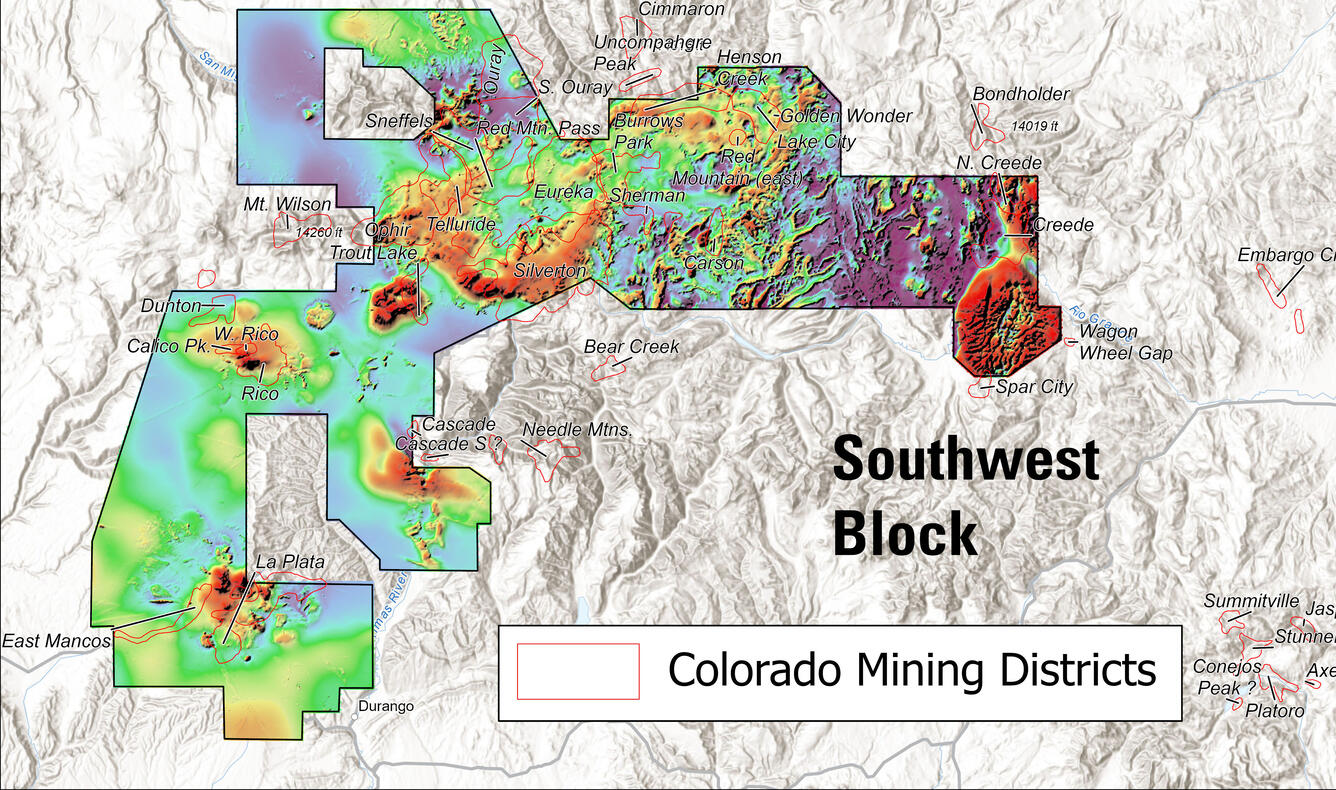
The Colorado Mineral Belt has been studied since the late 19th century inception of the U.S. Geological Survey, providing numerous major breakthroughs for understanding mineral systems. However, many datasets for this region are unconsolidated, inconsistent, or generated from techniques and methods that are out of date. The USGS Earth Mapping Resources Initiative (Earth MRI) has recently generated large geophysical datasets, which can provide significant insights into the location of previously undiscovered or unexplored deposits. By combining this with new isotope geochemistry, geochronology and structural geologic datasets, this project aims to better understand the critical mineral endowment of the region and how tectonic, magmatic, and fluid flow processes created these mineral deposits.
Research Focus
We have several objectives within the Colorado Mineral Belt project. Together, they have the ability to help resolve a longstanding debate about what formed mineral deposits in this region—as well as provide insights into how mineral deposits form in other regions of the world. Explore each objective below.
Integrated Geophysical & Geological Frameworks
Regional-Scale Tectonic & Magmatic Processes
Isotope Geochronology & Geochemistry
Metallogeny & Economic Geology
Structural Geology
The Colorado Mineral Belt (CMB) contains many important metallic and critical mineral deposits, concentrated (or localized) in a region that is geologically complex. The origins of these deposits are still not well understood making the CMB an ideal place to study how geologic processes concentrate minerals. This project aims to determine where, when, and how these mineral deposits form.
Understanding Where, When, and How Mineralization Form
Mineral resources are important for modern society because they provide the materials we need for a high standard of living. Many ore deposits are found in certain regions where tectonic, magmatic, fluid flow, and structural geologic processes overlap. But we still don’t have consistent models explaining why these factors come together in some places to create large mineral-rich areas. Understanding how these factors align can help us find mineral deposits and better understand the ones we already know about.
The Colorado Mineral Belt as a Natural Laboratory
The Colorado Mineral Belt started the nation’s first gold rush in 1858 and has produced a large variety of minerals ever since. It is a long, somewhat narrow zone with numerous mineral deposits that have remained economically important since the 19th century. Because of its unique geology, it is an excellent place to study how mineral deposits form and why they occur in specific regions.
The Colorado Mineral Belt is a northeast-southwest zone of metallic ores and other non-fuel mineral deposits that stretches from Durango to Boulder. These ore deposits have produced a suite of commodities including copper, lead, molybdenum, gold, silver, tungsten, uranium and zinc, beginning in 1858 and they continue to be productive. Mining in the region created economic vitality throughout the state of Colorado, leading to the incorporation of many towns and communities driving the initial push for infrastructure throughout much of the state. The region hosts a suite of critical mineral deposits where exploration and mining resulted in production of target minerals that host beryllium, fluorspar, graphite, lithium, manganese, niobium, rare Earth elements (REEs), tantalum, titanium, uranium, vanadium, and zinc.
Importance of New Research
The Colorado Mineral Belt has been studied since the late 19th century inception of the U.S. Geological Survey, providing numerous major breakthroughs for understanding mineral systems. However, many datasets for this region are unconsolidated, inconsistent, or generated from techniques and methods that are out of date. The USGS Earth Mapping Resources Initiative (Earth MRI) has recently generated large geophysical datasets, which can provide significant insights into the location of previously undiscovered or unexplored deposits. By combining this with new isotope geochemistry, geochronology and structural geologic datasets, this project aims to better understand the critical mineral endowment of the region and how tectonic, magmatic, and fluid flow processes created these mineral deposits.
Research Focus
We have several objectives within the Colorado Mineral Belt project. Together, they have the ability to help resolve a longstanding debate about what formed mineral deposits in this region—as well as provide insights into how mineral deposits form in other regions of the world. Explore each objective below.