



Examining the Effects of Roads, Culverts, and Bridges in Areas of Critical Salmon Habitat
The U.S. Geological Survey (USGS) and the Federal Highway Administration (FHWA) are cooperating on research that examines the effects of design, construction, operation, and maintenance of roads, culverts, and bridges on threatened and endangered Atlantic and Pacific Salmon populations. The USGS is leveraging expertise across several scientific disciplines, including biology, ecology, and hydrology, to address a range of environmental interactions that may affect these protected species. The results will be used to inform and improve transportation infrastructure design and management aimed at maintaining or improving habitat.
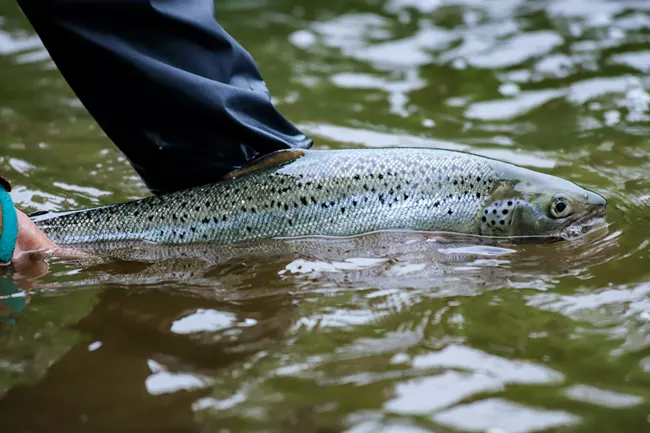
This work focuses on areas of critical salmon habitat in Washington, Oregon, California, and Maine. All salmon species are anadromous, meaning they spawn in freshwater but live as adults in saltwater. Adult salmon yearly return to rivers and streams and swim against the current to find optimal spawning habitat with stable gravel beds, cold, clean water and unobstructed flows that do not impede their movement up and down these freshwater systems.
Roads, bridges, and culverts can contribute to the degradation and fragmentation of critical salmon habitat by creating physical barriers that block migration, degrading water quality from roadway contaminants, changing natural streamflows, and accelerating sediment transport that reduces the “spawning gravel” needed for egg survival.
When transportation infrastructure reduces the connection between habitats and changes streamflows and water quality, the salmon populations can decrease. As part of a cooperative federal effort to understand and address these effects on endangered and threatened Atlantic and Pacific salmon populations, USGS and FHWA will investigate and quantify the effects of transportation infrastructure. The findings will address knowledge gaps and be used to produce actionable information and tools that FHWA, state departments of transportation, and other stakeholders may use to make decisions about managing transportation infrastructure in areas of critical salmon habitat.
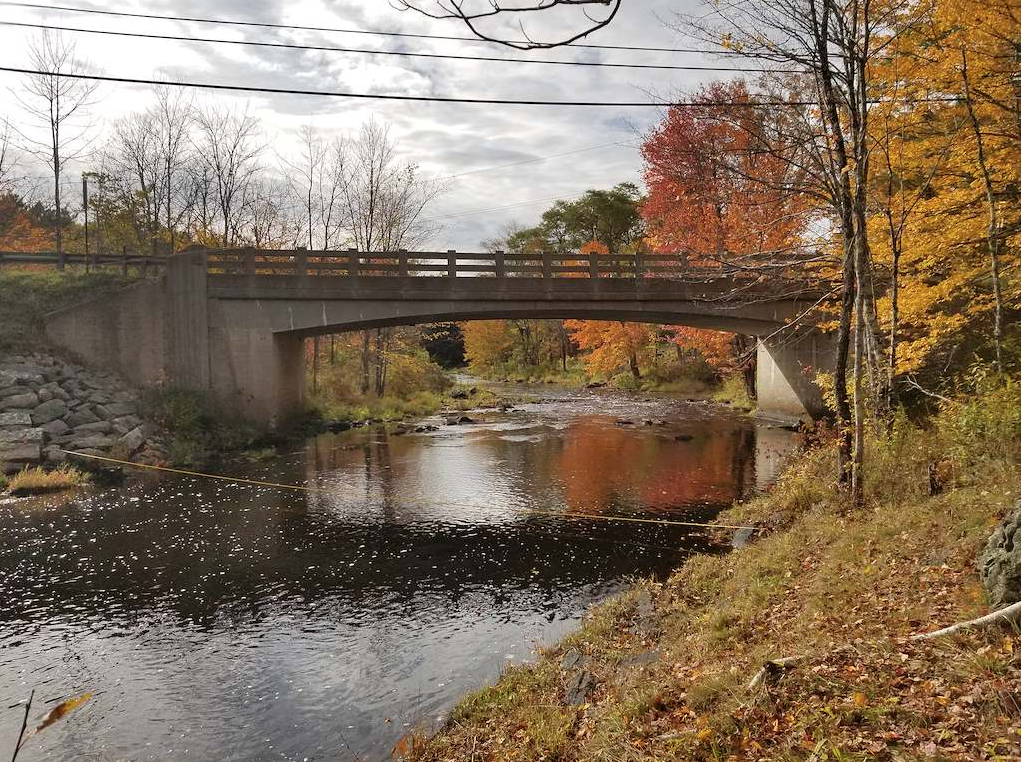

The U.S. Geological Survey (USGS) and the Federal Highway Administration (FHWA) are cooperating on research that examines the effects of design, construction, operation, and maintenance of roads, culverts, and bridges on threatened and endangered Atlantic and Pacific Salmon populations. The USGS is leveraging expertise across several scientific disciplines, including biology, ecology, and hydrology, to address a range of environmental interactions that may affect these protected species. The results will be used to inform and improve transportation infrastructure design and management aimed at maintaining or improving habitat.
This work focuses on areas of critical salmon habitat in Washington, Oregon, California, and Maine. All salmon species are anadromous, meaning they spawn in freshwater but live as adults in saltwater. Adult salmon yearly return to rivers and streams and swim against the current to find optimal spawning habitat with stable gravel beds, cold, clean water and unobstructed flows that do not impede their movement up and down these freshwater systems.
Roads, bridges, and culverts can contribute to the degradation and fragmentation of critical salmon habitat by creating physical barriers that block migration, degrading water quality from roadway contaminants, changing natural streamflows, and accelerating sediment transport that reduces the “spawning gravel” needed for egg survival.
When transportation infrastructure reduces the connection between habitats and changes streamflows and water quality, the salmon populations can decrease. As part of a cooperative federal effort to understand and address these effects on endangered and threatened Atlantic and Pacific salmon populations, USGS and FHWA will investigate and quantify the effects of transportation infrastructure. The findings will address knowledge gaps and be used to produce actionable information and tools that FHWA, state departments of transportation, and other stakeholders may use to make decisions about managing transportation infrastructure in areas of critical salmon habitat.