



The USGS New Jersey Water Science Center is partnering with New Jersey American Water (NJAW) on a project in the Raritan River Basin Study area to investigate the potential sources of Cryptosporidium in the Raritan River basin.
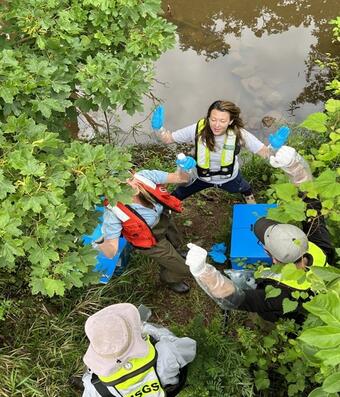
Cryptosporidium (Crypto) is a protozoan parasite of both domestic and wild animals that has been labeled as a pathogen of concern. Crypto may be introduced to waterbodies by point or non-point sources and is considered a leading cause of waterborne disease among humans in the United States. Potential human health risks have been noted for those using the Raritan River Basin for recreational activities as well as for sources of drinking water.
The USGS New Jersey Water Science Center is partnering with New Jersey American Water (NJAW) on a project in the Raritan River Basin Study area. The objective of the project is to investigate the occurrence and potential sources of Cryptosporidium from multiple rivers and tributaries to the main steam Raritan River.
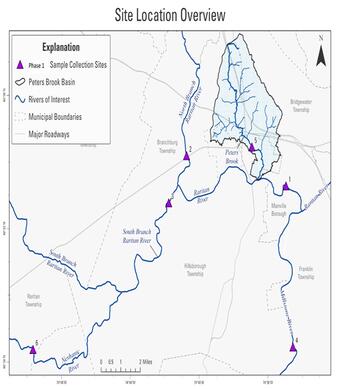
Phase 1
A phase 1 study conducted at 6 sites across the basin determined that there was cryptosporidium present, with sources depending on spatiotemporal variables. This project supports efforts by NJAW, the U.S. Environmental Protection Agency, and other partners to identify potential sources of this pathogen. A better understanding of these sources can be used to help decision makers with remediation of microbial contamination within the Raritan River basin. The Scientific Investigation Report (SIR) following phase 1 will provide further information on the spatial and temporal distribution of contamination and potential pathogen sources.
Phase 2
A phase 2 study has been developed to further investigate “hot spots” or areas identified as significant source locations during phase 1.
The USGS New Jersey Water Science Center is partnering with New Jersey American Water (NJAW) on a project in the Raritan River Basin Study area to investigate the potential sources of Cryptosporidium in the Raritan River basin.
Cryptosporidium (Crypto) is a protozoan parasite of both domestic and wild animals that has been labeled as a pathogen of concern. Crypto may be introduced to waterbodies by point or non-point sources and is considered a leading cause of waterborne disease among humans in the United States. Potential human health risks have been noted for those using the Raritan River Basin for recreational activities as well as for sources of drinking water.
The USGS New Jersey Water Science Center is partnering with New Jersey American Water (NJAW) on a project in the Raritan River Basin Study area. The objective of the project is to investigate the occurrence and potential sources of Cryptosporidium from multiple rivers and tributaries to the main steam Raritan River.
Phase 1
A phase 1 study conducted at 6 sites across the basin determined that there was cryptosporidium present, with sources depending on spatiotemporal variables. This project supports efforts by NJAW, the U.S. Environmental Protection Agency, and other partners to identify potential sources of this pathogen. A better understanding of these sources can be used to help decision makers with remediation of microbial contamination within the Raritan River basin. The Scientific Investigation Report (SIR) following phase 1 will provide further information on the spatial and temporal distribution of contamination and potential pathogen sources.
Phase 2
A phase 2 study has been developed to further investigate “hot spots” or areas identified as significant source locations during phase 1.