Kathryn M. Irvine, Northern Rocky Mountain Science Center Research Statistician, Receives Distinguished Achievement Award
Kathi Irvine was recently selected to receive the American Statistical Association's Section on Statistics and the Environment 2025 Distinguished Achievement Award, which recognizes individuals for outstanding contributions to the development of methods, issues, concepts, applications, and initiatives in environmental statistics.

Kathi Irvine, a research statistician at Northern Rocky Mountain Science Center, has been selected to receive the American Statistical Association's Section on Statistics and the Environment 2025 Distinguished Achievement Award. The Distinguished Achievement Award is presented annually by the American Statistical Association to recognize outstanding contributions in the often-unrecognized field of environmental statistics. In addition to this year’s honor, Kathi was inducted as a fellow of the American Statistical Association in 2021.
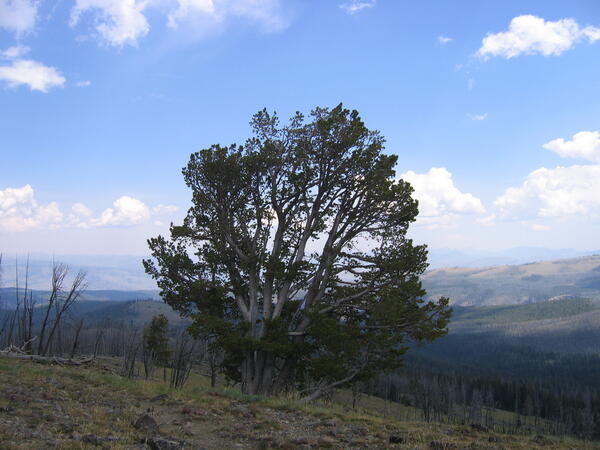
Kathi specializes in developing decision support tools for resource managers and conservation scientists. Her statistical expertise has been instrumental in decreasing statistical uncertainty and increasing the utility of scientific studies and natural resource monitoring designs. Kathi has applied her quantitative skills to promote the understanding of a variety of organisms and ecological systems, including bats across the U.S. and Canada, whitebark pine in the Greater Yellowstone Ecosystem, vegetation communities in the sagebrush steppe, and aquatic fauna in the Greater Everglades.
Kathi has developed durable and productive collaborative relationships with federal and state agencies engaged in long-term natural resource research and monitoring. She has worked with the National Park Service (NPS) on numerous initiatives. For example, she has helped increase the understanding of whitebark pine decline in the Greater Yellowstone Ecosystem by evaluating and statistically improving methods used to estimate white pine blister rust prevalence—a major factor in the species’ decline. Kathi also collaborated with the NPS to understand vegetation patterns in response to wildfire and the dynamics of invasive and native plants in many western NPS units. Furthermore, she is also assisting the NPS and the interagency collaborative—Restoration, Coordination, Verification (RECOVER)—with their efforts to improve, restore, and preserve the Greater Everglades in Florida by statistically reviewing their ongoing monitoring and assessment plans. These plans include monitoring American alligator nests in Everglades National Park and wet season aquatic fauna in the Greater Everglades.

Kathi is a co-developer of the North American Bat Monitoring Program (NABat)—an extensive collaborative network of U.S. and Canadian governmental, non-governmental, and research organizations that collect and organize bat data critical for scientists and land managers. Kathi and her team have innovated statistical tools to improve ecological understanding of bats through robust survey design and models for bat acoustic (echolocation) data. Her research supports the early detection of bat population declines due to threats like white-nose syndrome—a fatal fungal disease—and habitat modification.
In addition to developing long-term relationships with partners and helping to initiate large research collaboratives, Kathi has continuously mentored graduate students to address real-world ecological statistical problems and has been actively involved in their career development.
This recognition reflects Kathi’s holistic career to this point: her significant statistical contributions to developing and supporting large-scale environmental monitoring programs, commitment to translational work, passion for building effective collaborations with scientists and managers, exceptional mentorship of graduate students and early-career environmental statisticians, and her ongoing leadership and service with environmental statistician communities at local and national levels.