



As Invasive Mussels Reach West, WFRC Scientists Help Evaluate the Risks they Pose to Washington’s Hatcheries
Invasive quagga mussels were recently found in the greater Columbia River basin. Our scientists are working with the Washington State Department of Fish and Wildlife to determine which of their fish hatcheries are at greatest risk of invasion and what can be done to mitigate the impacts.
They arrived unnoticed, hitching rides on ships and boats. Today, zebra and quagga mussels have transformed North American waterways—clearer water, clogged pipes, and over 100 million dollars annually in damages. How did two tiny shellfish become such a colossal threat?
These razor-sharp, fingernail-sized invaders, originally from Eastern Europe, slipped into the Great Lakes in the late 1980s and spread with astonishing speed. Their ability to filter vast amounts of water may seem like nature’s cleanup crew, but the reality is far more destructive: native species are starved, food webs are disrupted, and infrastructure is choked.
Now, they are coming for the Pacific Northwest: the last untouched frontier within the continental United States. In September 2023, quagga mussels were first detected near Twin Falls, Idaho in the Snake River, a large tributary of the Columbia River. They were again detected in the same area in 2024 and 2025.
While the infestation appears to currently be contained in the Snake River, there is a high risk of invasive mussels spreading throughout the Columbia River Basin. These invasive mollusks hitchhike on boats and their larvae can drift downstream. Once they settle in a water body, females can release up to one million eggs per year, leading to one singular mussel producing between 30,000 to 100 million offspring annually.
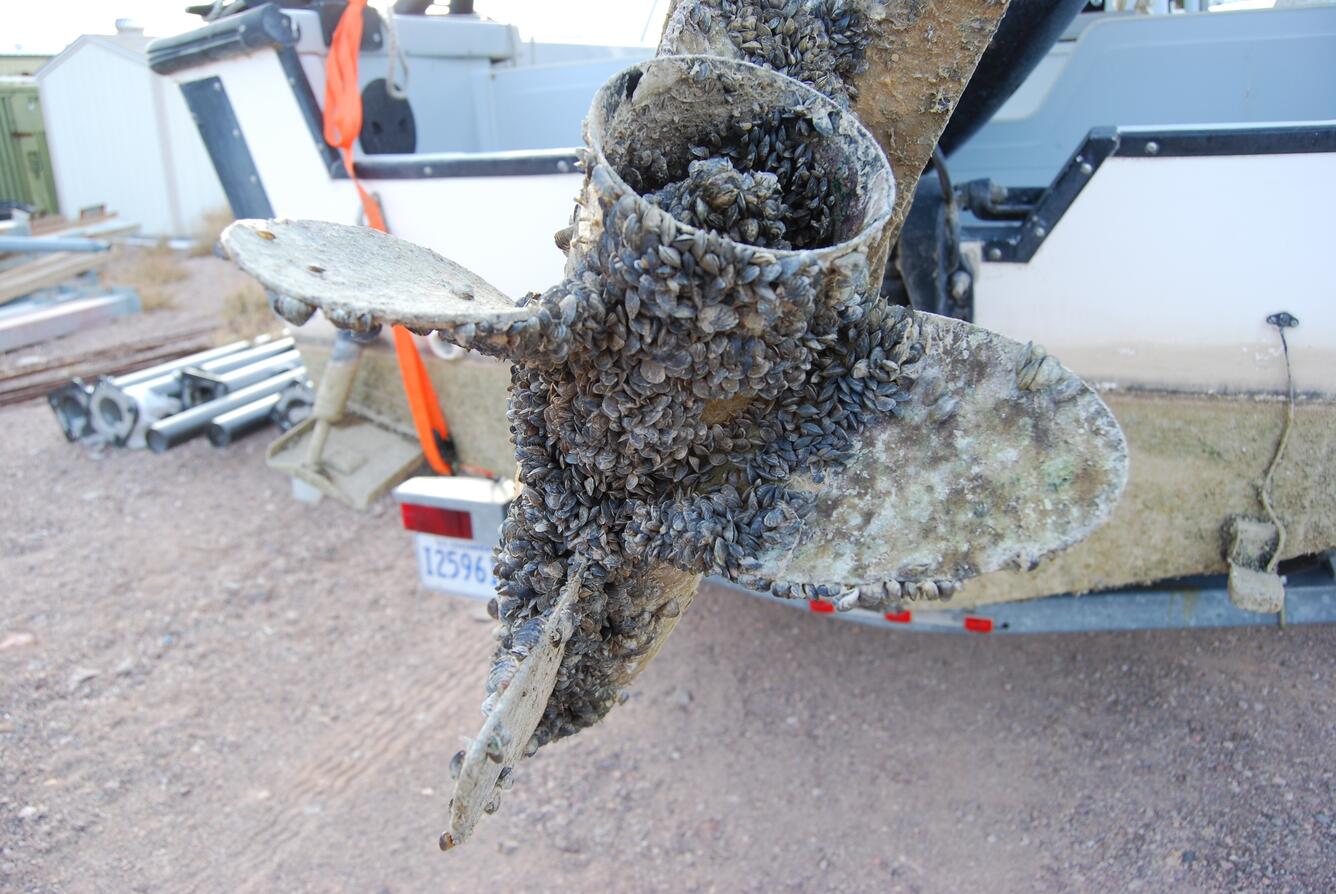
Invasive quagga and zebra mussels are extremely destructive as adults. Water diversion pipes for hatcheries, agriculture, and municipal water are prime habitat, with adult mussel colonies aggregating in high numbers, restricting water flow. Hydro-electric, fish passage and boat transport infrastructure at the many large dams of the northwest are also at risk of being damaged.
Invasive mussels can also dramatically alter river ecosystems. They do this by consuming massive amounts of nutritious phytoplankton while spitting harmful cyanobacteria back into the water, giving these toxic cyanobacteria a competitive advantage. Toxic algae and cyanobacteria are further supported by the increased light penetrating to their deeper water habitat through surface waters the phytoplankton once clouded. This leads to less plankton for little fish and other biota at the base of food chain, and as such less food for all other animals higher up. Toxic algae and cyanobacteria can also bloom and poison fish, leading to enormous fish kills.
Ramona Rapp, a WFRC scientist at the Columbia River Research Laboratory, is no stranger to these effects. In 2019, she joined the USGS Oklahoma Texas Water Science Center in Fort Worth, Texas, where she surveyed over 30 manmade lakes and the Trinity River for invasive zebra mussels and evaluated their impacts to aquatic ecosystems. Many of the lakes were infested, with others at high risk of infestation.
Rapp and her team set out samplers at key points across north Texas lakes and the Trinity River to measure the presence and density of adult mussels. Scientists use water samples collected from plankton sampler nets to analyze mussel larvae (veligers) presence under a microscope.
“Water intake infrastructure was often coated in a hard, difficult to remove layer of invasive mussels. I’ve also seen beaches with large amounts of sharp shells, making places I grew up swimming inaccessible to people and wildlife alike," Rapp observed.
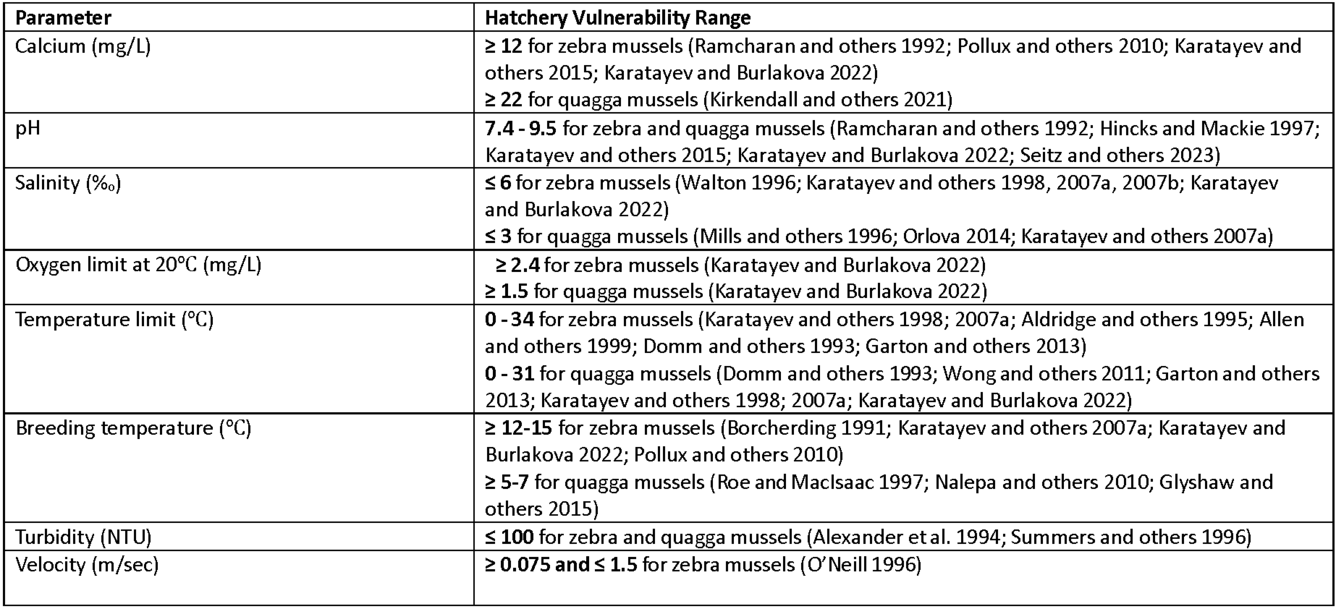
Rapp recently authored a guide with the Washington Department of Fish and Wildlife (WDFW) to assess hatchery infrastructure for the risk of invasion and damage by zebra and quagga mussels. The effort involved developing a risk management guide and survey that WDFW staff will use to collect information about the 30+ hatcheries and hatchery-related infrastructure they operate in the Columbia River basin.
The survey includes assessing water to see if it has the characteristics that promote invasive mussel growth, evaluating water intakes to determine whether they will keep mussels out, assessing pipes and tanks to see where invasive mussels could latch on and obstruct water flows or cause structural damage, and reviewing current maintenance and biosecurity measures.
The guidance document describes the parts of the hatchery at greatest risk of infestation by invasive mussels and suggests infrastructure and biosecurity measures that can be implemented to mitigate their impacts. It also includes the survey results for four test hatcheries.
WDFW is continuing to survey their hatcheries. Meanwhile, USGS and WDFW are discussing expanding the utility of this approach to include other invasive species of concern, such as New Zealand mud snails and golden mussels.