



Developing a Roadmap for the Future of Natural Resources in Everglades National Park
To sustain economic and ecologically viable ecosystems into the future, USGS is developing freshwater delivery targets for water flowing southward into Everglades National Park by integrating climate and sea level projections, hydrologic modeling, and ecological modeling to forecast ecosystem responses to future freshwater availability scenarios.
The Science Issue and Relevance:
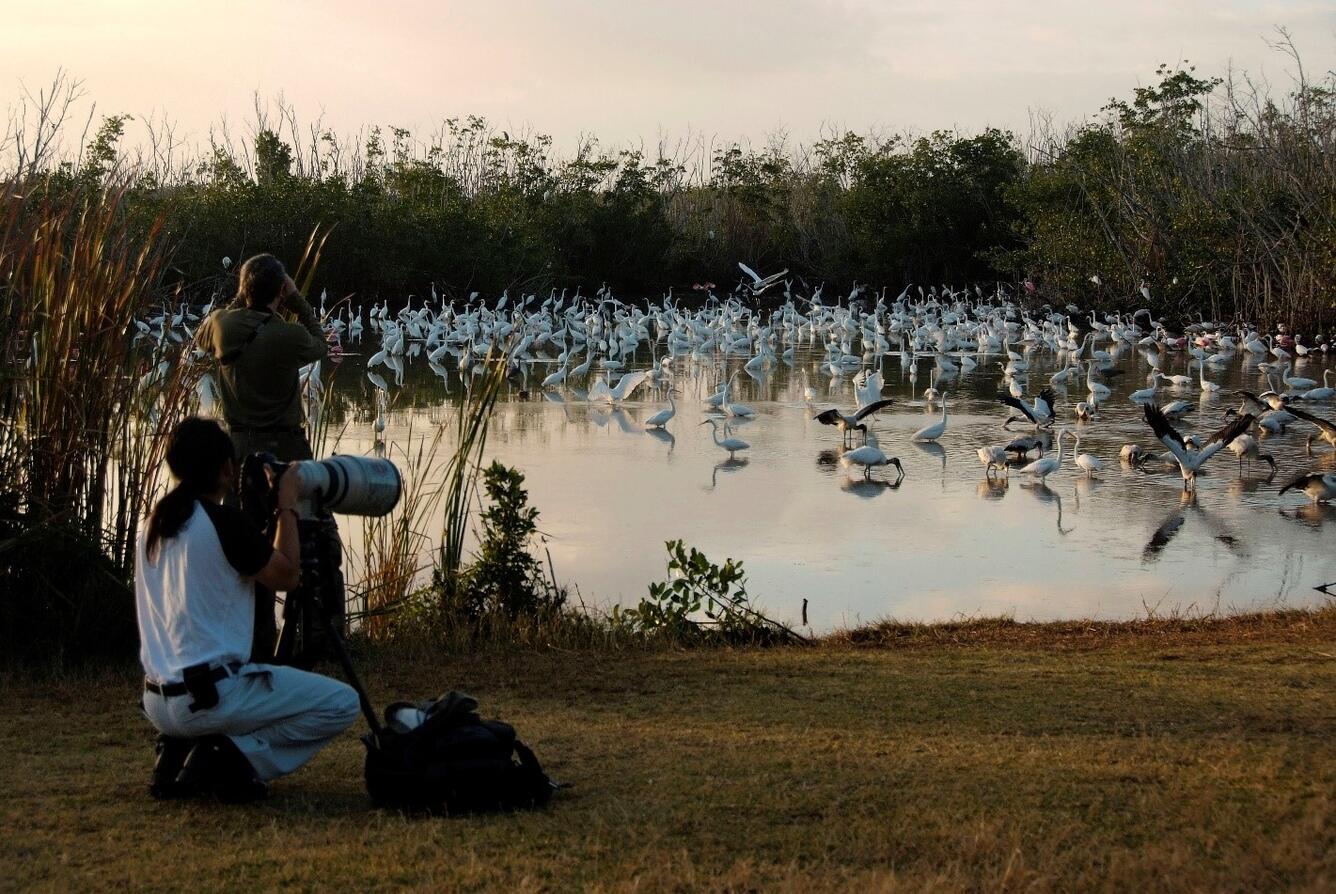
The ecosystems within Everglades National Park (ENP) create the foundation for its renowned birding, fishing, boating, and outdoor recreational opportunities. These ecosystems are highly dependent on both freshwater flows originating outside the ENP boundaries and rainfall within the park. The availability of freshwater from both sources has changed over the past century and it is expected that sea level change, rising temperatures, and ongoing restoration efforts will continue to alter freshwater supply into the future. These anticipated impacts pose an unprecedented challenge to the ability of ENP to protect its natural resources and preserve the visitor experiences for which it was originally established.
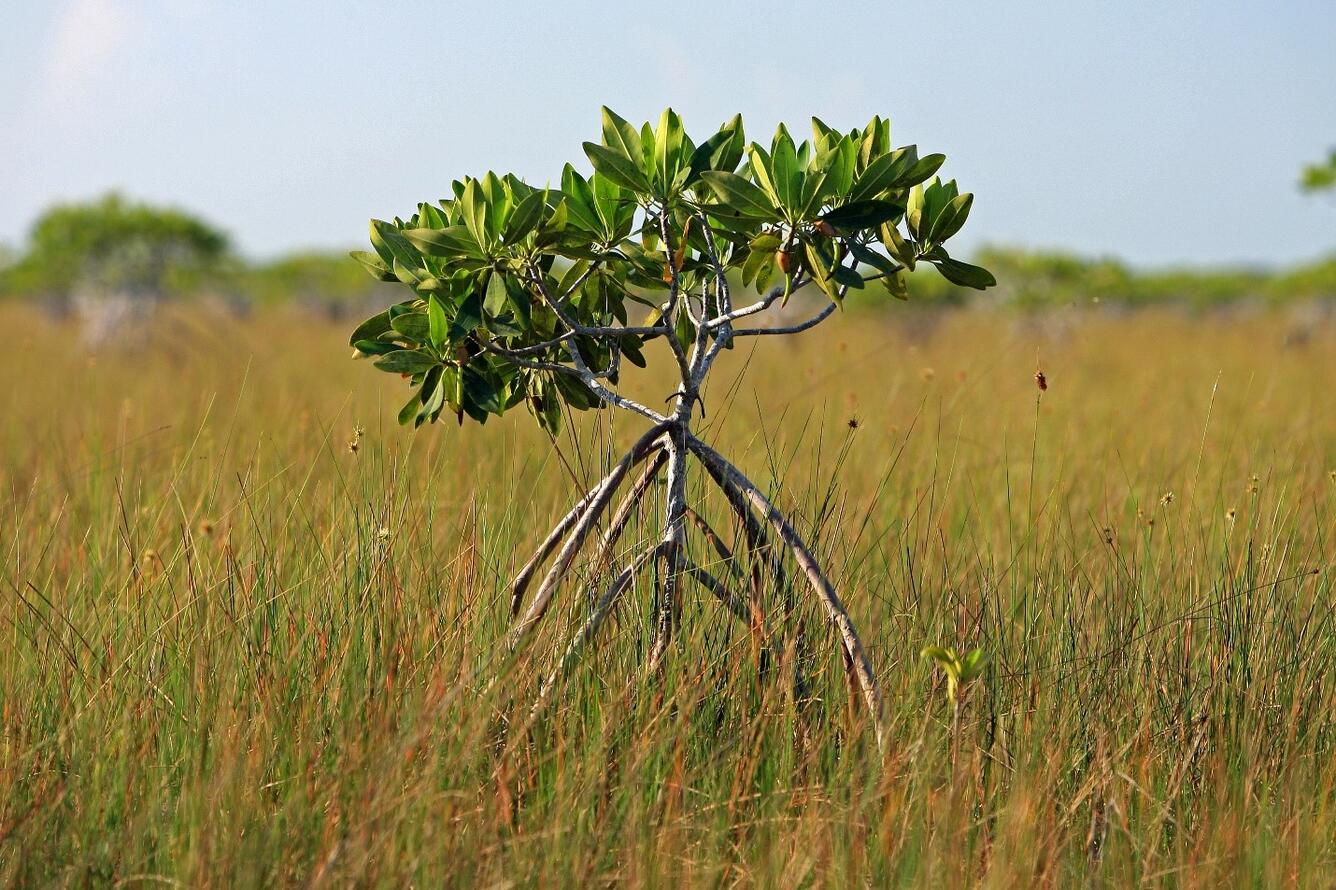
To sustain economic and ecologically viable ecosystems into the future, ENP has asked the USGS to assist with developing freshwater delivery targets for water flowing southward into ENP. This freshwater flow will serve as countermeasures against drought, flooding, and saltwater intrusion. USGS will identify freshwater delivery targets that contribute to three key ENP priorities: 1) managing salinity levels in Florida Bay to sustain healthy fish populations; 2) maintaining a healthy mangrove-marsh ecotone that provides critical wading bird habitat; and 3) preserving vegetation communities across ridge, slough, marl prairie, tree island, and pine rockland habitats. Developing and implementing management strategies can help mitigate changing conditions for wildlife and ecosystems, thus enhancing the resilience of the natural resources that ENP was founded to protect. This project complements ongoing restoration efforts, such as those in the Comprehensive Everglades Restoration Plan (CERP), by accounting for anticipated future changes and establishing delivery targets that will be critical in the heavily managed system even after restoration is complete. Further, it focuses exclusively on ENP, whereas other projects have a broader spatial footprint.
Methodology for Addressing the Issue:
For this project, USGS will integrate climate and sea level projections, hydrologic modeling, and ecological modeling to forecast ecosystem responses to future freshwater availability scenarios. Scientists from USGS will conduct a literature review to understand the historic degradation, current state, and desired restoration condition of Florida Bay, the marsh-mangrove ecotone, and central Everglades vegetation communities, as well as the hydrologic requirement for each habitat. Panels of experts will then be assembled for multiple workshops to identify target future conditions and assess potential freshwater delivery scenarios. Through ongoing engagement with the expert panels, USGS will synthesize workshop discussions into water delivery targets and identify approaches that ENP can implement to preserve their distinct and diverse ecosystems.
Future Steps:
Everglades National Park will use the freshwater delivery targets to set conservation and restoration priorities that sustain healthy ecosystems and recreational value in both the near and long term. These targets and management actions will enhance the ability of ENP ecosystems and species to respond to environmental changes, preserving recreation opportunities into the future. Future work can apply the methods USGS develops to other management areas within the Greater Everglades or to other ecosystems undergoing restoration.


Joint Ecosystem Modeling: Cape Sable Seaside Sparrow Helper

Joint Ecosystem Modeling: Wader Distribution & Evaluation Modeling (WADEM)

Joint Ecosystem Modeling: Cape Sable Seaside Sparrow Marl Prairie Indicator

Joint Ecosystem Modeling: EverSnail

Joint Ecosystem Modeling: Alligator Production Probability Model

Joint Ecosystem Modeling: Greater Everglades Modeling Decision Support Tools

Advanced Technological Solutions in Support of Greater Everglades Priority Ecosystem Science: Joint Ecosystem Modeling (JEM)
To sustain economic and ecologically viable ecosystems into the future, USGS is developing freshwater delivery targets for water flowing southward into Everglades National Park by integrating climate and sea level projections, hydrologic modeling, and ecological modeling to forecast ecosystem responses to future freshwater availability scenarios.
The Science Issue and Relevance:
The ecosystems within Everglades National Park (ENP) create the foundation for its renowned birding, fishing, boating, and outdoor recreational opportunities. These ecosystems are highly dependent on both freshwater flows originating outside the ENP boundaries and rainfall within the park. The availability of freshwater from both sources has changed over the past century and it is expected that sea level change, rising temperatures, and ongoing restoration efforts will continue to alter freshwater supply into the future. These anticipated impacts pose an unprecedented challenge to the ability of ENP to protect its natural resources and preserve the visitor experiences for which it was originally established.
To sustain economic and ecologically viable ecosystems into the future, ENP has asked the USGS to assist with developing freshwater delivery targets for water flowing southward into ENP. This freshwater flow will serve as countermeasures against drought, flooding, and saltwater intrusion. USGS will identify freshwater delivery targets that contribute to three key ENP priorities: 1) managing salinity levels in Florida Bay to sustain healthy fish populations; 2) maintaining a healthy mangrove-marsh ecotone that provides critical wading bird habitat; and 3) preserving vegetation communities across ridge, slough, marl prairie, tree island, and pine rockland habitats. Developing and implementing management strategies can help mitigate changing conditions for wildlife and ecosystems, thus enhancing the resilience of the natural resources that ENP was founded to protect. This project complements ongoing restoration efforts, such as those in the Comprehensive Everglades Restoration Plan (CERP), by accounting for anticipated future changes and establishing delivery targets that will be critical in the heavily managed system even after restoration is complete. Further, it focuses exclusively on ENP, whereas other projects have a broader spatial footprint.
Methodology for Addressing the Issue:
For this project, USGS will integrate climate and sea level projections, hydrologic modeling, and ecological modeling to forecast ecosystem responses to future freshwater availability scenarios. Scientists from USGS will conduct a literature review to understand the historic degradation, current state, and desired restoration condition of Florida Bay, the marsh-mangrove ecotone, and central Everglades vegetation communities, as well as the hydrologic requirement for each habitat. Panels of experts will then be assembled for multiple workshops to identify target future conditions and assess potential freshwater delivery scenarios. Through ongoing engagement with the expert panels, USGS will synthesize workshop discussions into water delivery targets and identify approaches that ENP can implement to preserve their distinct and diverse ecosystems.
Future Steps:
Everglades National Park will use the freshwater delivery targets to set conservation and restoration priorities that sustain healthy ecosystems and recreational value in both the near and long term. These targets and management actions will enhance the ability of ENP ecosystems and species to respond to environmental changes, preserving recreation opportunities into the future. Future work can apply the methods USGS develops to other management areas within the Greater Everglades or to other ecosystems undergoing restoration.
Joint Ecosystem Modeling: Cape Sable Seaside Sparrow Helper
Joint Ecosystem Modeling: Wader Distribution & Evaluation Modeling (WADEM)
Joint Ecosystem Modeling: Cape Sable Seaside Sparrow Marl Prairie Indicator
Joint Ecosystem Modeling: EverSnail
Joint Ecosystem Modeling: Alligator Production Probability Model
Joint Ecosystem Modeling: Greater Everglades Modeling Decision Support Tools