



Why is climate change happening and what are the causes?
There are many “natural” and “anthropogenic” (human-induced) factors that contribute to climate change. Climate change has always happened on Earth, which is clearly seen in the geological record; it is the rapid rate and the magnitude of climate change occurring now that is of great concern worldwide. Greenhouse gases in the atmosphere absorb heat radiation. Human activity has increased greenhouse gases in the atmosphere since the Industrial Revolution, leading to more heat retention and an increase in surface temperatures. Atmospheric aerosols alter climate by scattering and absorbing solar and infrared radiation and they may also change the microphysical and chemical properties of clouds. Finally, land-use changes, such as deforestation have led to changes in the amount of sunlight reflected from the ground back into space (the surface albedo).
Related

Does the USGS monitor global warming? Does the USGS monitor global warming?
Not specifically. Our charge is to understand characteristics of the Earth, especially the Earth's surface, that affect our Nation's land, water, and biological resources. That includes quite a bit of environmental monitoring. Other agencies, especially NOAA and NASA, are specifically funded to monitor global temperature and atmospheric phenomena such as ozone concentrations. The work through...
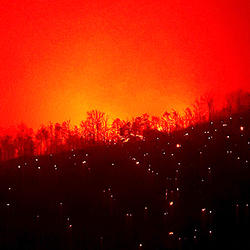
Will global warming produce more frequent and more intense wildfires? Will global warming produce more frequent and more intense wildfires?
There isn’t a direct relationship between climate change and fire, but researchers have found strong correlations between warm summer temperatures and large fire years, so there is general consensus that fire occurrence will increase with climate change. Hot, dry conditions, however, do not automatically mean fire—something needs to create the spark and actually start the fire. In some parts of...
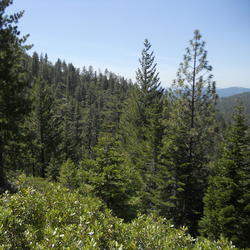
Has the USGS made any Biologic Carbon Sequestration assessments? Has the USGS made any Biologic Carbon Sequestration assessments?
The USGS is congressionally mandated (2007 Energy Independence and Security Act) to conduct a comprehensive national assessment of storage and flux (flow) of carbon and the fluxes of other greenhouse gases (including carbon dioxide) in ecosystems. At this writing, reports have been completed for Alaska, the Eastern U.S., the Great Plains, and the Western U.S. Learn more: Carbon Emissions and...

How does carbon get into the atmosphere? How does carbon get into the atmosphere?
Atmospheric carbon dioxide comes from two primary sources—natural and human activities. Natural sources of carbon dioxide include most animals, which exhale carbon dioxide as a waste product. Human activities that lead to carbon dioxide emissions come primarily from energy production, including burning coal, oil, or natural gas. Learn more: Sources of Greenhouse Gas Emissions (EPA)

How much carbon dioxide can the United States store via geologic sequestration? How much carbon dioxide can the United States store via geologic sequestration?
In 2013, the USGS released the first-ever comprehensive, nation-wide assessment of geologic carbon sequestration, which estimates a mean storage potential of 3,000 metric gigatons of carbon dioxide. The assessment is the first geologically-based, probabilistic assessment, with a range of 2,400 to 3,700 metric gigatons of potential carbon dioxide storage. In addition, the assessment is for the...
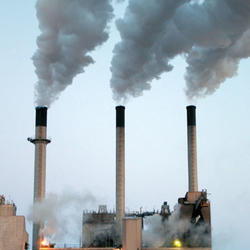
How much carbon dioxide does the United States and the World emit each year from energy sources? How much carbon dioxide does the United States and the World emit each year from energy sources?
The U.S. Energy Information Administration estimates that in 2019, the United States emitted 5,130 million metric tons of energy-related carbon dioxide, while the global emissions of energy-related carbon dioxide totaled 33,621.5 million metric tons.
Related
Does the USGS monitor global warming? Does the USGS monitor global warming?
Not specifically. Our charge is to understand characteristics of the Earth, especially the Earth's surface, that affect our Nation's land, water, and biological resources. That includes quite a bit of environmental monitoring. Other agencies, especially NOAA and NASA, are specifically funded to monitor global temperature and atmospheric phenomena such as ozone concentrations. The work through...
Will global warming produce more frequent and more intense wildfires? Will global warming produce more frequent and more intense wildfires?
There isn’t a direct relationship between climate change and fire, but researchers have found strong correlations between warm summer temperatures and large fire years, so there is general consensus that fire occurrence will increase with climate change. Hot, dry conditions, however, do not automatically mean fire—something needs to create the spark and actually start the fire. In some parts of...
Has the USGS made any Biologic Carbon Sequestration assessments? Has the USGS made any Biologic Carbon Sequestration assessments?
The USGS is congressionally mandated (2007 Energy Independence and Security Act) to conduct a comprehensive national assessment of storage and flux (flow) of carbon and the fluxes of other greenhouse gases (including carbon dioxide) in ecosystems. At this writing, reports have been completed for Alaska, the Eastern U.S., the Great Plains, and the Western U.S. Learn more: Carbon Emissions and...
How does carbon get into the atmosphere? How does carbon get into the atmosphere?
Atmospheric carbon dioxide comes from two primary sources—natural and human activities. Natural sources of carbon dioxide include most animals, which exhale carbon dioxide as a waste product. Human activities that lead to carbon dioxide emissions come primarily from energy production, including burning coal, oil, or natural gas. Learn more: Sources of Greenhouse Gas Emissions (EPA)
How much carbon dioxide can the United States store via geologic sequestration? How much carbon dioxide can the United States store via geologic sequestration?
In 2013, the USGS released the first-ever comprehensive, nation-wide assessment of geologic carbon sequestration, which estimates a mean storage potential of 3,000 metric gigatons of carbon dioxide. The assessment is the first geologically-based, probabilistic assessment, with a range of 2,400 to 3,700 metric gigatons of potential carbon dioxide storage. In addition, the assessment is for the...
How much carbon dioxide does the United States and the World emit each year from energy sources? How much carbon dioxide does the United States and the World emit each year from energy sources?
The U.S. Energy Information Administration estimates that in 2019, the United States emitted 5,130 million metric tons of energy-related carbon dioxide, while the global emissions of energy-related carbon dioxide totaled 33,621.5 million metric tons.