



Climate
How can climate change affect natural disasters?
What are the long-term effects of climate change?
What is "El Niño" and what are its effects?
USGS science helps communities understand the implications of change, anticipate the effects of change, and reduce the risks associated with a changing environment.

What is the difference between weather and climate change? What is the difference between weather and climate change?
Weather refers to short term atmospheric conditions while climate is the weather of a specific region averaged over a long period of time. Climate change refers to long-term changes.

How can climate change affect natural disasters? How can climate change affect natural disasters?
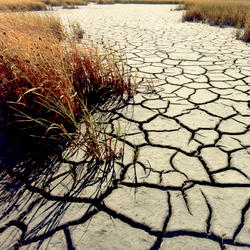
With increasing global surface temperatures the possibility of more droughts and increased intensity of storms will likely occur. As more water vapor is evaporated into the atmosphere it becomes fuel for more powerful storms to develop. More heat in the atmosphere and warmer ocean surface temperatures can lead to increased wind speeds in tropical storms. Rising sea levels expose higher locations...
What are some of the signs of climate change? What are some of the signs of climate change?
• Temperatures are rising world-wide due to greenhouse gases trapping more heat in the atmosphere. • Droughts are becoming longer and more extreme around the world. • Tropical storms becoming more severe due to warmer ocean water temperatures. • As temperatures rise there is less snowpack in mountain ranges and polar areas and the snow melts faster. • Overall, glaciers are melting at a faster rate...
What are the long-term effects of climate change? What are the long-term effects of climate change?
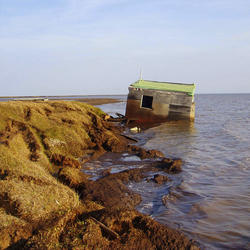
Scientists have predicted that long-term effects of climate change will include a decrease in sea ice and an increase in permafrost thawing, an increase in heat waves and heavy precipitation, and decreased water resources in semi-arid regions. Below are some of the regional impacts of global change forecast by the Intergovernmental Panel on Climate Change: North America: Decreasing snowpack in the...

What is the difference between global warming and climate change? What is the difference between global warming and climate change?
Although people tend to use these terms interchangeably, global warming is just one aspect of climate change. “Global warming” refers to the rise in global temperatures due mainly to the increasing concentrations of greenhouse gases in the atmosphere. “Climate change” refers to the increasing changes in the measures of climate over a long period of time – including precipitation, temperature, and...

Why is climate change happening and what are the causes? Why is climate change happening and what are the causes?
There are many “natural” and “anthropogenic” (human-induced) factors that contribute to climate change. Climate change has always happened on Earth, which is clearly seen in the geological record; it is the rapid rate and the magnitude of climate change occurring now that is of great concern worldwide. Greenhouse gases in the atmosphere absorb heat radiation. Human activity has increased...
How do we know the climate is changing? How do we know the climate is changing?
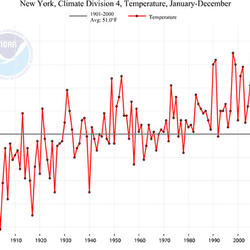
The scientific community is certain that the Earth's climate is changing because of the trends that we see in the instrumented climate record and the changes that have been observed in physical and biological systems. The instrumental record of climate change is derived from thousands of temperature and precipitation recording stations around the world. We have very high confidence in these...

How long can we expect the present Interglacial period to last? How long can we expect the present Interglacial period to last?
No one knows for sure. In the Devils Hole, Nevada paleoclimate record, the last four interglacials lasted over ~20,000 years with the warmest portion being a relatively stable period of 10,000 to 15,000 years duration. This is consistent with what is seen in the Vostok ice core from Antarctica and several records of sea level high stands. These data suggest that an equally long duration should be...

How does present glacier extent and sea level compare to the extent of glaciers and global sea level during the Last Glacial Maximum (LGM)? How does present glacier extent and sea level compare to the extent of glaciers and global sea level during the Last Glacial Maximum (LGM)?
The Last Glacial Maximum (LGM) occurred about 20,000 years ago, during the last phase of the Pleistocene epoch. At that time, global sea level was more than 400 feet lower than it is today, and glaciers covered approximately: 8% of Earth’s surface 25% of Earth’s land area 33% of Alaska Beginning about 15,000 years ago, continental glaciers retreated and sea level began to rise. Sea level reached...

How would sea level change if all glaciers melted? How would sea level change if all glaciers melted?
There is still some uncertainty about the full volume of glaciers and ice caps on Earth, but if all of them were to melt, global sea level would rise approximately 70 meters (approximately 230 feet), flooding every coastal city on the planet. Learn more: USGS Water Science School: Glaciers and Icecaps National Snow and Ice Data Center: Facts about Glaciers U.S. Global Change Research Program: Sea...

What are the impacts of glacier loss, other than losing an aesthetic landscape feature? What are the impacts of glacier loss, other than losing an aesthetic landscape feature?
Glaciers act as reservoirs of water that persist through summer. Continual melt from glaciers contributes water to the ecosystem throughout dry months, creating perennial stream habitat and a water source for plants and animals. The cold runoff from glaciers also affects downstream water temperatures. Many aquatic species in mountainous environments require cold water temperatures to survive. Some...

What is "El Niño" and what are its effects? What is "El Niño" and what are its effects?
The term El Niño (Spanish for 'the Christ Child') refers to a warming of the ocean surface, or above-average sea surface temperatures, in the central and eastern tropical Pacific Ocean. The low-level surface winds, which normally blow from east to west along the equator (“easterly winds”), instead weaken or, in some cases, start blowing the other direction (from west to east or “westerly winds”)...