This region is an extensive (278,800 square-miles; 722,000 km 2) patchwork of ecological types. Sub-regions include:
- A) Interior Highlands and Ogilvie Mountains
- B) Interior Forested Lowlands and Uplands, Interior Bottomlands, and Yukon Flats
- C) Alaska Range, Wrangell Mountains, and Copper Plateau
- D) Cook Inlet
In the interior, winters are cold (average minimums -1 0 F to -31 0 F; -18 0 C to -35 0 C) and summers are warm (average maximum 63 0 F to 72 0 F; 17 0 C to 22 0 C). The Cook Inlet region has both maritime and continental influences and the state’s most populous region, two-thirds of Alaska’s population reside here, enjoys a mild year-round climate.
A mosaic of vegetation communities arise from the interplay of elevation, permafrost, surface water, fire, and aspect. All forest types (needleleaf, deciduous, and mixed) are found in the region and are dominated by white spruce, black spruce, poplars, and paper birch. Tall shrub communities occur along rivers, drainages, and near treeline. Bogs, consisting of low shrubs and shrub-graminoid communities, are common in the lowlands. Alpine dwarf scrub communities are common in Interior Highlands and throughout mountainous regions; highest elevations are generally devoid of vegetation. Despite the varied ecoregions, many bird species are shared among the regions. Lowlands, bottomlands and flats harbor many species of migrating and breeding waterfowl (e.g., Northern Pintail, Northern Shoveler, Green-winged Teal) and swans.
These ecoregions, combined with forested lowlands and uplands support breeding shorebirds such as Greater and Lesser Yellowlegs, Solitary and Spotted Sandpipers, and Common Snipe. American Golden-Plovers and Surfbirds are found in alpine habitats in Interior Highland and mountainous ecoregions.
The unvegetated intertidal area of Cook Inlet has recently been identified, not only as a major spring stopover site for Western Sandpipers and Dunlins, but also as the primary wintering site for the nominate form of Rock Sandpiper (C. p. ptilocnemis). Significant numbers of Long- and Short-billed Dowitchers and Hudsonian Godwits stop in upper Cook Inlet during migration as do Wrangel Island Snow Geese during the spring.
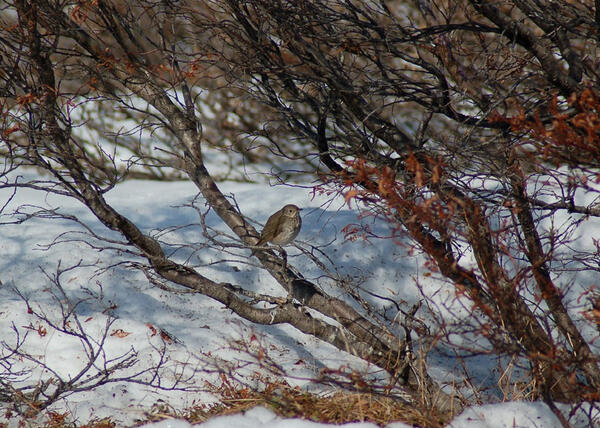
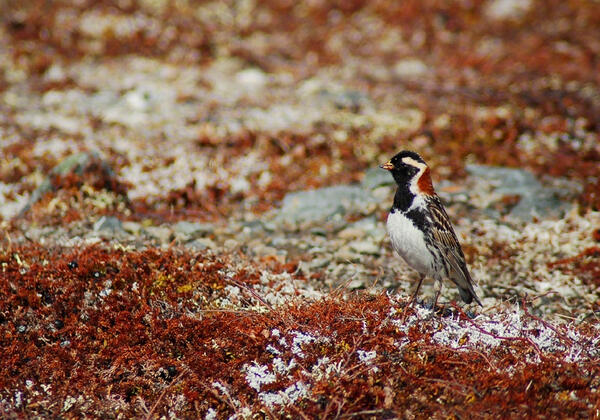
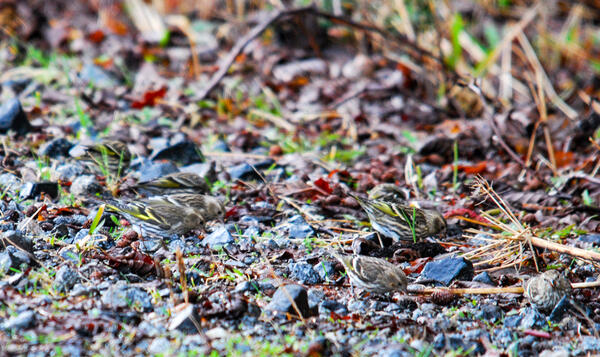
A suite of passerines inhabit forest, scrub, and graminoid communities in the region. Black-capped and Boreal Chickadees, Ruby-crowned Kinglets, Swainson’s Thrushes, Yellow-rumped Warblers and Dark-eyed Juncos are common forest species. Tall shrub communities host White-crowned, American Tree, and Fox Sparrows, Wilson’s and Yellow Warblers, Gray-cheeked Thrushes, and Common Redpolls, among others. At high elevations, Horned Lark and Lapland Longspur are common breeders.