



This is B-roll video of Anatok Creek, Kobuk Valley National Park, Alaska from August 19, 2025.
The Rusting of Arctic Rivers: Freshwater Ecosystems Respond to Rapidly Uptaking Metals
Active
By Alaska Science Center
February 27, 2026
The water quality of streams and rivers in the Arctic is sensitive to rapid climate change and altered disturbance regimes.
Return to Ecosystems or Water >> Fish and Aquatic Ecology
Rusting Rivers Videos:
Rusting Rivers Videos:
Featured Film: Rusting Rivers: Heavy Metals and Visible Color Changes
Featured Film: Rusting Rivers: Heavy Metals and Visible Color Changes
Featured Film: Rusting Rivers: Heavy Metals and Visible Color Changes
B-Roll: Anatok Creek, Alaska
B-Roll: Anatok Creek, Alaska
B-Roll: Anatok Creek, Alaska
B-Roll: Igning River, Alaska
B-Roll: Igning River, Alaska
B-Roll: Igning River, Alaska
B-Roll: Kugururok River, Alaska
B-Roll: Kugururok River, Alaska
B-Roll: Kugururok River, Alaska
Widespread permafrost thaw, thaw-induced erosion, and wildfires have altered the concentration and flux of organic carbon, nutrients, and trace metals in Arctic rivers. Subsequently, changes in surface waters can impact the habitability for biota and growth rates for fish.
Recent observations from Arctic Alaska indicate that waters draining permafrost landscapes may be susceptible to iron and carbon mobilization following thaw. One consequence of these altered iron-cycling processes is the abrupt change in color (orange) of stream and river reaches, reflecting a dramatic shift in water quality.
Although the exact mechanisms are yet to be determined, evidence indicates that shifting hydrological and oxidation-reduction processes associated with permafrost thaw may function to transport high concentrations of iron in dissolved and colloidal forms from thawing soils to streams.
Preliminary observations suggest that orange stream reaches have higher iron concentrations, less dissolved oxygen, and more acidic water than nearby clearwater streams. Further, the conversion of streams from clear to orange water appears to reflect a considerable deterioration of habitat for benthic macroinvertebrates and fish.
Sources/Usage: Public Domain. View Media Details

Media
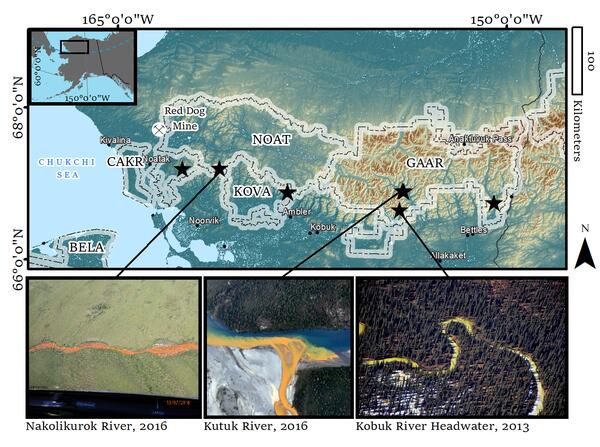
Sources/Usage: Public Domain. View Media Details
In 2022, a team of USGS and NPS researchers began working on this topic with the overall goal of defining and understanding changes to Arctic rivers in Alaska to meet conservation goals of the Department of the Interior. We are partnering with the University of California-Davis, University of Alaska-Anchorage, and Alaska Pacific University to address several research objectives including:
- Mapping the spatial distribution of orange streams and the onset of stream color change across national parks in the Arctic Inventory & Monitoring Network.
- Quantifying the effects of iron and other metal inputs on water quality in Arctic streams and determining landscape controls on metal mobilization.
- Identifying how geology, hydrology, and permafrost degradation are contributing to changes in the chemistry of Arctic rivers, with the goal to determine susceptibility and resilience to current and future changes.
- Assessing consequences of shifts in stream water quality on stream biota, including biofilm, macroinvertebrates, and resident fish communities.
Funding: USGS Changing Arctic Ecosystem Initiative and USGS-NPS Water Quality Partnership
Liquid Assets Podcast: Episode 28: Rusting Rivers
Liquid Assets Podcast: Episode 28: Rusting Rivers
Orange streams are increasingly common in the Brooks Range of northern Alaska. The orange stream color reflects oxidized iron, but also often indicates elevated heavy metal concentrations. Our ongoing study aims to document these occurrences and the timing of their onset. By sampling orange stream chemistry and assessing their spatial and temporal distribution we aim to 1) test multiple hypotheses related to their cause and link to warming and thawing landscapes, and 2) consider the implications for downstream water quality and ecosystems.
Media

Sources/Usage: Public Domain. View Media Details
Rusting Rivers in Arctic Ecosystems
Recent observations from Arctic Alaska indicate that waters draining through thawing permafrost landscapes are mobilizing iron, carbon, and other heavy metals. These altered processes associated with thaw of permafrost is leading to abrupt changes in the color (orange) of stream and rivers, reflecting a dramatic shift in water quality. Change in water quality includes higher acidity and turbidity, and higher concentrations of sulfate, total iron, and trace metals, such as zinc and nickel. Stream discoloration has also been associated with declines in macroinvertebrate diversity and fish abundance. These findings may have implications for drinking water supplies and subsistence fisheries of rural Alaskan communities.
View Video: Alaska's Rusting Rivers: The Alarming Impact of Permafrost Thaw on Arctic Rivers
Alaska's Rusting Waters | UC Davis
Alaska's Rusting Waters | UC Davis
Rusting of Wild and Scenic Rivers in Alaska Arctic National Parks | NPS
Rusting of Wild and Scenic Rivers in Alaska Arctic National Parks | NPS
Why Are Alaska's Rivers Turning Orange? | Scientific American
Why Are Alaska's Rivers Turning Orange? | Scientific American
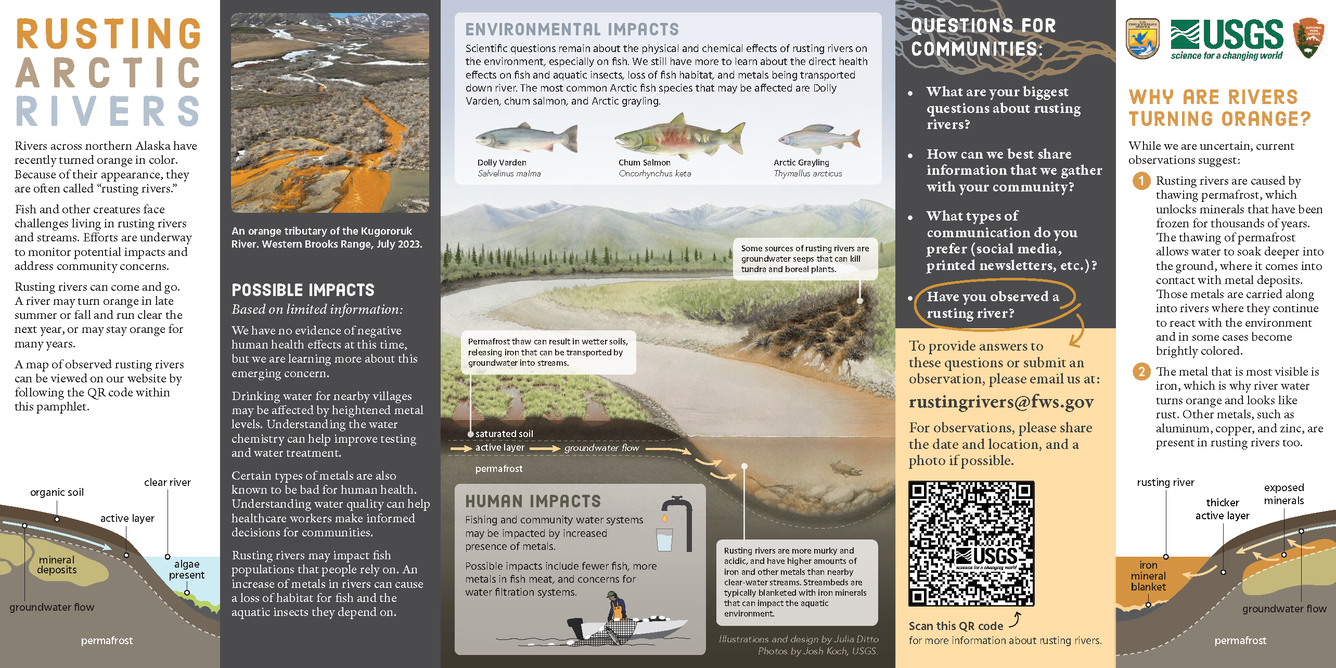
Rusting Arctic Rivers Pamphlet
Click HERE to download
Media
Sources/Usage: Public Domain. View Media Details
Below are other science projects associated with this project.

Fish and Aquatic Ecology
Fish and aquatic habitats in Alaska support important commercial, sport, and subsistence fisheries and provide forage fish that support wildlife populations. The USGS Alaska Science Center conducts interdisciplinary research to inform local, state, federal, and international policy makers regarding conservation of fish, aquatic species, and their habitats. We work collaboratively with hydrologists...

Hydro-Ecology of Arctic Thawing (HEAT): Ecology
Permafrost thaw is leading to a myriad of changes in physical and chemical conditions throughout the Arctic.

Hydro-Ecology of Arctic Thawing (HEAT): Hydrology
The Arctic is warming at higher rates than much of the rest of the world. For Alaska, this results in changes in hydrology and ecosystems – permafrost is thawing, changing landscapes and releasing nutrients to soils and streams.

Q&A: Arctic Rivers Project
Alaska is home to numerous cultural and linguistic Indigenous groups and the largest number of Federally Recognized Tribes in the United States. Indigenous Alaskans, often living in rural remote communities, are facing multiple impacts due to climate change. As infrastructure, landscapes, and subsistence resources continue to be impacted by warming temperatures, the safety, well-being, and...

Arctic – Boreal Catchment Studies
Catchment hydrology focuses on the movement of water and solutes from landscapes to waterbodies. Our research addresses questions such as: Where is the stream water coming from? How long did it take to get here? What solutes, nutrients, and/or contaminants did the water pick up along the way? Because streams and lakes gather water and solutes, we can learn about the entire watershed by studying...
Filter Total Items: 56
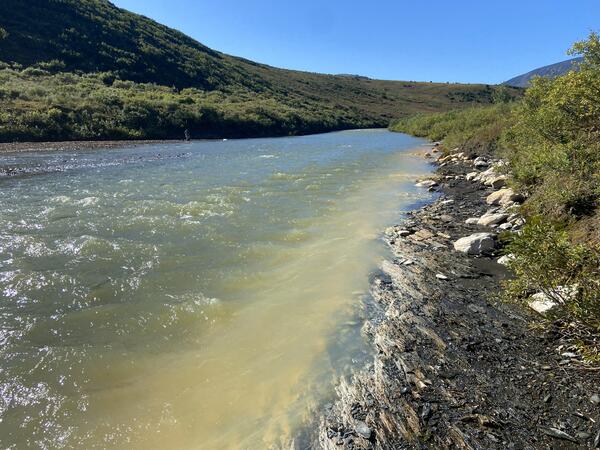
Rusting Rivers B-Roll: Anatok Creek, Alaska
This is B-roll video of Anatok Creek, Kobuk Valley National Park, Alaska from August 19, 2025.
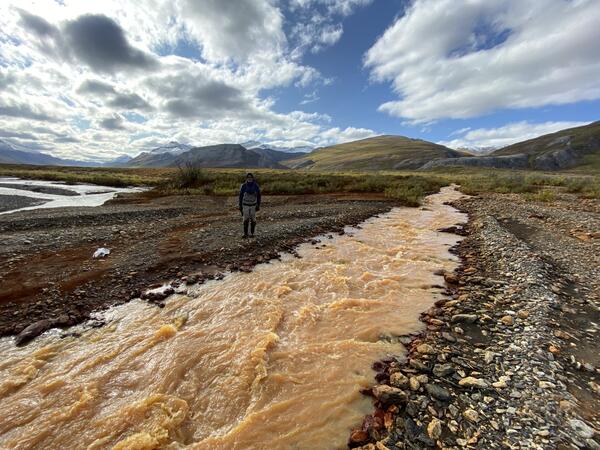
Rusting Rivers B-Roll: Igning River, Alaska
This is B-roll video of the Igning River, Gates of the Arctic National Park and Preserve, Alaska from August 26, 2024.
This is B-roll video of the Igning River, Gates of the Arctic National Park and Preserve, Alaska from August 26, 2024.

Rusting Rivers B-Roll: Kugururok River, Alaska
This is B-roll video of the Kugururok River, Noatak National Preserve, Alaska from August 30, 2025.
This is B-roll video of the Kugururok River, Noatak National Preserve, Alaska from August 30, 2025.
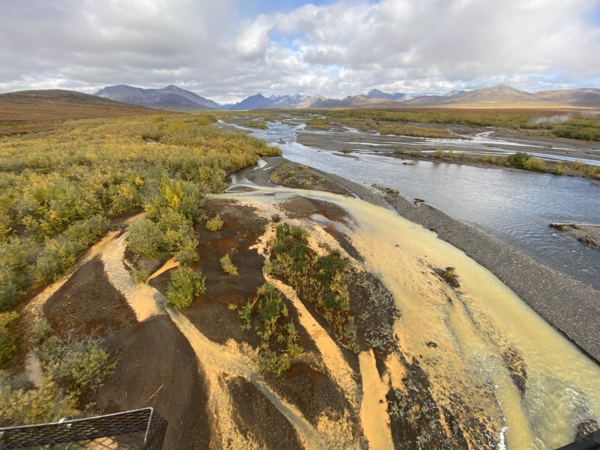
Rusting Rivers: Heavy Metals and Visible Color Changes
Rusting Rivers: Heavy Metals and Visible Color ChangesRusting rivers are increasingly common in the Brooks Range of northern Alaska. The orange stream color reflects oxidized iron (hence the appearance of rusting), but orange color also indicates elevated heavy metal concentrations and impaired water quality.
Rusting Rivers: Heavy Metals and Visible Color Changes
Rusting Rivers: Heavy Metals and Visible Color ChangesRusting rivers are increasingly common in the Brooks Range of northern Alaska. The orange stream color reflects oxidized iron (hence the appearance of rusting), but orange color also indicates elevated heavy metal concentrations and impaired water quality.
An orange tributary of the Kugururok River in Noatak National Preserve, Alaska
An orange tributary of the Kugururok River in Noatak National Preserve, AlaskaOrange streams are increasingly common in the Brooks Range of northern Alaska. The orange stream color reflects oxidized iron, but also often indicates elevated heavy metal concentrations. Our ongoing study aims to document these occurrences and the timing of their onset.
An orange tributary of the Kugururok River in Noatak National Preserve, Alaska
An orange tributary of the Kugururok River in Noatak National Preserve, AlaskaOrange streams are increasingly common in the Brooks Range of northern Alaska. The orange stream color reflects oxidized iron, but also often indicates elevated heavy metal concentrations. Our ongoing study aims to document these occurrences and the timing of their onset.
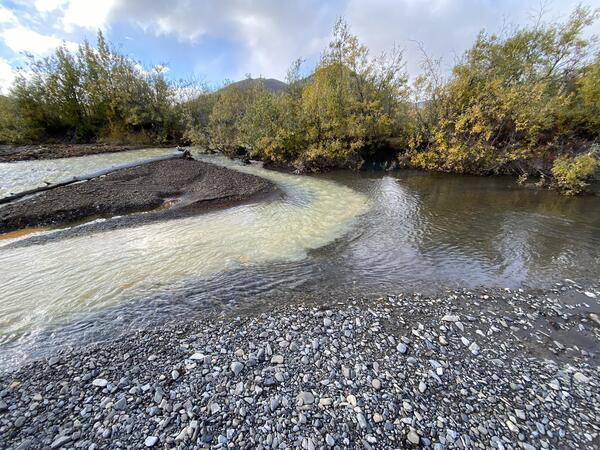
Mixing of an orange tributary and Kugururok River, Noatak National Preserve, Alaska
Mixing of an orange tributary and Kugururok River, Noatak National Preserve, AlaskaOrange streams are increasingly common in the Brooks Range of northern Alaska. The orange stream color reflects oxidized iron, but also often indicates elevated heavy metal concentrations. Our ongoing study aims to document these occurrences and the timing of their onset.
Mixing of an orange tributary and Kugururok River, Noatak National Preserve, Alaska
Mixing of an orange tributary and Kugururok River, Noatak National Preserve, AlaskaOrange streams are increasingly common in the Brooks Range of northern Alaska. The orange stream color reflects oxidized iron, but also often indicates elevated heavy metal concentrations. Our ongoing study aims to document these occurrences and the timing of their onset.
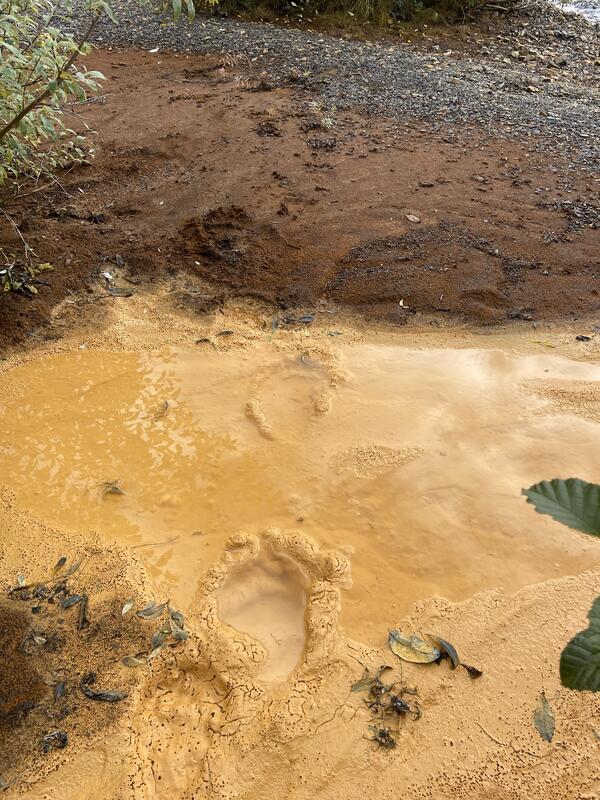
Bear tracks in an orange tributary of the Kugururok River, Noatak National Preserve, Alaska
Bear tracks in an orange tributary of the Kugururok River, Noatak National Preserve, AlaskaOrange streams are increasingly common in the Brooks Range of northern Alaska. The orange stream color reflects oxidized iron, but also often indicates elevated heavy metal concentrations. Our ongoing study aims to document these occurrences and the timing of their onset.
Bear tracks in an orange tributary of the Kugururok River, Noatak National Preserve, Alaska
Bear tracks in an orange tributary of the Kugururok River, Noatak National Preserve, AlaskaOrange streams are increasingly common in the Brooks Range of northern Alaska. The orange stream color reflects oxidized iron, but also often indicates elevated heavy metal concentrations. Our ongoing study aims to document these occurrences and the timing of their onset.
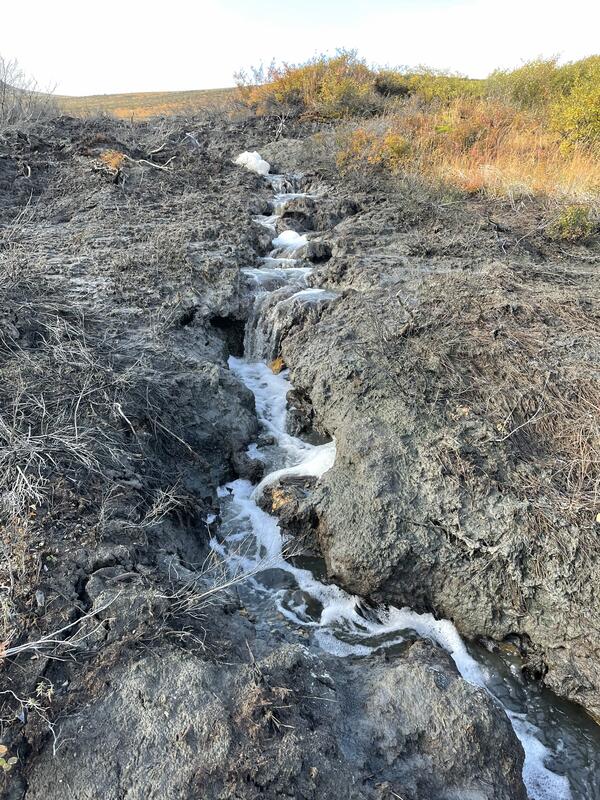
Acidic waters kill and blacken vegetation as they plunge downhill towards the Nakolikurok Creek
Acidic waters kill and blacken vegetation as they plunge downhill towards the Nakolikurok CreekOrange streams are increasingly common in the Brooks Range of northern Alaska. The orange stream color reflects oxidized iron, but also often indicates elevated heavy metal concentrations. Our ongoing study aims to document these occurrences and the timing of their onset.
Acidic waters kill and blacken vegetation as they plunge downhill towards the Nakolikurok Creek
Acidic waters kill and blacken vegetation as they plunge downhill towards the Nakolikurok CreekOrange streams are increasingly common in the Brooks Range of northern Alaska. The orange stream color reflects oxidized iron, but also often indicates elevated heavy metal concentrations. Our ongoing study aims to document these occurrences and the timing of their onset.
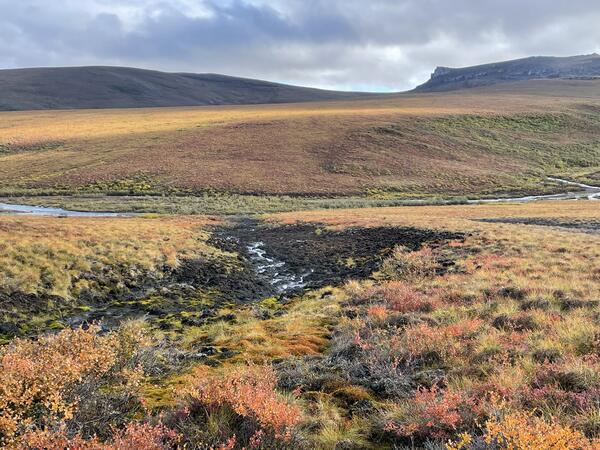
An acid seep on the Nakolikurok Creek
Orange streams are increasingly common in the Brooks Range of northern Alaska. The orange stream color reflects oxidized iron, but also often indicates elevated heavy metal concentrations. Our ongoing study aims to document these occurrences and the timing of their onset.
Orange streams are increasingly common in the Brooks Range of northern Alaska. The orange stream color reflects oxidized iron, but also often indicates elevated heavy metal concentrations. Our ongoing study aims to document these occurrences and the timing of their onset.
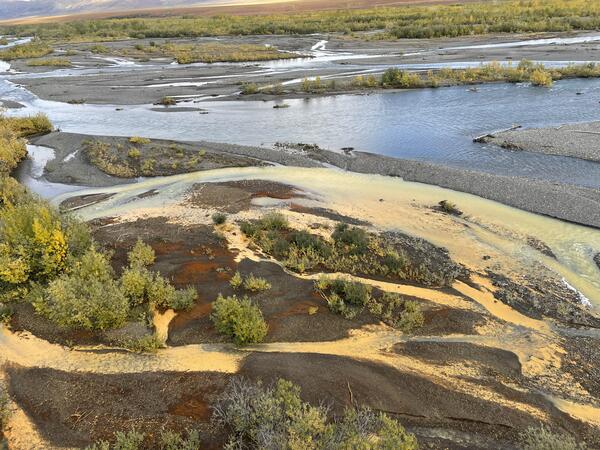
Orange waters mixing in to the mainstem of the Kugururok River
Orange waters mixing in to the mainstem of the Kugururok RiverOrange streams are increasingly common in the Brooks Range of northern Alaska. The orange stream color reflects oxidized iron, but also often indicates elevated heavy metal concentrations. Our ongoing study aims to document these occurrences and the timing of their onset.
Orange waters mixing in to the mainstem of the Kugururok River
Orange waters mixing in to the mainstem of the Kugururok RiverOrange streams are increasingly common in the Brooks Range of northern Alaska. The orange stream color reflects oxidized iron, but also often indicates elevated heavy metal concentrations. Our ongoing study aims to document these occurrences and the timing of their onset.
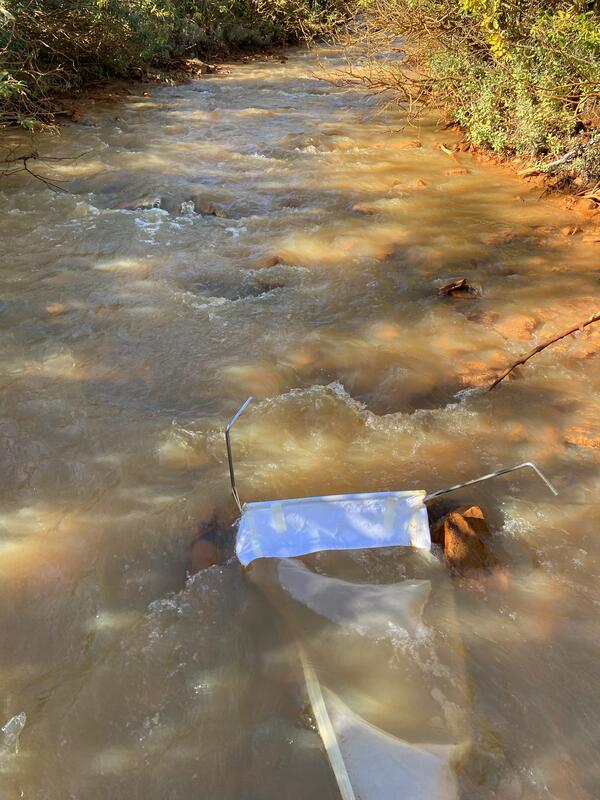
Drift net collecting samples in orange tributary of Anatok Creek, Kobuk Valley National Park, Alaska
Drift net collecting samples in orange tributary of Anatok Creek, Kobuk Valley National Park, AlaskaOrange streams are increasingly common in the Brooks Range of northern Alaska. The orange stream color reflects oxidized iron, but also often indicates elevated heavy metal concentrations. Our ongoing study aims to document these occurrences and the timing of their onset.
Drift net collecting samples in orange tributary of Anatok Creek, Kobuk Valley National Park, Alaska
Drift net collecting samples in orange tributary of Anatok Creek, Kobuk Valley National Park, AlaskaOrange streams are increasingly common in the Brooks Range of northern Alaska. The orange stream color reflects oxidized iron, but also often indicates elevated heavy metal concentrations. Our ongoing study aims to document these occurrences and the timing of their onset.
Anatok Creek, Kobuk Valley National Park, Alaska
Orange streams are increasingly common in the Brooks Range of northern Alaska. The orange stream color reflects oxidized iron, but also often indicates elevated heavy metal concentrations. Our ongoing study aims to document these occurrences and the timing of their onset.
Orange streams are increasingly common in the Brooks Range of northern Alaska. The orange stream color reflects oxidized iron, but also often indicates elevated heavy metal concentrations. Our ongoing study aims to document these occurrences and the timing of their onset.
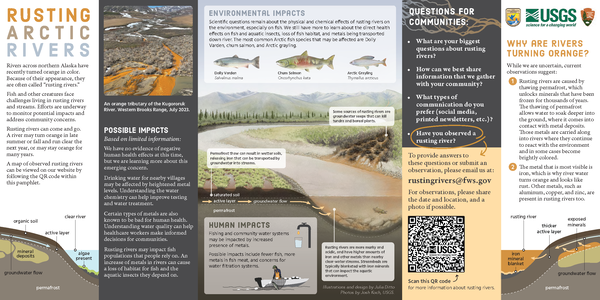
Rusting Arctic Rivers Pamphlet
Rivers across northern Alaska have recently turned orange in color. Because of their appearance, they are often called “rusting rivers.”
Rivers across northern Alaska have recently turned orange in color. Because of their appearance, they are often called “rusting rivers.”
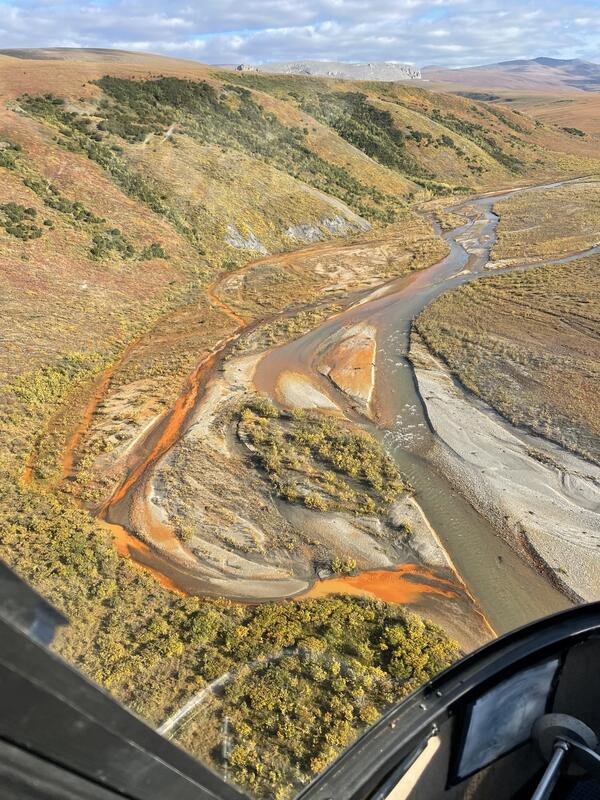
Orange staining in a side channel of the Nakolikurok Creek
Orange staining in a side channel of the Nakolikurok CreekOrange streams are increasingly common in the Brooks Range of northern Alaska. The orange stream color reflects oxidized iron, but also often indicates elevated heavy metal concentrations. Our ongoing study aims to document these occurrences and the timing of their onset.
Orange staining in a side channel of the Nakolikurok Creek
Orange staining in a side channel of the Nakolikurok CreekOrange streams are increasingly common in the Brooks Range of northern Alaska. The orange stream color reflects oxidized iron, but also often indicates elevated heavy metal concentrations. Our ongoing study aims to document these occurrences and the timing of their onset.
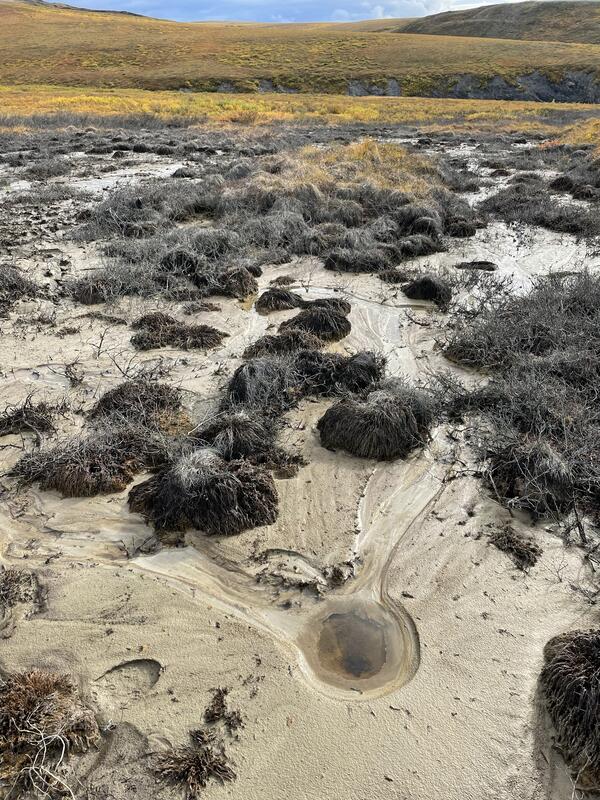
Emergence of acidic waters from a seep in the Agashashok River Watershed
Emergence of acidic waters from a seep in the Agashashok River WatershedOrange streams are increasingly common in the Brooks Range of northern Alaska. The orange stream color reflects oxidized iron, but also often indicates elevated heavy metal concentrations. Our ongoing study aims to document these occurrences and the timing of their onset.
Emergence of acidic waters from a seep in the Agashashok River Watershed
Emergence of acidic waters from a seep in the Agashashok River WatershedOrange streams are increasingly common in the Brooks Range of northern Alaska. The orange stream color reflects oxidized iron, but also often indicates elevated heavy metal concentrations. Our ongoing study aims to document these occurrences and the timing of their onset.
An orange tributary of the Igning River, Gates of the Arctic National Park and Preserve, Alaska
An orange tributary of the Igning River, Gates of the Arctic National Park and Preserve, AlaskaOrange streams are increasingly common in the Brooks Range of northern Alaska. The orange stream color reflects oxidized iron, but also often indicates elevated heavy metal concentrations. Our ongoing study aims to document these occurrences and the timing of their onset.
An orange tributary of the Igning River, Gates of the Arctic National Park and Preserve, Alaska
An orange tributary of the Igning River, Gates of the Arctic National Park and Preserve, AlaskaOrange streams are increasingly common in the Brooks Range of northern Alaska. The orange stream color reflects oxidized iron, but also often indicates elevated heavy metal concentrations. Our ongoing study aims to document these occurrences and the timing of their onset.
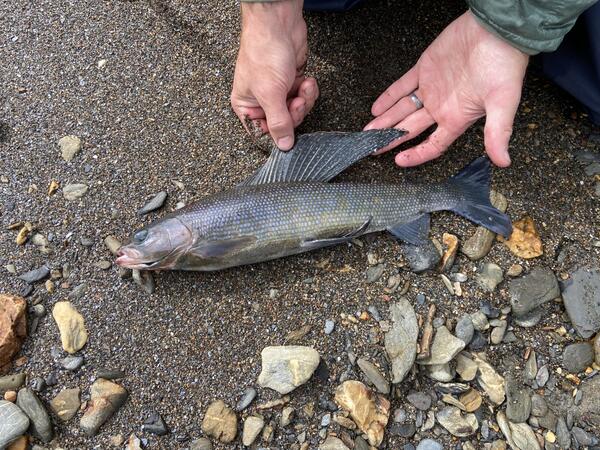
Arctic Grayling (Thymallus arctus) caught in the Nakolikuruk River near an orange tributary, Noatak National Preserve, Alaska
Arctic Grayling (Thymallus arctus) caught in the Nakolikuruk River near an orange tributary, Noatak National Preserve, AlaskaOrange streams are increasingly common in the Brooks Range of northern Alaska. The orange stream color reflects oxidized iron, but also often indicates elevated heavy metal concentrations. Our ongoing study aims to document these occurrences and the timing of their onset.
Arctic Grayling (Thymallus arctus) caught in the Nakolikuruk River near an orange tributary, Noatak National Preserve, Alaska
Arctic Grayling (Thymallus arctus) caught in the Nakolikuruk River near an orange tributary, Noatak National Preserve, AlaskaOrange streams are increasingly common in the Brooks Range of northern Alaska. The orange stream color reflects oxidized iron, but also often indicates elevated heavy metal concentrations. Our ongoing study aims to document these occurrences and the timing of their onset.
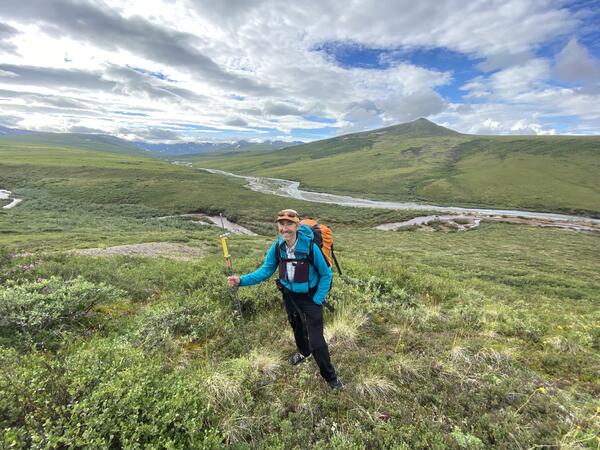
Surveying for "rusting rivers" in the Nakolikurok Creek watershed, Noatak National Preserve, Alaska
Surveying for "rusting rivers" in the Nakolikurok Creek watershed, Noatak National Preserve, AlaskaOrange streams are increasingly common in the Brooks Range of northern Alaska. The orange stream color reflects oxidized iron, but also often indicates elevated heavy metal concentrations. Our ongoing study aims to document these occurrences and the timing of their onset.
Surveying for "rusting rivers" in the Nakolikurok Creek watershed, Noatak National Preserve, Alaska
Surveying for "rusting rivers" in the Nakolikurok Creek watershed, Noatak National Preserve, AlaskaOrange streams are increasingly common in the Brooks Range of northern Alaska. The orange stream color reflects oxidized iron, but also often indicates elevated heavy metal concentrations. Our ongoing study aims to document these occurrences and the timing of their onset.

Rusting Rivers b-roll - Kugororuk River
This is B-roll video of the Kugororuk River in Noatak National Park and Preserve, Alaska from July 17, 2023.
This is B-roll video of the Kugororuk River in Noatak National Park and Preserve, Alaska from July 17, 2023.
Rusting Rivers b-roll - Kugororuk River
This is B-roll video of the Kugororuk River in Noatak National Park and Preserve, Alaska from July 17, 2023.
This is B-roll video of the Kugororuk River in Noatak National Park and Preserve, Alaska from July 17, 2023.
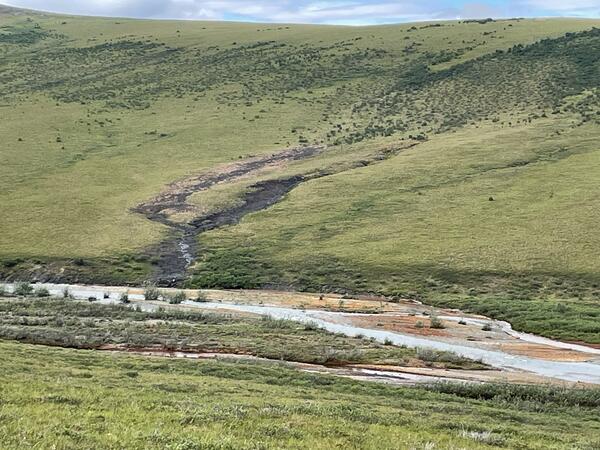
A seep emanates from a hillslope in the Nakolikurok Creek Watershed, blackening vegetation and staining the streambanks orange
A seep emanates from a hillslope in the Nakolikurok Creek Watershed, blackening vegetation and staining the streambanks orangeOrange streams are increasingly common in the Brooks Range of northern Alaska. The orange stream color reflects oxidized iron, but also often indicates elevated heavy metal concentrations. Our ongoing study aims to document these occurrences and the timing of their onset.
A seep emanates from a hillslope in the Nakolikurok Creek Watershed, blackening vegetation and staining the streambanks orange
A seep emanates from a hillslope in the Nakolikurok Creek Watershed, blackening vegetation and staining the streambanks orangeOrange streams are increasingly common in the Brooks Range of northern Alaska. The orange stream color reflects oxidized iron, but also often indicates elevated heavy metal concentrations. Our ongoing study aims to document these occurrences and the timing of their onset.
The water quality of streams and rivers in the Arctic is sensitive to rapid climate change and altered disturbance regimes.
Return to Ecosystems or Water >> Fish and Aquatic Ecology
Rusting Rivers Videos:
Rusting Rivers Videos:
Featured Film: Rusting Rivers: Heavy Metals and Visible Color Changes
Featured Film: Rusting Rivers: Heavy Metals and Visible Color Changes
Featured Film: Rusting Rivers: Heavy Metals and Visible Color Changes
B-Roll: Anatok Creek, Alaska
B-Roll: Anatok Creek, Alaska
B-Roll: Anatok Creek, Alaska
B-Roll: Igning River, Alaska
B-Roll: Igning River, Alaska
B-Roll: Igning River, Alaska
B-Roll: Kugururok River, Alaska
B-Roll: Kugururok River, Alaska
B-Roll: Kugururok River, Alaska
Widespread permafrost thaw, thaw-induced erosion, and wildfires have altered the concentration and flux of organic carbon, nutrients, and trace metals in Arctic rivers. Subsequently, changes in surface waters can impact the habitability for biota and growth rates for fish.
Recent observations from Arctic Alaska indicate that waters draining permafrost landscapes may be susceptible to iron and carbon mobilization following thaw. One consequence of these altered iron-cycling processes is the abrupt change in color (orange) of stream and river reaches, reflecting a dramatic shift in water quality.
Although the exact mechanisms are yet to be determined, evidence indicates that shifting hydrological and oxidation-reduction processes associated with permafrost thaw may function to transport high concentrations of iron in dissolved and colloidal forms from thawing soils to streams.
Preliminary observations suggest that orange stream reaches have higher iron concentrations, less dissolved oxygen, and more acidic water than nearby clearwater streams. Further, the conversion of streams from clear to orange water appears to reflect a considerable deterioration of habitat for benthic macroinvertebrates and fish.
Sources/Usage: Public Domain. View Media Details
Media
Sources/Usage: Public Domain. View Media Details
In 2022, a team of USGS and NPS researchers began working on this topic with the overall goal of defining and understanding changes to Arctic rivers in Alaska to meet conservation goals of the Department of the Interior. We are partnering with the University of California-Davis, University of Alaska-Anchorage, and Alaska Pacific University to address several research objectives including:
- Mapping the spatial distribution of orange streams and the onset of stream color change across national parks in the Arctic Inventory & Monitoring Network.
- Quantifying the effects of iron and other metal inputs on water quality in Arctic streams and determining landscape controls on metal mobilization.
- Identifying how geology, hydrology, and permafrost degradation are contributing to changes in the chemistry of Arctic rivers, with the goal to determine susceptibility and resilience to current and future changes.
- Assessing consequences of shifts in stream water quality on stream biota, including biofilm, macroinvertebrates, and resident fish communities.
Funding: USGS Changing Arctic Ecosystem Initiative and USGS-NPS Water Quality Partnership
Liquid Assets Podcast: Episode 28: Rusting Rivers
Liquid Assets Podcast: Episode 28: Rusting Rivers
Orange streams are increasingly common in the Brooks Range of northern Alaska. The orange stream color reflects oxidized iron, but also often indicates elevated heavy metal concentrations. Our ongoing study aims to document these occurrences and the timing of their onset. By sampling orange stream chemistry and assessing their spatial and temporal distribution we aim to 1) test multiple hypotheses related to their cause and link to warming and thawing landscapes, and 2) consider the implications for downstream water quality and ecosystems.
Media
Sources/Usage: Public Domain. View Media Details
Rusting Rivers in Arctic Ecosystems
Recent observations from Arctic Alaska indicate that waters draining through thawing permafrost landscapes are mobilizing iron, carbon, and other heavy metals. These altered processes associated with thaw of permafrost is leading to abrupt changes in the color (orange) of stream and rivers, reflecting a dramatic shift in water quality. Change in water quality includes higher acidity and turbidity, and higher concentrations of sulfate, total iron, and trace metals, such as zinc and nickel. Stream discoloration has also been associated with declines in macroinvertebrate diversity and fish abundance. These findings may have implications for drinking water supplies and subsistence fisheries of rural Alaskan communities.
View Video: Alaska's Rusting Rivers: The Alarming Impact of Permafrost Thaw on Arctic Rivers
Alaska's Rusting Waters | UC Davis
Alaska's Rusting Waters | UC Davis
Rusting of Wild and Scenic Rivers in Alaska Arctic National Parks | NPS
Rusting of Wild and Scenic Rivers in Alaska Arctic National Parks | NPS
Why Are Alaska's Rivers Turning Orange? | Scientific American
Why Are Alaska's Rivers Turning Orange? | Scientific American
Rusting Arctic Rivers Pamphlet
Click HERE to download
Media
Sources/Usage: Public Domain. View Media Details
Below are other science projects associated with this project.
Fish and Aquatic Ecology
Fish and aquatic habitats in Alaska support important commercial, sport, and subsistence fisheries and provide forage fish that support wildlife populations. The USGS Alaska Science Center conducts interdisciplinary research to inform local, state, federal, and international policy makers regarding conservation of fish, aquatic species, and their habitats. We work collaboratively with hydrologists...
Hydro-Ecology of Arctic Thawing (HEAT): Ecology
Permafrost thaw is leading to a myriad of changes in physical and chemical conditions throughout the Arctic.
Hydro-Ecology of Arctic Thawing (HEAT): Hydrology
The Arctic is warming at higher rates than much of the rest of the world. For Alaska, this results in changes in hydrology and ecosystems – permafrost is thawing, changing landscapes and releasing nutrients to soils and streams.
Q&A: Arctic Rivers Project
Alaska is home to numerous cultural and linguistic Indigenous groups and the largest number of Federally Recognized Tribes in the United States. Indigenous Alaskans, often living in rural remote communities, are facing multiple impacts due to climate change. As infrastructure, landscapes, and subsistence resources continue to be impacted by warming temperatures, the safety, well-being, and...
Arctic – Boreal Catchment Studies
Catchment hydrology focuses on the movement of water and solutes from landscapes to waterbodies. Our research addresses questions such as: Where is the stream water coming from? How long did it take to get here? What solutes, nutrients, and/or contaminants did the water pick up along the way? Because streams and lakes gather water and solutes, we can learn about the entire watershed by studying...
Filter Total Items: 56
Rusting Rivers B-Roll: Anatok Creek, Alaska
This is B-roll video of Anatok Creek, Kobuk Valley National Park, Alaska from August 19, 2025.
This is B-roll video of Anatok Creek, Kobuk Valley National Park, Alaska from August 19, 2025.
Rusting Rivers B-Roll: Igning River, Alaska
This is B-roll video of the Igning River, Gates of the Arctic National Park and Preserve, Alaska from August 26, 2024.
This is B-roll video of the Igning River, Gates of the Arctic National Park and Preserve, Alaska from August 26, 2024.
Rusting Rivers B-Roll: Kugururok River, Alaska
This is B-roll video of the Kugururok River, Noatak National Preserve, Alaska from August 30, 2025.
This is B-roll video of the Kugururok River, Noatak National Preserve, Alaska from August 30, 2025.
Rusting Rivers: Heavy Metals and Visible Color Changes
Rusting Rivers: Heavy Metals and Visible Color ChangesRusting rivers are increasingly common in the Brooks Range of northern Alaska. The orange stream color reflects oxidized iron (hence the appearance of rusting), but orange color also indicates elevated heavy metal concentrations and impaired water quality.
Rusting Rivers: Heavy Metals and Visible Color Changes
Rusting Rivers: Heavy Metals and Visible Color ChangesRusting rivers are increasingly common in the Brooks Range of northern Alaska. The orange stream color reflects oxidized iron (hence the appearance of rusting), but orange color also indicates elevated heavy metal concentrations and impaired water quality.
An orange tributary of the Kugururok River in Noatak National Preserve, Alaska
An orange tributary of the Kugururok River in Noatak National Preserve, AlaskaOrange streams are increasingly common in the Brooks Range of northern Alaska. The orange stream color reflects oxidized iron, but also often indicates elevated heavy metal concentrations. Our ongoing study aims to document these occurrences and the timing of their onset.
An orange tributary of the Kugururok River in Noatak National Preserve, Alaska
An orange tributary of the Kugururok River in Noatak National Preserve, AlaskaOrange streams are increasingly common in the Brooks Range of northern Alaska. The orange stream color reflects oxidized iron, but also often indicates elevated heavy metal concentrations. Our ongoing study aims to document these occurrences and the timing of their onset.
Mixing of an orange tributary and Kugururok River, Noatak National Preserve, Alaska
Mixing of an orange tributary and Kugururok River, Noatak National Preserve, AlaskaOrange streams are increasingly common in the Brooks Range of northern Alaska. The orange stream color reflects oxidized iron, but also often indicates elevated heavy metal concentrations. Our ongoing study aims to document these occurrences and the timing of their onset.
Mixing of an orange tributary and Kugururok River, Noatak National Preserve, Alaska
Mixing of an orange tributary and Kugururok River, Noatak National Preserve, AlaskaOrange streams are increasingly common in the Brooks Range of northern Alaska. The orange stream color reflects oxidized iron, but also often indicates elevated heavy metal concentrations. Our ongoing study aims to document these occurrences and the timing of their onset.
Bear tracks in an orange tributary of the Kugururok River, Noatak National Preserve, Alaska
Bear tracks in an orange tributary of the Kugururok River, Noatak National Preserve, AlaskaOrange streams are increasingly common in the Brooks Range of northern Alaska. The orange stream color reflects oxidized iron, but also often indicates elevated heavy metal concentrations. Our ongoing study aims to document these occurrences and the timing of their onset.
Bear tracks in an orange tributary of the Kugururok River, Noatak National Preserve, Alaska
Bear tracks in an orange tributary of the Kugururok River, Noatak National Preserve, AlaskaOrange streams are increasingly common in the Brooks Range of northern Alaska. The orange stream color reflects oxidized iron, but also often indicates elevated heavy metal concentrations. Our ongoing study aims to document these occurrences and the timing of their onset.
Acidic waters kill and blacken vegetation as they plunge downhill towards the Nakolikurok Creek
Acidic waters kill and blacken vegetation as they plunge downhill towards the Nakolikurok CreekOrange streams are increasingly common in the Brooks Range of northern Alaska. The orange stream color reflects oxidized iron, but also often indicates elevated heavy metal concentrations. Our ongoing study aims to document these occurrences and the timing of their onset.
Acidic waters kill and blacken vegetation as they plunge downhill towards the Nakolikurok Creek
Acidic waters kill and blacken vegetation as they plunge downhill towards the Nakolikurok CreekOrange streams are increasingly common in the Brooks Range of northern Alaska. The orange stream color reflects oxidized iron, but also often indicates elevated heavy metal concentrations. Our ongoing study aims to document these occurrences and the timing of their onset.
An acid seep on the Nakolikurok Creek
Orange streams are increasingly common in the Brooks Range of northern Alaska. The orange stream color reflects oxidized iron, but also often indicates elevated heavy metal concentrations. Our ongoing study aims to document these occurrences and the timing of their onset.
Orange streams are increasingly common in the Brooks Range of northern Alaska. The orange stream color reflects oxidized iron, but also often indicates elevated heavy metal concentrations. Our ongoing study aims to document these occurrences and the timing of their onset.
Orange waters mixing in to the mainstem of the Kugururok River
Orange waters mixing in to the mainstem of the Kugururok RiverOrange streams are increasingly common in the Brooks Range of northern Alaska. The orange stream color reflects oxidized iron, but also often indicates elevated heavy metal concentrations. Our ongoing study aims to document these occurrences and the timing of their onset.
Orange waters mixing in to the mainstem of the Kugururok River
Orange waters mixing in to the mainstem of the Kugururok RiverOrange streams are increasingly common in the Brooks Range of northern Alaska. The orange stream color reflects oxidized iron, but also often indicates elevated heavy metal concentrations. Our ongoing study aims to document these occurrences and the timing of their onset.
Drift net collecting samples in orange tributary of Anatok Creek, Kobuk Valley National Park, Alaska
Drift net collecting samples in orange tributary of Anatok Creek, Kobuk Valley National Park, AlaskaOrange streams are increasingly common in the Brooks Range of northern Alaska. The orange stream color reflects oxidized iron, but also often indicates elevated heavy metal concentrations. Our ongoing study aims to document these occurrences and the timing of their onset.
Drift net collecting samples in orange tributary of Anatok Creek, Kobuk Valley National Park, Alaska
Drift net collecting samples in orange tributary of Anatok Creek, Kobuk Valley National Park, AlaskaOrange streams are increasingly common in the Brooks Range of northern Alaska. The orange stream color reflects oxidized iron, but also often indicates elevated heavy metal concentrations. Our ongoing study aims to document these occurrences and the timing of their onset.
Anatok Creek, Kobuk Valley National Park, Alaska
Orange streams are increasingly common in the Brooks Range of northern Alaska. The orange stream color reflects oxidized iron, but also often indicates elevated heavy metal concentrations. Our ongoing study aims to document these occurrences and the timing of their onset.
Orange streams are increasingly common in the Brooks Range of northern Alaska. The orange stream color reflects oxidized iron, but also often indicates elevated heavy metal concentrations. Our ongoing study aims to document these occurrences and the timing of their onset.
Rusting Arctic Rivers Pamphlet
Rivers across northern Alaska have recently turned orange in color. Because of their appearance, they are often called “rusting rivers.”
Rivers across northern Alaska have recently turned orange in color. Because of their appearance, they are often called “rusting rivers.”
Orange staining in a side channel of the Nakolikurok Creek
Orange staining in a side channel of the Nakolikurok CreekOrange streams are increasingly common in the Brooks Range of northern Alaska. The orange stream color reflects oxidized iron, but also often indicates elevated heavy metal concentrations. Our ongoing study aims to document these occurrences and the timing of their onset.
Orange staining in a side channel of the Nakolikurok Creek
Orange staining in a side channel of the Nakolikurok CreekOrange streams are increasingly common in the Brooks Range of northern Alaska. The orange stream color reflects oxidized iron, but also often indicates elevated heavy metal concentrations. Our ongoing study aims to document these occurrences and the timing of their onset.
Emergence of acidic waters from a seep in the Agashashok River Watershed
Emergence of acidic waters from a seep in the Agashashok River WatershedOrange streams are increasingly common in the Brooks Range of northern Alaska. The orange stream color reflects oxidized iron, but also often indicates elevated heavy metal concentrations. Our ongoing study aims to document these occurrences and the timing of their onset.
Emergence of acidic waters from a seep in the Agashashok River Watershed
Emergence of acidic waters from a seep in the Agashashok River WatershedOrange streams are increasingly common in the Brooks Range of northern Alaska. The orange stream color reflects oxidized iron, but also often indicates elevated heavy metal concentrations. Our ongoing study aims to document these occurrences and the timing of their onset.
An orange tributary of the Igning River, Gates of the Arctic National Park and Preserve, Alaska
An orange tributary of the Igning River, Gates of the Arctic National Park and Preserve, AlaskaOrange streams are increasingly common in the Brooks Range of northern Alaska. The orange stream color reflects oxidized iron, but also often indicates elevated heavy metal concentrations. Our ongoing study aims to document these occurrences and the timing of their onset.
An orange tributary of the Igning River, Gates of the Arctic National Park and Preserve, Alaska
An orange tributary of the Igning River, Gates of the Arctic National Park and Preserve, AlaskaOrange streams are increasingly common in the Brooks Range of northern Alaska. The orange stream color reflects oxidized iron, but also often indicates elevated heavy metal concentrations. Our ongoing study aims to document these occurrences and the timing of their onset.
Arctic Grayling (Thymallus arctus) caught in the Nakolikuruk River near an orange tributary, Noatak National Preserve, Alaska
Arctic Grayling (Thymallus arctus) caught in the Nakolikuruk River near an orange tributary, Noatak National Preserve, AlaskaOrange streams are increasingly common in the Brooks Range of northern Alaska. The orange stream color reflects oxidized iron, but also often indicates elevated heavy metal concentrations. Our ongoing study aims to document these occurrences and the timing of their onset.
Arctic Grayling (Thymallus arctus) caught in the Nakolikuruk River near an orange tributary, Noatak National Preserve, Alaska
Arctic Grayling (Thymallus arctus) caught in the Nakolikuruk River near an orange tributary, Noatak National Preserve, AlaskaOrange streams are increasingly common in the Brooks Range of northern Alaska. The orange stream color reflects oxidized iron, but also often indicates elevated heavy metal concentrations. Our ongoing study aims to document these occurrences and the timing of their onset.
Surveying for "rusting rivers" in the Nakolikurok Creek watershed, Noatak National Preserve, Alaska
Surveying for "rusting rivers" in the Nakolikurok Creek watershed, Noatak National Preserve, AlaskaOrange streams are increasingly common in the Brooks Range of northern Alaska. The orange stream color reflects oxidized iron, but also often indicates elevated heavy metal concentrations. Our ongoing study aims to document these occurrences and the timing of their onset.
Surveying for "rusting rivers" in the Nakolikurok Creek watershed, Noatak National Preserve, Alaska
Surveying for "rusting rivers" in the Nakolikurok Creek watershed, Noatak National Preserve, AlaskaOrange streams are increasingly common in the Brooks Range of northern Alaska. The orange stream color reflects oxidized iron, but also often indicates elevated heavy metal concentrations. Our ongoing study aims to document these occurrences and the timing of their onset.
Rusting Rivers b-roll - Kugororuk River
This is B-roll video of the Kugororuk River in Noatak National Park and Preserve, Alaska from July 17, 2023.
This is B-roll video of the Kugororuk River in Noatak National Park and Preserve, Alaska from July 17, 2023.
Rusting Rivers b-roll - Kugororuk River
This is B-roll video of the Kugororuk River in Noatak National Park and Preserve, Alaska from July 17, 2023.
This is B-roll video of the Kugororuk River in Noatak National Park and Preserve, Alaska from July 17, 2023.
A seep emanates from a hillslope in the Nakolikurok Creek Watershed, blackening vegetation and staining the streambanks orange
A seep emanates from a hillslope in the Nakolikurok Creek Watershed, blackening vegetation and staining the streambanks orangeOrange streams are increasingly common in the Brooks Range of northern Alaska. The orange stream color reflects oxidized iron, but also often indicates elevated heavy metal concentrations. Our ongoing study aims to document these occurrences and the timing of their onset.
A seep emanates from a hillslope in the Nakolikurok Creek Watershed, blackening vegetation and staining the streambanks orange
A seep emanates from a hillslope in the Nakolikurok Creek Watershed, blackening vegetation and staining the streambanks orangeOrange streams are increasingly common in the Brooks Range of northern Alaska. The orange stream color reflects oxidized iron, but also often indicates elevated heavy metal concentrations. Our ongoing study aims to document these occurrences and the timing of their onset.