



USGS is collaborating with numerous partner institutions to explore susceptibility and pathogenesis of relevant avian influenza strains in waterfowl species with special emphasis on sea ducks and diving ducks.
The susceptibility and pathogenesis of highly pathogenic avian influenza (HPAI) virus is poorly understood in many avian species, especially diving ducks (genera Melanitta, Aythya, and Oxyura). As a result, there is a lack of data needed to inform potential impacts of HPAI on diving duck abundances and the potential for these species to serve as vectors or reservoirs for HPAI.
This project, in collaboration with the U.S. Department of Agriculture Southeast Poultry Disease Research Laboratory and St. Jude Children's Research Hospital, has produced novel data indicating the infectiousness and post-infection response to avian influenza for species such as lesser scaup (Aythya affinis), surf scoter (Melanitta perspicillata), and ruddy duck (Oxyura jamaicensis). This research has also compiled all previously published data regarding 1) effects of HPAI on wild species in North America to identify continued data gaps and 2) testing emergent HPAI viral threats in more ubiquitous species such as mallard (Anas platyrhynchos) and American black duck (Anas rubripes).
Ongoing efforts include studies aimed at characterizing the pathobiology of HPAI in lesser scaup, surf scoter, and common eider (Somateria mollissima) with special focus on tracking transcriptomic signatures across the period of infection. These studies will help fill an important gap in our current state of knowledge on HPAI in wild birds and identify the sub-clinical immune responses of focal species.
<<Back to Avian Influenza Research at EESC
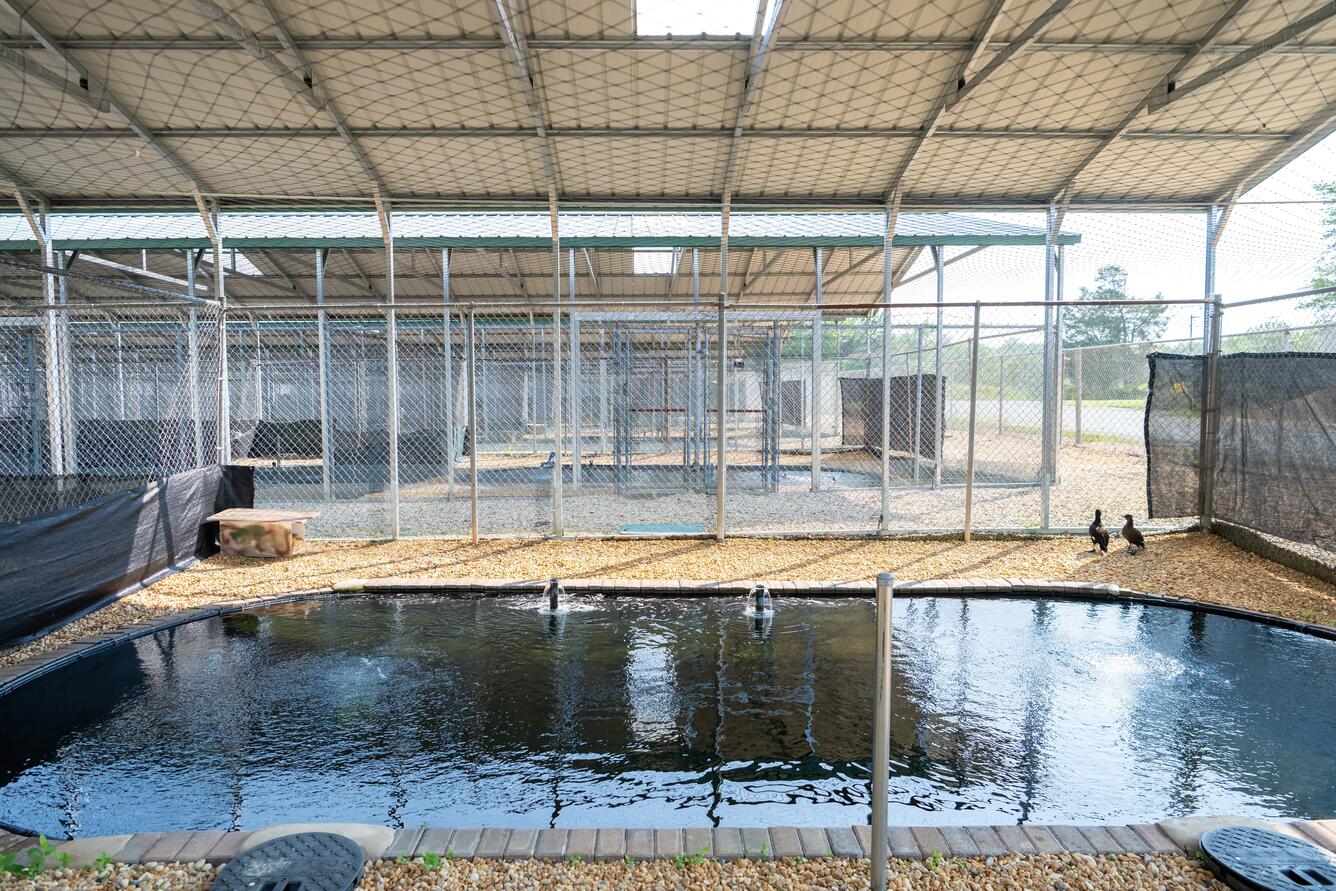
USGS is collaborating with numerous partner institutions to explore susceptibility and pathogenesis of relevant avian influenza strains in waterfowl species with special emphasis on sea ducks and diving ducks.
The susceptibility and pathogenesis of highly pathogenic avian influenza (HPAI) virus is poorly understood in many avian species, especially diving ducks (genera Melanitta, Aythya, and Oxyura). As a result, there is a lack of data needed to inform potential impacts of HPAI on diving duck abundances and the potential for these species to serve as vectors or reservoirs for HPAI.
This project, in collaboration with the U.S. Department of Agriculture Southeast Poultry Disease Research Laboratory and St. Jude Children's Research Hospital, has produced novel data indicating the infectiousness and post-infection response to avian influenza for species such as lesser scaup (Aythya affinis), surf scoter (Melanitta perspicillata), and ruddy duck (Oxyura jamaicensis). This research has also compiled all previously published data regarding 1) effects of HPAI on wild species in North America to identify continued data gaps and 2) testing emergent HPAI viral threats in more ubiquitous species such as mallard (Anas platyrhynchos) and American black duck (Anas rubripes).
Ongoing efforts include studies aimed at characterizing the pathobiology of HPAI in lesser scaup, surf scoter, and common eider (Somateria mollissima) with special focus on tracking transcriptomic signatures across the period of infection. These studies will help fill an important gap in our current state of knowledge on HPAI in wild birds and identify the sub-clinical immune responses of focal species.
<<Back to Avian Influenza Research at EESC