



USGS WARC Science Supporting the Inter-State Fisheries Commissions: Game Fish in the Gulf
The USGS WARC has partnered with the Gulf States Marine Fisheries Commission to support the conservation, management, and use of the Gulf's fisheries resources.
The Science Issue and Relevance
Throughout the United States, there are regional Marine Fisheries Commissions that represent the Pacific, Atlantic, Great Lakes and Gulf of America systems. The primary objective of these commissions is to ensure the continued sustainability of fishery resources. The commissions, which are comprised of state representatives and commission employees, work with their member states to collectively ensure sound conversation and management of their shared coastal fishery resources and the resulting benefits to the public. To meet these objectives, the commissioners and state partners frequently conduct research to inform conservation of the species; however, gaps in research capabilities exist.
To help fill those gaps and provide the commissions with unbiased scientific information about fish communities in each regional ecosystem, USGS Ecosystems Centers have established partnerships with nearby commissions. The USGS is unique among the Federal agencies; while the National Oceanic and Atmospheric Administration (NOAA) focuses on marine fisheries and the U.S. Fish and Wildlife Service (USFWS) takes a regulatory role in species conservation, USGS can provide non-regulatory, actionable science to partners to tackle complex fisheries management challenges across freshwater and coastal ecosystems resulting in impartial, multidisciplinary science that supports fisheries management.
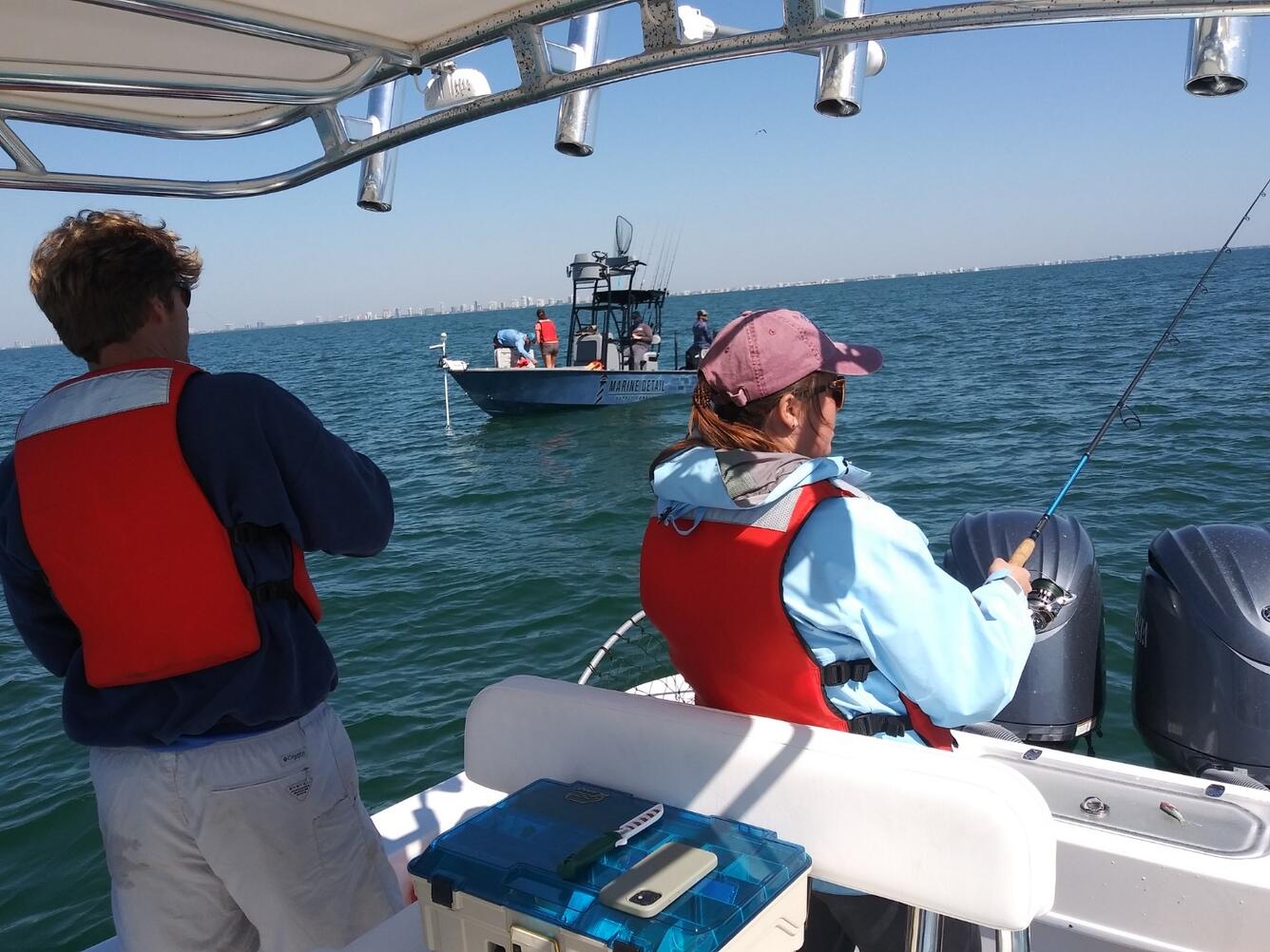

On March 17, 2022, the Gulf States Marine Fisheries Commission (GSMFC) approved development of a cooperative partnership with the USGS Wetland and Aquatic Research Center (WARC) for shared research needs in the Gulf of America. The GSMFC is comprised of all five states bordering the Gulf - Florida, Alabama Mississippi, Louisiana, and Texas – and intends to respond to regional needs of marine resources and state management decisions to benefit the resources and the public. USGS WARC supports the GSMFC by providing unbiased scientific information about fish communities to help guide the conservation, development, and utilization of the region's fishery resources. Coordination with USGS WARC scientists on telemetry and fish movement was prioritized as the first undertaking of this partnership.
Methodology for Addressing the Issue
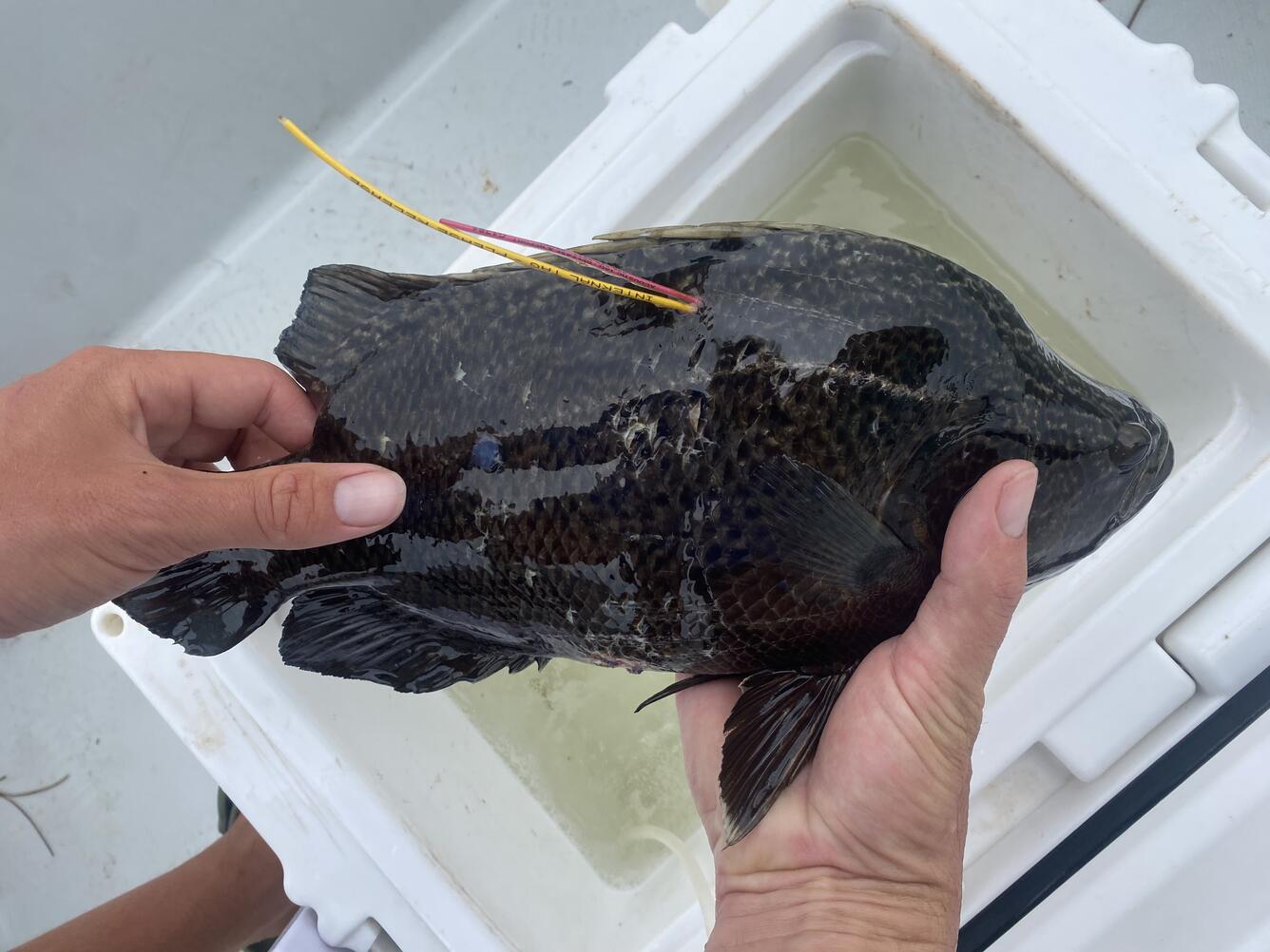
To address this new partnership, two projects were initiated between GSMFC and USGS WARC. First, a Gulf-wide study on the ecology of Tripletail (Lobotes surinamensis) was being conducted jointly by the GSMFC and the Mississippi Department of Natural Resources (MS DNR). Although considered a valuable game fish species by recreational and commercial fisherman, little is known about movement patterns of Tripletail across the northern Gulf of America. Biologists at the MS DNR were deploying acoustic and satellite tags on Tripletail in Mississippi waters but wanted to expand their tagging sites to other locations throughout the Gulf. To assist in this effort, scientists at USGS WARC began capturing and tagging Tripletail in St. Joseph Bay, Florida, in the summer of 2023. A USGS WARC acoustic array in northwest Florida has also been valuable in providing detection data for Tripletail tagged in this collaborative effort.
A tagged Tripletail
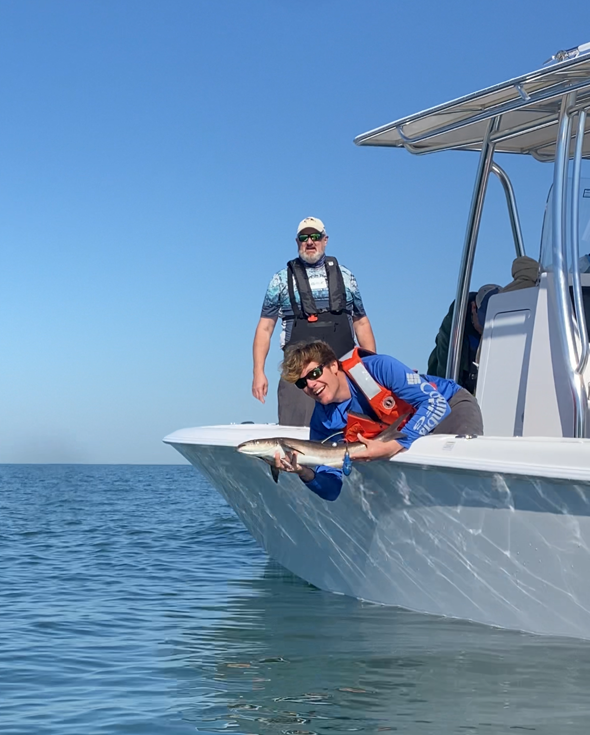
Second, the USGS WARC is leading a joint project with GSMFC to examine movements of Cobia (Rachycentron canadum) throughout the eastern Gulf. Cobia is an important game fish species in the region; however, changes in cobia abundance and distribution have been observed in recent years. Several large cobia tournaments have been canceled due to reduced numbers of landings and this has had significant negative impacts to the economies of those areas. There are several theories surrounding the decline in Cobia landings including over-fishing, changes in migratory patterns due to environmental conditions, and impacts to Cobia spawning from the Deepwater Horizon oil spill. To address this need to understand the Cobia’s decline, scientists at USGS WARC are deploying acoustic and satellite tags on Cobia at sites throughout the eastern Gulf.
Additionally, the USGS WARC is leading a working group to synthesize and analyze historic and current Cobia data in the Gulf to better understand changes to Cobia distributions. This working group, funded by the Gulf Ecosystem Initiative (GEI) and the Resources and Ecosystems Sustainability, Tourist Opportunities, and Revived Economies of the Gulf Coast States (RESTORE) Act, consists of fisheries experts from the Gulf States Marine Fisheries Commission, USGS-Cooperative Fish and Wildlife Research Units (Colorado), NOAA, Okaloosa County (FL), Florida Fish and Wildlife Conservation Commission, the University of Southern Mississippi, Louisiana State University, Texas A&M University’s Harte Research Institute, Dauphin Island Sea Lab, and the University of South Florida. Workshops will be held virtually and in-person at the National Center for Ecological Analysis and Synthesis (NCEAS) in Santa Barbara, CA.
Future Steps
USGS WARC’s scientists will continue to tag and track Cobia in the Gulf and will continue analysis of those telemetry data to support GSMFC. The models developed and run as part of the GEI/NCEAS working group are expected to be updated as new data become available.
The USGS WARC is also working with the Florida Fish and Wildlife Conservation Commission to develop a project that will provide more detailed data on Tripletail using Florida waters. This project will be particularly focused on refining our understanding of Tripletail spawning.
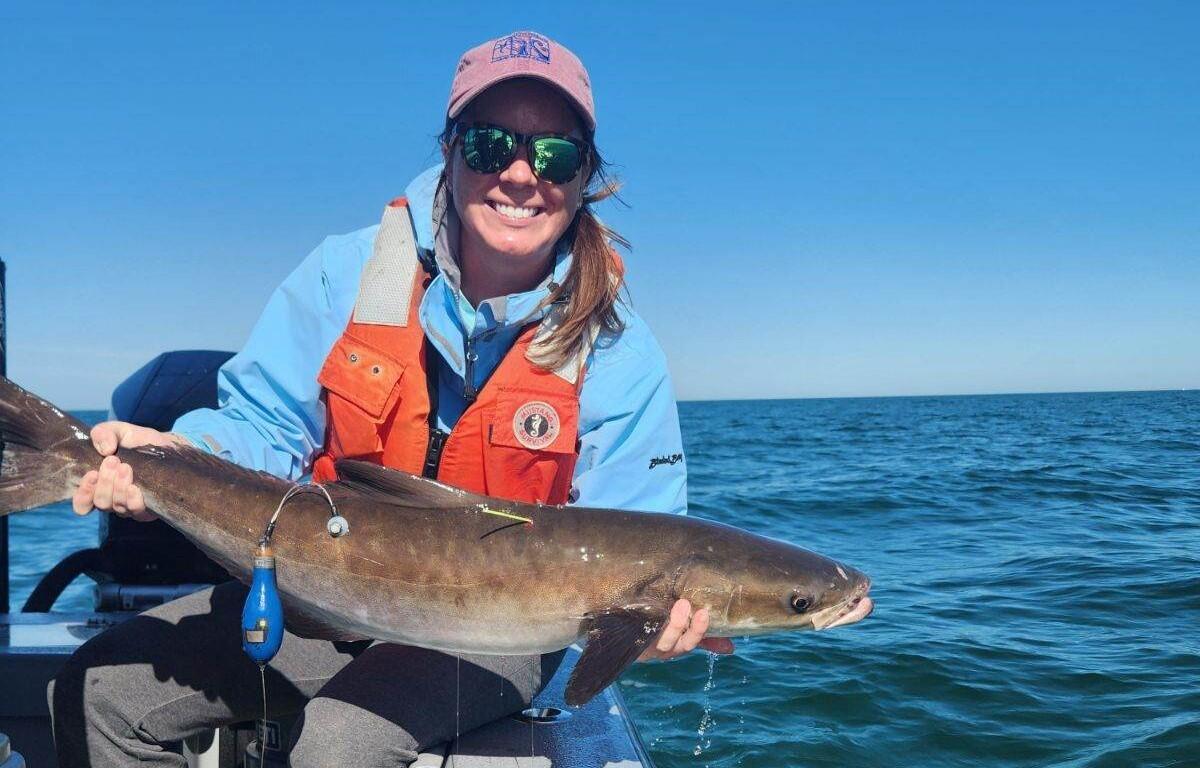
USGS biologist Carson Alday holds a tagged Cobia.

Eastern Ecological Science Center partnership with Atlantic States Marine Fisheries Commission
The USGS WARC has partnered with the Gulf States Marine Fisheries Commission to support the conservation, management, and use of the Gulf's fisheries resources.
The Science Issue and Relevance
Throughout the United States, there are regional Marine Fisheries Commissions that represent the Pacific, Atlantic, Great Lakes and Gulf of America systems. The primary objective of these commissions is to ensure the continued sustainability of fishery resources. The commissions, which are comprised of state representatives and commission employees, work with their member states to collectively ensure sound conversation and management of their shared coastal fishery resources and the resulting benefits to the public. To meet these objectives, the commissioners and state partners frequently conduct research to inform conservation of the species; however, gaps in research capabilities exist.
To help fill those gaps and provide the commissions with unbiased scientific information about fish communities in each regional ecosystem, USGS Ecosystems Centers have established partnerships with nearby commissions. The USGS is unique among the Federal agencies; while the National Oceanic and Atmospheric Administration (NOAA) focuses on marine fisheries and the U.S. Fish and Wildlife Service (USFWS) takes a regulatory role in species conservation, USGS can provide non-regulatory, actionable science to partners to tackle complex fisheries management challenges across freshwater and coastal ecosystems resulting in impartial, multidisciplinary science that supports fisheries management.
On March 17, 2022, the Gulf States Marine Fisheries Commission (GSMFC) approved development of a cooperative partnership with the USGS Wetland and Aquatic Research Center (WARC) for shared research needs in the Gulf of America. The GSMFC is comprised of all five states bordering the Gulf - Florida, Alabama Mississippi, Louisiana, and Texas – and intends to respond to regional needs of marine resources and state management decisions to benefit the resources and the public. USGS WARC supports the GSMFC by providing unbiased scientific information about fish communities to help guide the conservation, development, and utilization of the region's fishery resources. Coordination with USGS WARC scientists on telemetry and fish movement was prioritized as the first undertaking of this partnership.
Methodology for Addressing the Issue
To address this new partnership, two projects were initiated between GSMFC and USGS WARC. First, a Gulf-wide study on the ecology of Tripletail (Lobotes surinamensis) was being conducted jointly by the GSMFC and the Mississippi Department of Natural Resources (MS DNR). Although considered a valuable game fish species by recreational and commercial fisherman, little is known about movement patterns of Tripletail across the northern Gulf of America. Biologists at the MS DNR were deploying acoustic and satellite tags on Tripletail in Mississippi waters but wanted to expand their tagging sites to other locations throughout the Gulf. To assist in this effort, scientists at USGS WARC began capturing and tagging Tripletail in St. Joseph Bay, Florida, in the summer of 2023. A USGS WARC acoustic array in northwest Florida has also been valuable in providing detection data for Tripletail tagged in this collaborative effort.
A tagged Tripletail
Second, the USGS WARC is leading a joint project with GSMFC to examine movements of Cobia (Rachycentron canadum) throughout the eastern Gulf. Cobia is an important game fish species in the region; however, changes in cobia abundance and distribution have been observed in recent years. Several large cobia tournaments have been canceled due to reduced numbers of landings and this has had significant negative impacts to the economies of those areas. There are several theories surrounding the decline in Cobia landings including over-fishing, changes in migratory patterns due to environmental conditions, and impacts to Cobia spawning from the Deepwater Horizon oil spill. To address this need to understand the Cobia’s decline, scientists at USGS WARC are deploying acoustic and satellite tags on Cobia at sites throughout the eastern Gulf.
Additionally, the USGS WARC is leading a working group to synthesize and analyze historic and current Cobia data in the Gulf to better understand changes to Cobia distributions. This working group, funded by the Gulf Ecosystem Initiative (GEI) and the Resources and Ecosystems Sustainability, Tourist Opportunities, and Revived Economies of the Gulf Coast States (RESTORE) Act, consists of fisheries experts from the Gulf States Marine Fisheries Commission, USGS-Cooperative Fish and Wildlife Research Units (Colorado), NOAA, Okaloosa County (FL), Florida Fish and Wildlife Conservation Commission, the University of Southern Mississippi, Louisiana State University, Texas A&M University’s Harte Research Institute, Dauphin Island Sea Lab, and the University of South Florida. Workshops will be held virtually and in-person at the National Center for Ecological Analysis and Synthesis (NCEAS) in Santa Barbara, CA.
Future Steps
USGS WARC’s scientists will continue to tag and track Cobia in the Gulf and will continue analysis of those telemetry data to support GSMFC. The models developed and run as part of the GEI/NCEAS working group are expected to be updated as new data become available.
The USGS WARC is also working with the Florida Fish and Wildlife Conservation Commission to develop a project that will provide more detailed data on Tripletail using Florida waters. This project will be particularly focused on refining our understanding of Tripletail spawning.
USGS biologist Carson Alday holds a tagged Cobia.