



About
The USGS M3 Research Laboratory specializes in the analysis of mercury, trace metals, and microplastics across environmental matrices. The M3 Lab leads national cutting-edge collaborative studies, including state-of-the-art sample analysis, methods development for field and lab procedures, and data interpretation and dissemination.
Scientific Leadership, Study Design, and Execution
The M3 Research Lab is involved in studies from Alaska to Florida, and from California to Maine. Frequently, our leading-edge studies are done collaboratively with large research teams both within and outside of the USGS and designed to provide answers to specific land-resource management questions from federal, state, tribal, and private partners. Our researchers are dedicated to continually providing scientific consultation and service to our cooperators.
Mercury Expertise
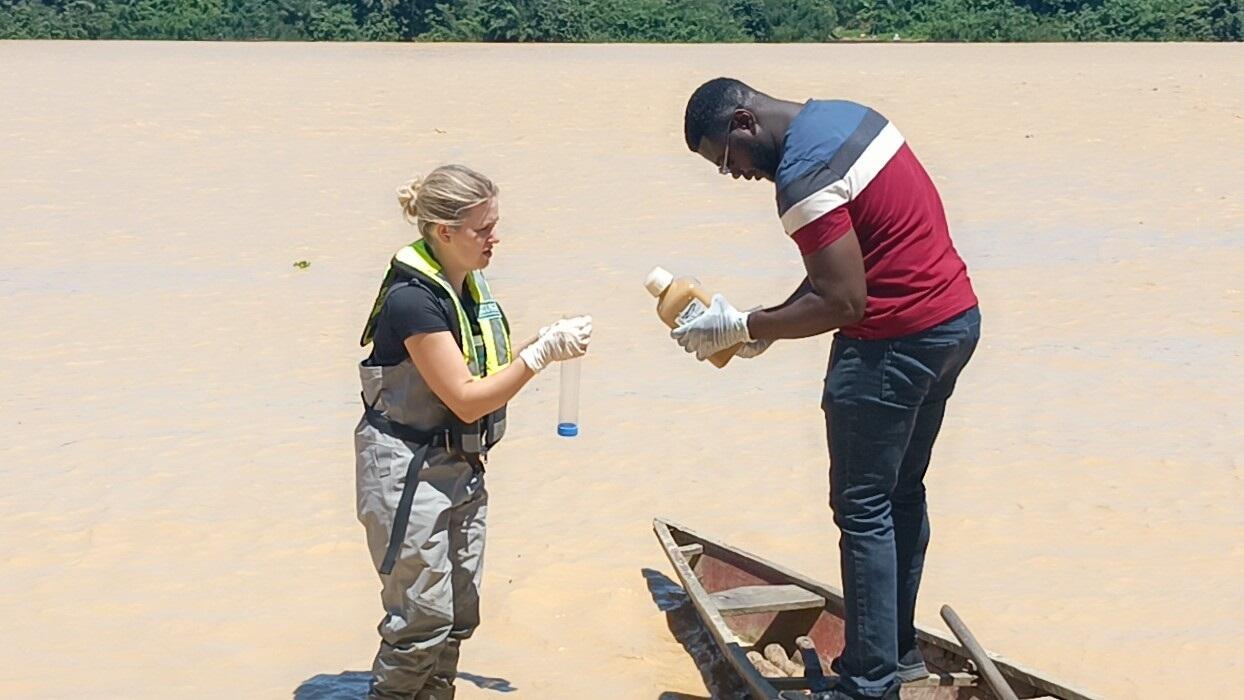
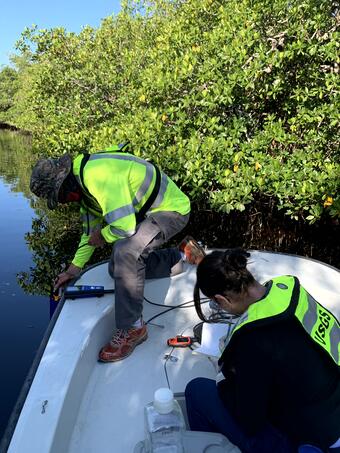
The M3 Research Lab originally started as the Wisconsin District Mercury Research Laboratory in the early 1990s. Over the course of three decades our group has established an international reputation for excellence in low-level quantification and speciation of mercury in all forms of environmental samples (water, sediment, biota, and air). Our long-term projects focus on understanding mercury transport, methylation, and exposure risk in important priority ecosystems within the United States including the Florida Everglades, the Laurentian Great Lakes, and the Columbia River Basin. In the past decade we have also expanded into mercury stable isotopes using high-resolution mass-spectrometry methods. This has allowed us to understand mercury sources and delivery pathways to aquatic and terrestrial environments across the nation. Combining traditional concentration and advanced isotope measurements allow us to examine previously unattainable scientific information on mercury in the environment.
Microplastics Capabilities
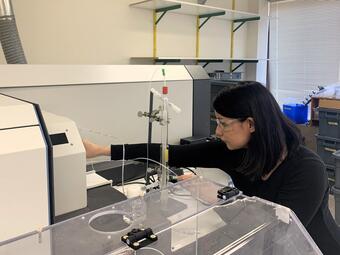
In 2023 the M3 Research Laboratory expanded into the analysis of nanoplastics and low micrometer microplastics (LMMPs) in environmental samples. With the acquisition of a Raman confocal microscope and a laser direct infrared spectrometer the M3 has established the first advanced analytical laboratory for microplastics within the USGS. We are currently focused on improving quality control and assurance metrics, comparing field collection methods for surface and groundwater, and expanding the detection of LMMPs using surface enhanced membranes. Currently, we are working with university, state, and federal partners to expand measurements of microplastics within the Great Lakes region.
Exploration of Metal Isotope Systems
Our group has a dedicated multicollector inductively coupled plasma mass spectrometer (MC-ICP-MS) which can be used to measure isotope ratios of different elements in the environment. Isotope measurements can provide insight to environmental sources and processes impacting elements such as mercury, copper, lithium, and lead. These tools allow us to perform “environmental forensics” to ascertain where a metal or element came from as well as assess its environmental fate and transport. These tools can be applied across a wide range of studies from contaminated site investigations all the way to critical mineral assessments. In 2025 the M3 laboratory expanded its analysis capabilities for trace element concentrations by leveraging our quadrupole ICP-MS and ICP optical emission spectrometer (OES) to complement isotope investigations.
Carbon Characterization in Surface Waters
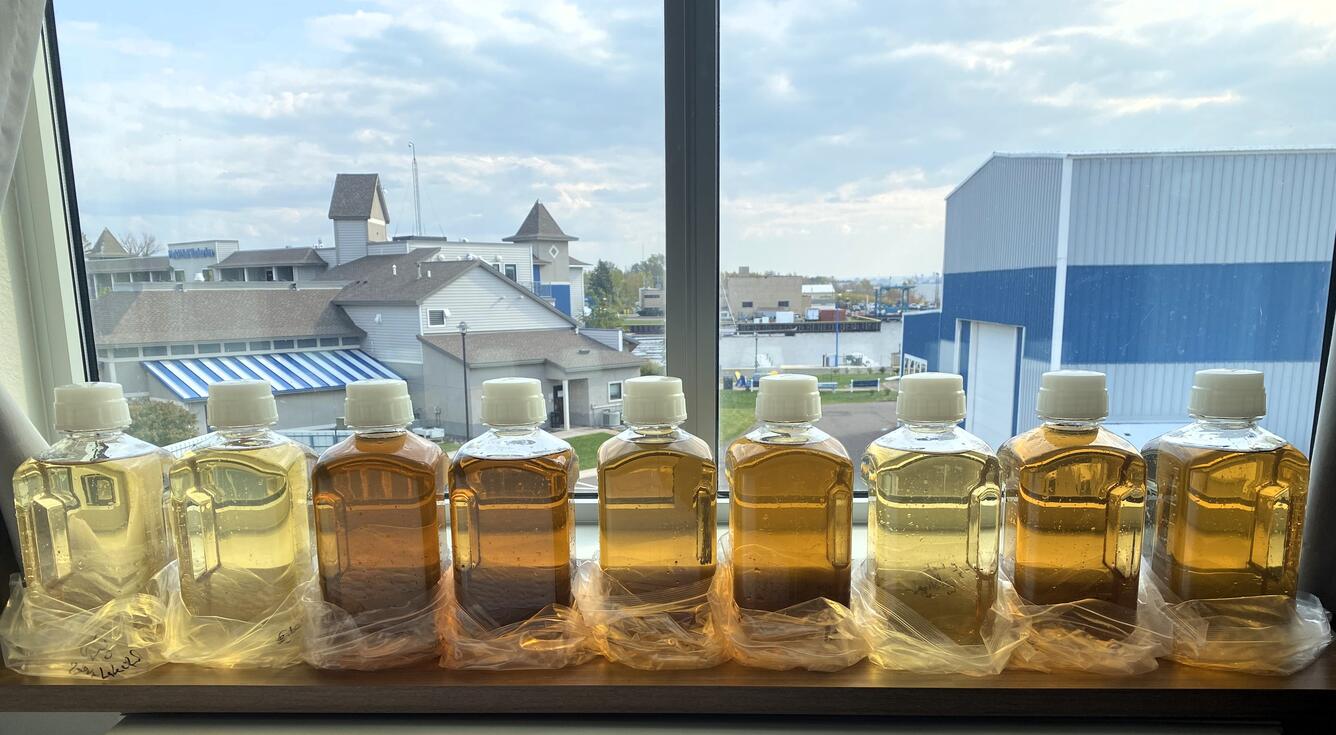
Dissolved organic carbon (DOC) is one of the main drivers impacting mercury and metal transport in the environment. DOC, as well as carbon characterization (UV or fluorescence profiles), can be powerful predictors of metal concentrations across freshwater ecosystems. To complement mercury and metals projects we analyze DOC concentrations, dissolved organic matter absorbance (250-800 nm), and dissolved organic matter fluorescence (Ex200-Ex400, Em240-Em600) within surface waters.
Mentorship and Training
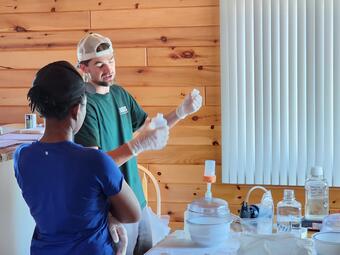
The M3 Research Lab is dedicated to mentoring the next generation of scientists within and outside the USGS. Our group regularly hosts student visitors and trainees for mercury, stable isotope, and microplastics analyses. In the past 5 years, we have had over 20 visiting researchers from 11 different academic and tribal institutions. For graduate student mentorship, we have paired with USGS Youth and Education in Science (YES) to host students as part of the National Science Foundation INTERN program. In addition, scientists from our group mentor undergraduate summer research fellows through our partnership with the Water @ University of Wisconsin (UW) Summer Research Opportunities Program. For more information about mentorship or training programs, please reach out!
See our team of experts below!
| Name | Topics | |
|---|---|---|
| Sarah Jansen | sjanssen@usgs.gov | Project and proposal inquiries, fee-per-service pricing, laboratory capabilities, student mentorship |
| Grace Armstrong | garmstrong@usgs.gov | Great Lakes contaminant cycling, international mercury projects |
| Bryce Cook | bcook@usgs.gov | Microplastics analysis and method development |
| Michael Tate | mttate@usgs.gov | Trace elemental analysis and natural abundance stable isotope measurements |
| Tylor Rosera | trosera@usgs.gov | Data delivery and quality control and assurance questions, mercury sampling and analysis |
| Laura Flucke | lflucke@usgs.gov | Mercury sampling and analysis, solid sample preparation |
| Thomas Wang | twang@usgs.gov | Dissolved organic carbon analyses |