



Science
The M3 performs numerous research projects at local, regional, national, and global scales. Our group is an international leader for mercury research and our work has been highlighted by various outlets.
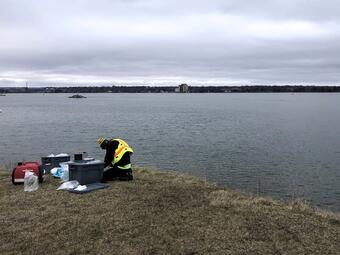
Interested in learning how mercury stable isotopes can be used to assess legacy contaminated sites?
Check out our interview with Wisconsin Public Radio: Historic Pollution Is Driving Higher Mercury Concentrations In Fish Within St. Louis River – WPR
Did you know that dragonflies can tell us how mercury entered an ecosystem?
See our interview with National Geographic: Dragonflies can reveal mercury contamination. Here's how.
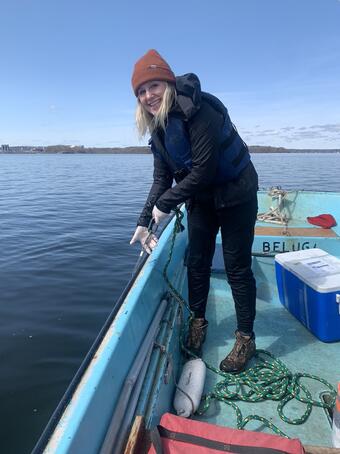
Want to know how we are working to reduce mercury exposure and fish consumption advisories in the Great Lakes?
Check out our summary poster here, covering our work across the Great Lakes region.
How do we develop effective mercury monitoring across the United States?
See our perspective document and connect to our conference sessions hosted at the Society of Environmental Toxicology and Chemistry (SETAC) Conference: Mercury Monitoring and Effectiveness Evaluation: Future Research Directions for a Legacy Contaminant.
Related
Check out more of our mercury and microplastics science below!

Innovative Sensor Development for Detecting Low-Micrometer Plastics in Freshwater Systems

Wildfires Increase Mercury Concentrations in Headwater Streams

How Spiders Can Help Us Connect Aquatic Mercury Contamination to Terrestrial Food Webs

Mercury Isotope Ratios used to Determine Sources of Mercury to Fish in Northeast U.S. Streams

Mercury cycling, bioaccumulation, and risk across western North America: a landscape scale synthesis linking long-term datasets
Related
Check out more of our mercury and microplastics science below!
Innovative Sensor Development for Detecting Low-Micrometer Plastics in Freshwater Systems
Wildfires Increase Mercury Concentrations in Headwater Streams
How Spiders Can Help Us Connect Aquatic Mercury Contamination to Terrestrial Food Webs
Mercury Isotope Ratios used to Determine Sources of Mercury to Fish in Northeast U.S. Streams